Been a few tweaks and changes since my last visit to Hendon. The PioneerCC1 and Provost T1 are no longer on display in the Milestones of Flight Hall. In the Bomber Hall, the Halifax II now has electric light illuminating the interior of the fuselage but you can only see in through the rear gun turret. Also in the Bomber Hall there is a very large canvas nailed to the wall with a photograph of the BBMF Spitfire IIa and Hurricane IIc. Looks a bit pixelated until you get up close and its made out of thousands of individual photographs. The seating area of the Wessex Cafe, in the Historic Hangars, has been extended and to make room for it the Spitfire FR24 has been moved in to the spot previously occupied by Spitfire Vb which has moved next to Spitfire XVI which is being used for the ‘Sit in a Spitfire Experience’.
The 5-axis image stabilisation system of the A7rII had a good work out to see how low a shutter speed I could achieve hand holding (with the help of a shoulder brace). 1/2 second seems to be the limit. For the moment.
1/10sec~f8~ISO3200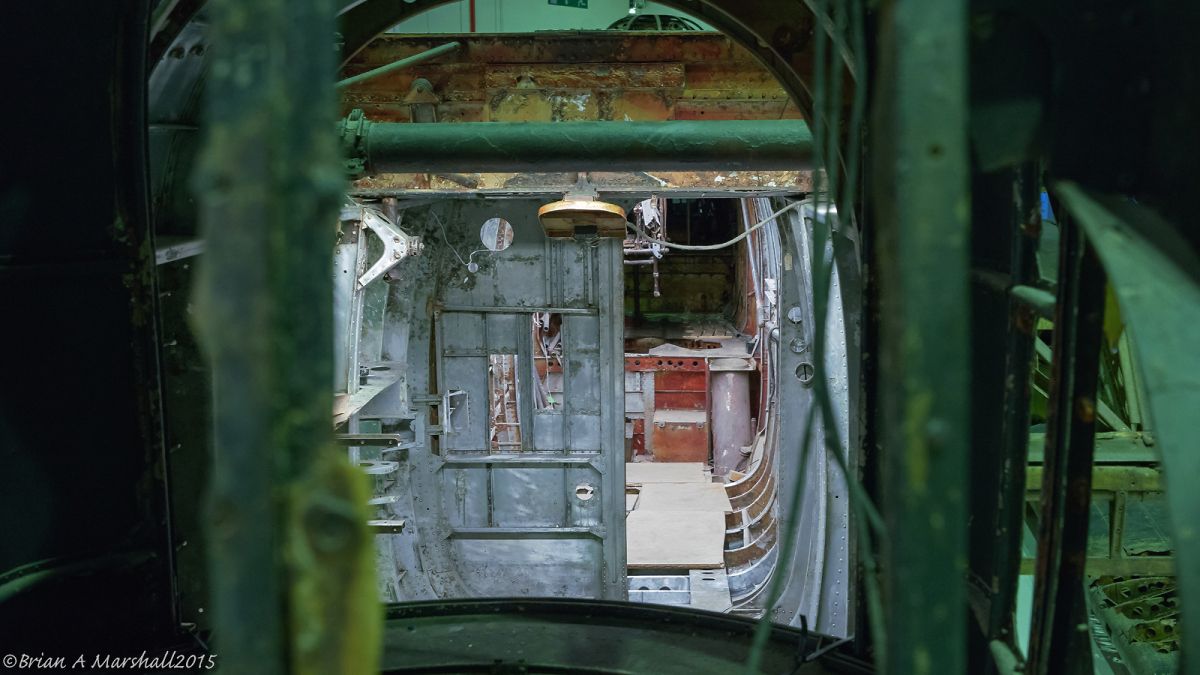
1/13sec~f6.3~ISO2000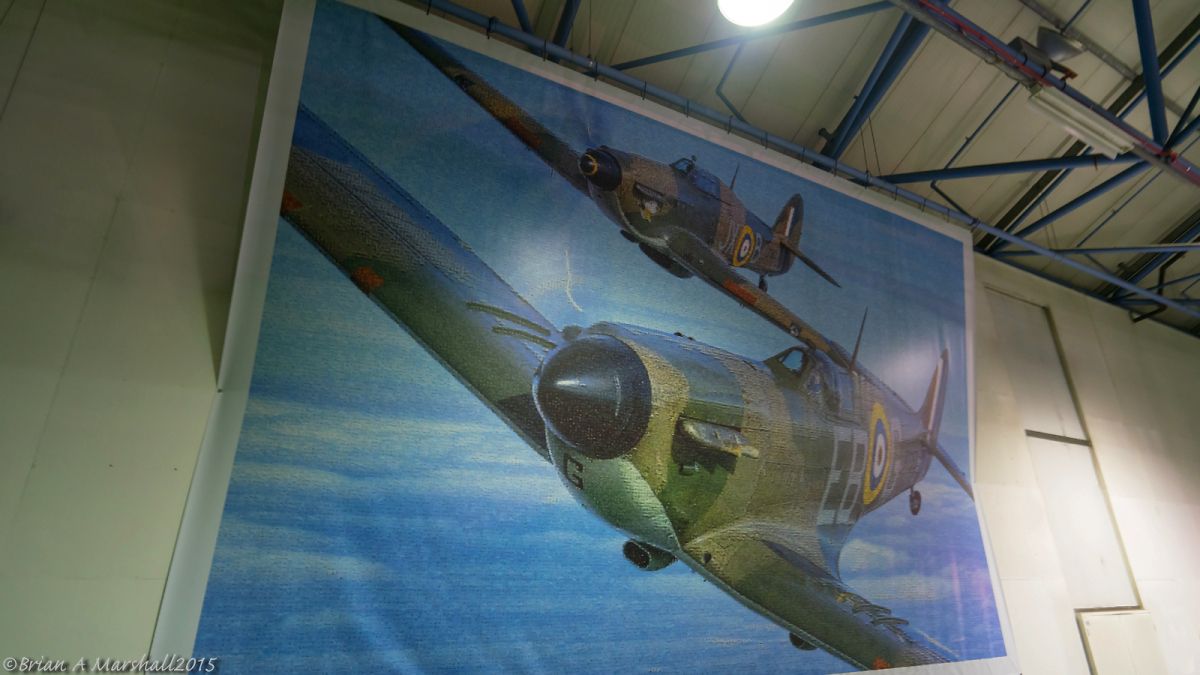
1/15sec~f6.3~ISO3200
1/5sec~f8~ISO800
1/2sec~f9~ISO800
1/3sec~f7.1~ISO800
1/2sec~f8~ISO800
1/2sec~f5.6~ISO800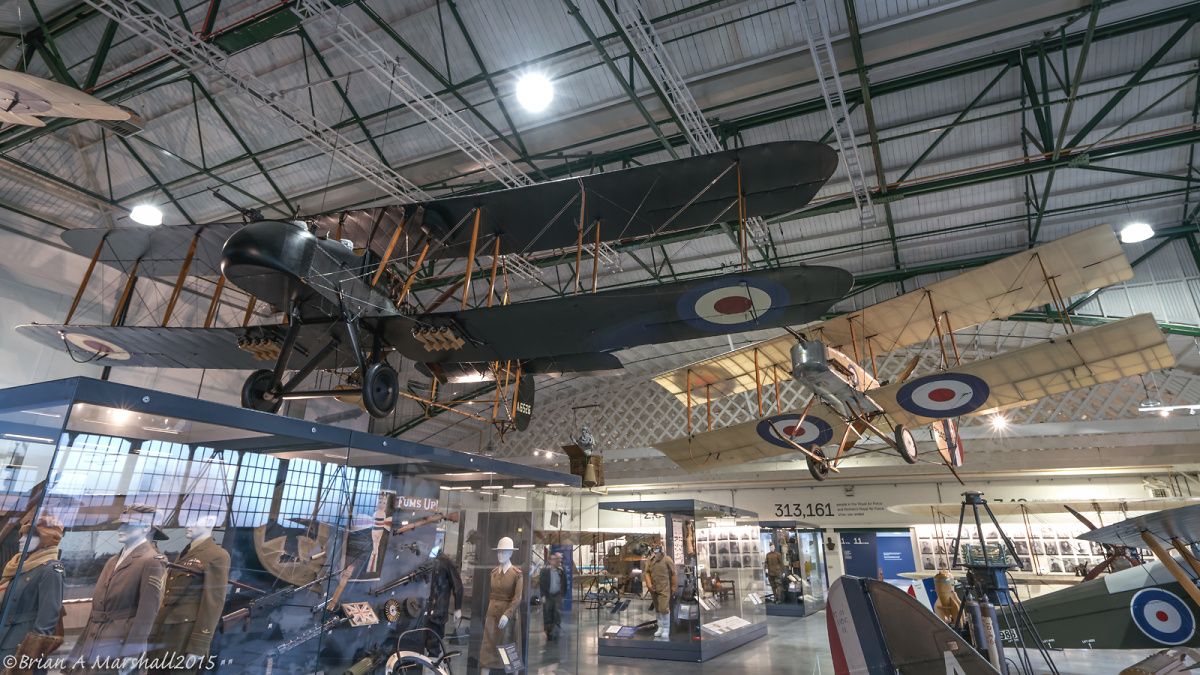
1/2sec~f8~ISO800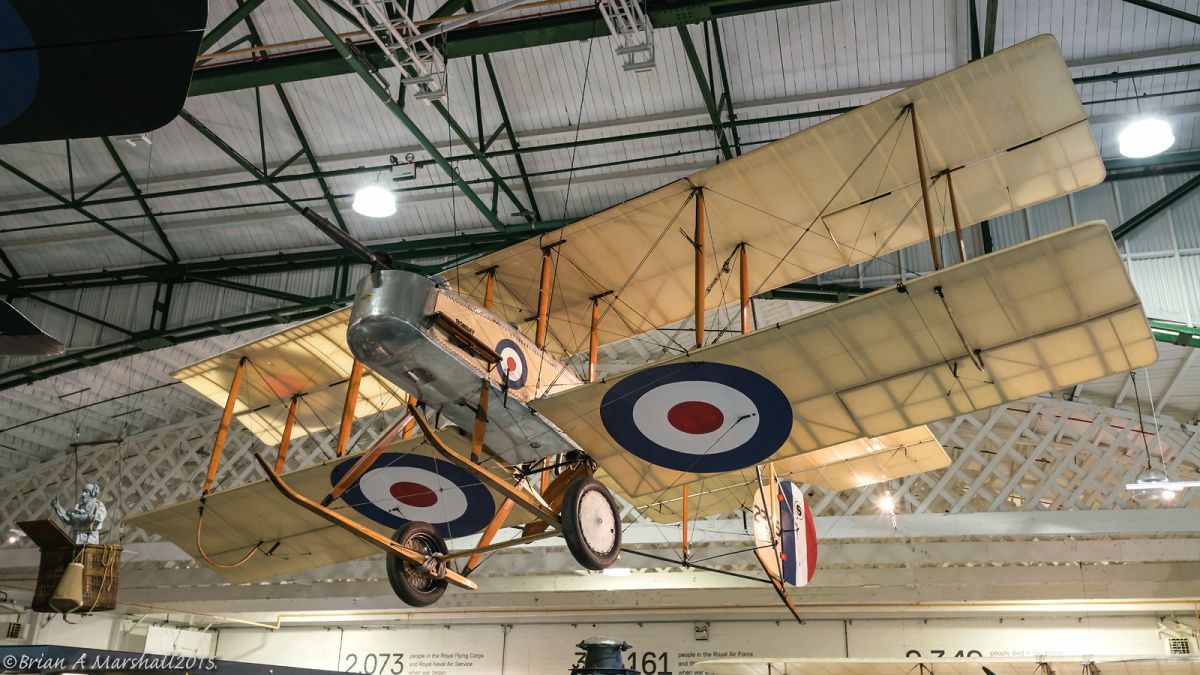
1/2sec~f8~ISO1000
1/2sec~f8~ISO1000
1/2sec~f8~ISO1000
Sony ILCE-A7rII + Sony FE16-35mm f4 ZA OSS Vario-Tessar T* Lens. Uncompressed RAW, manual settings.
Brian

By: David Burke - 23rd November 2015 at 14:41
Its a good place to do it ! School parties seem to get a lot of use out of Hendon – the title must temper peoples expectations .
By: Meddle - 23rd November 2015 at 14:35
You are assuming that casual visitors only go there to learn about the RAF.
By: David Burke - 23rd November 2015 at 14:19
The RAF museum has a very clear remit -why would telling the history of aircraft preservation be of the remotest interest to casual visitors who wish to learn more about the RAF past and present?
By: Meddle - 23rd November 2015 at 13:45
I was at Hendon last week; a pilgrimage of sorts. Most excitingly, a gas cylinder exploded on the roof of the construction site opposite whilst I was there. I felt the shockwave in my chest, though the sound wasn’t actually that loud. I thought it was part of the soundtrack until I stepped outside and saw the police cordon and fire engines.
As a museum I was impressed and apathetic in equal measure. For one thing it was very enjoyable to see so many types in the flesh. The Bomber hall was overwhelming however. In other circumstances a Lancaster, Vulcan or Liberator would be the focal point of an indoor static display, but when you cram them all into one space a sort of fatigue set in. The lighting didn’t help really, being an odd mix of bright-yet-directional lights and gloomy murk. I’m not sure if this is a conservation tactic or simply the result of various half-baked upgrades to the lighting? I’ve been to other museums with low lighting, but none where a Vulcan bomber can be reduced to a virtual silhouette. Impressive that they fitted it in, but other than getting to walk under the nose the thing is virtually nothing more than a canopy blocking out even more light.
I visited a few museums in London, and overall Hendon was the one with the least impressive interpretation or sense purpose. The Battle of Britain hall was better, and the milestones section was also interesting If a little scatty, but the bomber hall and the bit next to it didn’t work. I personally think they could make much better use of he collection they have, or possibly cull it down. You are presented with either a Top Trumps list of aircraft attributes, endless walls of text or a thinly veiled ‘Tally Ho, we smashed the Huns!’ narrative. You could argue that it is hard to tell the story of aviation concisely, but the British Museum do a better job with several millennia’s worth of disparate artefacts. Perhaps a better solution would be to talk about the specific aircraft themselves? To what degree have they been rebuilt, restored or replaced? Some aircraft had this, but not all. Another idea would be to break the fourth wall and talk about what actually goes into restoring an aircraft, and what the museum have to do to keep them in their current state? Perhaps even discuss the history of aircraft preservation in the UK? The Natural History Museum do this, because they realise that rooms full of stuffed animals aren’t sufficient. Hendon, in the main, provides a museum for the anally retentive rivet-counters who just want to see ‘one of everything’.
By: SADSACK - 23rd November 2015 at 13:10
re:
shows what you can do with photographic skill 🙂 I do get tired of hearing people moaning about it being dark in there 🙂 I like the atmosphere.
By: DazDaMan - 22nd November 2015 at 19:00
Nice work.
Personal favourite is, obviously, the Spit V and XVI shot. It shows how much the design changed, even within the Merlin variants, in just a couple of years.
By: CeBro - 22nd November 2015 at 18:16
W1048 is still being cleaned by the look of it. Good to see that terrible red goop removed.
Cees
By: Tin Triangle - 22nd November 2015 at 16:33
Beautiful shots. 1/2sec handheld exposures, wow!
It would be nice if the RAF would donate some RB199s for the Tornado F.3…
By: Rosevidney1 - 22nd November 2015 at 16:27
Splendid photography, well done!


 Sign In








 November 22, 2015 at 2:27 pm