No one could accuse naval aviation of being boring or same ole same.. especially when you look at some of the beautiful and also diverse (or should that be perverse) types evaluated and operated by the Royal Navy.
Here’s some of my favourites..

By: RMAllnutt - 9th April 2009 at 21:28
For the cutlass fans here’s a short summary of surviving airframes.
Grtz.
TG 1984
Many thanks for the list. I am curious to know where Walter Soplata’s Cutlass is now, as you seem to infer that it was moved last year. Any details? I’ve seen this aircraft on a couple of occasions when I visited Walt back in the mid-nineties. It is an amazing place to visit!
Cheers,
Richard
By: pagen01 - 9th April 2009 at 19:10
Yes XE172 was an MR.2, fin flash and lack of hook also give it away, nice pic.
By: jetprov - 9th April 2009 at 18:59
Bringing the thread back with a pic I dug out early today from a recentley donated private collection. XE172 Short Seamew at SBAC 1955.
C/s would make this the MR2 as opposed to an AS.1?
Courtesy BAE North West Heritage Group
By: pagen01 - 30th March 2009 at 18:18
FANTASTIC! Thanks for link, some amazingly clear and unusual FAA pics there, especially like the Cutlass cross decking on HMS Eagle, and the Wyvern departure from direct astern.
By: Wyvernfan - 30th March 2009 at 18:15
Dave your a star. Some wonderful new shots in there… many thanks for pointing them out. 😉
By: Thunderbird167 - 30th March 2009 at 17:40
Especially for Wyvern I thought you might not have seen these
http://www.abpic.co.uk/results.php?q=fathers%20photo&fields=all&sort=latest&page=0&limit=50
By: Bager1968 - 26th March 2009 at 22:02
Yes, the 7,400 lb (10,500 lb w/afterburner) J65 (US-built Sapphire) [37.7″ diameter] was a little disappointing in service.
The F11F-1F (Super Tiger) was to have the 9,600 lb (14,800 lb) J79-GE-3B [30.4” dia. (38.3 dia. over afterburner)], not the 16,475 lb (23,500 lb) J75 (way too big to fit… 43” (58.5”)).
Later, more powerful versions of the J79 would have boosted performance even more, like the -10 [11,430 lb (17,860 lb) in 1964].
By: pagen01 - 26th March 2009 at 09:08
Nothing, hence my superlatives such as wonderful, and beauties!
However it did have powerplant reliability problems as well as not being able to fulfill its role parameters. It had a short front-line service life (1959-’61 on carriers), appearing to have been only a useful supersonic step between the Couger etc, and the far more capable Crusader.
The J-75 powered Super Tiger would have been something though!
By: Bager1968 - 26th March 2009 at 03:47
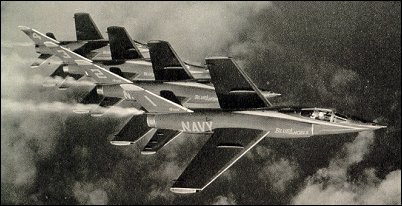
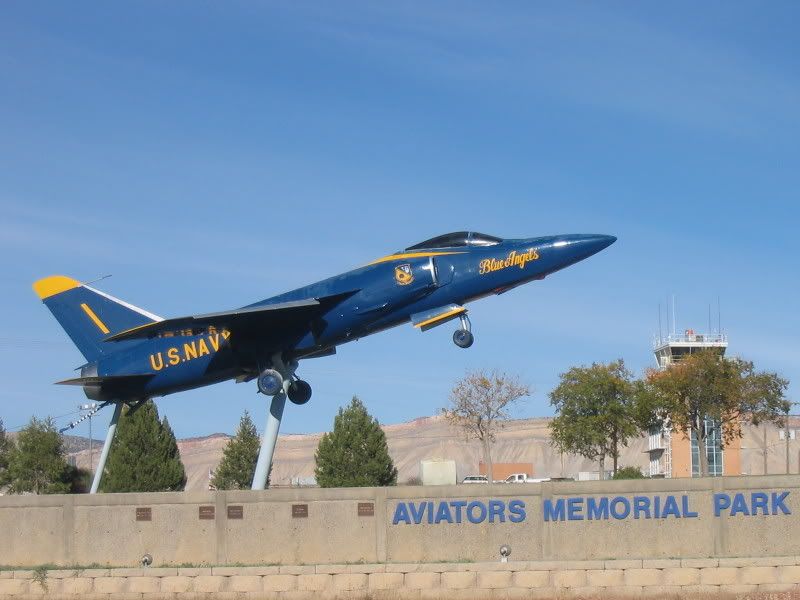
When it comes to ‘wonderful’ types the USN were up there with the FAA, such beauties as the
….
Grumman Tiger..
What’s wrong with the Tiger?
By: Wyvernfan - 25th March 2009 at 13:20
I think of you’re posting pics from Air Britain, Airliners or similar photo site (and prints aswel really) you should at least acknowledge the photographer.
Good point.. post has been amended.!
By: pagen01 - 25th March 2009 at 12:20
I think if you’re posting pics from Air Britain, Airliners or similar photo site (and prints aswel really) you should at least acknowledge the photographer, they are copywrited.
Cutlass to fly, would be great to see, but can’t imagine it being allowed. It had an abysmal safety record in its day. Maybe it will be permited to fly on the understanding of fairly basic handling parameters.
When it comes to ‘wonderful’ types the USN were up there with the FAA, such beauties as the Ryan FR-1 Fireball and NA AJ-2 Savage, both combined piston and jet powered, Vought Pirate, McDonald Phantom I, Grumman Guardian, Douglas F3D Skynight, Grumman Tiger..
And that is without looking into all the strange prototypes, such as the Vought XF-5 ‘Flying Pancake’, Ryan F-2 Dark Shark, Douglas A-2 Skyshark..!
By: Topgun1984 - 25th March 2009 at 11:50
Here’s a pic of the example under restoration to (hopefully) fly. Photo taken from the superb Airliners.Net website. If i am infringeing any copyright then please remove.
here is actualy a link for a more recent view on this extraordinary piece of aviation history…
By: WP840 - 25th March 2009 at 11:42
An aircraft that can hover!
I don’t think you can get too much wackier than an aircraft that can hover!
Photo courtesy of Airliners.net
By: Wyvernfan - 25th March 2009 at 10:03
Vought Cutlass.
Here’s a pic of the example under restoration to (hopefully) fly. Photo taken from the superb Airliners.Net website. If i am infringeing any copyright then please remove (photo credit Axel Schauenburg).
By: pagen01 - 25th March 2009 at 09:23
…but how many pics can there be of three Seamews?
Adrian
There is also the well known ‘Flight’ photos of four Seamews in the air together, these were XE171, XE172, XA209 & XA213.
The swept wing Hawker is the P.1052, VX272, now of course preserved at the FAAM. VX279 became the P.1081 (Hunter style rear end) before flight, and was the aircraft that ‘Wimpy’ Wade was tragically killed in.
Thanks for the Cutless info, good to know that many survive.
By: Topgun1984 - 25th March 2009 at 08:20
For the cutlass fans here’s a short summary of surviving airframes.
Grtz.
TG 1984
Survivors
Seven F7U Cutlass are known to have survived.;
F7U-3 s/n 128451:Located unrestored and incomplete at the Fred E. Weisbroad Aviation Museum/International B-24 Museum in Pueblo, Colorado. Its condition is poor.;
F7U-3 s/n 129554:Purchased by Len Berryman from Geiger Field, Washington in May 1958 and displayed outside the Berryman War Memorial Park in Bridgeport, Washington from 1958 until 1992. In June 1992 it was sold to Tom Cathcart of Ephrata, Washington for restoration to eventual flying condition. This aircraft is currently undergoing restoration at the Museum of Flight in Everett, Washington.;
F7U-3 s/n 129642:On display at the Wings of Freedom Aviation Museum at the Naval Air Station-Joint Reserve Base Willow Grove, Pennsylvania. The aircraft belonged to attack squadron VA-12 and was flown to Willow Grove in May 1957 to take part in an air show. Upon arrival the aircraft was stricken from active duty. It was given to the Navy Reserve as a ground training aircraft, and eventually placed as a gate guard in front of the base on US Route 611. The airframe has only 326.3 hours total time.;
F7U-3M s/n 129655:On display at the National Museum of Naval Aviation in Pensacola, Florida.;
F7U-3 s/n 129685:Located for many years at the collection of Walter Soplata in Newbury, Ohio. Retrieved: 25 February 2008.] Like most aircraft on this famous farm the aircraft appears complete, though it is exposed to the elements and unrestored.;
F7U-3 s/n 129565:Was undergoing restoration for display at the USS Hornet (CV-12) Museum in Alameda, California. Has now been transferred to USS Midway (CV-41) Museum in San Diego, California for final restoration and display.;
F7U-3 s/n 128451 :Also at USS Midway (CV-41) Museum in San Diego, California. May be restored for later display
By: Wyvernfan - 25th March 2009 at 08:06
Seamew MR.2 intended for RAF Coastal Command. The other two are AS.1 variants.
Great shot!
Lee
PS: nothing “whacky” or “wierd” about any of these types – they’re all RN (or intended for RN), and therefore are all “wonderful”! 😀
Ahh thanks for that Lee.. never seen that scheme on a Seamew before. And yes i know all RN types are wonderful, but some of the uneducated amongst us may not agree..;)
Rob
By: Lee Howard - 25th March 2009 at 07:50
I wonder what was behind the different colour scheme on the aircraft nearest the camera.
Seamew MR.2 intended for RAF Coastal Command. The other two are AS.1 variants.
Great shot!
Lee
PS: nothing “whacky” or “wierd” about any of these types – they’re all RN (or intended for RN), and therefore are all “wonderful”! 😀
By: dhfan - 25th March 2009 at 02:50
LR359 an FB.Mk VI was fitted with arrestor gear and on March 25th 1944 (Thats 65 Years tomorrow) !! made the first British twin engined type to land on an aircraft Carrier. Pilot Lt Cdr EM (Winkle) Brown and the Carrier HMS Indefatigable. No doubt the more informed will be able to elaborate on this mark far better than me.
The Sea Hornet looks so similar that it could well be developed from the Mossie, but I am sure our very own Hornet specialist will be able to put us right.
I will go through the slides and see if I have any pics.
Dornier 217 tugs- now that I would love to see.
Not only the first British twin-engined aircraft to land and take off from a carrier, the first anywhere.
Despite the apparent similarity between the Mosquito and the Hornet, apart from the method of fuselage construction it was an entirely new design.
By: Mark12 - 24th March 2009 at 22:37
Hawker P.1052.One of two prototypes to A.M Spec E.38/46. This pic looks like VX272 (the other being VX279)
VX272 ended up as one of the ‘Gate Guards’ at RAF Cardington in the latter 1950’s.
Mark



 Sign In








 March 23, 2009 at 12:18 pm