
By: JDK - 14th February 2004 at 14:35
Sorry. I usually leave a few people in my pics. For the record, it’s 2″ long. (OK, I lied! It was a big impressive bit of kit.) :p
By: dhfan - 14th February 2004 at 13:56
I knew roughly what that (those?) lump had to look like, but that is pretty amazing. Shame there’s nothing to give it scale.
By: JDK - 14th February 2004 at 13:19
And here’s a pic of the thingy in the pointed end of that Macchi at the start of the thread. It was on loan from Italy to the Science Museum (London) way back when, for an exhibition.
By: Melvyn Hiscock - 12th February 2004 at 17:34
Originally posted by Wombat
MHI think 7 years for those days was a long time. It takes that long today, but when aircraft were much simpler, seven years was excessive.
Not really, remember that fligyht itself was only 36 years old when te war started.
Have a look at Mitchell’s first effort with the pre=Spitfire thingo with the Goshawk steam cooled engine – trousered undercarriage, open cockpit – not much of an advance.As much down to the specification and available engine as the designer.
As I pointed out originally, between the S6B and the Spitfire, there was the Bulldog, Hart and a multitude of other Hawker derivatives, the Gauntlet and the Gladiator – none of these showed any real advance over a period of, well, lookit that, seven years! (or so) True, the Hawkers were aesthetically pleasing and streamlined by biplane standards, but the only real advance was the development of the Kestrel prior to the Merlin.All of those designs were due to a specification being written at a time when spending was drastically cut back after the first war, again not so much about lack of progress but lack of foresight in higher quarters. If you separate the development after the German threat was realised and money was being spent you see an incredible advance quickly.
It was in the US that aircraft development was moving quickly, with stressed skins, retractable undercarriages, enclosed cockpits,(passenger aircraft anyway).And in the UK too, look at the Type 142! Sure the DC2 and to a lesser extent the B247 were some way ahead but developments always leap-frogged like that. Also look at the American fighters of the peiod and you see things that are not that far removed from the Bulldog. They had the P36 and early P40s by the 1939 but nothing that would have stood up to the Luftwaffe, hence the P51 being designed around a British purchasing commission specification.
Just as well the war didn’t start till ’39!
Regards
Wombat
Agreed, I can see where you are coming from on your thinking but I think it is a little simplistic as the political, economic and social forces of the time had as much to do with development as the designers. Simple answer to your original point?
MONEY!
All the best,
Melvyn Hiscock
(who is quite fond of a particular 1939 American design!)
By: Mark12 - 12th February 2004 at 13:00
Originally posted by EN830
It’s easier to make a one off design, but takes longer to tool up production to make a series. Look how long it took to put the Spitfire into full production !!!
Surely this depends on the ‘Design Brief’ and the budget.
Any aircraft, or motor car for that matter, designed with production sales as an objective will go through a series of phases. A batch of evaluation prototypes, effectively ‘one off designs’ will be produced to gain knowledge and establish speedy confidence with the management/customer and is one of the initial phases at the transition of the design from paper (then) into hardware. These prototypes are often supplemented with ‘mules’ to explore or confirm certain aspects of the design. Thence follows the ‘Design for production’ phase or cancellation by the government of the day etc.
The Spitfire isn’t actually a good example. It was designed for production around a potential order of some 300 aircraft and the production processes and lack of complexity reflect this. If the designers knew, with foresight, that the anticpated prodution was going to exceed 20,000 believe me it would have been designed differently. Indeed it is the Spitfire’s inherent design and production simplicity, albeit labour intensive, that has made it possible for today’s engineers, on a ‘cottage industry’ basis, to maintain and regenerate the breed.
Mark
—————————————————————————–
“Accept that some days you are the pigeon and some days you are the statue.”
David Brent
By: EN830 - 12th February 2004 at 12:22
Originally posted by Wombat
What fascinates me is that the designers in England and Italy were able to come up with such beautiful, strealined designs as early as they did, particularly compared to the fighters of that time, yet it was many years before those design characteristics found their way into fighter designs.
It’s a bit like F1 today, technology that features in motor sports today will take a few years to filter down into everyday cars.
It’s easier to make a one off design, but takes longer to tool up production to make a series. Look how long it took to put the Spitfire into full production !!!
By: Wombat - 12th February 2004 at 11:44
Originally posted by Melvyn Hiscock
OK, S4 1925 (flawed due to wing flutter but first RAF aircraft with flaps, seven years after the end of WW2)
S6 1929 – 11 years after the end of the war and 2000(ish)hp.
S6B 1931 lots of speed and lots still to learn
5/6 march 1936
SEVEN years after the S6B we have the prototype Spitfire
1942 we get the merlin MustangThat is not very long in anyone’s book.
it takes that long these days to even write the specification.
let’s translate the time above to the delays in any current military programme.So long to catch up?
Nah. We were still ahead of the competition.
MH
MH
I think 7 years for those days was a long time. It takes that long today, but when aircraft were much simpler, seven years was excessive.
Have a look at Mitchell’s first effort with the pre=Spitfire thingo with the Goshawk steam cooled engine – trousered undercarriage, open cockpit – not much of an advance. As I pointed out originally, between the S6B and the Spitfire, there was the Bulldog, Hart and a multitude of other Hawker derivatives, the Gauntlet and the Gladiator – none of these showed any real advance over a period of, well, lookit that, seven years! (or so) True, the Hawkers were aesthetically pleasing and streamlined by biplane standards, but the only real advance was the development of the Kestrel prior to the Merlin.
It was in the US that aircraft development was moving quickly, with stressed skins, retractable undercarriages, enclosed cockpits,(passenger aircraft anyway).
Just as well the war didn’t start till ’39!
Regards
Wombat
By: Distiller - 12th February 2004 at 09:21
What the world flew in 1934, the year the MC.72 set that 709km/h record – as a comparison:
Italy – Fiat CR. 32
Czechoslovakia – Avia B 534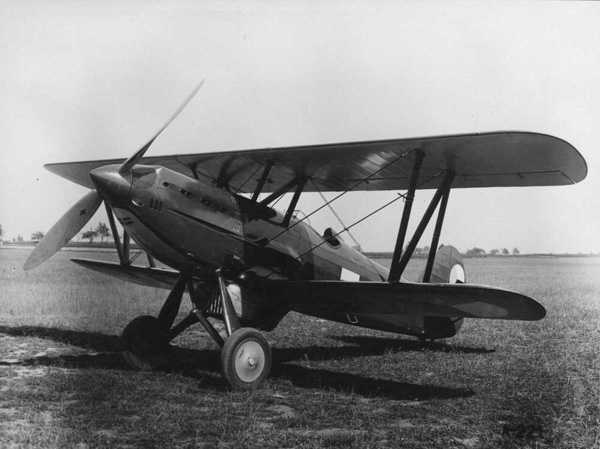
U.S.Navy – Grumman F3F
USAAC – Boeing P26
RAF – Gloster Gauntlet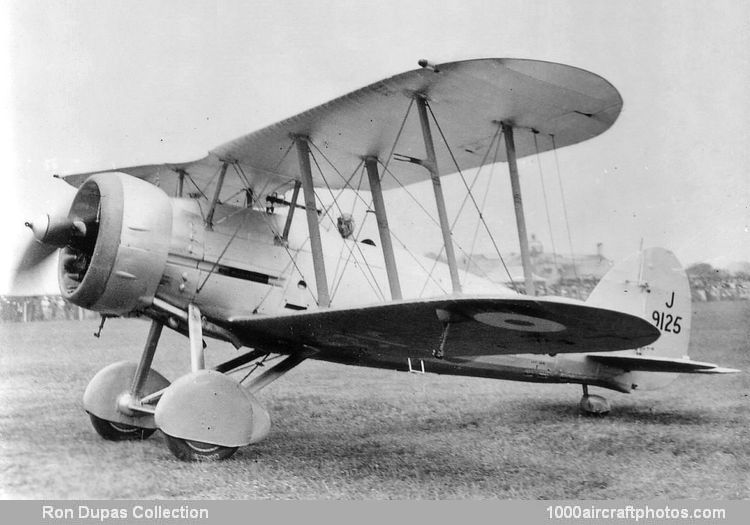
By: Melvyn Hiscock - 12th February 2004 at 09:16
Originally posted by JDK
It’s a bit like saying that Thrust SSC hasn’t translated to road-legal cars…
Cheers
You’ve never seen Richard Noble drive then . . .
Melv
PS, once sat in my car with Richard doing V signs at speed cameras. The thought of the second fastest man on land doing that still makes me laugh.
By: JDK - 12th February 2004 at 09:12
Don’t forget that the Schnieder a/c by this period were designed to go as fast as possible in a streight line while fighters, particularly at that point were meant to be able to manoevre. Remember, the British, before W.W.II believed no dogfighting would be possible at speeds of -gasp- 250mph!
It’s a bit like saying that Thrust SSC hasn’t translated to road-legal cars…
Cheers
By: Melvyn Hiscock - 12th February 2004 at 00:36
Originally posted by Wombat
What fascinates me is that the designers in England and Italy were able to come up with such beautiful, strealined designs as early as they did, particularly compared to the fighters of that time, yet it was many years before those design characteristics found their way into fighter designs.Obviously, the speed potential of the Schneider Trophy aircraft could not directly translate to contemporary fighters, as the engines were not designed for sustained high performance, but it is amazing that the fighters’ aerodynamics took so long to catch up.
Regards
Wombat
OK, S4 1925 (flawed due to wing flutter but first RAF aircraft with flaps, seven years after the end of WW2)
S6 1929 – 11 years after the end of the war and 2000(ish)hp.
S6B 1931 lots of speed and lots still to learn
5/6 march 1936
SEVEN years after the S6B we have the prototype Spitfire
1942 we get the merlin Mustang
That is not very long in anyone’s book.
it takes that long these days to even write the specification.
let’s translate the time above to the delays in any current military programme.
So long to catch up?
Nah. We were still ahead of the competition.
MH
By: dhfan - 12th February 2004 at 00:27
For the uninitiated, note the number of exhaust ports on the MC.72…
By: Wombat - 11th February 2004 at 20:41
What fascinates me is that the designers in England and Italy were able to come up with such beautiful, strealined designs as early as they did, particularly compared to the fighters of that time, yet it was many years before those design characteristics found their way into fighter designs.
The S6B first flew during the time of the Bristol Bulldog or therabouts. Don’t know what Italy had for fighters at that time. After the Bulldog, there was a series of semi-modern Hawker fighters, (still biplanes though), the Gauntlet, Gladiator, and even Mitchell;s own abortive early effort prior to the Spit. In Italy, Fiat CR 32’s and 42’s were flying until well after the war started. Biplanes again.
Obviously, the speed potential of the Schneider Trophy aircraft could not directly translate to contemporary fighters, as the engines were not designed for sustained high performance, but it is amazing that the fighters’ aerodynamics took so long to catch up.
Regards
Wombat
By: Mark12 - 11th February 2004 at 20:22
Distiller,
Would they be original signatures of Stainforth and Boothman?
Hmmm! Very nice.
John Boothman – one of the more famous ‘Old Boys’ of my old school.
Here is a shot of the dedicated window above the school entrance.
Is it any wonder that as a school boy I had a passion for Spitfires? 😉
Mark
By: turbo_NZ - 11th February 2004 at 18:48
I agree, esp the wicked Macchi one !!!
Looks like a beast and a half !!!


 Sign In








 February 11, 2004 at 5:50 pm


