Rather than continue to intrude on the Bucc photo thread I am posting a variety of Sea Prince photographs to see if they can assist in any way.
I can’t tell in the black and white photos what is silver and what is grey and my memory is suspect!
WP314 CU 573 at Carlisle about 2002
The 2 photos were taken the same day and within a few minutes of each other The nose on shot seems to indicate that the aircraft is mainly silver with a red type of daygow. The props red is (in the original photo) a bit more red. However the second picture the airframe is grey with faded dayglow. This agrees with my poor memory.
WF131 at Lossiemouth
May be white or grey undersides
WF120 608
Is White top and grey undersides
WM758 LM 609
May be white or grey undersides
WP 309 880 at Arbroath about 1968
I think is silver with a white nose and top
LM 639 landing at Lossiemouth
May be silver undersides
The final photo is fuzzy but my record states that is is WP309 again at Arbroath 6-7-1963. Yellow bands on wings and rear fuselage. BMS44 has a colour photo at http://forum.keypublishing.com/showthread.php?t=105907&page=9

By: pagen01 - 8th July 2012 at 21:08
I am sure one of the party pieces from her airshow act (and one of the more popular parts for the public with no aviation knowledge) was to fly around with one undercarriage leg up and the other down. The hydraulic system was split which made it possible to retract/extend each side independently.
.
The only hydraulic system on the Prince/Pembroke family is the wipers, everything else is pneumatic, not sure how they isolated one u/c side from the other.
By: pagen01 - 8th July 2012 at 21:06
…we are trying to decide which authentic colour scheme we will use to re paint her – probably grey with dayglo bands and wing panels. Was she ever painted differently? were her bands ever trainer yellow?
Basically the Sea Prince trainers initially wore the all over silver with a golden yellow training band applied around the rear fuselage and each wing.
then went to silver with dayglo nose, tail, and outboard wings, and white fuselage roof.
Finally wore the all over light aircraft grey with dayglo applied as above
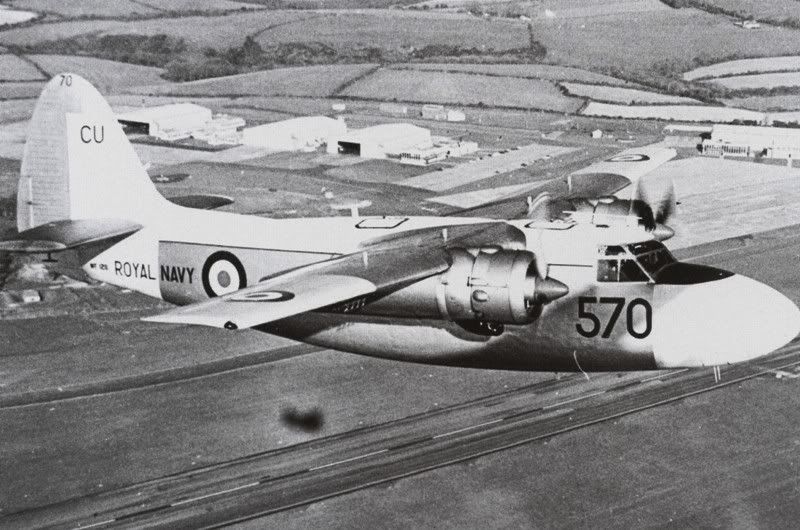
WF128 570-CU
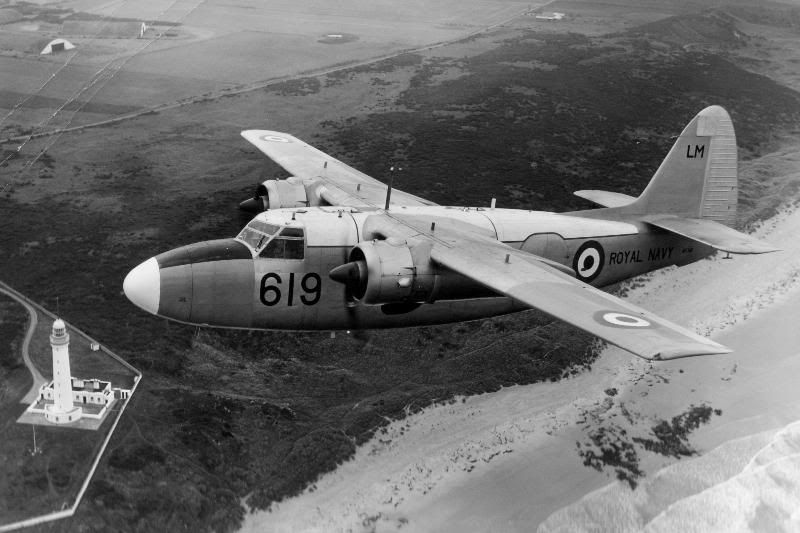
WF118 619-LM
Please, oh please, go for the all over silver, dayglo orange nose, tail, and wing sections, and white fuselage roof with thin cheatline scheme – the scheme just prior to going into the light aircraft grey and dayglo scheme. No other preserved Sea Prince is in these colours.
Attached pic by friend Chris England of WM739 shown in this scheme.
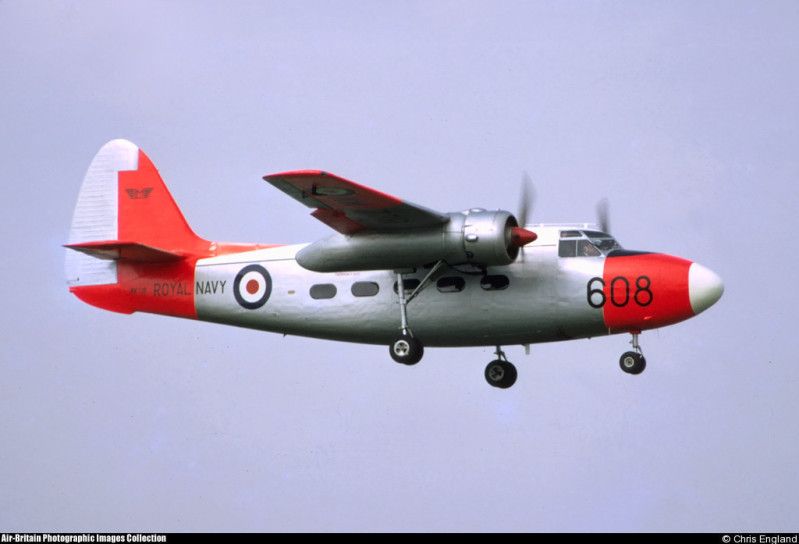
Hopefully see you at the hangar soon!

Sea Prince T.1 WP321 G-BRFC 30 May 12 by jamtey71, on Flickr
By: WJ244 - 8th July 2012 at 18:33
Very pleased to see someone has bought her with a view to flying her again.
I am sure one of the party pieces from her airshow act (and one of the more popular parts for the public with no aviation knowledge) was to fly around with one undercarriage leg up and the other down. The hydraulic system was split which made it possible to retract/extend each side independently.
Best of luck with the restoration/overhaul and I really hope you can get her sorted and back into the air soon.
By: Wyvernfan - 8th July 2012 at 18:29
Mark, Can’t really help with photos or actual schemes i’m afraid, but i have fond memories of this wonderful aeroplane in the skies overhead when operated by the RFC at Bourn airfield nr Cambridge back in the eighties. And i would just like to thank you for saving the Sea Prince, and wish you well and good luck in returning her to where she belongs… in the skies over Britain.! 😎
Rob
By: freebird - 8th July 2012 at 18:25
Mark
I sent you some photos a few months ago. 😀
By: markstott - 8th July 2012 at 17:58
Sea Prince WP321 G-BRFC
I am now the proud owner of this aircraft and we hope to restore her to flying condition once more – she is in good shape apart from one engine which has probably been ‘hydrauliced’. Does anyone have facts or stories about her history and service record?
I would be interested in any old photos of her as we are trying to decide which authentic colour scheme we will use to re paint her – probably grey with dayglo bands and wing panels. Was she ever painted differently? were her bands ever trainer yellow?
Mark Stott
By: DaveF68 - 27th February 2012 at 10:44
To (hopefully) bring the discussion of reds to a close, at the end of the day it doesn’t really matter what the name used is….it’s the BS381C tint reference number which is the important bit to get right. Post-war roundel reds should be BS381C-538.
The difference is that British Standards changed the name of colour 538 from Post Office Red to Cherry Red at one point (Might have been the 80s revision, if not earlier)
By: Chox - 6th May 2011 at 17:57
Nothing to add to my previous comments regarding the Sea Prince colours, although I have now got to the bottom of the “Cherry Red ” saga as mentioned earlier in the thread. See the separate thread on this little matter if it really does interest anybody! :p
By: AMB - 30th April 2011 at 19:12
Here’s some more of that lovely orange dayglo,
http://www.youtube.com/watch?v=I42lzNAUm8c
Hang on…*Red* Pelicans?
😀
Dare I say it, now they were a different shade of Dayglo altogether, specially mixed for the team!
By: WebPilot - 30th April 2011 at 14:34
Here’s some more of that lovely orange dayglo,
http://www.youtube.com/watch?v=I42lzNAUm8c
Hang on…*Red* Pelicans?
😀
By: Bruce - 29th April 2011 at 14:00
Thats a good example of dayglo fading – and was why I didnt use it for the Vampire!
The Dove is getting quite bad now (in terms of fading), and was only painted a couple of years ago.
Bruce
By: pagen01 - 29th April 2011 at 12:41
Actually Bruce your post has just reminded how good Dove D-IFSB at the de Havilland Museum looks in its dayglo scheme, http://www.flickr.com/photos/36928008@N08/4708876035/
By: Bruce - 29th April 2011 at 11:54
Crikey – never realised a thread on the Sea Prince could get so contentious.
My experience of dayglo is that it fades like the very devil. When it is new, it is a very bright, vibrant orange – which comes out as red when reproduced photographically. Cant be avoided; when you photograph it, it doesnt come out the same shade!
As it fades, it clearly looks orange, and will reproduce as such in a photograph. It often still looks a shade darker though.
When its really faded, it looks white – the colour of the primer underneath.
When I repainted a Vampire that should have used Dayglo, I used a bright red – to save the fade issue.
Bruce
By: bms44 - 28th April 2011 at 21:09
…never mind, you didn’t know! Thanks for the thought, though . 🙂
By: pagen01 - 28th April 2011 at 20:45
Burgger, I would have sent you one of my copies!
By: bms44 - 28th April 2011 at 20:31
The above pictures are from Peter Londons’ book RNAS Culdrose and attributed to Culdrose.
James, hadn’t come across this book before, but managed to obtain a good s/hand copy this evening through Amaz*n. Have to be patient until after Easter now though.Brian
By: Wyvernfan - 28th April 2011 at 20:06
Thanks James. That crash landing looks nasty!
By: WebPilot - 28th April 2011 at 19:37
Lots here, though the “watermark” prevents real enjoyment:
http://www.transportphotos.com/air?sort=asc&order=Subject&page=768&search=
By: bms44 - 28th April 2011 at 18:50
Welcome back Robert :good shots to kick off again pagen01, I know I’ve more or less exhausted my photo archives on the Sea Prince , but I look forward to seeing several more that must be still awaiting display here. (Come on chaps!) and monochrome is good, especially if it avoids further confrontation.:)
By: pagen01 - 28th April 2011 at 18:33
Anyone got anymore pics of Sea Princes in the silver/ white / dayglo scheme.?.. i really like that.
I know this is going to sound stupid (especially in a colours thread!), but here are some in B&W!
Gatwicks’ WF118 619 LM flying off Lossies’ coast
WF128 570 CU flying over Culdrose
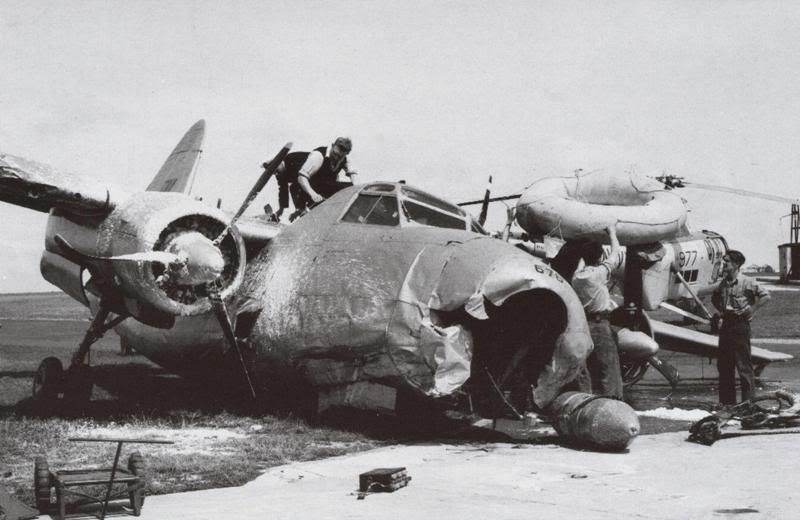
This is WF124 676 CW after a crash landing in 1956, notice the thimble radome lying on the floor. It was a bullet shapped afair which was suspended on a framework within the nose structure, the panel work around it was cut away to allow the radome to protrude right through.
The above pictures are from Peter Londons’ book RNAS Culdrose and attributed to Culdrose.


 Sign In








 April 21, 2011 at 4:51 pm