Hi Guys, complete Noob here, I need your expert advice!
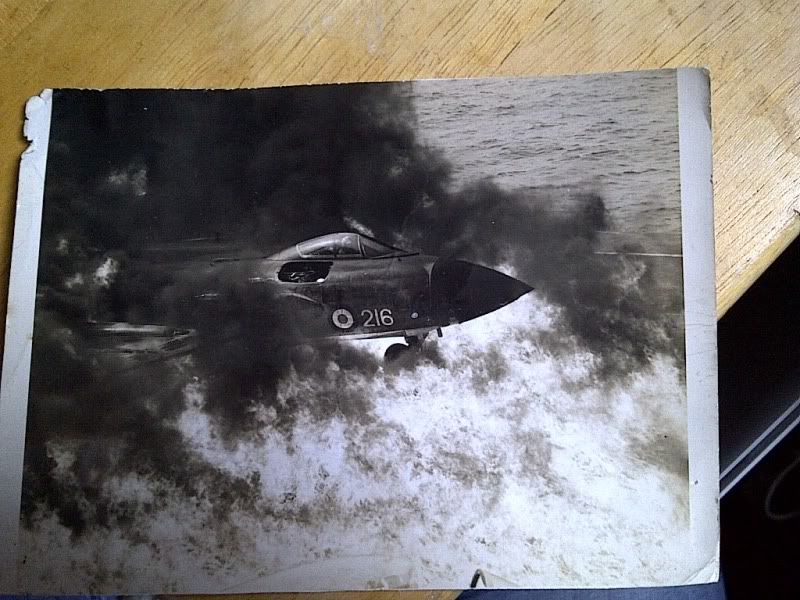
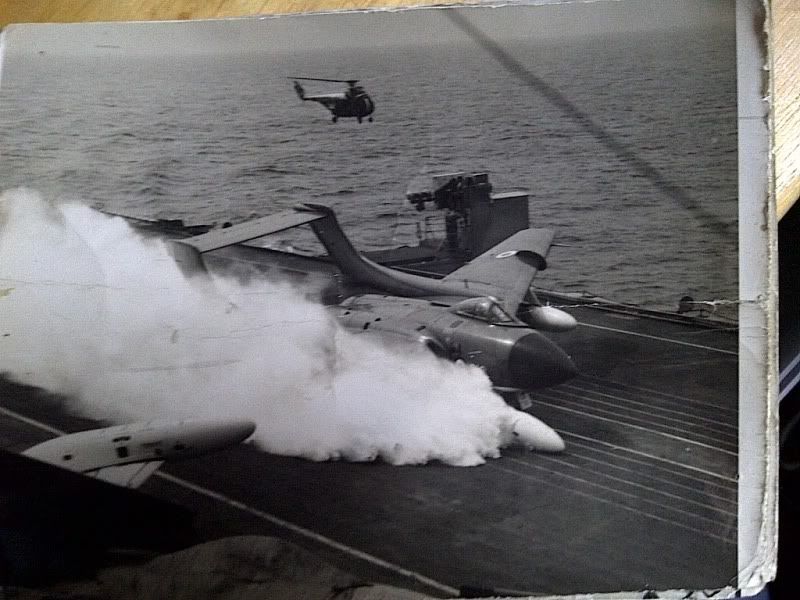
I was given 4 photos about 12 years ago and have stupidly done nothing with them, they look like originals of a crash and we have found the crash info online too, and seen the pictures blown up on posters in Caernaferon air museum in Wales but couldnt find anyone interested in telling us more about the photos
here is the clip from the website about the plane- 08/02/1961 XJ583 V-216 Sea Vixen FAW1 892 NAS A drop tank caught fire after the starboard oleo leg collapsed when landing on HMS Victorious while operating off Malaysia. Returned to the UK on HMS Hermes and was later allocated to Arbroath as A2507- here is the website link http://www.ukserials.com/losses-1961.htm
If they are just copies then thats fine as i think they are brilliant photos, Have a look and let me know what you think



By: Bager1968 - 18th January 2011 at 22:08
Here is a proper display hood… on the A-6E Intruder. The hood has a handle which extends it so the B/N can look inside easily, and retracts it for normal flight and entry to/egress from the cockpit (note hinged arms on both sides).
A-6E with hood over FLIR display (bombardier/navigator’s station) and joystick for FLIR/laser designator: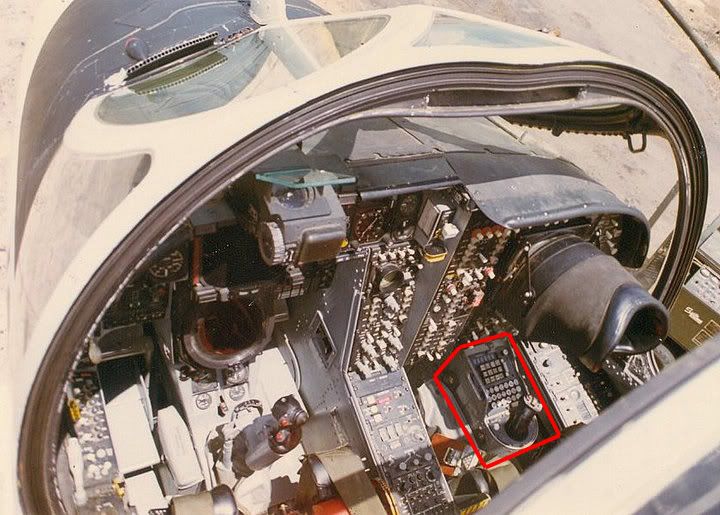
A-6E without hood or joystick: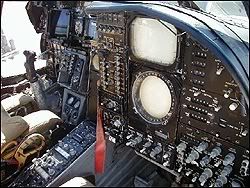
By: PeterVerney - 18th January 2011 at 20:09
In the Meteor NF one was close enough to the visor not to have to lean too much, and of course the harness moved with one.
In the Mosquito I only did the straps up for take off, and, if I remembered, for landing. The radar was a bit forward and needed a hunched position to see into the visor. It was also necessary to swivel round 90 degrees towards the pilot to operate any nav equipment which was behind the pilots seat. That’s what I blame my poor posture on anyway. 🙂 One sat several inches below and behind the pilot. He had a proper seat, the nav had a cushion on the front end of the bomb bay. The pilots view was not seriously inconvenienced.
As for the British developed AI radars the least said the better. We developed the original American SCR 520/720 sets to a very usable system and then bought the resultant AI Mk10 from Westinghouse for serious dollars.
AI MkIX was developed in parallel, using the same cavity magnetron, but was a more ambitious set. It was also dogged by production problems and was so long in development that it missed out. It was exported postwar to Yugoslavia in the Mosquito NF38, which did not enter RAF service. The tubes were very small and therefore difficult to interpret.
This contraption was developed into AI Mk17 or 18 by the simple expedient of a better 3cm magnetron and by strapping a magnifying glass over the tube:eek::eek::mad::mad:
By: pagen01 - 18th January 2011 at 19:48
I can understand the chosen layout versus normal side by side, but the Javelin layout seemed so much more logical without increasing drag, and became the standard for two seat fighter/strike aircraft.
The Vixen does have slightly restricted vision for the pilot to lower port compared to centre cockpit layout.
However one thing that has always got me into the type is that it is so unconventional and ‘weird’ in layout, something a bit 1950s vision of the future about it, especially so with the DH 110s.
In the pic you can see the large compressed air underwater escape (as Amarok mentions) select/arming lever in yellow, and beside it you can just see the shoulder straps inertia reel ‘lean forward’ lever, you can follow the cable and links around to the reel mech itself.
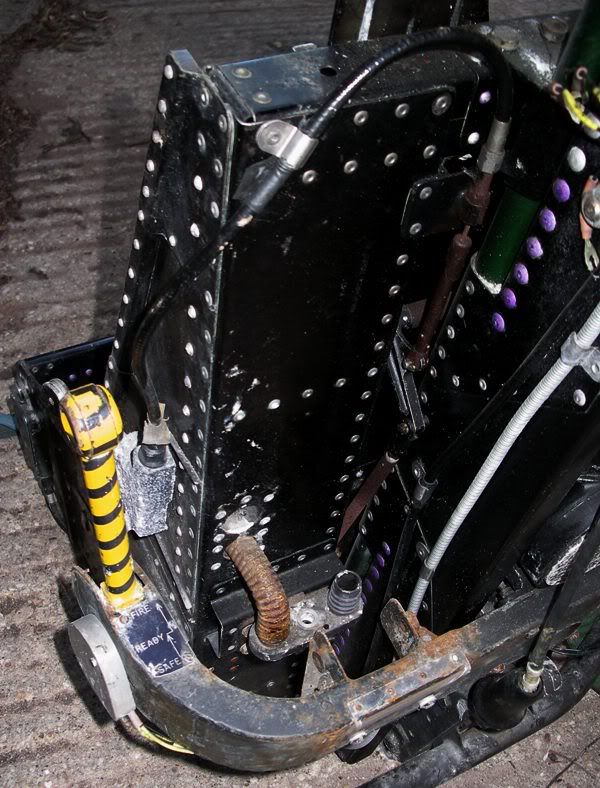
By: Amarok - 18th January 2011 at 17:17
both pilot and nav had inertia reel seat belts, that would pull the occupant back into the seat prior to ejection.
Also the Sea Vixen had a dual ejection system
1. Pneumatic (for ditching)
2. Standard Rocket.
IMHO the location of the nav in the ‘pit’ gives the pilot an excellent field of vision (canberra BI8’s and the PR9’s have the same layout) side by side would restrict the view not to mention the light for the radar
Regards
Mike
By: Wyvernfan - 18th January 2011 at 16:39
So if the Nav is leaning forward to look into the scope, does that mean he has had to slacken off his seat / chute harness in order to do so?
By: slicer - 18th January 2011 at 16:28
I think I read somewhere that the best way of getting the pilot’s attention in a hurry was to jab him in the right thigh with a handy pair of compasses!
And can’t you just SMELL those pictures!
By: pagen01 - 18th January 2011 at 15:53
It is AI.18. I’ve often wondered how Jav crews got on with their sets, but I have never even seen pics of the AI.17 or AI.23 (AN/APQ-43) displays fitted.
Generally you hear that the Vixen radar was superior to the Javelin, but unsure whether that is based on radar performance or usability.
DeHav semed to have made a backward step considering they were probably the leaders in the field back in Mosquito days.
I agree about the sexy catapault launch analogy though, anymore info on what it was like to fly in that hole is welcome though!:)
By: PeterVerney - 18th January 2011 at 14:48
That Sea Vixen visor does not look very efficient. I can only remember AI Mk 10 visor set up where the viewing end was rectangular and the visor was rigid. In that was by resting ones forehead aginst the visor one excluded the external light and it was easy to see the tubes.
I assume the radar shown is AI Mk17 or 18. This has reverted to the less efficient American B scope PPI layout, instead of the original Bowen inspired B scope as AI Mk10.
I never graced the back seat of a Javelin. Never fancied a bang seat either, being the original devout coward. And some people have a very warped idea of sex :):)
By: Scotiaq - 18th January 2011 at 13:49
Sea Vixen Coal Hole
I was a Watch Chief on 899 Squadron on board HMS Eagle, in the late 60s. I was flown from the ship into Luqa (Malta), the Observers on the squadron used to say that being fired off the catapult was the next best thing to sex. After my experience, I had to agree with them. Queen of the skies in her day!!! I flew in XN 655, for those interested.:)
Sq
By: pagen01 - 18th January 2011 at 12:28
Wish it was that seemple, The Vixen does have the screen visor as you describe (though missing in the above shots), it is a rubber affair as shown below.
Still dosen’t quite explain why the extra blackout measures had to be taken.
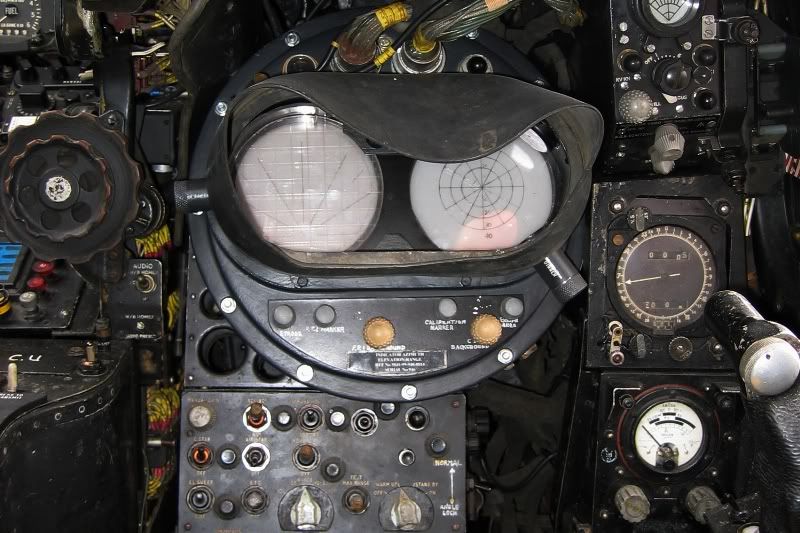
Picture taken and supplied by FMK6John
Did you serve on the Javelin Peter?
By: PeterVerney - 18th January 2011 at 11:37
Proper AI sets had a visor which shielded the tubes. The visor was a simple open ended box, one end clipped to the indicator unit while the nav/rad leant on the other, padded, end so excluding all extraneous light. “Simples” as the meercat says.
By: pagen01 - 17th January 2011 at 20:49
The reason for the cockpit being designed the way it was with the nav/observer being buried in the fusalage goes back to the DH110’s early RAF night fighter specification, at a time when radar sets were not very bright they required as dark a work station as possible for the crew to monitor the screens properly.
The GA.5 (Javelin) prototypes also had a dark rear crew position with just two portholes for the observer to see out of.
The bit that I can never understand is that with the Meteor and Venom night fighters thay had quite large bubble canopies over pilot and nav positions and seemed to operate quite successfully with this, the Javelin went a similar route but not the Vixen. I suppose by the time the type had gone through years of being kicked from service to service and contstant spec changes that the one thing that they couldn’t design out of it was its odd crew layout.
The Navy must have been happy with it though as they had one of their own chaps seconded to the flight test team just in regard to the cockpit layout, and he signed it off.
However it had to made darker still and APs of the time introduced a black out blind to go across the observers window, and that the tiny upper hatch window had to painted over in black. The later FAW.2s with the large clear frangible hatch also had to have that painted over in black in service.
In its main role as a stand-off radar guided weapons fighter, and LABS delivery tactical bomber the idea of the position made some sense, but as a pure fighter it was a very badly layed out cockpit in regard to the observer not being any use as an extra pair of eyes in close in combat and for closer crew communication.
It really is a horrible workstation, and probably just pips the Canberra PR.9 to the honour of worst in class, but a very poor ejection sequence for the observer added to its reputation.
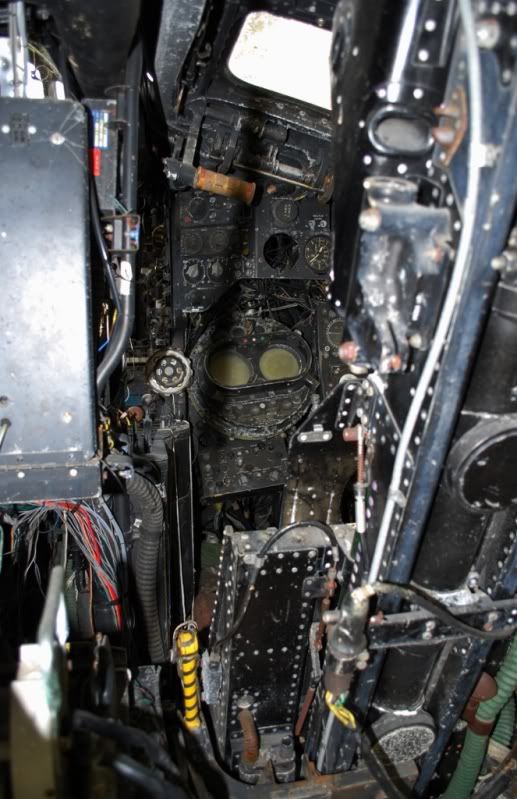
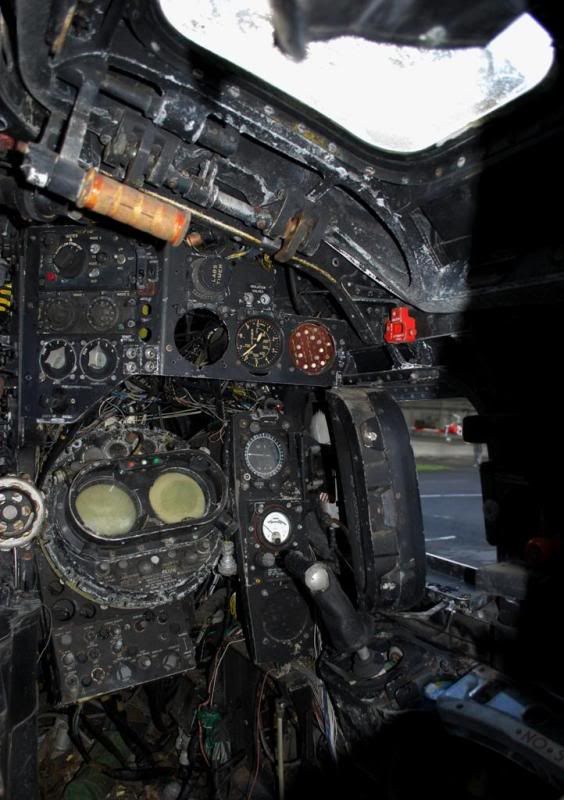
One thing I would love to know, was the Javelin’s AI (17?) set a brighter and easier to read scope than the Sea Vixen’s AI.18?
By: slicer - 17th January 2011 at 16:38
Serving in the FAA as an AEO, my father flew as passenger in a number of multiseat FAA aircraft, but always refused to fly in a Vixen, for the reasons above!
By: PeterVerney - 17th January 2011 at 11:20
As a nav/rad when this design came out I can remember thinking I’d run a mile before sitting in one of those things. Being able to see out was an essential part of the job, for chrissake.
By: Wyvernfan - 16th January 2011 at 20:34
Yes cracking photos. Times like these it does make me feel rather sorry for the Nav in the ‘coal hole’. With only a tiny window and the pilots voice to tell him whats going on, it must have been a pretty big shock for him to stick his head up having first jettisoned the hatch and see the aircraft surrounded by flames and burning fuel.
By: XF828 - 16th January 2011 at 20:25
A famous set of phots, much reproduced at the time and since. If I were you I’d scan them at high resolution so you can print out some high quality copies and flog the originals on ebay, they’ll go for at least a tenner each I’d expect.
By: yojikat - 30th December 2010 at 16:57
They are certainly not worthless, any period prints have good value, it’s the copies of copies (dupes) which loose value.
But I would keep them and enjoy them, they are a remarkable set of pictures!
thanks 😀 we do love them
I realised pic 4 is pic 1 :p
here is pic 4

By: pagen01 - 30th December 2010 at 16:37
They are certainly not worthless, any period prints have good value, it’s the copies of copies (dupes) which loose value.
But I would keep them and enjoy them, they are a remarkable set of pictures!
By: yojikat - 30th December 2010 at 14:17
ahhhh thanks for the reply
well, I guess if they are worthless to people then I can get round to putting them in a decent frame 🙂
they are fabulous, the one with the plane surrounded in fire is my favourite!
By: pagen01 - 30th December 2010 at 14:04
Hi yojikat, thay are quite a well known set of pics, and like you I have seen them reproduced in museums and they appear in some FAA related books.
Strangely the same aircraft had a similar mishap (Stbd oleo leg splitting) 5 months earlier on Ark Royal, but with less dramatic results.
As for the pics they look like prints from negatives, they look like they were printed at the time, but like any print it is essentially a copy form a neg.


 Sign In








 December 30, 2010 at 1:42 pm