A straight forward question, what price would you give to photographs such as these and would you be tempted to buy them.
[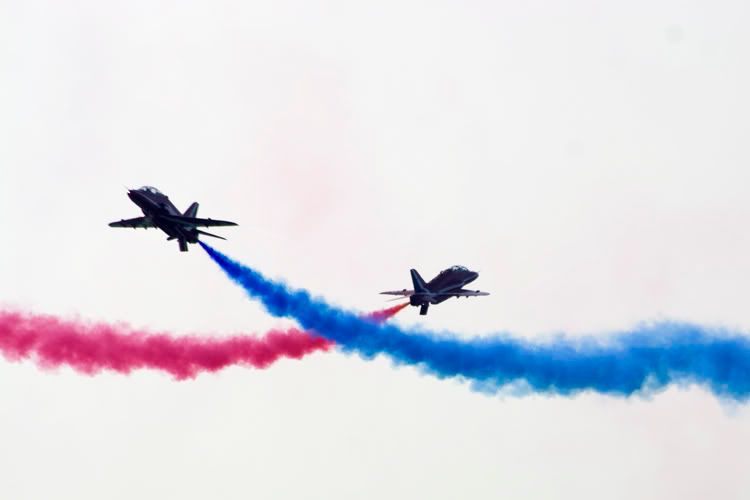
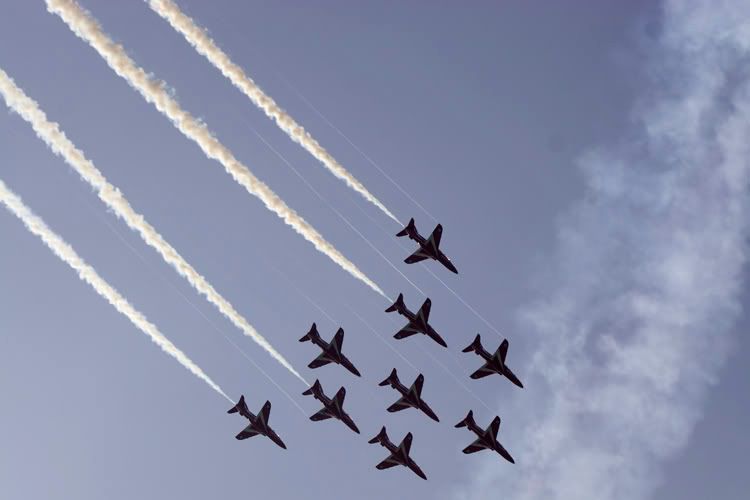
The reason I ask is that we went to an exhibition of aviation photography in support of the airshow this afternoon and couldn’t believe our eyes !!!!

By: EK764 - 23rd May 2009 at 16:10
Selling pictures is really a matter of having the right image in front of the right person at the right time. How to do this is a major challenge. There are simply too many photo sites on the internet to know where to look for a picture and buyers don’t have the time to trawl through hundreds of sites after googling keywords. It also helps to be able to write a short and well researched story to go with the picture – at least this is true in the case of magazine editors. The picture also needs to be topical. There are also many, many photographers happy to have their images published for a byline. Another important factor is that it’s not about the camera. I’ve had six separate pictures published in three of the big magazines recently – all taken with a Canon compact (I’m not a Canon fan either – the compact is easy to carry around). 😉
By: old shape - 22nd May 2009 at 21:54
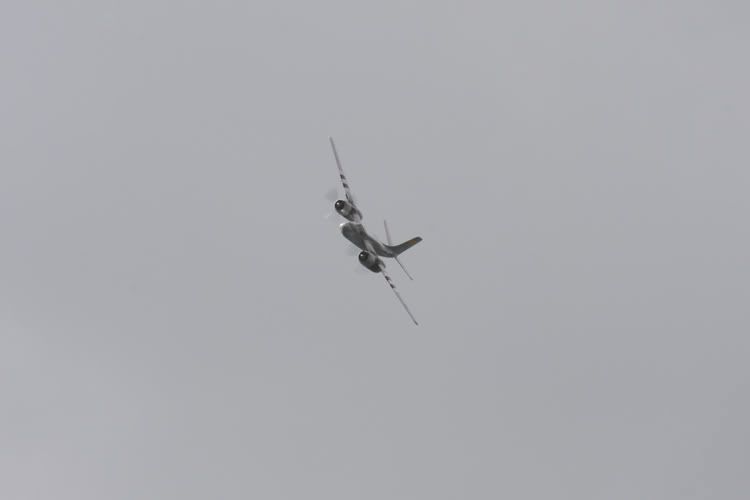
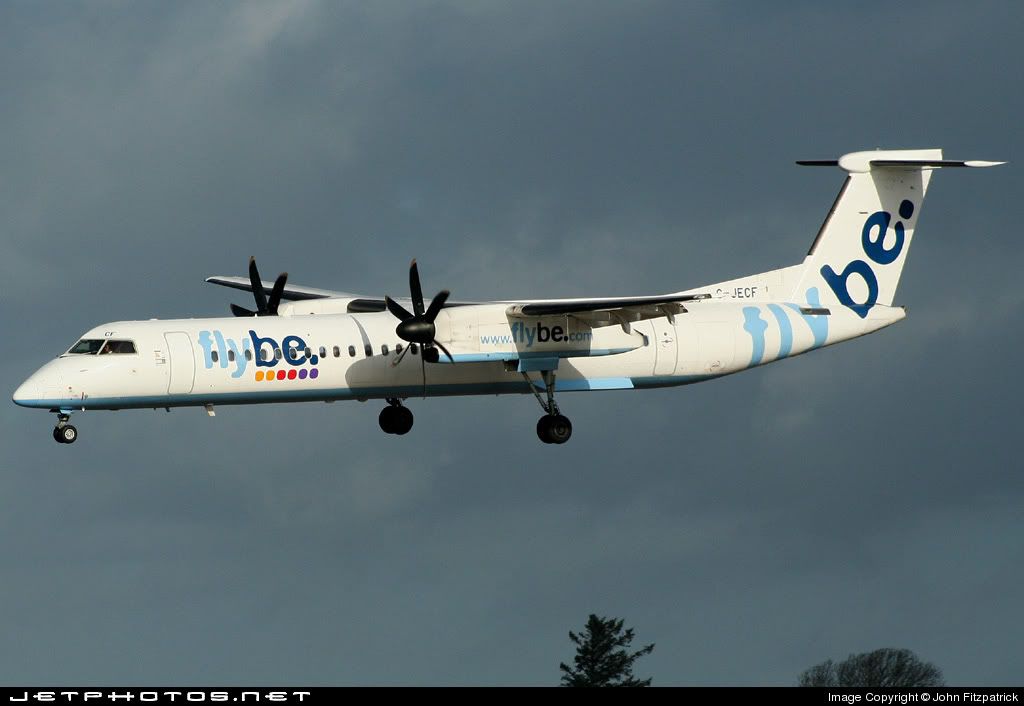
I’ll give you an example of why I think JP is at times just a happy snappy dumping ground and ask you what quality this photo has ?
That’s a prime example of how NOT to take a picture of a prop-job.
By: EN830 - 22nd May 2009 at 20:13
If you did it right, you could make alot of money during the Airshow season, by even setting up a stall at a local town near X airshow or if you could happen to get permission to sell at an event or even hand out fliers, to people with a weblink and you just print and frame what they order.
I don’t think it would be that easy, taking at the airshow and selling on site, as the majority of attendees will have their own equipment and will be taking their own. The work flow could also be quite high considering the number of images taken at an airshow and how quickly they could be sorted to filter out the crap.
Not quite relevant here, but what does sell and sells very well are images of peoples animals and if given permission to take them, children. We recently took our event unit to a dog agility festival and cleared enough in two days to buy a generator for the unit and part way towards a WFT transmitter unit for the cameras.
I have thought that using a prop such as a cockpit section with a suitable back drop may be an angle to try at airshows. However, for us, that will sometime down the road before we can even contemplate trying it.
Out of interest this is our unit on site at the local steam museum on May 9th.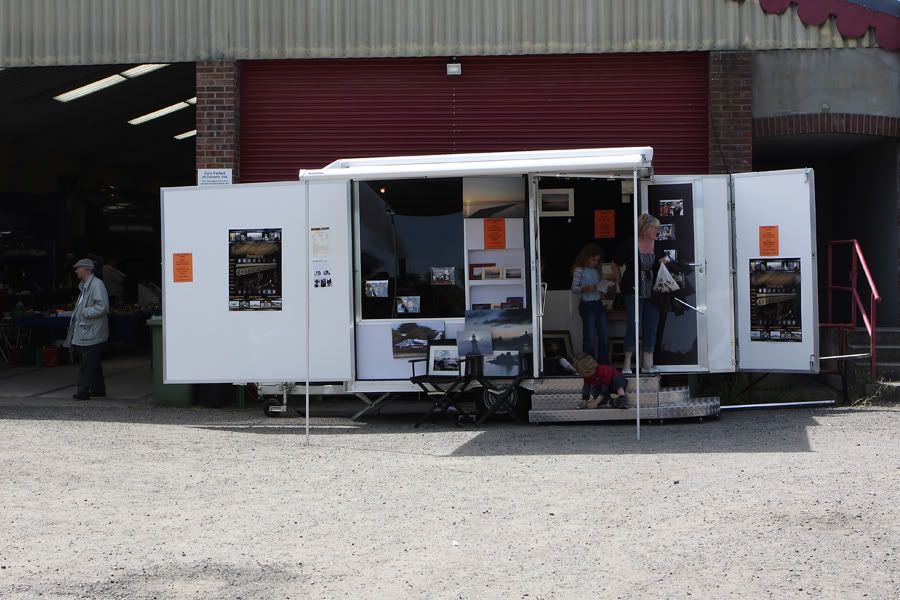
By: pilatus - 22nd May 2009 at 10:18
If you did it right, you could make alot of money during the Airshow season, by even setting up a stall at a local town near X airshow or if you could happen to get permission to sell at an event or even hand out fliers, to people with a weblink and you just print and frame what they order.
By: EN830 - 21st May 2009 at 07:58
That said, there’s some truely inspirational work on there (like this guys: http://www.jetphotos.net/showphotos.php?userid=15497)Paul
I agree Paul, we can all aspire to take such images.
By: PMN - 20th May 2009 at 23:58
Sorry I thought we were talking about the principles of photography not the exact period of history, I stand corrected.
It was you who brought time into it, not me! 😀
I have to say I’m not going to start ripping into some random photographers’ work that has been posted but that wouldn’t be an image I would upload.
The thing is there are plenty of people with hundreds or even thousands of images online but a lot of those people will upload 20 images and only get 2 or 3 accepted, then they’ll upload another 20 and get another 2 or 3 accepted. In that sense you’re absolutely right in saying such sites can be a dumping ground. I regularly see people post very basic questions in forums on such sites and then notice they have 1000+ images in the database (albeit generally 1000+ very standard images). These are clearly the people who, as you say, use automatic modes and never actually learn how the camera works but if that’s what they want to do, then fine. That’s their choice to make. Personally I’d rather spend the time and learn how to do things a little more advanced than that, but that’s me. We’re all individual after all. That said, there’s some truely inspirational work on there (like this guys: http://www.jetphotos.net/showphotos.php?userid=15497)
So yes, I do agree with you to a point but I still think there’s a tremendous amount of superb work on there uploaded by some very talented photographers (some of whom are members of this forum). One interesting thing I do find is people who shoot a lot of non aviation as well tend to be the ones with the more varied and interesting angles, but I guess that’s to be expected!
Paul
By: EN830 - 20th May 2009 at 23:29
Sorry I thought we were talking about the principles of photography not the exact period of history, I stand corrected.
Again my point is the principles are the same, you press a button, a shutter opens, light is let in by the aperture onto a medium, whether that is film a digital sensor or straight onto silver or chloride emulsions, the science is the same. Yes all act in a different way to each other and produce different results, but DoF, exposure, focus are all still as important to each other.
I’ll give you an example of why I think JP is at times just a happy snappy dumping ground and ask you what quality this photo has ? I know the photographer and see him on a regular basis, I also know that he vehemently refuses to change his settings sticking to the tried and tested sports mode on his 350D. The last time I saw him to speak too for any length he was taking anything and everything to get his 1,000th photo on JP.
I don’t class myself or my wife as professional photographers, we both have day jobs, but set up our photography business in order to pay for the hobby. It may come to a point whereby we are doing it as our main source of income but that is a long way off as the current income wouldn’t come even close to paying a third of our mortgage.
I also don’t profess to know everything there is, I’m learning something every time I pick up my camera and there are far more proficient aviation photographers around than I will ever be, the talents of which I can only aspire too. Also as I live on an island it limits my access to interesting aviation subjects, so I have to make do with other topics.
Out of interest by the end of May we will have covered 2 weddings, 1 christening, 1 funeral, a Tai Kwon Do grading event, a dog agility festival, two Catholic first communions and a Liberation Day celebration event at our local steam museum. On the back of these events and the images we have sold, we have three full weekends booked in June including two more weddings, a local motoring festival, a celebrity cricket function, and the local air rally. July is similarly booked up as is August, during which we will be flown down to Florence to cover a wedding for a local lawyer. So we must be doing something right and our past clients have been pleased with what we have accomplished.
There are aspects that in time I would like to master such as portraiture and the use of studio lights. Hopefully in time and with the funds available it will be something we will get to tackle more proficiently than we are at present.
By: PMN - 20th May 2009 at 20:52
You misunderstood me, the principle is the same no matter what medium and has been for hundreds of years.
As for the quality of the shots being accepted to JP, I disagree with your analysis of quality many are just technically inept snap shots, taken with the intention of getting a certain/record/hugh (delete where applicable) number of shots onto the site with little thought given to how the shot is taken, especially where prop driven aircraft are concerned.
I grant there are many well executed photographs that anyone with an interest would be proud to have taken, equally there are many that aren’t.
Photography hasn’t really existed for hundreds of years! Certainly not in any sense that’s relevent to your point. The daguerrotype process was only developed (no pun intended) in the 1830’s.
The only principle that’s the same as you change mediums and types of camera is that you capture an image. To say how you do that is the same regardless of the medium or type of camera you use is simply wrong. Digital is a very different medium to film and to get the best out of it requires a certain amount of knowledge specific to digital (film doesn’t understand what 0 to 255 means). Once you know the technical limits of digital (or you’re at least aware of them) you can learn to push your equipment and yourself to them. If you go straight from film to digital and expect to push it in the same way then the results will be horrendous. You have to understand the traits of each to get the best out of them, and if you don’t realise that then you’ll probably never get the best out of either. They are very much not the same and I have no idea why any supposed experienced photographer would think they are.
As for JP, disagree by all means; I won’t try tell you you’re wrong because that’s your opinion and you’re entitled to it, but I do think you have a somewhat narrow minded view of it and I still think you’re confusing quality with taste. I have almost 2000 images on JP and I’ve screened thousands more (on another site), so I have a pretty good idea what’s required to get high quality aviation images and those ideas are shared by the vast majority of experienced aviation photographer in the world. In terms of what the major aviation sites require, quality is accurate exposure, it is sharpness, it is good levels of saturation, good composition, level horizons, no dust spots and several other things; at least for the vast majority of cases. That isn’t arguable; it’s just the way it is. A soft, or underexposed (again, a something that’s technical and can be measured), or undersaturated side on shot of a BA A319 isn’t a high quality image and no amount of arguing will make it one.
There are a great many creative aviation photographers out there who think about every single shot they take (including the much neglected props you rightly point out). Sure, many people do take photos with the specific intent of getting them on JP and other such sites, but if they can produce work of sufficient quality to do that, then good on them. Too few people talk with an air of authority but actually understand very little either creatively or technically. I respect anyone who can get quality results, even if they’ve only been captured for a photography website.
Just out of interest, do you have any galleries online we can have a nosy through? I’d be very interested to see them if you do, especially what you produce professionally.
Paul
By: mike currill - 20th May 2009 at 20:21
Rob the seller wasn’t in attendance when we were there but I’m sure our paths will cross at some point.
That’s another debate as quality is in the eye of the beholder, sadly many of the images that make it onto the aviation photography forums are not that superb and little more than sports programme snap shots.
That sounds very much like a fair description of many of my aviation shots:)or should that be:o
By: EN830 - 20th May 2009 at 20:01
That isn’t true at all. Depth of field increases as the recording medium gets smaller; an APS-C sensor has greater DoF than a full frame digital sensor or 35mm film (with the appropriate adjustment in focal length to give the same field of view). Film and digital also respond in very different ways, you can overexpose and push film in ways that would look horrendous if you did the same on digital. They’re very, very different mediums. Paul
You misunderstood me, the principle is the same no matter what medium and has been for hundreds of years.
As for the quality of the shots being accepted to JP, I disagree with your analysis of quality many are just technically inept snap shots, taken with the intention of getting a certain/record/hugh (delete where applicable) number of shots onto the site with little thought given to how the shot is taken, especially where prop driven aircraft are concerned.
I grant there are many well executed photographs that anyone with an interest would be proud to have taken, equally there are many that aren’t.
By: Phillip Rhodes - 20th May 2009 at 17:28
Making money from any form of photography is becoming more difficult – unless you have a real scoop that newspapers and magazines will want to buy top dollar for. Taking a good photograph should be reward in itself. Check out: http://driffieldaerodrome.co.uk/earplugs-optional/earplugs-optional.htm
By: Phillip Rhodes - 20th May 2009 at 17:11
Making money from photography has become extremely difficult. Digital photography has made me into a better photographer, but the same can be said for every other nut with a DSLR. And that’s the problem. The market is flooded with good imagery, so having a brilliant image isn’t always the key to success. Getting that image out on the market (either as a framed print or on the desk of a picture editor) is the key to success. My advice is keep taking photographs and photographs and photographs and build up a library of thousands of images – all picture perfect, then try and create a brand and get your brand out in the market.
If an aircraft crashes at Duxford or Heathrow, they you’re the first person a picture editor should think of when trying to find a picture of the aircraft when intact. Aviation photographs are used in a wide variety of print media – not just that related to aviation titles. Get your name across and you might win.
The knack is trying to keep at it year-after-year. My belief is that the best aviation photographers are those who do this as a hobby (they have a proper, paid job and they build up their back-catalogue and experience), then they start to get noticed and the orders [SLOWLY] start to come in. Yep, I had the same idea, but the amount of time and money needed invest in visits to airshow and airports and top-end lenses was beyond my pocket.
Regarding selling framed prints: One option is an online service, where the public can choose an image and order a print – all done automatically. You would receive a few quid per print (if you’re lucky). We have a local landscape photographer, who produces some really impressive framed prints, but none are more than £40 for a 12in x 16in. Delusional are those who think they can charge more, especially when you can buy a limited edition print by a well known aviation artist for £150 to £300.
By: PMN - 20th May 2009 at 13:24
That’s another debate as quality is in the eye of the beholder, sadly many of the images that make it onto the aviation photography forums are not that superb and little more than sports programme snap shots.
I can’t really say I agree with that either, at least not in terms of the kind of photography you see on sites like JP. I think the things that determine quality are very evident if you know what you’re looking for; you have to train your eye to understand those aspects of quality in exactly the same way as you have to train your ear to notice things that are wrong in music. That doesn’t mean an image lacking quality cant be nice, I’ve seen many images that lack any of the commonly accepted aspects of quality but I’ve still loved the image, and it’s often a lack of quality that makes me love it. The the ‘rules’ can be broken, but broken creatively. Going back to ‘standard Jetphotos-type’ aviation shooting and quality, exposure is a technical aspect of photography and is measurable; a photo is either over or under exposed and that’s unequivocally shown by looking at the luminosity histogram. Sharpness either exists or it doesn’t, colours are either bold and clear or they’re not and composition is usually very obviously balanced or unbalanced.
I don’t think the term ‘quality is in the eye of the beholder’ really works. Taste, however, is. They’re two very different things. Again, you could have a soft, underxposed, undersaturated image that you absolutely love because the image itself works and it’s been tastefully captured but the fact that you love it doesn’t make it a high quality image.
I do agree that not many images on forums such as these are all that spectacular, but not many people have the inclination to spend lots of money or time on it. I have a huge interest in photography; I’ve spent thousands of pounds on equipment and thousands of hours trying to learn how to use that equipment (not that I actually can yet!) Not everyone has that interest but that doesn’t mean their contributions can’t be enjoyable.
exposure, focus, DoF etc are all the same no matter if its film or digital, Box Brownie or EOS 1DS Mk3.
That isn’t true at all. Depth of field increases as the recording medium gets smaller; an APS-C sensor has greater DoF than a full frame digital sensor or 35mm film (with the appropriate adjustment in focal length to give the same field of view). Film and digital also respond in very different ways, you can overexpose and push film in ways that would look horrendous if you did the same on digital. They’re very, very different mediums.
You may be right on the delusional thing – though possibly things like home photo printing and memory cards with more than 36 shots on them make it easier? Certainly you don’t have to invest time and space in a drkroom any more (not that that is currently stopping me!).
I do have a digital camera – in fact I splashed quite a lot of cash on a bridge camera so that I could do more with it – but if I want to do more than point-and-click the menus are so complex… I find I’m using it for the quick-and-dirty shots where I can check I’ve got the image I want, and using the SLRs (and a few of my junk-store cameras) for the “good” stuff (If you’ve looked at my Flickr, you’ll see that there’s not a lot of that…).
Weirdo? No more so than I am – in fact, the thing that improved my photography most was playing with Box Brownies, as I realised how much of a photo was made by thinking about what you wanted rather than pointing at a nice scene. Now that is weird…
Adrian
It’s certainly ‘easier’ to make prints with digital, there’s no doubt about that. That doesn’t necessarily mean they’re good ones though!
I have to say my personal preference for anything that isn’t aviation is film. Comparing digital to film is like comparing transistors to valves in amplifiers or CD to vinyl; CD is clean and accurate, but vinyl has warmth. Transistors are powerful and reliable, but valves have individual character. Digital is convenient, but film imparts its own ‘feel’ onto everything you shoot. I have a great love of both formats and enjoy using both immensely, I just use them for different things. The convenience of digital is perfect for aviation but I love wandering round with my old manual focus Olympus OM20. All good fun! 🙂
Paul
By: adrian_gray - 20th May 2009 at 12:56
You may be right on the delusional thing – though possibly things like home photo printing and memory cards with more than 36 shots on them make it easier? Certainly you don’t have to invest time and space in a drkroom any more (not that that is currently stopping me!).
I do have a digital camera – in fact I splashed quite a lot of cash on a bridge camera so that I could do more with it – but if I want to do more than point-and-click the menus are so complex… I find I’m using it for the quick-and-dirty shots where I can check I’ve got the image I want, and using the SLRs (and a few of my junk-store cameras) for the “good” stuff (If you’ve looked at my Flickr, you’ll see that there’s not a lot of that…).
Weirdo? No more so than I am – in fact, the thing that improved my photography most was playing with Box Brownies, as I realised how much of a photo was made by thinking about what you wanted rather than pointing at a nice scene. Now that is weird…
Adrian
Sadly I think the people who delude themselves will do so regardless of the medium they use, I don’t really believe it to be a medium-specific thing.
I understand your point about being used to film and going digital so soon, but then again I did it the other way round. After a year of shooting seriously on digital, I went to film and now use a lot of both but for different things and different styles of shooting… Weirdo that I am! 😀
Paul
By: PMN - 20th May 2009 at 00:53
It’s certainly much easier to take many shots, and delude yourself that some are good, though…
Sadly I think the people who delude themselves will do so regardless of the medium they use, I don’t really believe it to be a medium-specific thing.
I understand your point about being used to film and going digital so soon, but then again I did it the other way round. After a year of shooting seriously on digital, I went to film and now use a lot of both but for different things and different styles of shooting… Weirdo that I am! 😀
Paul
By: adrian_gray - 19th May 2009 at 23:31
I really don’t agree with that! If it were true then I wouldn’t reject as many images as I do on the aviation photography site I screen for. Both mediums require a lot of skill to get truely superb results!
Paul
OK, perhaps I was a smidgin too quick to comment, especially as a film dinosaur (someone gives you a Nikon F3… Do you go digital immediately?).
It’s certainly much easier to take many shots, and delude yourself that some are good, though…
Adrian
By: EN830 - 19th May 2009 at 23:01
Duxford, I would say in some respects you are right, exposure, focus, DoF etc are all the same no matter if its film or digital, Box Brownie or EOS 1DS Mk3.
The real upside with digital is the instance play back and the ability to retake straight away if things aren’t quite what you wanted or expected.
I wouldn’t be surprised if the majority of people who post here haven’t improved their photography in some way by using digital.
Robbo we maybe be backward but not everyone here is a fool and if the turnover from the past month is anything to go by, we maybe giving up the day jobs much sooner that we anticipated, all I can say is both the dead and dog owners pay dividends 😉
By: duxfordhawk - 19th May 2009 at 22:17
I do wonder if he sold any, If he did then I need go through my collection as I have plenty of messed up shots sitting around doing nothing that could make me rich:D.
As to the debate on digital photography being easier, I really don’t think it is, But its easier with some effort using programmes such as photoshop to make a average photo which you did not quite get right better. Also because you can take a greater volume of photos with digital and the delete button option its more likely you will get a result you like. But in general the actual taking of a photo is still the same skill.
.
By: EN830 - 19th May 2009 at 20:19
Ian, did you mention the existance of the real world to the seller?
Rob the seller wasn’t in attendance when we were there but I’m sure our paths will cross at some point.
I really don’t agree with that! If it were true then I wouldn’t reject as many images as I do on the aviation photography site I screen for. Paul
That’s another debate as quality is in the eye of the beholder, sadly many of the images that make it onto the aviation photography forums are not that superb and little more than sports programme snap shots.
By: PMN - 19th May 2009 at 19:33
with digital, everyone can be a professional (insert inverted commas as you wish) photographer. You don’t need to be good at it…
I really don’t agree with that! If it were true then I wouldn’t reject as many images as I do on the aviation photography site I screen for. Both mediums require a lot of skill to get truely superb results!
Paul


 Sign In








 May 17, 2009 at 6:45 pm