We have recently seen the news about air traffic controllers falling asleep in the towers on duty, mostly from insufficient sleep.
In my opinion, a sleeping air traffic controller is a contributor to a midair collision, possibly one more worse than Charkhi Dadri in terms of casualties.

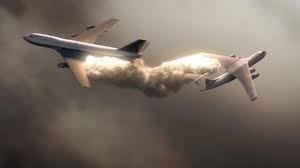

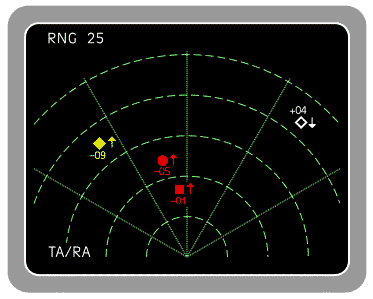
Realistically, chances of a second Charkhi Dadri are lowered with aircraft being equipped with TCAS, but does not eliminate the problem completely, as evidenced by the midair collision with Gol Transportes Aereos Flight 1907 and an Embraer Legacy business jet.

So I have posted an excerpt of an article about sleeping air traffic controllers:
Hey Sleepy, think air traffic controllers are the only ones craving a nap? Dream on!
It’s the silences that get you.
The silences between emergency calls, incoming planes or products rolling down the line. Those stretches of time and quiet make a person want to nap, and today more than ever, napping is taboo.
It happens every time an air traffic controller falls asleep on the job. The common nap becomes news. The public expresses horror and some government agency launches a million-dollar study to determine why we’re so tired and what can be done about it.
If you’ve ever worked the overnight shift, you don’t need a study. You know that when the world goes dark and there’s a break in the action, you want to sleep.
“I guess I made it through the nights,” said emergency dispatcher Andrew Hart, “playing solitaire, chatting with co-workers a lot. And the 3:30 a.m. Dunkin’ Donuts run.”
For a year, Hart manned a radio at the 911 dispatch center in Auburn. When a building is burning down or stores are getting robbed, it’s not hard to stay awake. Take away the drama, though, and the body wants to go to sleep.
Source: http://www.sunjournal.com/bplus/story/1046029
What do you think of this issue and how should it be addressed?
Should a 24/7 computerized ATC system replace the sleep-needing human operators, speaking to the pilots in computer voices? Or should more human ATCs be trained?

By: Primate - 1st July 2011 at 14:46
A few questions from where I stand today:
Is complete automation of ATS a real alternative today or in the near future? Can current systems replace human operators in every aspect? What about factors such as local knowledge, social intelligence, adaptivity etc.?
Can a computer fully understand voice communications with different types of dialects, pronounciations, small speech impediments etc. like a trained ATC?
Can a computer e.g. tell when a pilot for some reason is nervous and try to adapt itself accordingly to the situation?
Remember that interaction between ATS and aircrews is about more than mere exchanges of information in a clear tongue.


 Sign In








 June 30, 2011 at 3:19 pm