Zacks Equity Research, On Wednesday July 7, 2010, 9:39 am EDT
Raytheon Company (NYSE: RTN – News) received a $368 million, three-year, contract from the U.S. Navy to manufacture Standard Missile-6 (“SM-6”) systems.
The contract includes the production of missiles, spare parts, and system and design engineering efforts, to meet the requirements of the U.S. Navy.
SM-6 is capable of providing over-the-horizon air defense and takes full advantage of the kinematics available to the Standard Missile family, allowing the use of both active and semi-active modes and advanced fuzing techniques. The missile is designed to help ships protect themselves against various aircraft, including unmanned aerial vehicles and anti-ship missiles.
Raytheon stated that SM-6 is undergoing development testing presently and will go for operational testing in fiscal year 2011, with initial operational start-up by March 2011. The company plans to begin the delivery of the extended-range, anti-aircraft missiles in early 2011.
Raytheon, one of the largest aerospace and defense companies in the U.S., with its technological edge enjoys a strong presence in defense, homeland security and other government markets worldwide. It boasts a diversified line of military products, including missiles, radars, sensors, surveillance and reconnaissance equipment, communication and information systems, naval systems, air traffic control systems and technical services.
Going forward, the company’s focus on Intelligence, Surveillance and Reconnaissance (“ISR”) unmanned systems, training, cyber security, Standard Missile-6, Patriot, Zumwalt and THAAD is expected to fuel growth.

By: sferrin - 19th July 2010 at 19:14
sferrin,
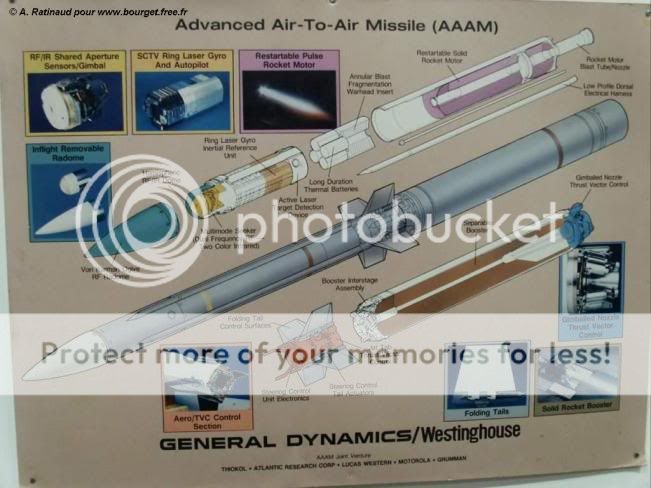
Such an asymmetrical, modified ‘ERAM block AIM’ would actually be a full leap beyond GD’s old AAAM concept, but your pic makes the point still the same..
So perhaps consider an ERAM-x block as the ‘Hi’ part of a ‘should have’ Hi-Lo, long range stand-off intercept capability mix. A practical, near-term ‘lo’ part of the mix however, could consider an air-launched ESSM variant – maybe call it an EASM for Evolved Active Sparrow Missile. Perhaps substitute an NCADE seeker w/ relevant electronics (improved 9x IIR seeker), for the ESSM’s semi-active RF sys?
They’ve tested several types of these airbreathing airframes (the most recent being the one launched from the F-4 RPV) but so far nobody seems interested. :confused:
By: Jason Simonds - 19th July 2010 at 04:13
The USN used to have a missile able to do that: Tomahawk Anti Ship Missile. It was retired.
One big problem is targeting. It’s not just a question of knowing a ship is somewhere, but you need to know what that ship is. You need to make sure your missile doesn’t sink some other ship, that you don’t want to hit. Over 400km, that can be very difficult.
Raytheon are adding ASM capability, back into Block IV Tactoms…
By: geogen - 19th July 2010 at 01:10
sferrin,
Such an asymmetrical, modified ‘ERAM block AIM’ would actually be a full leap beyond GD’s old AAAM concept, but your pic makes the point still the same..
So perhaps consider an ERAM-x block as the ‘Hi’ part of a ‘should have’ Hi-Lo, long range stand-off intercept capability mix. A practical, near-term ‘lo’ part of the mix however, could consider an air-launched ESSM variant – maybe call it an EASM for Evolved Active Sparrow Missile. Perhaps substitute an NCADE seeker w/ relevant electronics (improved 9x IIR seeker), for the ESSM’s semi-active RF sys?
By: sferrin - 19th July 2010 at 00:39
Jonesy,
In my humble opinion what DoD and joint-services need to be seriously looking at now, are cost-effective, modern air-launched ERAM variants.
Perhaps DoD should consider both an AGM-88E seeker based munition (with a properly modified, A2A-based, passive-radar, plus dual-active-millimeter-wave terminal guidance), as well as a dual-seeker based active guidance munition perhaps, such as with an active AMRAAM seeker, plus the added IIR seeker from the SM-2 IIIB and that which was originally designed for the AIM-7R dual heat-seeker concept??
That imho, would be serious, game-changing, Off-the-Shelf-Systems exploitation and a justified asymmetrical sys development..
By: geogen - 18th July 2010 at 23:11
Jonesy,
In my humble opinion what DoD and joint-services need to be seriously looking at now, are cost-effective, modern air-launched ERAM variants.
Perhaps DoD should consider both an AGM-88E seeker based munition (with a properly modified, A2A-based, passive-radar, plus dual-active-millimeter-wave terminal guidance), as well as a dual-seeker based active guidance munition perhaps, such as with an active AMRAAM seeker, plus the added IIR seeker from the SM-2 IIIB and that which was originally designed for the AIM-7R dual heat-seeker concept??
That imho, would be serious, game-changing, Off-the-Shelf-Systems exploitation and a justified asymmetrical sys development..
By: sferrin - 17th July 2010 at 03:51
He was asking about the size and if it can fit into a Mk-41 VLS.
I’ve seen a couple SM-2 launches before, quite a thing to behold.
I’ll bet the SM-3 Block IIs will be something. 🙂 (Same booster though so I guess the same amount of fire.)
By: AegisFC - 17th July 2010 at 03:35
SM-2 Block IV (Looks similar to an SM-3 for those unfamiliar with a Block IV)
He was asking about the size and if it can fit into a Mk-41 VLS.
I’ve seen a couple SM-2 launches before, quite a thing to behold.
By: sferrin - 16th July 2010 at 17:01
It is a modified SM-2.
SM-2 Block IV (Looks similar to an SM-3 for those unfamiliar with a Block IV)
Just to give an idea of its performance:

“The AQM-37C(EP) extended performance target capable of flying at 100,000 ft altitude at a speed of MACH 4 was launched from an F-4 aircraft at 50,000 ft altitude traveling at MACH 1.5. Eight of these targets were specially modified for flight safety purposes to be flown at WSMR as targets for the Standard Missile program SM-2 Block IV in 1993. The targets were supported by crews from the Pacific Missile Range at Point Mugu, CA. Launch of the target from the F-4 aircraft occurred virtually over the Albuquerque International Airport requiring special road blocks south of Albuquerque, use of the north range extension co-use area and evacuation of most of WSMR up-range areas. The AQM-37 targets were built by Beech Aircraft Co. at Wichita Kansas.”
Video on a dual Block IV launch / TBM intercept. (ignore the first minute)
http://www.youtube.com/watch?v=JzEaua0ePGI
SM-6 will improve on this as it’s not LOS limited.
By: swerve - 16th July 2010 at 14:51
Ideally, one would be able to hit enemy ships perhaps even 400+ km away, without even launching a single strike airplane.
The USN used to have a missile able to do that: Tomahawk Anti Ship Missile. It was retired.
One big problem is targeting. It’s not just a question of knowing a ship is somewhere, but you need to know what that ship is. You need to make sure your missile doesn’t sink some other ship, that you don’t want to hit. Over 400km, that can be very difficult.
By: swerve - 16th July 2010 at 14:43
What are the dimensions of this new missile? I’m assuming for that range it has to be close to Tomahawk-size? And will it be compatible with the mk41 VLS?
Try Google. Believe it or not, the answers to your questions are on Wikipedia, & can also be found on on other websites. But yes, it is Tomahawk-size.
BTW, Mk 41 VLS comes in different sizes.
By: AegisFC - 16th July 2010 at 13:20
What are the dimensions of this new missile? I’m assuming for that range it has to be close to Tomahawk-size? And will it be compatible with the mk41 VLS?
It is a modified SM-2.
By: Witcha - 16th July 2010 at 12:54
What are the dimensions of this new missile? I’m assuming for that range it has to be close to Tomahawk-size? And will it be compatible with the mk41 VLS?
By: totoro - 16th July 2010 at 12:46
Since SM-2s were known to be used as antishipping missiles on certain occasions, how hard would it be to use SM-6 for the same mission? I would imagine amraam seeker isn’t as great for targeting purposes as the targeting 15 miles off a ship is – but still. I do hear there’s a new seeker planned long term, to come in place of amraam’s.
Ideally, one would be able to hit enemy ships perhaps even 400+ km away, without even launching a single strike airplane.
By: Distiller - 16th July 2010 at 11:14
Yip, impressive. Performance should be immense, looking at e.g. the Black Brant sounding rockets.
I would be worried that it re-enters denser air ass first and is unable to regain control or disintegrates.
Btw, that calls for multiple hittile darts instead of a single warhead. A single missile could take out a whole formation of aircraft, or multiple aircraft or cruise missile tens of miles apart.
By: sferrin - 14th July 2010 at 17:28
I’d say the key to the full utilization of the SM-6’s motor would be orbital targeting. And in absence of that, ultra-long endurance guard UAV, possibly as small as the ScanEagle or the Bat, as forward located sensors on the periphery of the fleet’s sensor range. Or a Hawkeye if a carrier is around.
I think 200nm is conservative, though I could imagine that missile running into new problems up on the edge of space, when going for a ballstic long range shot. With purely aerodynamic controls the motor might potentially push thtat thing higher than it is controllable.
Just to give you an idea of it’s potential, in an early SM-3 shot (same booster, same 2nd stage) they had an inert 3rd stage. At 2nd-stage burnout they seperated and just let the 3rd stage tumble uncontrolled (it was inert remember). In the video they were calling out altitudes and it went from 330,000 feet (62+ miles UP) to 340,000 feet (a few more miles UP) in a matter of seconds, which means it’s actual velocity was much higher and it’s peak altitude wasmuch higher. Whether or not it’s stable in space shouldn’t be a huge problem because as it comes back down into denser air it will regain stability. It’s not going to be able to make course changes up there (I’m assuming) but it’ll be able to make corrections coming back down.
By: tomcat1974 - 14th July 2010 at 17:13
will put a practical limit on the range that would be far lower than the kinematic performance on offer.
I think that was always the difference between Russian missiles and US missiles.
Russians advertised always the kinematic range even if the missile was a lost bullet at that Range.
By: Distiller - 14th July 2010 at 17:10
I’d say the key to the full utilization of the SM-6’s motor would be orbital targeting. And in absence of that, ultra-long endurance guard UAV, possibly as small as the ScanEagle or the Bat, as forward located sensors on the periphery of the fleet’s sensor range. Or a Hawkeye if a carrier is around.
I think 200nm is conservative, though I could imagine that missile running into new problems up on the edge of space, when going for a ballstic long range shot. With purely aerodynamic controls the motor might potentially push thtat thing higher than it is controllable.
By: sferrin - 14th July 2010 at 15:50
Isn’t the SM-6 basically just the SM-2 Block III with the AMRAAM seeker?
SM-2 Block IV. The difference being it’s no longer limited by line-of-sight. Block IV has a lot of potential that couldn’t be used due to that little detail.
By: Witcha - 14th July 2010 at 11:38
Isn’t the SM-6 basically just the SM-2 Block III with the AMRAAM seeker?
By: Jonesy - 14th July 2010 at 09:20
Any esitmates on range? I’d be surprised if it were less than the 200nm range.
As is the case so often sferrin I’d imagine the answer to that is ‘it depends…’!. The degree of target capture prior to launch and permissiveness of the environment will put a practical limit on the range that would be far lower than the kinematic performance on offer. Nothing new there though obviously!. Against a fat, dumb, plodding target in an uncluttered environment I cant see why you couldnt expect that range.
The really trick thing about this though is the virtual attrition problem it presents an attackers airborne ISTAR solution. SM-6 shots against seaskimming tactical fighters from 100+ miles might not be high percentage, but, a lunking great MPA on a search pattern may have to turn as soon as it gets a hint of an E-2 on its RWR kit just incase one of the little blips on the outer extent of its surface plot launches a missile that it wont pick up until seeker activation!.


 Sign In








 July 8, 2010 at 2:40 pm