I finally have had some good enough weather to take some more images using my new camera (Meade Deep Sky Imager Pro). Here are the results… Click on the thumbnails for full size.
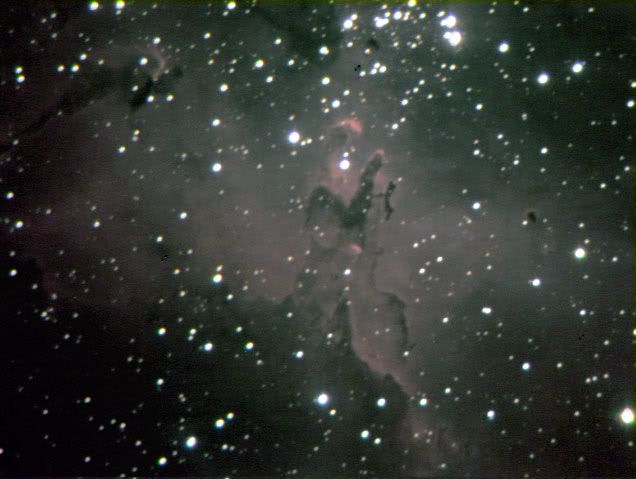
M16 – The Eagle Nebula. These two images are the same data, just processed a little differently for colour balance. The Hubble Space Telescope took some amazing images of this nebula. The huge columns of gas were dubbed ‘ The Pillars of Creation’ due to the fact that stars are being formed within them. Another name for a star forming area is a Stellar Nursery. The Eagle Nebula is about 7000 light years away.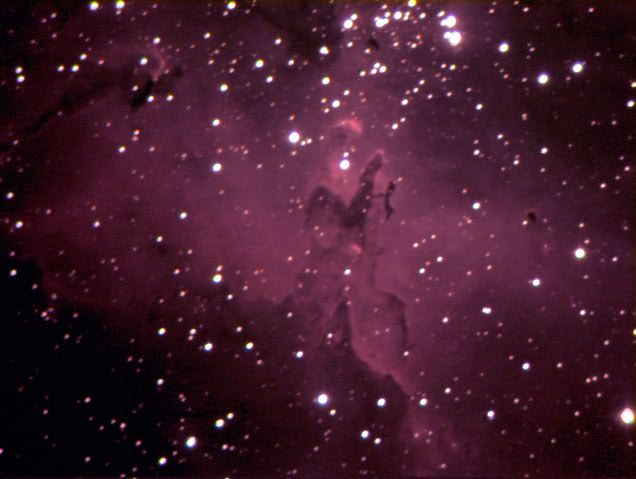
This is my first image of a Comet. This particular comet (73P Schwassmann-Wachmann) is in the process of breaking up. It is not expected to survive another orbit of the sun. By the middle of May it should be bright enough to see naked eye.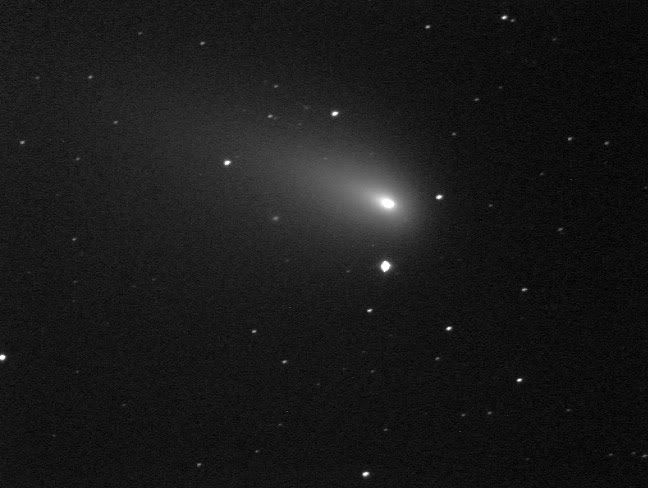
This is the galaxy M100. Earlier this year a Super Nova was discovered there (I have added an arrow to point it out). M100 is approximately 60 Million Light Years away.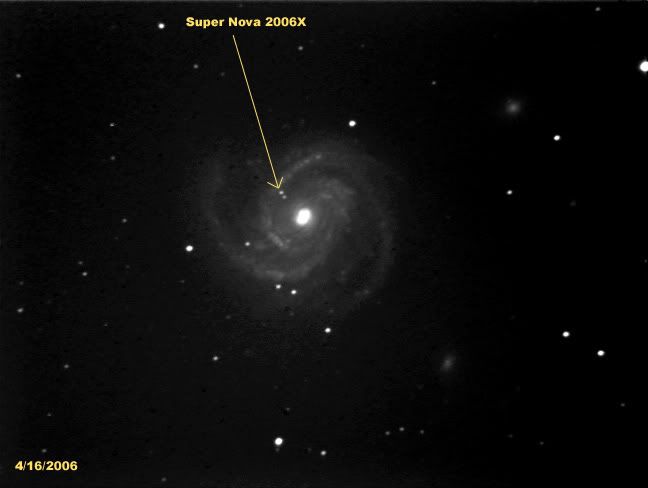
This is M1 (The Crab Nebula). This is what is left of a star that went Super Nova in our own galaxy. Light from the Super Nova reached us in 1054 and it was visible in broad daylight for several days.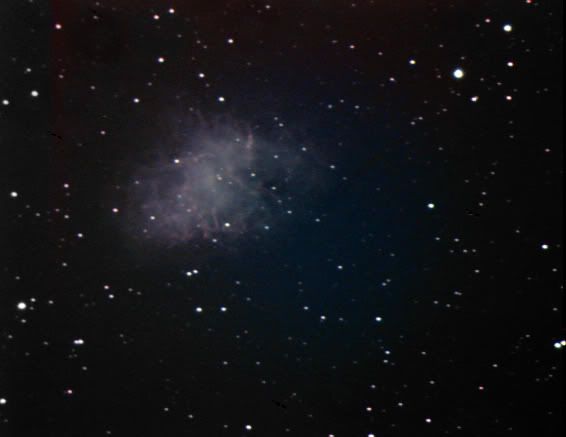
This is NGC3628, a part of the well known ‘Leo Triplet’ of galaxies. It is a spiral Galaxy which we see edge on.
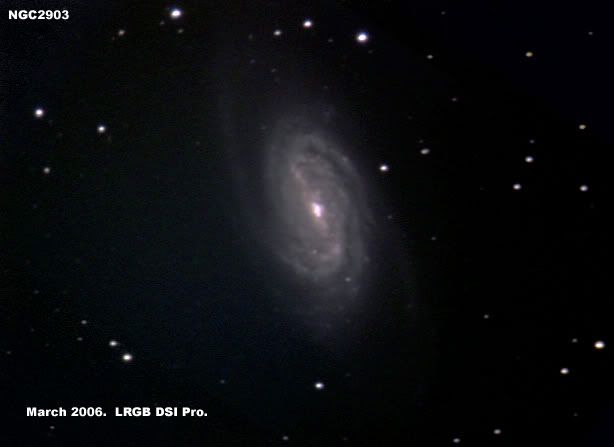
Finally, NGC 2903. This is the first image I took with the new camera. You can see the central bar that extends from the core before the spiral arms start to sweep back. Recently it was determined that our galaxy also has a central bar structure and so the Milky Way would look similar to this when viewed face on. NGC2903 is relatively close at 20 Million Light Years (roughly).
Still awake at the back ???? 😀

By: Der - 13th February 2008 at 21:46
Fantastic photos.
By: Paul Rix - 12th February 2008 at 23:49
I was browsing through some old posts of mine and came across this thread. Time does indeed fly by when you are having fun. I now have the telescope permanently set up in a roll off roof, back yard observatory. I now live out of town in a fairly dark rural setting which helps too. Here is a selection from the past year or so.
The Horsehead Nebula in Orion…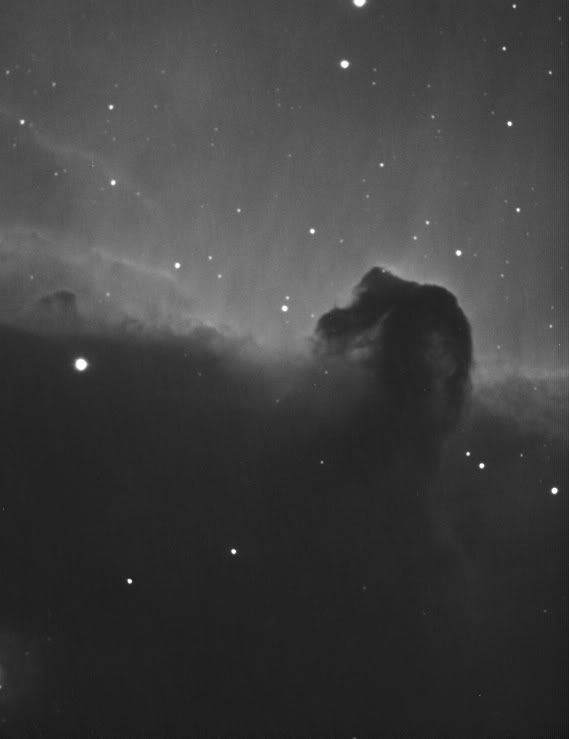
Thor’s Helmet (NGC2359)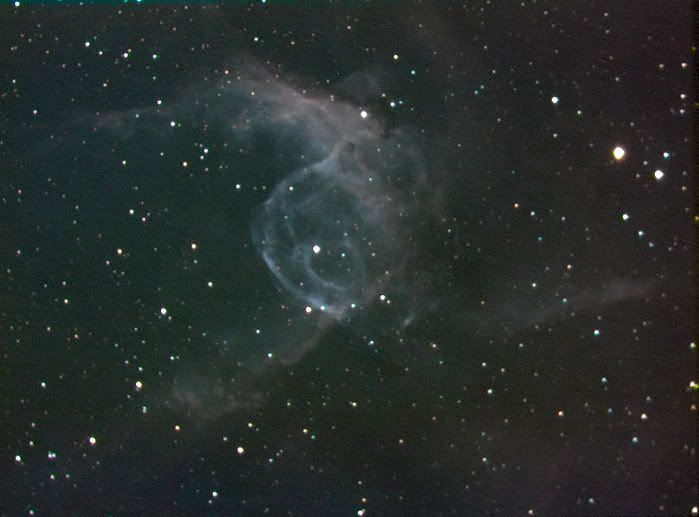
The ISS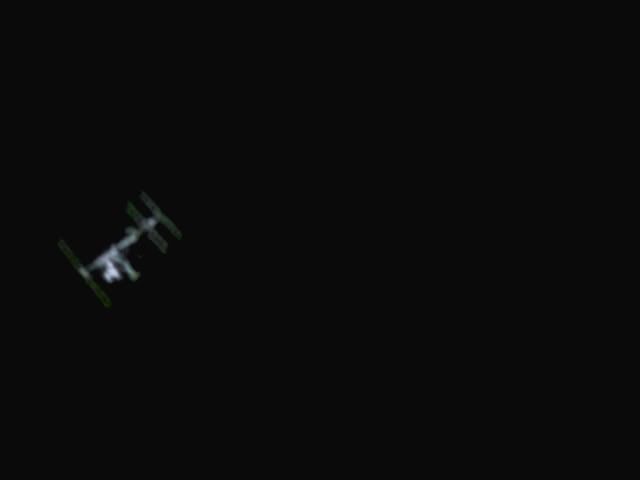
Space Shuttle Discovery the day before landing last November.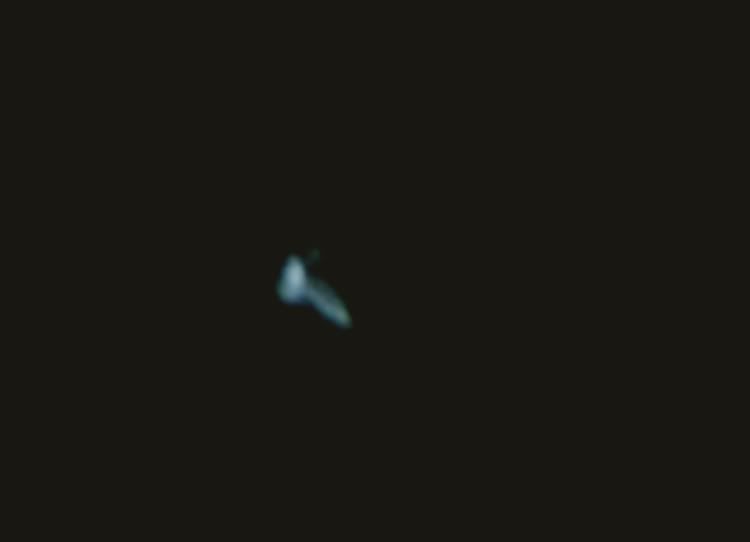
M16 The Eagle Nebula (again)..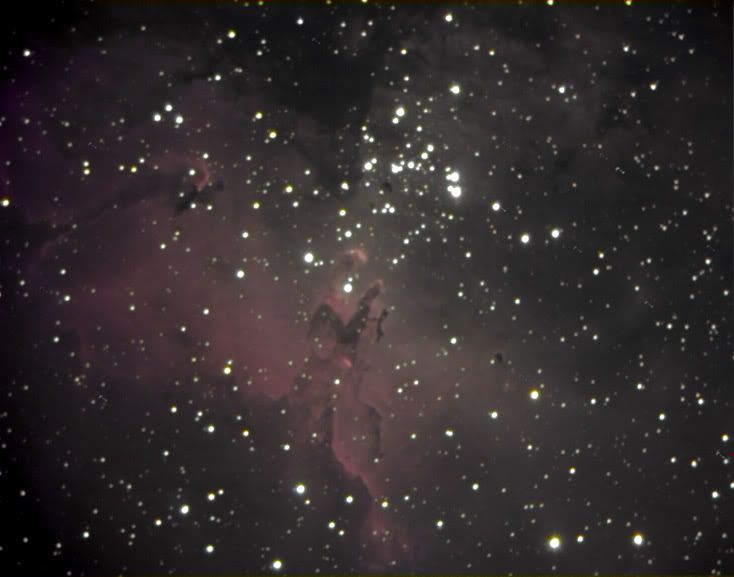
NGC6946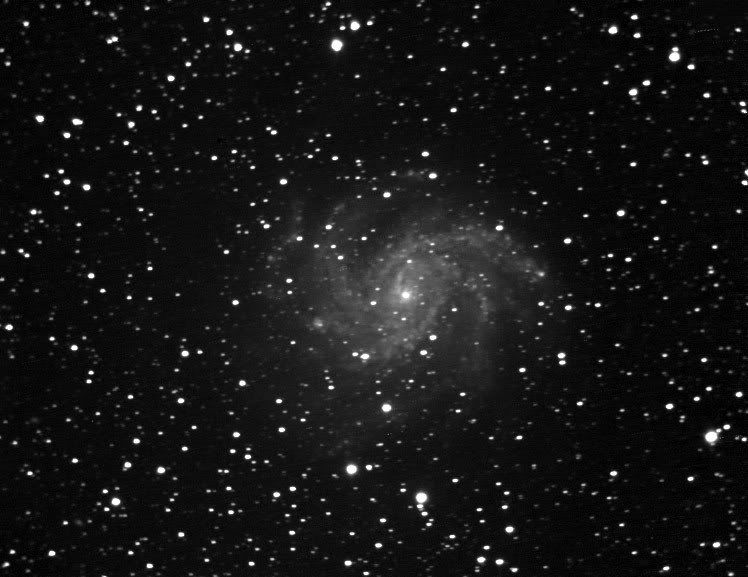
M31 The Andromeda Galaxy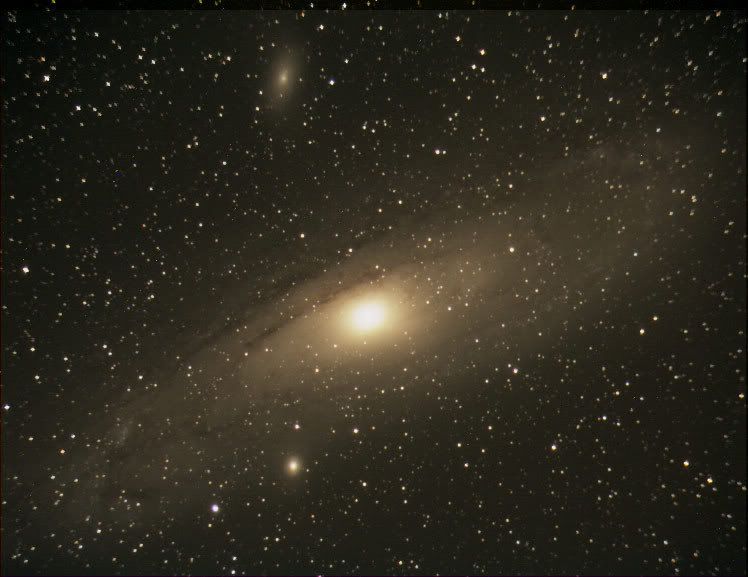
M20 The Trifid Nebula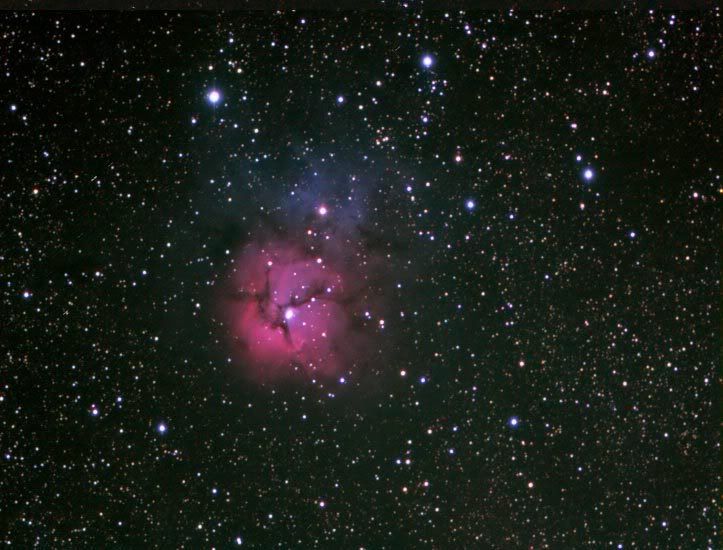
By: Paul Rix - 7th May 2006 at 01:15
the Taurid Firball shower was pretty impressive last November. I saw several Fireballs while flying. They were bright enough to light up the clouds and you could see their smoke trails until the meteors burned up completely leaving the sky dark again. Pretty surreal when you are cruising along at FL250 to see one of those shoot across the sky.
By: sea vixen - 6th May 2006 at 21:05
i wish i had a telescope like that one..very very nice pictures…got eny pics of andromada. i see cassini is doing fantasic work all the way out there with saturn.
By: holty - 4th May 2006 at 14:48
although that may have been the leonids!!
By: holty - 4th May 2006 at 14:48
happens every year anna, i saw it once in america….VERY impressive!!
By: Mark9 - 4th May 2006 at 14:16
Very nice indeed. A big Metor shower Perseid is due to peak around August 13, it will be visable to the naked eye. 😉
By: laviticus - 3rd May 2006 at 09:05
Thanks for that paul ,my eldest son is getting in to astronomy, his collection of books is growing and i promised him a good telescope when hes a bit older.
By: Paul Rix - 3rd May 2006 at 03:15
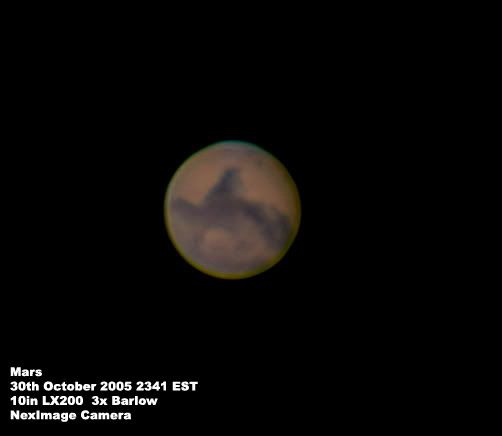
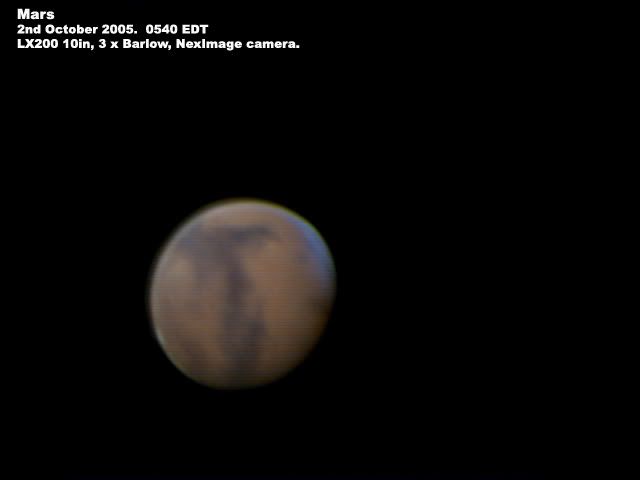
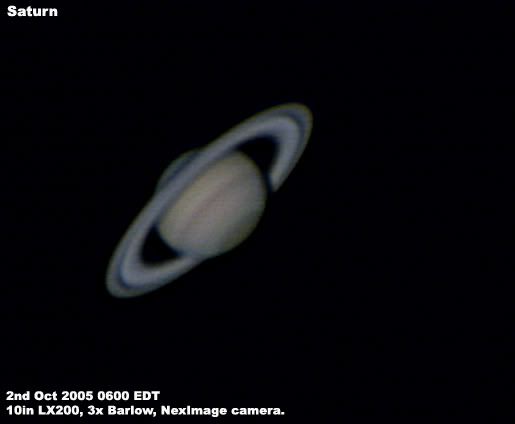
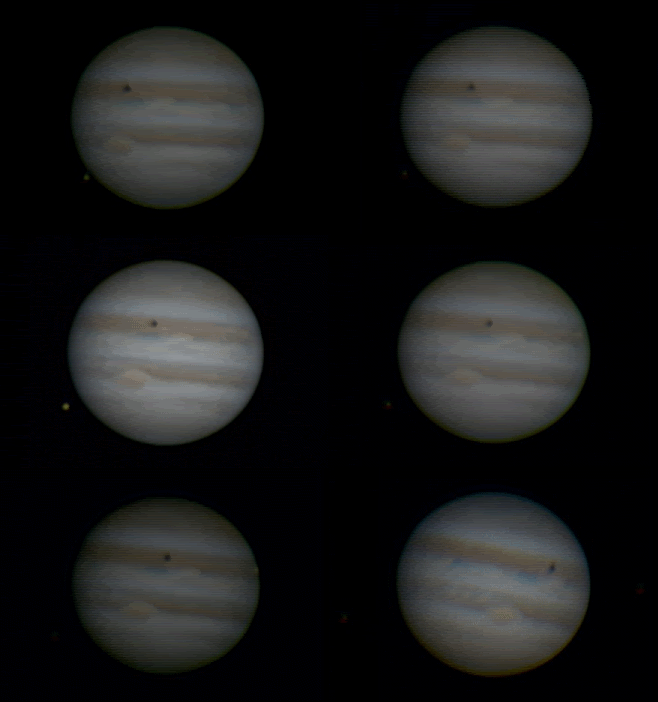
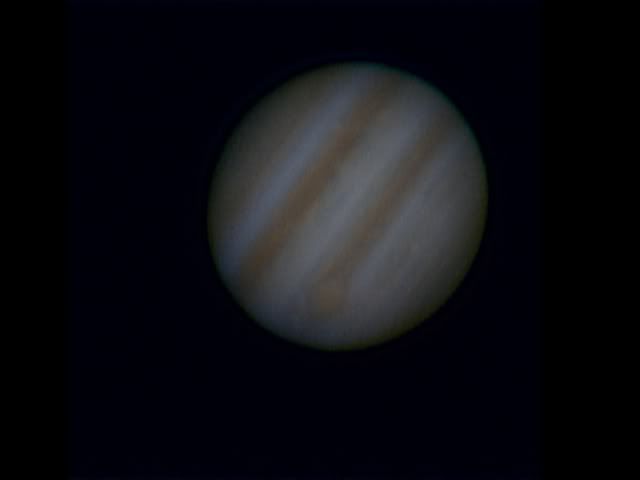
Here are a few from the past 12 months Dave :
By: laviticus - 2nd May 2006 at 08:54
Paul have you ever taken picks of our neighbouring planets???
dave
By: Paul Rix - 30th April 2006 at 23:37
😀
By: laviticus - 30th April 2006 at 23:35
Paul i think you’ve hooked Don,hes on his way to his local telescope shop ,after convincing his missus……
By: laviticus - 30th April 2006 at 23:15
laviticus, I do hope we’re not going to rake over old ground here, are we?
Good god no!!!!lol 😀
The images shown i took to be more than a few hundred feet,and wanted to clear up any misconceptions before anyone else!!! 😮
dave…
By: Paul Rix - 30th April 2006 at 22:55
Not even the Hubble Space Telescope can resolve the equipment left at the Apollo landing sites. Supposedly there is going to be a survey satellite put into lunar orbit soon that should be able to show the lander & rovers.
By: laviticus - 30th April 2006 at 22:38
So at a distance of hundreds of miles away ,still with no atmosphere or cloud ,it still would be virtually impossable to see space exploration debris on the lunar surface id say????.
Thanks Don&Paul I’m learning more and more about astrophotography.
By: Paul Rix - 30th April 2006 at 22:12
Don, you describe the process perfectly. I keep a digital thermometer with me and if the temp changes significantly I take another set of dark frames.
By: laviticus - 30th April 2006 at 22:05
SO the images posted show the lunar surface as if you were what miles away or hundreds of feet its difficult to get a perspective .But still stunning none the less.
dave
By: Paul Rix - 30th April 2006 at 16:57
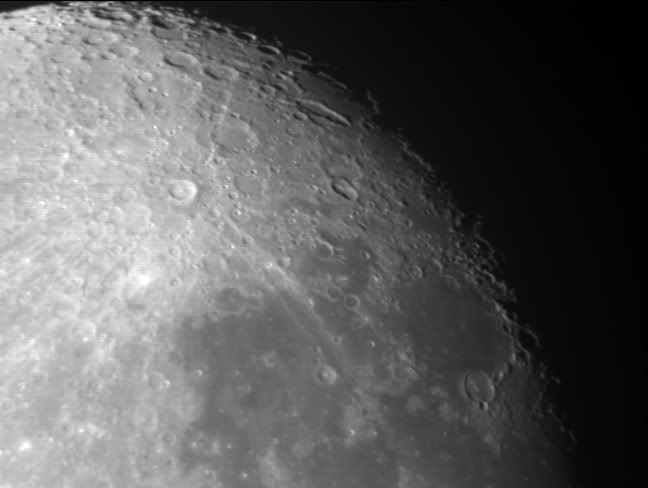
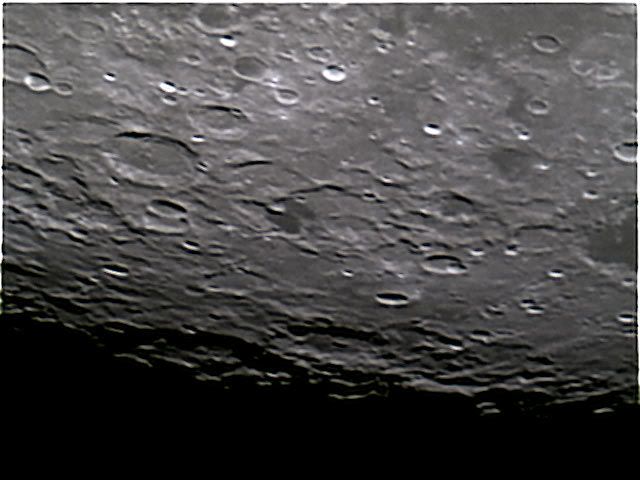
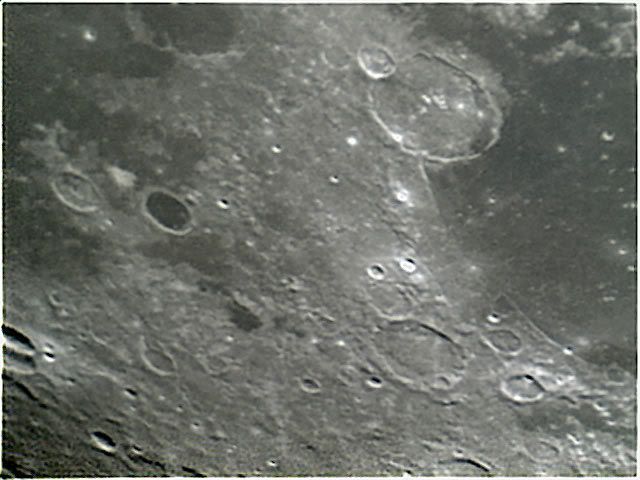
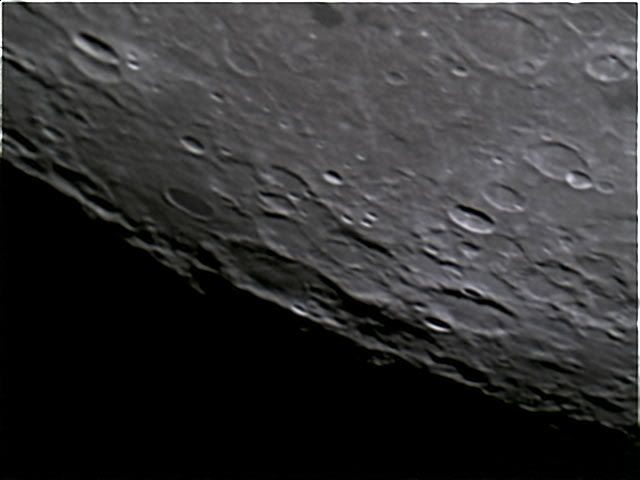
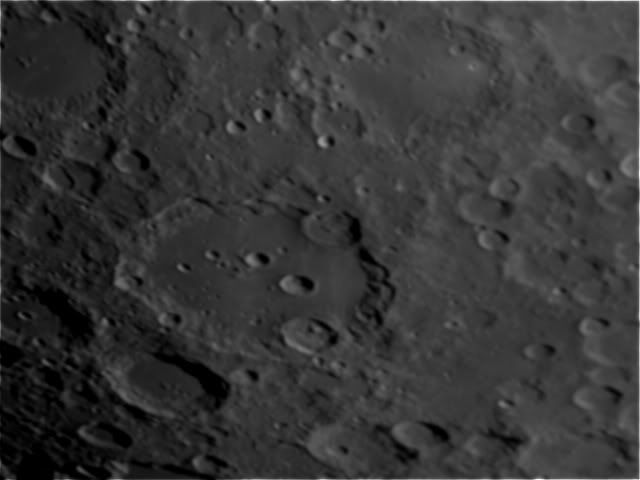
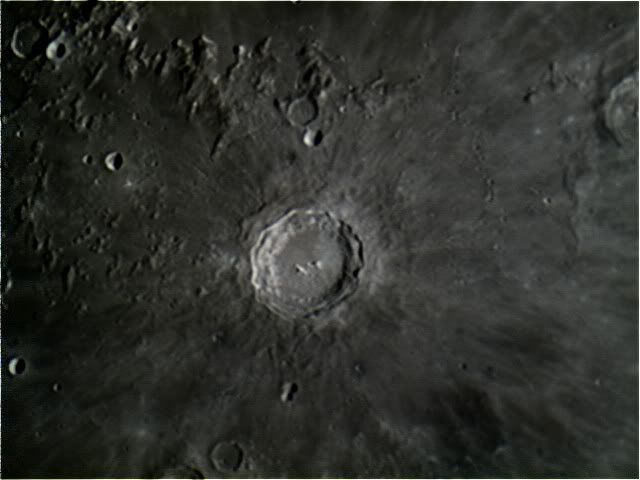
Dave, the first image shows the crater Tycho (the brightest crater). The prominant double crater is Gassendi at the edge of Mare Humorum. That means it does not show the Apollo 17 landing site (which is at the southeastern rim of the Mare Serenitatis).
By: laviticus - 30th April 2006 at 16:29
Don, The image of M16 uses 30 second exposures. The camera is monochrome, so I shoot 4 sets of data. Luminance (for the detail) and then Red/Green/Blue through filters. Each set is a stack of averaged frames. In this case 30 x 30seconds for Luminance and 20 x 30 seconds each for RGB
WOW,hope you got that Don,cos it whistled strait over my head..lol
Paul the first pick of the moon dose that show the Apollo 17 landing area.
dave
By: Paul Rix - 30th April 2006 at 14:29
Good questions guys.
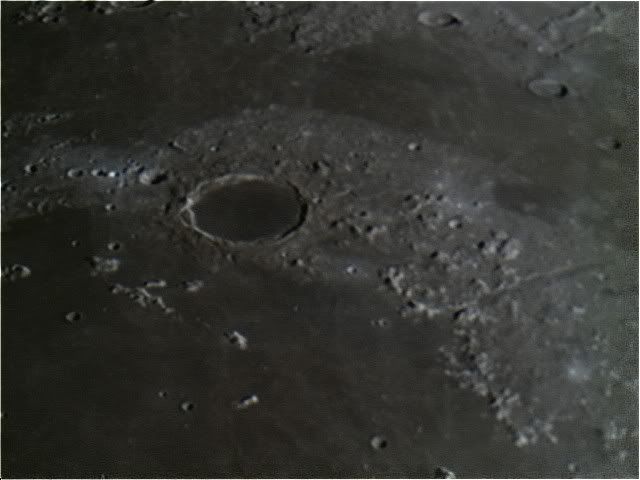
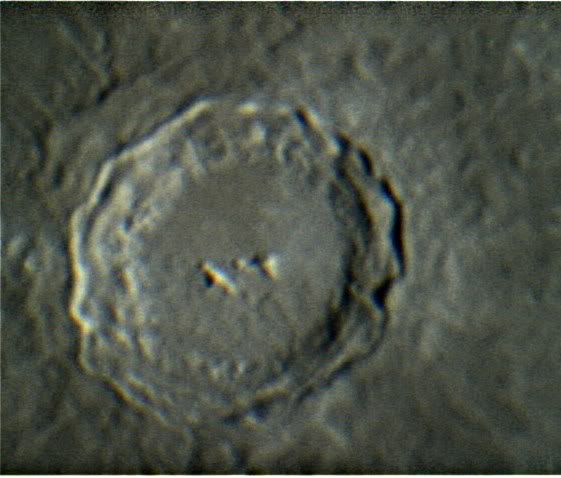
Dave, here is a selection of moon images I have taken with the LX200. The camera I use for planets and the Moon is a Celestron NexImage, basically a repackaged Phillips ToUcam II Pro webcam.
Don, The image of M16 uses 30 second exposures. The camera is monochrome, so I shoot 4 sets of data. Luminance (for the detail) and then Red/Green/Blue through filters. Each set is a stack of averaged frames. In this case 30 x 30seconds for Luminance and 20 x 30 seconds each for RBG.
Seeing on the night I took the M16 shot was average to good. At my location we are about 900ft AMSL. Transparency was good that night too. I do this from my back yard and as I live in a town, light pollution is a problem.
The large ‘Lens Hood’ is a dew shield. It does two things for me, first, it puts a layer of stable air in front of the objective lense. That helps to prevent moisture settling on the lense when the air starts to get saturated. Secondly, it acts as a lense hood, preventing off axis light from entering the telescope (important with the streetlights in the vacinity).
Hmm.. M3. Looking through my archive, I have one shot f it taken not long after getting the telescope last year. I used a different camera and was still learning how to use it.. so be gentle :)..
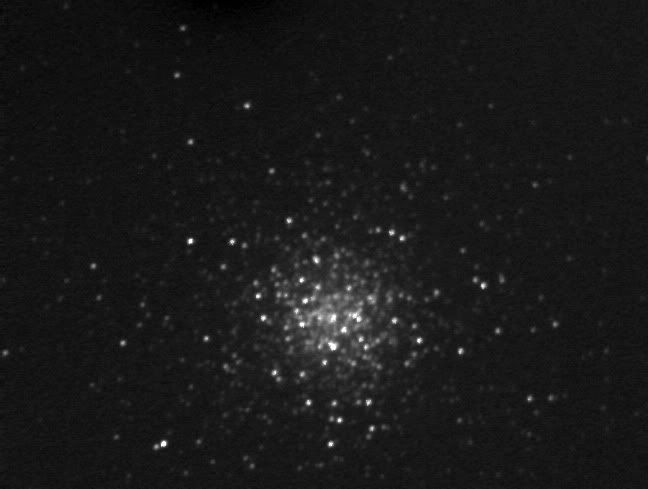
I need to go back and image it again with my new camera and a year of experience under my belt….
Costs of the equipment. Well, I bought most of the gear second hand.
Telescope : $1800 with a bunch of acessories including the Dew Shield. Equatorial Wedge was $90, Focal Reducer $150, DSI Pro camera $400 and a laptop PC (It is not a new one, about 4 years old which used to belong to my brother Neil). Hopefully he would approve of how I am using it. Buying everything new would make your estimate pretty close to the mark.
As for the stars appearing large, you are right, if you bring out the faint detail then the bright areas have a tendancy to become over exposed. Also, they are not perfectly round due to tracking error (which is why my next project is to perfect autoguiding).


 Sign In








 April 29, 2006 at 7:04 pm