Please Post the various Surface to Surface Ballistic Missiles that ur country uses/reported to have.Please One More Request can somebody post some Information on MIRV’s (with Pictures of course) and Topol-M(my Fav though not MIRV capable)
Here’s some Information I Have collected:
http://www.aeronautics.ru/archive/wmd/ballistic/ballistic/
AGNI Series
Type
Intermediate-range, surface-based, solid- and liquid-propellant, single warhead ballistic missiles.
Development
The development for the intermediate-range ballistic missile, called Agni 1 (Fire), started around 1979 under the direction of the Indian Defence Research and Development Laboratory (DRDL) at Hyderabad. Agni 1 uses a first-stage motor similar to the first-stage solid rocket motor from the Indian Satellite Launch Vehicle-3 (SLV-3) based upon an earlier US Scout rocket design. SLV-3 has been used in various satellite launches since 1979. The second stage of Agni 1 uses a shortened Prithvi missile liquid-propellant motor system.
There were conflicting reports in 1995 concerning the Agni programme. One report suggested that the programme had been halted due to technical difficulties. The second report suggested that the Indian government was planning a further five test launches. However, in December 1996, the Indian government announced that the Agni 1 trials programme would be terminated, but in July 1997, the development programme was restarted. It seems likely that the programme was restarted as a result of the development of new solid-propellant ballistic missiles in China.
There are reported to be four Agni versions in production or development; Agni 1 with a range of 2,500 km, Agni 2 with a range 3,000 km, Agni 2 upgrade with a range of 3,500 km, and Agni 3 with a range of 5,000 km. A range of around 4,000 km would be required for a missile to reach Beijing from India. An Agni-2 missile was displayed in January 1999 and the first test launch was made in April 1999. Agni 2 is a two-stage solid-propellant missile. A new first-stage solid motor with a diameter of 1.8 m and carrying 36,000 kg of propellant is being developed, possibly for the Agni 3 missile, which is expected to use the Agni 2 as its second and third stages. An alternative approach would be to use a new third stage for Agni 3, either liquid or solid propellant. An improved optical or radar terminal phase correlation system has been developed to provide greater accuracy. The terminal guidance option could be retrofitted into existing Agni 1 missiles.
There are unconfirmed reports that India is considering the design of an inter-continental range ballistic missile system named Surya, building on the experience of Agni and using the developed Augmented Satellite Launch Vehicle (ASLV) as its basis. Details can be found in the Unclassified Projects section.
Description
Agni 1 is a two-stage missile, with a length of 21 m, a first stage body diameter of 1.3 m, a second stage body diameter of 0.9 m and an estimated launch weight of 19,000 kg. The first stage is believed to be a version of the first-stage solid-propellant motor used in the SLV-3, with a length of about 13 m and a stage weight around 14,500 kg. This motor is believed to have a burn time of 50 seconds, and a thrust of 45 tons. The second Agni stage is a version of the Prithvi ballistic missile, using the liquid-propellant motor system developed for Prithvi, with a length of 6 m and a weight of 3,500 kg. It is reported that the first test vehicle used in the Agni 1 trials was smaller, with a total length of 19 m and a launch weight of 14,000 kg, but that the full size missile was used for the second and third test flights. Guidance is inertial, with a twin microprocessor control system, most probably an upgraded version of the system used in Prithvi. The missile is controlled during the boost phase by four moving control fins at the rear, and by secondary injection thrust vector control. It is believed that the warhead section separates to provide a re-entry vehicle on Agni 1 and that the payload is 1,000 kg with a warhead weight of 800 kg. Agni 1 is believed to have a minimum range of 500 km and a maximum range of 2,500 km. The Re-entry Vehicle (RV) is reported to have an attitude control system and aerodynamic manoeuvre fins, presumably to make any defence more difficult. Unconfirmed reports suggest that an optical correlation system was developed for the RV and that the accuracy was around 40 m CEP, although later reports have suggested that the accuracy was around 100 to 200 m CEP.
The Indian government initially stated that there were no plans to fit a nuclear warhead to Agni 1, but following the Indian nuclear tests in May 1998, it is assumed that a 45 kT warhead has been developed by the Bhabha Atomic Research Centre. Later unconfirmed reports suggest that an improved 200 kT warhead has been developed, and might be fitted to the Agni 1. It is believed that conventional High Explosive (HE), fuel-air explosive, chemical or HE submunitions warheads might also be developed. A report in 1996 suggested that a submunition warhead containing 500 one kilogram HE submunitions was under development for Agni 1, and possibly for Prithvi SS-150 as well.
Agni 2 has probably completed development following the first two test launches in April 1999 and January 2001. It has two solid-propellant motor stages, with a payload third stage. The missile has a total length of 20.0 m and a total weight of 16,000 kg. The first stage is similar to that used on SLV-3, but has a length of 10.5 m, a body diameter of 1.0 m and a weight of around 10,800 kg. The first stage motor burn time is believed to be 50 seconds. The second stage has a length of 4.8 m, a body diameter of 1.0 m and a weight of 4,200 kg. The second stage motor burn time is around 30 seconds. The missile probably has a minimum range of 500 km, with a maximum range of 3,000 km. The payload is believed to be 1,000 kg with a separating 200 kT nuclear warhead that weighs around 500 kg. The payload section has a length of 3.8 m and a body diameter of 0.8 m, and has four moving delta control fins at the rear to manoeuvre during the terminal phase using what has been described as an INS/GPS guidance module with a radar correlation terminal guidance system. An accuracy of 100 m CEP has been reported. Agni 2 was first launched in April 1999, from a converted rail carriage, using a system similar to that used by the Russian SS-24 ‘Scalpel’ missile, with a carriage roof that slides open to allow the missile to be raised to the vertical for launch by two large hydraulic pistons. The launch process is controlled from a separate railcar. It is believed that the Agni 2 missile can also be launched from a road TEL vehicle, and that this was used for the second test flight in January 2001. The Agni 2 upgrade version has a maximum range of 3,500 km, which may be achieved by reducing the payload weight to 750 kg, or by upgrading the motors.
Agni 3 is reported to have a maximum range of 5,000 km. This missile may have both first and second stages as solid-propellant motors similar to those used on Agni 2, with a liquid- or solid-propellant third stage. Alternatively, it is reported that a new solid propellant first stage motor with a diameter of 1.8 m may be used, with the existing Agni 2 stages forming the second and third stages.
Operational status
Development work on Agni 1 is believed to have started in 1979 and the first successful test launch was made in May 1989, when a trials missile flew about 1,000 km. A second test flight was made in May 1992, which failed, due to a fault with the second stage. A third test flight was made in February 1994, with a range reported to be 1,450 km. In 1995, it was reported that a further five flight tests were planned and that a nuclear warhead design had been prepared. The Indian government had described Agni 1 as a technology demonstrator and not a developed weapon system and, in 1996, terminated the programme although making the point that, if a threat appeared, then the Agni 1 design could still be used. It is reported that some 5 to 10 Agni 1 missiles have been built and are held in operational storage.
The Agni programme was restarted in 1997, and, in July 1998 the Indian government announced plans to test two Agni 2 missiles. The first launch of Agni 2 was made in April 1999 from a rail car launcher located on Wheeler’s Island, near Orissa in the Bay of Bengal. This flight was over a range of 2,100 km, and is reported to have carried a dummy warhead to test the safety and arming unit in real flight conditions. A second test flight was made in January 2001 from Wheeler’s Island, over a range of 2,400 km, and it is believed that this launch was made from a wheeled TEL vehicle. It is believed that low-rate initial production of the Agni 2 version has been started, with an initial order for some 10 to 20 missiles. A small number (less than 5) of Agni 2 missiles are believed to have been operationally available from late 2000, and a production rate of 15 to 20 missiles a year has been suggested. Agni 3 is in full development and a first test flight is expected by 2003.
Specifications
Agni 1
Length 21.0 m
Body diameter 1.3 m (1st stage), 0.9 m (2nd stage)
Launch weight 19,000 kg
Payload Single warhead; 1,000 kg
Warhead 800 kg, nuclear (45 or 200 kT), chemical, HE or submunitions
Guidance Inertial with optical correlation
Propulsion Solid propellant 1st-stage; liquid 2nd-stage
Range 2,500 km
Accuracy 150 m CEP
Agni 2
Length 20.0 m
Body diameter 1.0 m (1st and 2nd stages), 0.8 m payload
Launch weight 16,000 kg
Payload Single warhead, 1,000 kg
Warhead 500 kg, nuclear 200 kT
Guidance Inertial with GPS and radar correlation
Propulsion Two-stage solid propellant
Range 3,000 km (2), 3,500 km (2 upgrade)
Accuracy 100 m CEP
Prithvi 1/2
Prithvi (SS-150/-250/-350)(P-1/P-2/P-3) and Dhanush
Type
Short-range, ground- and ship-launched, liquid-propellant, single warhead ballistic missiles.
Development
Reported to have been developed by the Indian Defence Research and Development Laboratory in Hyderãbãd with design work starting in 1983, the Prithvi (Earth) Short-Range Ballistic Missile (SRBM) was first tested in February 1988. The design work may have been with assistance from other countries, and there are unconfirmed reports of European company participation. There are two versions of the Prithvi missile, an SS-150, designated P-1, with a range of 150 km and an SS-250, designated P-2, with a range of 250 km. The SS-150 missiles are used by the Indian Army, and the SS-250 by the Indian Air Force to attack enemy airfields and by the Indian Army for battlefield support. A third version was reported to be in development in 1994, an SS-350, designated P-3, with a range of 350 km, but it is not known if this development has continued.
Reports suggest that several nuclear warheads could be fitted to the Prithvi missiles, as well as conventional HE warheads. Unconfirmed reports suggest that an improved liquid-propellant motor is being developed, and that a possible solid-propellant motor is being researched for future Prithvi versions. A ship-launched version, believed to be similar to the SS-250 and named Dhanush, was tested from an offshore patrol vessel in April 2000. It is believed that these missiles might be fitted to future destroyers and frigates. A Submarine-Launched Ballistic Missile (SLBM) version of the Dhanush is also being developed by the Indian Defence and Research Development Organisation (DRDO), for fitment to the nuclear powered ATV submarines. It is also reported that mobile targets may be attacked with Prithvi missiles, using UAVs with TV and Imaging Infra-Red (IIR) sensors to locate these targets. Unconfirmed reports suggest that some Prithvi missiles might have a radar scene correlation terminal guidance system, using the small rear fins to control the missile when in the lower atmosphere near the target area. In 1998, it was reported that India will upgrade its Prithvi missiles, starting with the SS-150, to include GPS to improve the accuracy.
Description
It is believed that the Prithvi missile is 8.53 m long and has a body diameter of 0.9 m. the body is made from aluminium alloy and the wings from magnesium. There are four clipped-tip delta wings at mid-body and four small aerodynamic control fins at the rear. It is reported that Prithvi has two side-by-side gimbaled liquid-propellant motors, using IRFNA and a mix of xylidene and triethylamine, enabling a variable total impulse to be programmed for different payload and range requirements. The Prithvi liquid motor and guidance system are reported to have been based upon the Russian SA-2 ‘Guideline’ designs, using S2.720 motors. The missiles can be stored for up to five years, with the liquid propellants.
The SS-150 version, designated P-1, has a launch weight of 4,400 kg and an 800 kg payload. This version has a maximum range of 150 km and a minimum range of 40 km. While confirmed reports state that a High Explosive (HE) pre-fragmented blast unitary warhead has been developed for the SS-150 missile, unconfirmed reports suggest that alternative HE penetration, HE submunitions (incendiary and anti-personnel/anti-armour), fuel-air explosive or chemical warheads may be in development. Following the Indian nuclear tests in May 1998, it is believed that a range of small yield nuclear warheads has been developed, with 1 kT, 5 kT or 12 to 20 kT yields. The small yield nuclear warheads are believed to weigh around 250 kg. A strapdown inertial guidance system is used with twin microprocessors to monitor navigation, as well as providing built-in test facilities. Prithvi is believed to have both thrust vector and aerodynamic control and it is reported that the missile climbs to 30 km altitude, then glides to the target area at this altitude, followed by a steep 80º dive onto the selected target. The SS-150 is believed to have an accuracy of 10 m CEP at a range of 70 km, and of 50 m CEP at 150 km, when fired from pre-surveyed sites. Prithvi missiles are carried on a converted Kolos Tatra eight-wheeled Transporter-Erector-Launcher (TEL) vehicle, manufactured by Bharat Earth Movers at Bangalore. A proposed Prithvi SS-150 firing battery would have a command vehicle, four TEL vehicles, four missile reload vehicles, four warhead change vehicles, propellant tankers and four logistics support vehicles. The Prithvi missiles are reported to take 2 hours to set-up and launch, including the time taken to top up the liquid propellants, and to require 18 vehicles to support two missile launches.
The SS-250 Prithvi missile, designated P-2, is similar in size and weight to the SS-150 version, but has traded a smaller warhead for a longer range. The payload is believed to be between 500 and 750 kg. The minimum range is 40 km and the maximum range has been increased to 250 km. The accuracy is believed to be 75 m CEP, when launched from a pre-surveyed site. There are reports that the SS-250 version will be upgraded to carry the full range of warheads developed for the SS-150, with a payload increased to 800 kg. The Dhanush ship-launched version is believed to be similar to the SS-250. It is expected that two Dhanush missiles will be stored in the helicopter hangar in the ships.
The SS-350 version is believed to have a payload weight of 750 kg and a range of 350 km. Reports suggest that a new liquid-propellant system, or a solid-propellant motor will be used and that GPS guidance will provide an accuracy of around 25 m CEP.
Operational status
First test flown in February 1988, there was a total of 13 test flights completed by 1995. The eleventh launch in June 1993 was reported to have been the first test of the initial production batch, with the result that it is assumed the Prithvi SS-150 effectively entered service in 1994, although there have been conflicting reports as to whether or not these missiles are operational. User trials for the SS-150 version were completed in 1994, including a live HE warhead firing in June 1994. User trials were carried out by the 333rd Indian Army Missile Group at Secunderabad, and it is reported that this Group has continued with training programmes to provide an initial operational capability. In 1999 it was reported that a total of 14 development tests and 16 operational evaluation flights had been made. Statements from the Indian government have indicated that the SS-150 missiles remain in storage, but presumably they could become fully operational at short notice. Production started in 1993 and is believed to have continued until 1999, with around 130 missiles built and some 35 TEL vehicles. It is believed that some missiles are stored at Secunderabad, and the remainder at Jullander.
A first reported trial of the SS-250 version was carried out in January 1996, with further tests in 1996, 1997, and June 2000. It is assumed that this version entered service with the Indian Air Force in 1999, and it is believed that around 70 missiles will be built, with some 20 TEL vehicles. The production rate for all Prithvi versions is believed to be around 36 per year.
The third version, SS-350, is reported to have been first tested in November 1993, from a mobile launch vehicle, but this report may have been incorrect. It is not clear if this programme has been discontinued, although it is possible that some design work continues as a later upgrade option, probably entering service around 2010.
The ship-launched Dhanush version was first tested from INS Subhadra, a Sukanya class offshore patrol vessel, in April 2000. This test was reported to have failed after about 30 seconds of flight. The ship was anchored in the Bay of Bengal for the test, which was made from a strengthened helicopter deck using a hydraulically stabilised launch platform.
Specifications
SS-150
Length 8.53 m
Body diameter 0.9 m
Launch weight 4,400 kg
Payload Single warhead; 800 kg
Warhead HE, submunitions, FAE, chemical or nuclear
Guidance Inertial
Propulsion Liquid propellant
Range 150 km
Accuracy 50 m CEP
SS-250/Dhanush
Length 8.53 m
Body diameter 0.9 m
Launch weight 4,400 kg
Payload Single warhead; 500 to 750 kg
Warhead HE, nuclear or submunitions
Guidance Inertial
Propulsion Liquid propellant
Range 250 km
Accuracy 75 m CEP
DF-11 [CSS-7]/ Shaheen
The DF-11 (M-11 / CSS-7) is the Chinese replacement for the Scud-series of missiles. As of late 1999 the US estimated that China had deployed 40 DF-11s, with an eventual force goal of as many as 500 short-range missiles by 2005.
It was originally shown at the 1987 Beijing air show as a two-stage missile with 1000 kms range carrying a 400-500 kilogram payload. This M-18 missile had the longest range of any of the current M-series missiles. The M-series missiles all use solid fuel, and operational preparation time is short. They are all transported by highly-mobile cross- country trucks which have the capacity to launch the missiles. Due to MTCR considerations, China exported the M-11 system variant to Pakistan as a single-stage, solid-fueled missile with a range of 120-295 kms carrying a 500 kg (or perhaps 800 kg) warhead.
Although the DF-11 has a range of 300 km, the Chinese continued work on a version with a longer range. China’s 50th anniversary military parade on 01 October 1999 marked the first public Chinese display of a new version of the M-11 short-range missile, the CSS-7 Mod 2, more commonly known as the M-11 follow-on. The new Mod 2 missile about two meters longer than the Mod 1, and is believed to have a longer range, a larger warhead and greater accuracy than earlier M-11. The accuracy of these missiles will improve in the future if China is able to apply Global Positioning System (GPS) guidance technology to provide highly accurate location information for missile launchers or pre-surveyed launch sites.
China sold at least 34 M-11 missiles to Pakistan in November 1992. US imagery intelligence satellites provided imagery showing M-11 missile canisters being delivered at the Sargodha air base near Lahore, but not the M-11 missiles. But the Clinton Administration said they would need direct photographic proof by spy satellites to determine whether the Chinese sale to Pakistan had occurred, in order to impose Missile Technology Control Regime (MTCR) sanctions against China for selling missiles to Pakistan. Sanctions were imposed on China in August 1993 for selling missile components to Pakistan that were barred under MTCR. The sanctions were lifted in October 1994 after the Chinese pledged not to sell any more missiles.
In 1999 Pakistan displayed two “Shaheen” missiles in a military parade, which were apparently the improved longer-range CSS-7 Mod 2.
Specifications
Basing
Configuration Single Stage
Length [meters] 11.25
Diameter [meters] 0.88
Mass [kilograms] 6,350
Propellant Solid
Guidance Inertial
First Flight 19??
IOC ~1995?
Deployment mobile
Range (km) 300
Re-entry Vehicle Mass (kg) 500
Warhead Yield 350 KT or conventional
CEP (meters) 200m
Launch Preparation Time 30-45 minutes
DF-15 [CSS-6 / M-9](China)
The DF-15 (CSS-6) , better known by the export name M-9, is a sophisticated solid-fueled, single-stage mobile missile, similar in appearance to the US Pershing I-A system. The M-series missiles all use solid fuel, and operational preparation time is short. The DF-15 is expected to be equipped with a variety of warhead types and to become the mainstay of China’s sub-strategic missile force.
The vertically-launched 9.1 meter long missile has a range of 200-600 kms, carrying a payload of 500 kgs, with a CEP of about 280 meters. The missile uses a strapdown inertial guidance system on the warhead section which guides the trajectory using small thrusters. The missile body is designed to trail behind the separated warhead and provide camouflage for the warhead (which is only one-tenth of the size of the missile body). The DF-15 utilizes a Chinese-developed eight-wheel cross-country Transporter Erector Launcher [TEL] with both launch and transport capacities. These highly-mobile cross- country trucks have the capacity to launch the missiles. It is coordinated with advanced digital C3I computer system using digital computer-controlled technology and self-test functions to provide an operational preparation time of less than 30 minutes.
It has been suggested that in the future the DF-15 will be equipped with a global positioning system that is coordinated with a new-type ring-laser gyroscopic inertial-guidance system, coupled to a faster on-board computer system so as to increase the accuracy of the missile’s end-segment guidance system to achieve a CEP of 30-45 meters. As the missile has a terminal velocity of over Mach 6 this system may be considered for deep-penetration strike requirements (against underground fortifications).
Developed in the 1980s, the DF-15 first appeared in the Beijing Defense Exhibition in 1988. And it is believed that by 1989 China had equipped the Second Artillery with a few of these missiles. China’s DF-15 road-mobile SRBM has been operational since 1995, with an initial force of 40 missiles. By the end of 1999 China had deployed 200 SRBMs and was increasing the force at a rate of 50 missiles per year. As of mid-2000 the PLA had one regimental-sized CSS-6 SRBM unit deployed in southeastern China. This CSS-6 unit was expected to be augmented by a CSS-7 SRBM unit and one additional CSS-6 unit.
DF-15 missiles were launched from southern China into the waters off Taiwan in 1995 (six or seven launches) and 1996 (four launches) as part of Beijing’s efforts to dissuade Taiwan from moving toward independence. These launches into specific closure areas near Taiwan demonstrated a degree of accuracy not previously associated with Chinese missiles.
Specifications
Configuration Single Stage
Length [meters] 9.1
Diameter [meters] 1.0
Mass [kilograms] 6,200
Propellant Solid
Guidance Inertial
First Flight 198?
IOC 1995
Deployment mobile
Range (km) 600
Re-entry Vehicle Mass (kg) 500
Warhead Yield 50-350 KT or conventional
CEP (meters) 300-600
Launch Preparation Time 30 minutes
Nodong(NKorea)/Ghauri(Pakistan)/Shehab-3(Iran)/DPRK ND–1(China)
Technical Details
Range (km) 1,350-1,500
CEP (m) 190 (Previously thought to be several thousand meters)
Diam. (m) 1.32-1.35
Height (m) 15.852-16
L. W. (kg) 15,852-16,250
Stage Mass (kg) 15,092
D. W. (kg) 1,780-2,180
Thrust (Kg f) Effective: 26,051 (-709) Actual: 26,760-26,600
Burn time (sec.) 110
Isp. (sec.) Effective: 226 – SL due to vains steering drag loss of 4-5 sec. Actual: 230 Vac.: 264
Thrust Chamb. 1
Fuel TM-185 20% Gasoline 80% Kerosene
Oxidizer AK-27I 27% N2O4 73% HNO3 Iodium Inhibitor
Propellant Mass (kg) 12,912
Warhead (kg) 760-987-1,158
Type MRBM
A more extensive redesign of the Scud technology may have begun in the same 1988 time-frame as the modification program that resulted in the Scud-C. The new missile [variously called No-dong-1, Ro-dong 1, and Scud-D has a potential range/payload capacity of 1,000-1,300 km/700-1,000 kg. The higher range would cover a wide swath of cities from Tokyo to Taipei. At the extremity of the higher range, authoritative analyst estimates the CEP of the No-dong to be 2,000-4,000 m.
A prototype was detected on a launch pad in May 1990. Test flights did not begin until May 29-30, 1993, with an apparently successful launch 500 km into the Sea of Japan. This flight test of the No-dong-1 was almost certainly a high altitude flight with warhead separation being demonstrated. All within the 500 kilometer SCUD-C/D range profile. That is, the No-dong-1 rose to a much higher altitude with in a 500 kilometer range. Propulsion tests began in August 1994. To date the flight test program has consisted of this single North Korean test to partial range, along with what were apparently two tests by Pakistan and three by Iran [only one of which was completely successful]. As of late 2000 the US Department of Defense reported that North Korea continued to make and field No Dong missiles able to strike American forces based in Japan.
The No-dong program has evidently been plagued by numerous technical and financial problems. Some authoritative observers expected the first production models of the No-dong to be available in 1997, with export shipments soon thereafter. However, the CIA did not expect the No-dong to be deployed until the end of 1996. Reflecting the difficulties of assessing the precise status of the program, at a news briefing Secretary of Defense William Cohen states that “What we can say is that North Korea has completed its development of the No-dong missile, but I am not in a position to comment in terms of when or where or how there has been a deployment of the missile itself.”
The operational status of the No-dong design remains unclear. Operational training for crews may have begun in mid-1995. Missile storage facility construction began in July 1995, and as many as four launch sites were reportedly complete by October 1995. Mobile launchers were reportedly deployed in northeast North Korea in March 1997, and seven launchers were also deployed at a facility about 100 kilometers from Pyongyang.
The 1998 Rumsfeld Report concluded that the “Commission judges that the No-dong was operationally deployed long before the U.S. Government recognized that fact. There is ample evidence that North Korea has created a sizable missile production infrastructure, and therefore it is highly likely that considerable numbers of No-dong’s have been produced.” One of the unclassified discussion papers generated in the preparation of the Rumsfeld report indicated that only a small number of the systems (ten mobile launchers with missiles) have been produced by North Korea and fielded with its own forces According to an ROK military source, the DPRK had deployed at least nine No-Dong 1 missiles by early 1999, in addition to the Scud-A, Scud-B, and Scud-C missiles. Japanese sources suggest that 15-100 missiles are currently deployed.
SSMs NODONG-1
Warhead type HE, CHEM (thickened VX)
Range (km) 1000
CEP 2 km 150m (w/GPS guidance)
Reaction time (min) 60
Maximum road speed 70 km/h
Maximum road range 550 km
Design Heritage
The No-dong represent a significant departure from the prior North Korean practice of incremental improvements on the basic single-engine Scud design, and this departure is reflected in the protracted development history of the system, This single-stage missile apparently incorporates a SS-N-4, Isayev S-2.713M engine with a single large combustion chamber. The closely related Iranian Shehab-3 and the Pakistani Ghauri-II do reflect this design.
Some aspects of the No-dong seems to bear a close design resemblance to the early Soviet SS-N-4/R-13 and SS-N-5/R-21 SLBM designs. This would not be to surprising, given that these early submarine-launched ballistic missiles were an evolutionary development of the same Scud technology that is used by North Korea.
The Soviet R-13, known in the West as the SS-N-4, used one Isayev S2.713 engine with larger 1.3 m diameter tankage from the Scud 0.88 m diameter tankage design and warhead separation from the missile body. This missile had a launch weight of 13,745 kg, a range of 600 km and a body diameter of 1.3 meters. And the R-21, designated the SS-N-5 used the 4 thrust chamber Isayev S-5.38 higher thrust engine and more tankage with perhaps a material change and rearranged propellant tanks along with warhead separation. With a body diameter of 1.4 m, this missile had a launch mass of nearly 19,653 kg. with a range of 1,420 km.
The No-dong has a reported mass of 15,200-16,000 kilograms, with a diameter of 1.32-1.35 m’s and a length of 15.895 m giving it a range of 1,350-1,500 km’s. The characteristics of the No-dong missile with its 15,852-16,852 kg launch weight (with a 760-1,000 kg warhead) falls right in between the two older Soviet SLBM’s design. While this may simply reflect the unavoidable consequence of using this proven Scud design approach to achieve a long range missile, other evidence suggest that a more direct connection may exist.
In October 1992, the Russian, Security Minister stopped more than 60 Russian missile specialists at Moscow’s Sheremetyevo-2 airport where they were preparing to leave for North Korea, and subsequently a North Korean Major General was declared persona-non grata by the Yeltsin government. It turned out that these technical personnel were from the V.P. Makayev OKB, the submarine ballistic missile design bureau. It is difficult to assess the full extent of collaboration and technology transfer between the Makayev bureau and North Korea during this Gorbachev era, although such a large, senior delegation almost certainly meant that an earlier contact had already been substantially completed with certain critical documentation exchanged as a part of an agreement.
The SS-N-4 and SS-N-5 have been on public display at the Russian Central Army Museum since at least 1992. The existence of these missile demonstrates that this is a potential fruitful line of development to extend the range of Scud-derived systems. It certainly represents a proven design concept, in contrast to the less sophisticated Iraqi approach of simply clustering multiple Scuds to achieve longer range. But the apparent slow and uneven progress on the No-dong program since 1992 may not be entirely unrelated to the cessation of active assistance from Russian sources.
http://www.israeli-weapons.com/weapons/missile_systems/artillery/jericho-12/jericho-2.html
Jericho 2 (Israel)
Development
The Jericho 2 missile development programme started in 1977, possibly with joint funding from Iran for both land-based and submarine-launched versions of the two stage solid-propellant missile. Co-operation with Iran ceased in 1979, but later reports indicate that there was then some co-operation with South Africa on the Arniston (Jericho 2) project during the 1980s. Test firings for the Jericho 2 missile are reported to have taken place from 1986 onwards. Jericho 2 is an intermediate-range ballistic missile, possibly similar to the Shavit SLV but also similar to the French S-3 ballistic missile, and is believed to have the designator YA-3. There have been three successful Shavit launches, in September 1988, April 1990 and April 1995, an unsuccessful launch attempt was made in January 1998.
Description
It is reported that Jericho 2 has two solid propellant stages, has a length of 14.0 m, with a body diameter of 1.56 m and a launch weight of 26,000 kg. The motors are manufactured by Israel Military Industries, who make the solid-propellant motors for the Shavit SLV and Arrow ABM system. The first stage motor burns for 52 seconds and the second stage for 85 seconds, with boost burn completed at around 105 km altitude. An alternative launch weight of 21,935 kg has also been reported, with a first stage weight of 10,970 kg and a second stage weight of 9,965 kg. The payload capability is probably 1,000 kg, which means that either nuclear (possibly 1 MT) or conventional HE warhead options could be used. It is reported that the Jericho 2 warhead separates after the boost phase of flight. It is believed that the missile has inertial guidance and that the re-entry vehicle may also have a radar image correlation system for terminal guidance. Jericho 2 is reported to be located in underground caves and silos, but it is believed that the missile is also road mobile with a wheeled TEL, or can be launched from railroad flat trucks. The missile is reported to have a maximum range of 1,500 km. However, the capability of Jericho 2 is such that it could have a range considerably greater than 1,500 km with a 1,000 kg payload, probably around 3,500 km. The TEL vehicle used to launch Jericho 2 is believed to be 16 m long and is supported by three vehicles for command and communications, site survey and weather
Operational status
There have been several reported Jericho 2 test firings since 1986, with achieved ranges of 465 and 820 km respectively on the first two (in 1986 and 1987). An unconfirmed report in June 1989 suggested that a missile similar to Jericho 2 was positioned on a launcher just north of Cape Town in South Africa. It is not known whether this missile was a Jericho 2 being tested at full range or a separate new South African missile called Arniston, but unconfirmed reports suggest that South Africa had jointly funded the Jericho 2 programme with Israel. The July 1989 launch from South Africa flew 1,400 km and is believed to have been a Jericho 2 missile test. Subsequent flight tests are believed to have been made by Israel in September 1989, two further tests between 1990 and 1996, a seventh test in April 2000, and the eighth test in June 2001 from the Palmahim flight test centre near Tel Aviv.
Country: Israel
Alternate Name: YA-3
Class: MRBM
Basing: Road mobile
Payload: Single warhead, 1000 kg
Warhead: Nuclear 1 MT, HE
Length: 14.00 m
Diameter: 1.56 m
Launch Weight: 26,000 kg
Propulsion: 2-stage solid
Range: 1,500 km
Status: Operational
In Service: 1990
Please Post some good Photos also
Thanks
Regds
Infinity

By: edisonone - 1st November 2004 at 14:22
Hmmm! Are these SAMs, or are these SSMs???
😮

(Credit: Raygun; CMF)
😮
By: Hyperwarp - 31st October 2004 at 18:13
More DF-11 pics
By: INFINITE - 30th October 2004 at 13:19
Any Guesses which Missile is it????

Regds
Infinite
By: Hyperwarp - 29th October 2004 at 14:26
HyperWarp Sorry you Search did not yield any results but to amke u happy some more DF-11 Missile pic.Sorry for inconv
Hehe LOL! No probs!
Some DF-15 pics I collected about a year back:
Range 600km and slighty better accuracy (150m – 500m CEP)
By: INFINITE - 29th October 2004 at 14:16
Another picture of the DF-11 Hope it
works
http://www.chinaimg.com/imglib/china/missile/DandaoMissile/DF-11M-11CSS-7/006.jpg
By: INFINITE - 29th October 2004 at 14:05
HyperWarp Sorry your Search did not yield any results but to amke u happy some more DF-11 Missile pic.Sorry for inconv


By: Hyperwarp - 29th October 2004 at 14:00
Big boy DF-5
By: INFINITE - 29th October 2004 at 13:58
Df11A Searching……..
Plz be patient while search is going on..
Regds
Infinite
By: Hyperwarp - 29th October 2004 at 13:29
DF-11 (CSS-7)
280km
Not very good accuracy – 600m CEP
DF-11A
300km
200m – 500m CEP
Pics of DF-11. Anyone have pics of the DF-11A??
By: INFINITE - 29th October 2004 at 07:02
MissileName: Titan2
Source:http://www.spacetoday.org/images/Rockets/Plowshares/USA/Titan2launch.jpg
Source:http://www.skyrocket.de/space/img_lau/rokot_2.jpg
Source:http://www.siloworld.com/ICBM/Untitled-17.JPG
Souce:http://www.friends-partners.org/partners/mwade/graphics/n/newlvs3.jpg
W-87MX Missile
Source:http://nuclearweaponarchive.org/Usa/Weapons/W87mx.jpg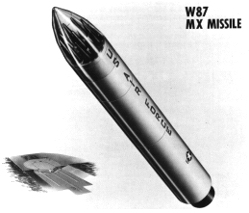
W-78 warhead
Source:http://nuclearweaponarchive.org/Usa/Weapons/W78a.jpg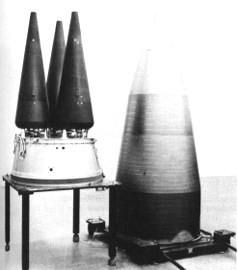


Missile:SS25
SOURCE:http://www.spacetoday.org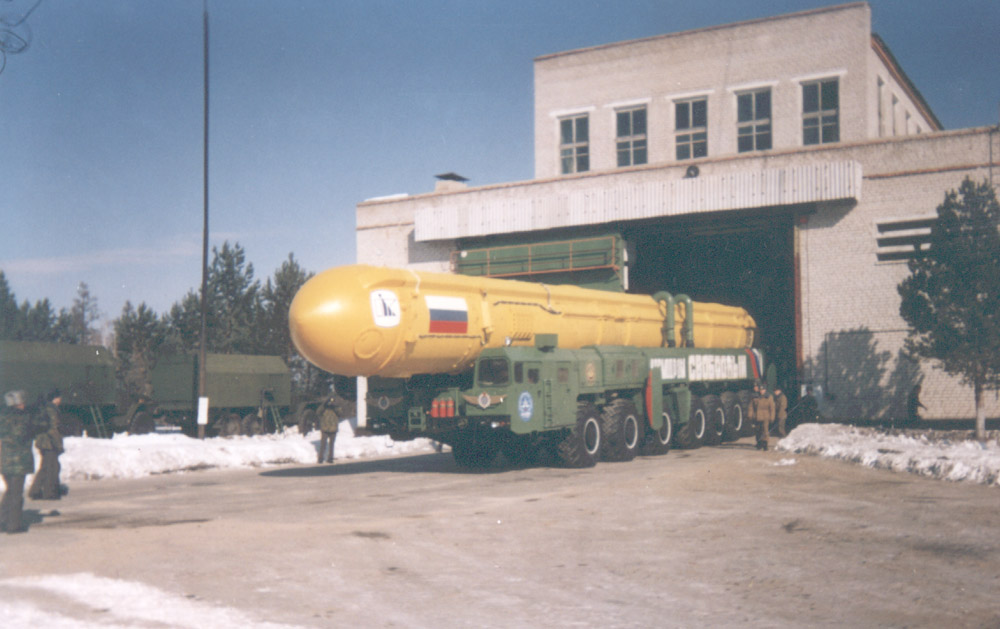

Missile:css6
Source:http://www.aeronautics.ru/
Missile:lgm30
Source:Same as above
Missile:ss-1
Source:Same as Above
Chinese Missiles
Regds
Infinite
By: edisonone - 25th October 2004 at 17:16
Any info on the pic edisonone?
I can see its the chinese (HY-2)(?) missile in the tunel.
Sorry, Buddy!
I’ve decided to let the pic speak for itself instead. Because, if
otherwise, I know for a fact that I’ll get whacked over the head by baseball bats, from both
sides of this kick-boxer’s fence – and that I definitely don’t need.
I had enough bickering from both sides on comments
I make here and I am hoping that other people’s may have the balls and raw nerves to
to take over the job of setting the records straight here.
Now, it’s time for people to prove themselves…
.
By: djnik - 25th October 2004 at 16:47
Any info on the pic edisonone?
I can see its the chinese (HY-2)(?) missile in the tunel.
By: edisonone - 25th October 2004 at 16:40
😮

😮
Don’t know who’s this is but going to click it anyway
http://bbs.china.com/images/2004-10-25/1098692148A5.jpg
.
By: INFINITY - 18th October 2004 at 07:23
N,joy!!
Regds
Infinity
By: INFINITY - 15th October 2004 at 05:45
Hey Hey Hey!!!!
They’re not only good in PS’s :p :p :p !!! In fact, they had proven
beyond a doubt that they have the ability to accomplish great feats and achievements with
friendly neighbours in joint science and technological advancements.What science and technological feats and advancements??? To put it
as less hash as possible: let’s simply call it “eat your hearts out feats and achievements”
or, what some here would term as “Chin*s* p*@#s *nvy” :p :p :p…
:p
Hmmmmm…….
Yes they were successfull in showing world “How to recycle MiG21 in several hundred ways” 😀 😀
Yes!They have Great Cooperation with friendly NieghBours,Some of the technical cooperation can be Described as “Copied in China,Scrapped in China,Scrap bought by Nieghbours and repainted in their own Colors” :p
PS:Nobody hates China Its fun to have aggressive competitor,rather than wailing neighbours!That comment was a positive remark,not a pun!Its always good to Imagine(I mean PS work :p ) and then implement!!
Regds
Infinity
By: edisonone - 14th October 2004 at 16:24
Sorry for the late reply But u could be correct ! i found it in a Chinese site under Df-31..
Any how Chinese Enthusiasts are known for their good PS work!! :pRegds
Infinity
Hey Hey Hey!!!!
They’re not only good in PS’s :p :p :p !!! In fact, they had proven
beyond a doubt that they have the ability to accomplish great feats and achievements with
friendly neighbours in joint science and technological advancements.
What science and technological feats and advancements??? To put it
as less hash as possible: let’s simply call it “eat your hearts out feats and achievements”
or, what some here would term as “Chin*s* p*@#s *nvy” :p :p :p…
:p
By: Arabella-Cox - 14th October 2004 at 09:49
First of all about which post you are talking about? I think this is your first Post in this thread……
The post I am referring to is one I made but it seems to have disappeared (or never appeared).
Second silos don’t have back doors or reloading magazines built in. To reload required the assistance of cranes and trucks and for the Silo to be prepared. After a retaliatory strike there is no guarantee that there will be personel alive and moving around to make the reload. In time of war silos are known fixed targets that will be targetted by plenty of enemy weapons. If the personel survive they won’t be reloading anything for a few weeks at least.
Some ICBMs are liquid fuelled and that liquid might or might not be storable. If it is not storable then the missile needs to be fuelled as well… for an ICBM that might take over an hour to do by itself.
BTW the “Rapid reload” definition does not describe all ICBMs… it is a definition of a term… in other words if an SS-18 ICBM can be reloaded into a silo within 12 hours then it is defined as a Rapid Reload ICBM. Equally if you can reload a TOPOL in 4 hours then it is a Rapid reload ICBM. It doesn’t mean that all ICBMs can be reloaded in that time. The SS-19 would certainly take longer to reload as it is hot launched. US missiles would also probably not be in that category either.
By: PLA - 14th October 2004 at 09:30
Rapid reload has no value to me. Let us think about a launch. At the moment it will be not the only launch. The same happens with the counter (why would anyone attack non nulcear power with nuclear weapons). A few hundreds explosions… Do you actually think one is busy with reloading? Within a few hours there would be atomic fallout everywhere…
By: INFINITY - 14th October 2004 at 07:52
Hi GarryB,
First of all about which post you are talking about? I think this is your first Post in this thread…… And figures which I have posted are not my imaginations but these were general figures which were mentioned in START terms under Point RAPID RELOAD..
refer to Document:
http://www.fas.org/nuke/control/start1/glossary.htm
Rapid Reload. Reloading a silo launcher of ICBMs in less than 12 hours or a mobile launcher of ICBMs in less than four hours after a missile has been launched or removed from such a launcher.
Regds
Infinity
By: Arabella-Cox - 14th October 2004 at 07:11
Hi,
My post didn’t seem to have worked to I will repeat basically what I said here.
Regarding reload speed/capability it would take weeks to reload a silo used for a hot launched ICBM as the damage is relatively extensive. This includes almost all US missiles and Soviet missiles like the SS-19. Basically a hot launched ICBM means they fire their engines inside the tube and “fly” out of the silo/launcher.
Cold launched weapons like the SS-18 and most SLBMs and Truck mounted ICBMs like TOPOL are forced out of the tube by gas pressure and their engines are fired above the launcher. This results in less damage to the launcher and therefore quicker reload capability.
Reload times are also effected by the type of fuel the missile uses and whether it can be loaded into the silo fully fuelled or if it needs refuelling after being placed in the silo.


 Sign In








 October 5, 2004 at 12:07 pm