http://www.janes.com/article/50817/switzerland-to-relaunch-f-5-replacement-effort-in-2017
lolol. had they stuck by it..they’d already have their first gripens before the restart of this competition.
this time its just Gripen, Rafale, Super hornet.
they don’t love the typhoon

By: MadRat - 5th December 2017 at 11:16
The technology in these arrays uses mirrors I believe, so you can pack multiple focal points in your same package. You’re trying to scan the same point in space with an array of different bandwidth spectrums. You wouldn’t want to use a traditional single purpose sensor for this when you can literally scan a 60º swath of the sky every few seconds with a moving mirror and utilize several separate sensors at once with the same mirror by splitting the image and dissecting it by spectrum.
By: eagle - 4th December 2017 at 22:03
If details have not been released yet how do you know it is going to be on par with RecceLite XR?
Because both feature similar sensor suites. Near IR TV, short wave IR and mid wave IR sensors.
By: eagle - 4th December 2017 at 21:41
In 2008 both the Typhoon and the Gripen offered the exact same Reccelite pod and were ranked at an almost identical level (Gripen 5.38, Typhoon 5.14, both way below the Rafale at 7.57), i imagine that the diference between the two would have been a direct relation to how much advanced the integration work had been by the time of the Swiss tests.
Cheers
You’re right my bad. Somehow I remembered that different.
I wonder though why Saab didn’t offer the Modular Reconnaissance Pod System.
By: TooCool_12f - 4th December 2017 at 20:40
I said “decent” mid range DSLR/lens, not a thing of 20 years of age 😉
even if you have a fabulous sensor, if your lens doesn’t give you sufficient resolution to use it fully, you waste your money… 😉
anyway, all that to say that for good optics, you definitely need a good lens
By: Sintra - 4th December 2017 at 20:24
but when you have a decent mid-range reflex camera, and a decent mid-range lens, if you have a decent upgrade budget for one item and can choose between getting the best camera or the best lens… if you know what you’re doing, you go always for the best lens.. your picture will be much better with a top of the range lens and medium sensor than the opposite
Its a bit more nuanced.
That was entirely correct on the age of film, it was pretty much a mantra on those days.
Today, that kind of comparison is heavily dependent on what type of sensor upgrade that we are talking about. An example you can pick the new 75 mm f:1.25 Noctilux at twelve thousand euros a piece, stuck it on a Leica M8 and the results will be vastly inferior to whatever piece of glass that you´ve stuck on a Leica M10, the sensor of this last one is so stageringly superior that more than offsets whatever gains of the (stupidly expensive, on its own its more expensive than an M-10 and a Summarit 75 f2.5) lens.
By rule if there´s a diference of one generation of sensors, you are entirely correct, better buy glass, if the camera is an old one (two or more sensor generations) by comparison with the state of the art, it might not be a bad idea to acquire a new camera (massively dependent on how good the sensor was/his).
Cheers
ps – Sorry for the off topic, cameras and lenses are a great big part of my “joy times” for the last three decades
By: Sintra - 4th December 2017 at 19:45
RECO-NG is the same as DB-110 on F-16
Its the first time that i´ve seen any connections between the Thales RECO-NG and the UTC DB-110. Aint you mixing the Adla/MN´s pod with the RAF´s RAPTOR?
Cheers
By: TooCool_12f - 4th December 2017 at 18:53
well, “all things being equal” better sensor gives better image.. it’s obvious..
but when you have a decent mid-range reflex camera, and a decent mid-range lens, if you have a decent upgrade budget for one item and can choose between getting the best camera or the best lens… if you know what you’re doing, you go always for the best lens.. your picture will be much better with a top of the range lens and medium sensor than the opposite
By: garryA - 4th December 2017 at 17:57
For optical systems, bigger lens is better because it can collect more photons. More photons mean you can see/record objects from longer distance. Obviously, the detector material also play a vital role because different material will have very different spectral responses range and amplitude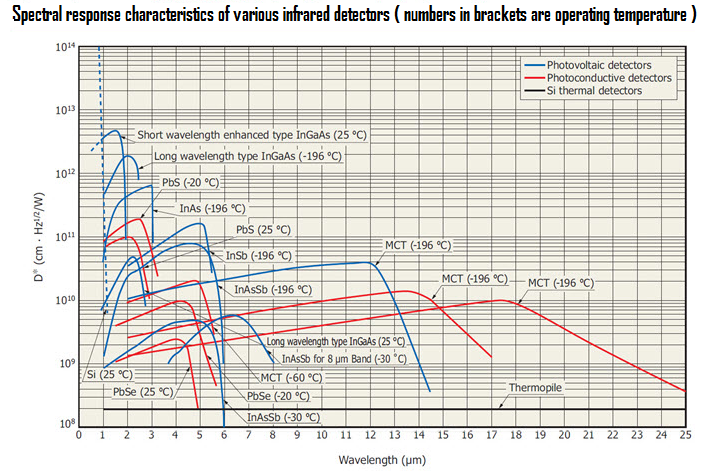

But considering everything equal, bigger sensor like TRS, RECO NG will perform better than EOTS, Pirate or OFS .Just like APG-81, N036 will enjoy big advantage over zhuk, RBE-2 due to the sheer aperture different.
By: mig-31bm - 4th December 2017 at 17:04
er, “the same”… besides being both “reconnaissance pods”, I doubt they have a single screw in common
The same as in they will have similar level of capability
By: eagle1 - 4th December 2017 at 16:22
Loke, I think you are simply mistaken with the Danish evaluation interpretation and you are making apple to orange comparison;
Non-Traditional Intelligence, Surveillance and Reconnaissance (NTISR) is refferred to real time video transmission which is a different thing than what is performed with a dedicated heavy reconnaissance pod. On one side you are looking at the world through a pipe, but in real time (like a drone). For pods like Reco NG you are collecting a huge photography of a zone (a bit like google earth, you are some kind of sattelite inteligence substitute). Real time transmission is not possible due to the sheer amount of data but it can be downloaded in flight in the case of the reco NG thanks to a dedicated datalink to reduce treatment time.
Strike, Coordination and Reconnaissance (SCAR) in the Danish evaluation could perhaps encompass the more traditionnal reconnaissance role which would explain F35 lower score but it is mixed with strike and coordination wich have nothing to do with pure reconnaissance. For this part the scope of the evaluation is not clear.
As far as the rafale is concerned it has the brand new Talios pod for NTISR AND Reco NG for pure reconnaissance. One is more tactical while the other is more “strategic” involving intelligence officer and post treatment (like drone vs sattelite). The F35 simply lack an important spectrum of capability as its has nothing like a proper heavy duty reconnaissance pod. You have to understand that for the classic reconnaissance duty you absolutely need powerfull optics and size matters.
For the US with dozens of optical sattelites this capability is less important but for other countries that is another matter…Even for France which has its own very modern optical sattelites…But not enough in numbers to be reactive at a sub strategic scale, you don’t necessarly have the sattelite in the right place at the right moment so Reco Ng is a felxible addition.
By: TomcatViP - 4th December 2017 at 16:14
and why comparing the size of a telescope with that of planes (from someone that like to call himself “eagle”, that’s full of irony)?!!
By: Loke - 4th December 2017 at 16:06
ahaha ! Could you give some evidences ? best camera and telescope have bigger sensor as you need to get as much light as possible. Have you ever heard of the magellan telescope, European extremely large telescope, the 30m telescope which are underway as the new generation ? They are still pushing size of optics to the extreme to get the maximum amount of photons…Do you know what is a full or medium frame sensor in photography ? Why are best cameras relying on bigger sensor ?
Physics is still relevant of course however there is more to this than what meets the eye… (pun intended).
Please look at the numbers from the Danish eval. F-35 scores higher than the others even in the Recce missions. The Delta is smaller than for the other missions (so in that respect you have probably identified a “weak point” of the F-35), however it still scores higher than the SH, Typhoon, and F-16!
If you are not happy with the Recce capabities of the F-35 then for sure you would not be happy with the recce capabilities of the SH/Typhoon/F-16…
By: Loke - 4th December 2017 at 16:01
For the one off customer that is interested in a dedicated recce capability the best approach would be to work with the existing, and integrated multi-mission pod and leverage a mature sensor that can be integrated with it. The US and most other operators will rely on (either organic or coalition) ISR assets (either manned or unmanned) so something that can be easily integrated will be the proffered choice of 1 or two potential operators that may want something organic to the F-35.
It would have been interesting to know what configurations were used in the Danish eval. They also had the Danish F-16 in the eval as a reference point, and the F-35 compared favorably to the Danish F-16 which, I believe, would normally fly with recce pods from Terma:
Interestingly the F-16 and Typhoon were roughly in the same ballpark in terms of mission effectivness — Typhoon slighly above in NTISR and F-16 slightly above the Typhoon in SCAR! I wonder where Rafale would have been in this chart!
By: eagle1 - 4th December 2017 at 15:58
@Eagle1:
Not anymore. Staring sensors are small clustered cells with very high definition data already digitalised.
ahaha ! Could you give some evidences ? best camera and telescope have bigger sensor as you need to get as much light as possible. Have you ever heard of the magellan telescope, European extremely large telescope, the 30m telescope which are underway as the new generation ? They are still pushing size of optics to the extreme to get the maximum amount of photons…Do you know what is a full or medium frame sensor in photography ? Why are best cameras relying on bigger sensor ?
By: TomcatViP - 4th December 2017 at 15:07
ye ye… optics do not rely on optics anymore… Sure…
Don’t Forget to Check Radar precision in SaR mode before going to bed also.
Optics face inherent volumic challenges That CAN be bypassed with new technologies. I also mentionned the data flow That is a limitting factor with optical sensor pod mounted.
Sorry to to put some light in you cave.
By: FBW - 4th December 2017 at 14:57
VERY reductive vision that could only show how biased the eval was biased..
As a time saving measure in the future, I would suggest that you copy and paste this quote on your desktop. That way every time the F-35 is in a competition you can just paste. Don’t say I never helped you be more productive.
Obviously a biased competition, that’s why they had independent agencies oversee the evaluation process… to ensure bias.
By: bring_it_on - 4th December 2017 at 14:51
For the one off customer that is interested in a dedicated recce capability the best approach would be to work with the existing, and integrated multi-mission pod and leverage a mature sensor that can be integrated with it. The US and most other operators will rely on (either organic or coalition) ISR assets (either manned or unmanned) so something that can be easily integrated will be the proffered choice of 1 or two potential operators that may want something organic to the F-35.
By: halloweene - 4th December 2017 at 14:49
Regarding “Recce”; In the Danish eval two of the missions were described as:
Non-Traditional Intelligence, Surveillance and Reconnaissance (NTISR), and:
Strike, Coordination and Reconnaissance (SCAR).
VERY reductive vision that could only show how biased the eval was biased…
@Eagle1:
Not anymore. Staring sensors are small clustered cells with very high definition data already digitalised.
teah ye ye… optics do not rely on optics anymore… Sure…
By: TomcatViP - 4th December 2017 at 14:34
@Eagle1:
Not anymore. Staring sensors are small clustered cells with very high definition data already digitalised.
By: Loke - 4th December 2017 at 14:32
Regarding “Recce”; In the Danish eval two of the missions were described as:
Non-Traditional Intelligence, Surveillance and Reconnaissance (NTISR), and:
Strike, Coordination and Reconnaissance (SCAR).
It seems to me that both of these have elements of “Recce”. So how did the Typhoon, SH and F-35 fare?
NTISR and SCAR Typhoon: 2.7 and 2.3
NTISR and SCAR F-35: 4.3 and 3.3
NTISR and SCAR SH: 3.3 and 3.0
As we see F-35 scores higher than the two others, and the SH scores higher than the Typhoon. We also see that the F-35 scores relatively low on SCAR, only 0.3 higher than the SH.
Of course we do not know what assumptions were made during these assessments…


 Sign In








 April 24, 2015 at 4:38 pm