
By: Arabella-Cox - 21st March 2016 at 19:19
That is correct, the FD2 was just out of frame on one shot but the vapour trail was well defined and after comparison with the other shots it was approved to be acceptable to extrapolate the position of the aircraft. It is indeed in “Faster than the Sun”, the narrative being tweaked slightly for dramatic effect, which is quite acceptable for a commercial book.
By: NEEMA - 21st March 2016 at 17:46
There was indeed something (perhaps in “Faster than the Sun”?) in that one of the tracking cameras showed the beginning of a vapour trail with a slight gap and didn’t actually show the F.D.2 itself. IIRC the pictures showing this were included in Twiss’s account. After a sweat the FAI observers accepted that this was proof that the aircraft had gone through the “gate” and accepted the ensuing speed calculations.
By: HP111 - 21st March 2016 at 17:24
No, a myth. The official RAE report on the timing operation was submitted to the FAI with a complete description of all metods, calibration and uncertainties and was accepted without question. The speed submitted had an error of 0.033% at the 99% confidence level, the maximum uncertainty acceptable being 0.25%. A copy was also provided to the US NAA.
(Source RAeC official records)
I read it in a piece written by Peter Twiss.
By: charliehunt - 21st March 2016 at 11:25
Thanks for that. I was surprised by HP111’s post as I had always presumed that that story was just an old myth.
By: Arabella-Cox - 21st March 2016 at 10:26
…. the recording cameras were not correctly aligned and the speed achieved could not be definitively determined. After much umming and ahhing, the attempt was allowed with an estimated speed.. .
No, a myth. The official RAE report on the timing operation was submitted to the FAI with a complete description of all metods, calibration and uncertainties and was accepted without question. The speed submitted had an error of 0.033% at the 99% confidence level, the maximum uncertainty acceptable being 0.25%. A copy was also provided to the US NAA.
(Source RAeC official records)
By: skyskooter - 14th March 2016 at 21:01
After she was in natural metal finish and before she was modified and painted blue wasn’t she painted purple ? Does anyone have a picture ?
By: dhfan - 13th March 2016 at 20:39
It’s always bugged me that with two FD2s to choose from, it was the record-breaker that was rebuilt as the BAC221.
By: Archer - 12th March 2016 at 12:35
Nice photos Ken, that first one of the BAC221 is strikingly similar to one of mine!
Edit: You can never have too many photos of pretty blue aeroplanes.
BAC221_Yeovilton_July2006 by Jelle Hieminga, on Flickr
By: Flanker_man - 12th March 2016 at 11:40
My pics of both…..
Fairey FD2 at the RAF Museum Cosford……
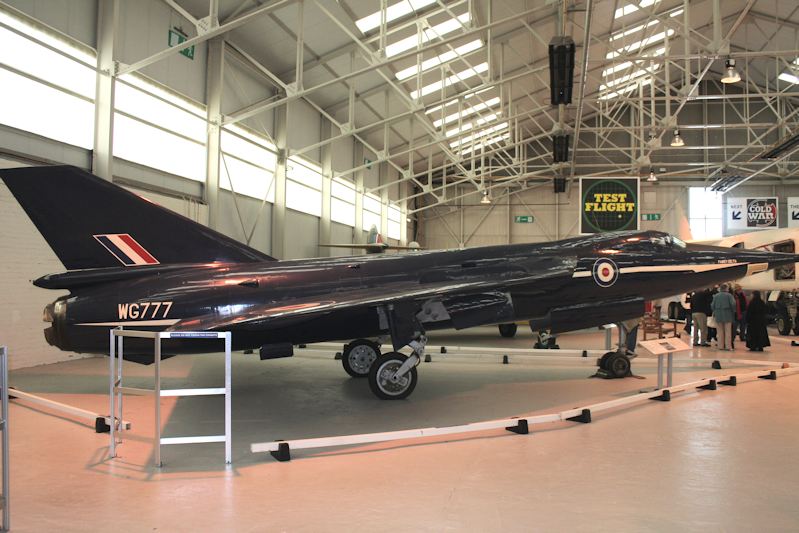
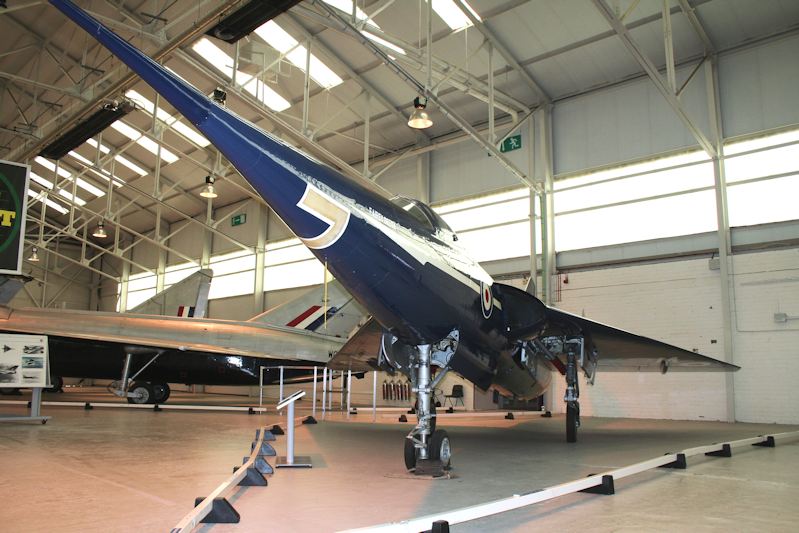
BAC-221 at the FAA Museum Yeovilton….
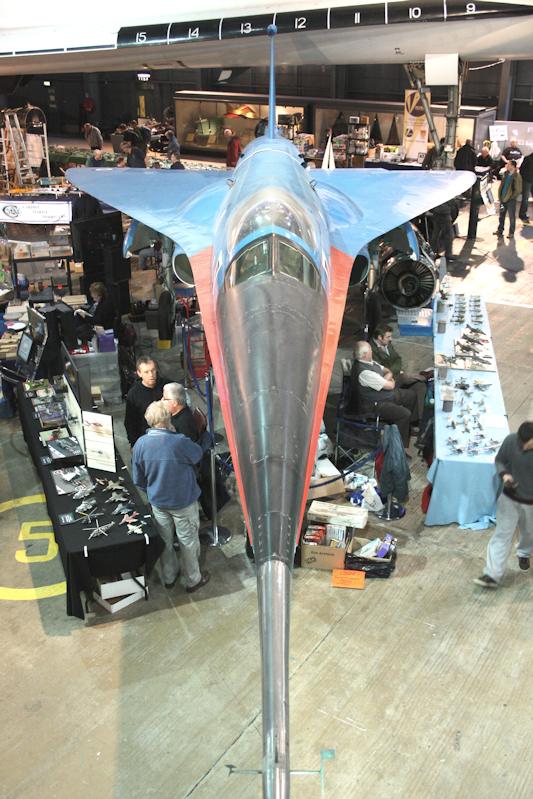
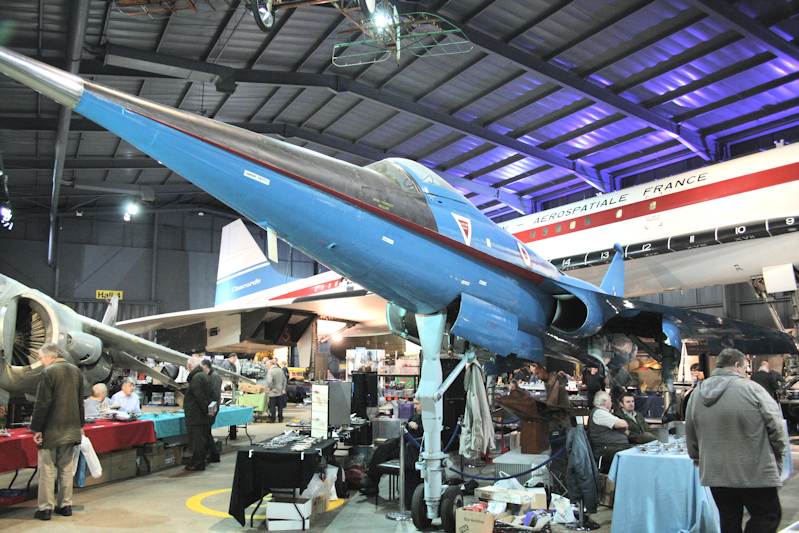
Ken
By: Archer - 12th March 2016 at 10:29
 FD2_Cosford_270216 by Jelle Hieminga, on Flickr
Still a great looking aircraft.
By: Mr Creosote - 10th March 2016 at 20:35
It flew so fast you thought you’d seen a Mirage 😉
Roger Smith
😀
By: RPSmith - 10th March 2016 at 20:12
It flew so fast you thought you’d seen a Mirage 😉
Roger Smith
By: HP111 - 10th March 2016 at 19:51
… that record of 1,132 mph was a fantastic achievement….
And yet it was all rather borderline. Firstly The Ministry was very reluctant to release the aircraft from its research programme in order to make the attempt runs. Secondly, the recording cameras were not correctly aligned and the speed achieved could not be definitively determined. After much umming and ahhing, the attempt was allowed with an estimated speed. And after all that it didn’t stand for all that long before the Americans beat it.
The FD2 was certainly an interesting aircraft though, the smallest highspeed airframe that could be built around an Avon engine and also carry a pilot.
By: Steve Bond - 10th March 2016 at 13:17
To be strictly accurate, the Concorde in miniature was a heavily modified FD.2 with a new wing, called the BAC221. Nonetheless, that record of 1,132 mph was a fantastic achievement and Peter Twiss was such a quiet unassuming chap about it.
By: mmitch - 10th March 2016 at 10:45
Concorde in miniature that lead to the full size carrying 100 passengers cruising at over 1000. Since then aviation has gone backward, with passengers needing 3 hours to clear an airport. The same time as Concorde took to cross the Atlantic…..
mmitch.


 Sign In








 March 10, 2016 at 10:17 am