OK, here’s a challenge.
It’s often stated that the Japanese referred to the Bristol Beaufighter as the ‘Whispering Death’. However I’ve never seen any credible original reference to it. Moreover, why would they do that? Enemy aircraft were a pain, but nicknames (when used) normally relate to tasks, not types (‘Bedcheck Charlie’ or the ‘Night Witches’).
On the other hand, like many other wartime stories, it makes good sense from the point of Allied propaganda journalism, which is where I’m sure it comes from, but of course I might be wrong. Can you prove it?
Of course a source reference would be no good to me as I don’t read or speak Japanese, but I’m interested who can come up with the earliest reference to the story, or any wartime Japanese reference to it. I’m willing to bet the latter doesn’t exist.
Let’s skip all the ‘I heard this’ / ‘I read that’ postwar scuttlebutt. Yes, it’s an oft repeated statement, but that’s because most people have just repeated it. Where did it come from? The fertile mind of some Allied PR merchant? Or a debrief of a Japanese soldier?
Let’s see…
[Edited to change title to include the other unlikely ‘alleged enemy nicknames’ discussed.]

By: WebPilot - 16th December 2006 at 09:05
Interestingly, I’m currently rading “Goody” Goodeson’s autobiography – he talks abuot “Thunderjugs”
By: WebPilot - 15th December 2006 at 17:07
Back to Beaufighters. Have you seen this on utube http://www.youtube.com/watch?v=B8HuO6vvnjg
I know its not real but will we ever see a Beau flying!!
Great stuff! Mr Picky says those virtual RAF Beaus are Beau 21 with the Sperry autpilot bulge over the nose as used by the RAAF….
Sorry, I’ll tell Mr Picky to shut up and just enjoy it.
By: Robert Whitton - 15th December 2006 at 16:32
Back to Beaufighters. Have you seen this on utube http://www.youtube.com/watch?v=B8HuO6vvnjg
I know its not real but will we ever see a Beau flying!!
By: WebPilot - 15th December 2006 at 10:47
Webpilot’s post was an excellent one, for which many thanks.
No, I’m just interested in the original source document. As we know, translation’s a funny thing, and a secondary reference isn’t as authoritative as a primary one. I also Don’t know what the original testimony would have been made in, and how. Did Milch speak English? That’s all.
Let’s say we need a bit more than ‘a bloke on the internet said’… 😉
Absolutely, the net is certainly less than proof positive! I’ve not been able to find an original source, but this is the place that would know.
http://nuremberg.law.harvard.edu/php/docs_swi.php?DI=1&text=overview
And, of course, as this was from the Nuremburg IMT trial, it would not make any difference whether Milch spoke or wrote English as if his evidence had been given in German, it would have been translated by the court translators. The records of the Trial are all transcripted in English – I’d imagine there must have been records of what was said in the original language used as well.
By: Flanker_man - 15th December 2006 at 08:16
I’m following this thread with great interest – one of the better ones that hasn’t yet deteriorated into a slanging match.
I can’t add much of any significance – except, why the name ‘Porcupine’ ??
Surely a heavily-armed Sunderland would have attracted the appelation ‘Fortress’ or ‘Flakship’ – something to indicate the number of guns.
The word Porcupine implies lots of spikes – which I suppose could be guns ‘sticking out’.
But – what about the profusion of Yagi aerials on the MkII ??
That would make a Sunderland look like a Porcupine………
In other words, the nickname (if it was given by the Germans) could simply mean that the Sunderland, with all its aerials, looked like a Flying Porcupine..
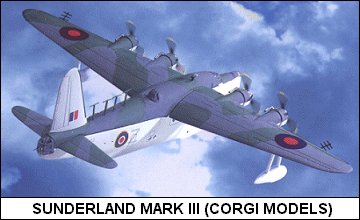

Just a thought… 😎
Ken
By: Malcolm McKay - 15th December 2006 at 03:43
Did Milch speak English? That’s all.
Well a quick search of the various histories indicate that he visted Britain before the war on several occasions and also dined with Churchill on one occasion. His job before he became part of the Luftwaffe would probably have necessitated some knowledge of English. However the reference here – http://www.au.af.mil/au/awc/awcgate/cbo-afa/cbo05.htm – was translated from German so perhaps he spoke English but was not so adept at written English.
By: Pondskater - 15th December 2006 at 01:12
I suspect the name’s a British PR effort from 1940, as the Sunderland with a four gun tail turret (plus a nose and two flexible dorsal mounts) regarded (by the British) as heavily armed for it’s day – remember the Wellington, a heavy bomber initially had only two forward and two rear… The Germans would hardly be impressed, as they were toting cannon around.
James, I think you’re right but with a little more detail and dates I think it comes even clearer.
As you said, early models had a twin gun front turret, four gun rear and two dorsal hatches each with single guns. In mid production (mainly MkIII) there was a mid upper turret but the dorsal hatches returned in the MkV.
In early 1943 the Galley guns, which could sweep the beam areas below the aircraft, were installed by 461 squadron (RAAF).
In August 1943 the fixed nose guns were installed by 10 squadron (RAAF).They are of almost no use in air combat, being fitted to attack U-boats flak batteries, but they add to the impression of the Sunderland being heavily armed.
The RAAF squadrons even came up with a plan to fit guns (and a gunner) in the tight space just behind the front turret. (see pic) They were told to remove this modification. The Australians were highly innovative and led the way in the MkV Sunderland having Pratt and Whitney engines with feathering props, building a prototype in parallel with Short Brothers.
Anyway, the point is, that we look back on the late Sunderlands, imagine guns pointing out of practically every window and happily assume that is why the Germans gave it a nickname. But the nickname “Flying Porcupine” pre dates those additional guns, so I agree – your comment is bang on. It shows how easy it is to apply hindsight in research. It takes great care to consider facts in light of the knowledge of the time, rather than our knowledge now.
If anybody can provide more evidence of an earlier use of “flying porcupine” than 1942, do share it. I’ve checked Flight magazine’s Jan 39 Sunderland article which had no mention – but then it wouldn’t prewar.
Try Bill Shaksphere with Richard III for much earlier ‘spin’. 😉
😀
By: JDK - 14th December 2006 at 21:42
James, are you suggesting ‘Stuka’ here is an English translation of a different German word?
Webpilot’s post was an excellent one, for which many thanks.
No, I’m just interested in the original source document. As we know, translation’s a funny thing, and a secondary reference isn’t as authoritative as a primary one. I also Don’t know what the original testimony would have been made in, and how. Did Milch speak English? That’s all.
Let’s say we need a bit more than ‘a bloke on the internet said’… 😉
By: VoyTech - 14th December 2006 at 12:41
Milch’s testimony at Nuremberg shows:
8th March 1946
MILCH: ….Then there was a big international meeting in the summer, in July 1937, on the occasion of the aviation meeting in Zurich, which was held every five years. At this meeting we purposely showed our latest models of fighters, bombers, and Stukas……There was, for instance, the Messerschmitt Fighter 109 ….; the newest Dornier bomber type; the newest Stuka by Junkers…”Excellent. That’s great stuff. Only quibble is presumably it’s a translation from Milch’s German testimony? Do we have the original version?
James, are you suggesting ‘Stuka’ here is an English translation of a different German word?
By: Moggy C - 14th December 2006 at 10:51
Now.
What of ‘The Blue-Nosed Ba5tards of Bodney’
That has no hint of the Hun about it in my book.
Pure US press invention or self promotion by the pilots?
MOggy
By: JDK - 14th December 2006 at 00:46
A real mythological machine was the “Gladfish”. Allegedly an unlikely ( nay near -impossible) combination of Gladiator fuselage and Swordfish wings put together from bits during the early days of the war in the Middle-East.
Could that be the ‘Bleriator’, a Malta Gladiator with Blenheim engine and prop? (Sounds like two different efforts…) There certainly was the super Gladiator (my term) on Malta which was a Glad fitted with adittional upper wing guns, but was fragged by a bomb before use. Where’s the reference to the Gladfish?
There was also the single examples of the “Super Stuka” reported in Malta as having a retractable undercarriage and mixed with normal Ju-87s. Again I think we are looking at misreporting -this time of a certain Italian machine on operational evaluation.
Interesting. That may be correct, but on a probability basis, I’d place a small wager that the ‘Super Stuka’ ‘attacking’ the ships were FAA Fulmars. They were certainly there, in the battle, and certainly shot at by the RN’s notoriously impartial ack ack…
OK, happy to look into the ‘Flying Porcupine’ question because, to be honest, it has bothered me for a while.
Ta!
…It was in mid 43 when the U-boats stayed on the surface that the Sunderland was fitted with addition fixed forward guns. Is my memory also correct that the additional galley guns would not have been used until 43?
Certainly 10 and 461 RAAF had galley .303 VGO / Vickers K early on in their respective Sqn. careers, prior to the addition of the mid upper turret, I believe. The forward firing guns are, I think, a red herring in that they’d be of no great importance in air combat, which is (allegedly) where the nickname came from. I suspect the name’s a British PR effort from 1940, as the Sunderland with a four gun tail turret (plus a nose and two flexible dorsal mounts) regarded (by the British) as heavily armed for it’s day – remember the Wellington, a heavy bomber initially had only two forward and two rear… The Germans would hardly be impressed, as they were toting cannon around.
A very early example of PR spin. 😉 …
Early PR? Nah. Try Bill Shaksphere with Richard III for much earlier ‘spin’. 😉
Thanks Joe, I wonder if Mark Pilkington can comment?
8th March 1946. MILCH: ….Then there was a big international meeting in the summer, in July 1937, on the occasion of the aviation meeting in Zurich, which was held every five years. At this meeting we purposely showed our latest models of fighters, bombers, and Stukas……There was, for instance, the Messerschmitt Fighter 109 ….; the newest Dornier bomber type; the newest Stuka by Junkers…”
Excellent. That’s great stuff. Only quibble is presumably it’s a translation from Milch’s German testimony? Do we have the original version?
By: JoeB - 13th December 2006 at 22:30
D’you recall which museum? There’s only a couple, and I’m interested.
The poster said an aircraft museum at Melbourne airport. Googling for that I suppose he might meant the Moorabbin Air Museum near Melbourne, which has a Beaufighter. Their web pages don’t give any info however but generic statement the Japanese “called it the Whispering Death”. And come to think of it, the poster on that Japanese forum might have just been translating “Whispering Death” as best he could to Japanese as “囁く死” for the benefit of others on that forum, rather than saying the Aussie museum gave that as the Japanese version of the nickname. Anyway here’s both pages.
http://www.warbirds.jp/ansq/11/A2001891.html
http://www.aarg.com.au/beaufighter.htm
Joe
By: Pondskater - 13th December 2006 at 22:22
As to … Moggy’s question of the Sunderland’s alleged ‘flying porcupine’ (Das Fliegen Stachelschwein) being an British invention or genuine German. I’m going for Allied, but anyone got early evidence?
OK, happy to look into the ‘Flying Porcupine’ question because, to be honest, it has bothered me for a while.
The earliest evidence I could find was 1942.
In “Coastal Command” published by the Ministry of Information through HMSO there is a sentence which states:
The Sunderland has a very wide range and an armament formidable enough for it to be nicknamed the ‘flying porcupine’ by the Germans.
Now that strikes me as very odd because the Fliegen Stachelschwein name is usually illustrated with the story of Ft Lt Walker’s epic battle with eight JU88s in EJ134, a 461 sqdn RAAF Sunderland, which took place on 2nd June 1943. It was in mid 43 when the U-boats stayed on the surface that the Sunderland was fitted with addition fixed forward guns. Is my memory also correct that the additional galley guns would not have been used until 43?
And a small negative. Chris Goss in his book “Bloody Biscay” which records the long range maritime fighter ops of the JU88s of V/KG 40, despite using much German sourced material, does not mention the nickname at all.
Based on this, my suggestion is that the name was simply a creation of a creative writer at the Ministry of Information during WWII. A very early example of PR spin. 😉 Can anybody add more to this?
Excellent thread – the comments above about Japanese being a contextual language are spot on but my Japanese friend knows more about art history than aviation and cannot add to the Beaufighter debate.
By: WebPilot - 13th December 2006 at 18:24
I don’t think so in this instance. It may be that you are referring to a fairly well known air- to-air image that is part of another confused saga , including some fakery and mix-ups with the jettisonable u/c of the naval Ju 87.
The Malta reports were from AAA crews and ground observers.
I think that the culprit may have been the Breda 201 ( see enclosed) on operational evaluation ,though I am not aware of any documentation to further support this hypothesis.
The photo is in Stuka at War and allegedly is an incident during an attack on the Polish fleet at Hels.
By: 25deg south - 13th December 2006 at 16:21
There does exist a photo of a JU87 flying sans wheels – remarkably the machine pulled out too low and hit the sea yet somehow the pilot managed to keep the thing flying despite ripping off both u/c legs. I wonder if this is the same machine and incident?
I don’t think so in this instance. It may be that you are referring to a fairly well known air- to-air image that is part of another confused saga , including some fakery and mix-ups with the jettisonable u/c of the naval Ju 87.
The Malta reports were from AAA crews and ground observers.
I think that the culprit may have been the Breda 201 ( see enclosed) on operational evaluation ,though I am not aware of any documentation to further support this hypothesis.
By: WebPilot - 13th December 2006 at 15:43
There was also the single examples of the “Super Stuka” reported in Malta as having a retractable undercarriage and mixed with normal Ju-87s.
There does exist a photo of a JU87 flying sans wheels – remarkably the machine pulled out too low and hit the sea yet somehow the pilot managed to keep the thing flying despite ripping off both u/c legs. I wonder if this is the same machine and incident?
By: WebPilot - 13th December 2006 at 15:37
Perhaps, but we can’t prove it. As it as, ‘Stuka’ was used by the Allies generally to refer to the Ju-87 only. Evidence? Difficult to find examples of German dive bombers not being called ‘Stukas’, but the Hs123 was in use, certainly on the Russian front and in Spain. Don’t recall Stuka for that – but I might be wrong.
A comparison might be that in W.W.I Allies would refer to a Fokker – but only specify when their was a risk of muddling different types. Thus the Eindekker was ‘just’ ‘Fokker!’ while the later (contemporary) types were a Tripe, De Seven and monoplane. (It’s a theory… 😀 )
I suspect you’re right on this. The Western Allies didn’t come up against any other German dive bombers in any numbers and the JU87 had acquired almost mythical status during 1939 and 40. The Germans certainly did use the term generically for all dive bombers as Milch’s testimony at Nuremberg shows:
8th March 1946
MILCH: ….Then there was a big international meeting in the summer, in July 1937, on the occasion of the aviation meeting in Zurich, which was held every five years. At this meeting we purposely showed our latest models of fighters, bombers, and Stukas……There was, for instance, the Messerschmitt Fighter 109 ….; the newest Dornier bomber type; the newest Stuka by Junkers…”
By: 25deg south - 13th December 2006 at 15:11
I can’t put my hand on it but I recall that the German infantry had an unofficial nickname for the night flying Po-2’s based upon the engine sound. (something like “sowing machine”, but not IIRC) This is linked to the “Night Witches”
A real mythological machine was the “Gladfish”. Allegedly an unlikely ( nay near -impossible) combination of Gladiator fuselage and Swordfish wings put together from bits during the early days of the war in the Middle-East.
Best bet was a misreported surviving Gauntlet.
There was also the single examples of the “Super Stuka” reported in Malta as having a retractable undercarriage and mixed with normal Ju-87s. Again I think we are looking at misreporting -this time of a certain Italian machine on operational evaluation.
Then of course there are “foo-fighters”…………..
By: VoyTech - 13th December 2006 at 14:11
Can we stop trying to score self-satisfying points please?
Sure we can. But it’s so much fun, sometimes…
As I understand it, ‘Stuka’ is an abbreviation used by the Allies to describe the Ju-87, and rarely, if ever, any other German type, despite the fact it’s an abbreviation of the German for ‘dive bomber’. As such, it would be a nickname and was never a formal reporting name – although perfectly clear (if over-precise) in Allied use. Anyone got a problem with that?
As I understand it now, I misunderstood the meaning of the word ‘nickname’ in this context. Possibly because the closest equivalent in my Unenglish language implies an informal name that is applied to someone/something with the intention of emphasising a particular quality or feature of the object. ‘Rata’ or ‘Whispering death’ match this (regardless of whether they are genuine wartime stuff), ‘Stuka’ doesn’t, as it doesn’t mean anything in any of the Allied languages.
So, to get back to my original question as I meant it: apart from all those mythical nicknames that JDK meant when he started this thread, were there at all any informal nicknames applied to the-other-side’s aircraft that were not derived from their names/designations/roles but coined to stress their positive or negative aspects? Or were all such poetic and/or savoury names in fact produced by own-side propaganda and/or post-war authors.
By: JDK - 13th December 2006 at 13:09
Thanks for your contribution Joe.
Ghost writers can insert stuff, and Freeman is perhaps the foremost expert on the 8th AF but…do you have a specific citiation from Freeman?
No, I’m afraid I don’t. I vaguely recall it being mentioned by a good airshow commentator (well, I can think of a couple). Can anyone else nail it? I suspect Joe’s view of it being unit specific is what I mis-remembered.
A thread on warbirds.jp I googled referred to a Beaufighter in an Aussie museum with a plaque saying the Japanese called it “囁く死”
D’you recall which museum? There’s only a couple, and I’m interested.
I’m skeptical about reverential nicknames for Allied planes by the Axis without specific wartime Axis sources that say so.
Absolutely. And we have proven early Allied invention, and not (yet) found and Japanese sources, which, I suspect is where we’ll stop on that one.
As to VoyTech’s ‘reverse’ Axis-Allied question, that’s interesting and ties back to Moggy’s question of the Sunderland’s alleged ‘flying porcupine’ (Das Fliegen Stachelschwein) being an British invention or genuine German. I’m going for Allied, but anyone got early evidence?


 Sign In








 December 7, 2006 at 1:53 pm