Curious if anyone has experience with underwater recovery of wartime aircraft. Obviously very important not to disturb war graves!
I am interested in things like figuring out techniques on how an airframe drifts with tidal activities and current, different ways to lift without damaging, and how to properly rinse and treat the aircraft after removal from the water.

By: Andywis - 19th April 2009 at 09:27
Loch Ness wellington
Hi, Cees;
Good idea. I’m a Volunteer at the Brooklands Museum, so I’ll have a word with the “powers that be”, about starting such a thread.
In the meantime, if one Googles “Loch Ness Wellington”, several sites detail the initial recovery plans, as well as the actual restoration. There is also a site on the Brooklands Museum…..
Regards to all,
Andy
By: Cees Broere - 18th April 2009 at 18:25
Alloy:
Have you researched into the Loch Ness Wellington? Perhaps you could email me off- line, as I am “connected” to N2980……..
Ht Andywis,
How about a thread about all things that led to the recovery of this amazing aircraft?
When I was on Loch Ness some years ago, I was talking to the captain of the boat about N2980, as he had been a diver during the recovery, while the other were “hunting” for Nessie. My wife thought it was hilarious:p
Cheers
Cees
By: Atcham Tower - 18th April 2009 at 17:12
Sorry for the silly comments but we all knew that the real experts would come up eventually with some useful information!
By: Alloy - 18th April 2009 at 14:40
Thanks guys, the last few posts are great!
By: Andywis - 17th April 2009 at 23:09
Alloy:
Have you researched into the Loch Ness Wellington? Perhaps you could email me off- line, as I am “connected” to N2980……..
By: G-ORDY - 17th April 2009 at 08:36
Midway – Chicago
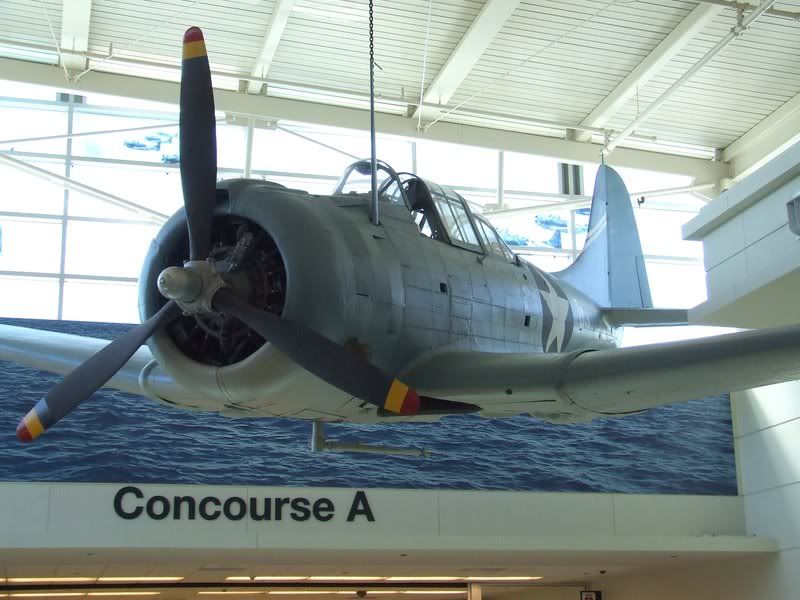
There are some very informative displays, including several videos, which show in detail how several aircraft were raised from Lake Michigan at Midway Airport, Chicago. It is all part of the area in the Terminal Concourse where they have the Douglas SBD Dauntless on display … apparently there is a Wildcat at O’Hare which was recovered in the same way.
By: ausflyboy - 17th April 2009 at 08:24
In my experience, the submerged airframe has a few variables such as whether a)canopy is open/closed b) holes in fuselage and wings c:) contents of fuel tanks , high or low wing etc. Once an aircraft has been submerged for a period of time, the void spaces that would initially create a possible neutral or positive bouyancy are replaced with water/sand and mud so a 2 tonne Aircraft COULD weigh 5 , 6 or even more. Very similar to the lift/drag/thrust/weight on an airworthy aircraft. In terms of movement of said aircraft… in theory …we are not talking aerodynamic force on an underwater aircraft…although the forces involved are the same! A low wing aircraft with a constant current (water) acting directly onto the normal airfoil section would create negligable lift as it would induce theoretically a stall as there is little or no pressure acting underneath the airfoil surface. So you would find the aircraft is most likely very close by your original location (or smashed into little bits). However a high wing aircraft would be buffeted along as the current can act the same as airflow in flight therefore the aircraft would be further afield than where you originally found it….but once again if weight/suction etc is higher…you’d probably find that the wings would be ripped off and aircraft destroyed, but it would be scattered in original general position
In recovering said aircraft normally a device like a vacuum cleaner is used to suck the sand from around strategic areas on the airframe and lifting slings are attached to plastic drums or lifting bags that are then slowly filled with compressed air to achieve a neutral bouyancy..once that has been achieved the drums are filled with more air to achieve a positive bouyancy which will start the aircraft back to the surface…..fun to watch 🙂
Anyhow, in terms of restoration….theres a couple good websites out there that explain the processes…two are listed below
http://www.museum.wa.gov.au/collections/maritime/march/fallenangels/degrigny/fockewulf.html
http://www.museum.wa.gov.au/collections/maritime/march/fallenangels/bv222.html
Hope some of this helps!!
Cheers,
Chris
By: Whitley_Project - 16th April 2009 at 22:08
Alloy – the depth of water is probably the most important factor, followed by the bottom – silt and sand may cover aircraft completely. Another important factor is other debris – a magnetometer is a good tool, but if your object of interest is surrounded by modern junk it will probably be useless. If you have a good sonar set up and a hard rocky bottom you may have a chance of finding something, but sea searches are long, nauseatingly boring and expensive.
If you know a rough location, you may be better off just dragging for it :p
Either way, the very best of luck.
By: Alloy - 16th April 2009 at 18:59
Hi Alloy:Are you going to a survey,[for the wreckoligists] and
what depth? Can you post a side scan? You’ve got us
curious now.
It will be a while yet for any imaging. Things look good for the location, but I have to trace how far the aircraft may have moved. We flew over the area with a magnetic anomaly detector a few years back, but there was too much interference to tell what was there. I would love to get out there with a side scan sonar, but would like to get input from others that have undergone similar searches and recoveries before I get too committed.
By: oshawaflyboy - 16th April 2009 at 17:53
Recoverery
Hi Alloy:Are you going to a survey,[for the wreckoligists] and
what depth? Can you post a side scan? You’ve got us
curious now.
By: Alloy - 16th April 2009 at 15:11
Actually there are a few interesting items I would like to have a look at, the only thing is trying to get a realistic area that they would have moved after ditching and prior to settling in. There is one aircraft that ditched in a sandy bottomed bay that I really hope was sucked into the sand just like that P-38 though!:D
By: GrahamSimons - 16th April 2009 at 13:30
well just wash that Spitfire ID plate in fresh water….!
By: Atcham Tower - 16th April 2009 at 12:56
Leave that P-38 alone!:)
By: Phantom Phil - 16th April 2009 at 12:48
You have found something interesting haven’t you 😀
Curious if anyone has experience with underwater recovery of wartime aircraft. Obviously very important not to disturb war graves!
I am interested in things like figuring out techniques on how an airframe drifts with tidal activities and current, different ways to lift without damaging, and how to properly rinse and treat the aircraft after removal from the water.


 Sign In








 April 15, 2009 at 5:28 pm