Since we have a couple other “unusual” threads, I thought I’d start one on wierd and wacky weapons. No limits, just post up the odd weaponry you know of.
To start:
A grand-uncle of mine was in the Navy sea-bee’s in WWII, building air/sea plane bases throughout the Pacific. He was officially a Machinist’s Mate, un-official position of “Scrounger.”
One of his favorite stories was how he helped a PBY crew mount a pair of “surplused” 😉 Navy AA guns under the wings of their Cat. According to him, it worked wonders as a barge-buster, as long as they could keep ammo in it.
I know there are some good stories out there, let’s hear them.
Matt

By: Tillerman - 15th March 2007 at 23:42
The ‘cannon’ fitted to the B-25 was a 75mm! 😮
Many years ago I saw some footage of one of those cannons being fired during a low level flight. It was filmed from behind the cockpit crew of a Mitchell. When the cannon was fired you saw the crew thumping forward as a result from the recoil, like they were in a car that goes over a speed bump. There was a smoke trail visible. The impact of the projectile on the water caused an impressive big fountain.
Would like to see that footage again.
Tillerman.
By: Creaking Door - 15th March 2007 at 21:31
Some unusual aircraft weapons in current use
The AC-130U Gunship which must surely be unique in carrying (as originally designed) air-to-air (25mm GAU-12 Gatling), ground-to-ground (105mm M102 Howitzer) and anti-aircraft (40mm L60 Bofors) weapons all at the same time!
And weren’t the RAF dropping concrete-filled practice bombs fitted with laser-guidance kits quite recently in Iraq or Afghanistan?
By: Bruggen 130 - 15th March 2007 at 18:59
[QUOTE=Creaking Door;1092169]Didn’t look like a Victor to me…seemed a bit close to the ground.
Not a Vulcan…unless it’s pregnant! :D[/QUOTE
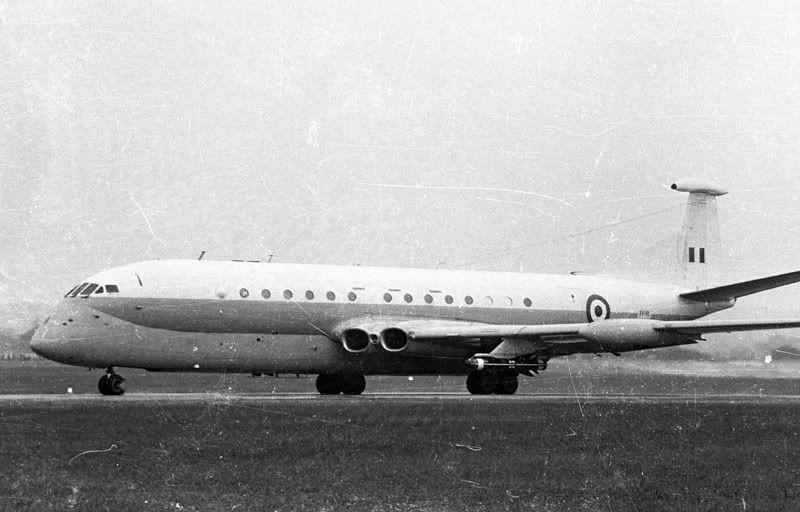
Yep, Prototype Nimrod XV-148 at Woodford Airshow, don’t know the year ?
By: Creaking Door - 15th March 2007 at 17:30
How about this;)
Didn’t look like a Victor to me…seemed a bit close to the ground.
Not a Vulcan…unless it’s pregnant! 😀
By: FMK.6JOHN - 15th March 2007 at 15:09
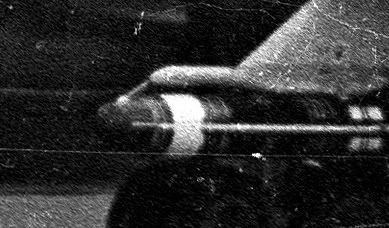
Yup, Martel was definatley fitted to both the Victor and the Vulcan, lost the Victor picture but here is the Vulcan…..
John.
By: FMK.6JOHN - 15th March 2007 at 15:03
How about Victor?
By: Creaking Door - 15th March 2007 at 14:27
Why Nimrod ?
Couldn’t think of many RAF aircraft with four-wheeled main gear.
So I thought Valiant, Nimrod or VC10.
Martel had anti-shipping versions so most probably Nimrod.
By: Bruggen 130 - 15th March 2007 at 12:28
Nimrod. 😀
Why Nimrod ?
By: TEXANTOMCAT - 15th March 2007 at 11:11
The original cannon in the B-25G was apparently adapted from either the M2 L/31 cannon of the early M4 Sherman tanks or the M3 L/40 cannon of the later M4 Sherman tanks (further variants had 76mm cannon, etc). I say this because as far as I can find, the US Army had no “75mm cannon, model M4”, and everything I have seen refers to the cannon of the B-25G as “M4”, as seen in the citation below:
“In the B-25G, a standard 75-mm Army M4 cannon was mounted to fire forward through the nose. This gun was a revision of the famous French 75 of World War I. The basic concept had been found to be feasible via a series of experiments on a converted Douglas B-18A Bolo.
B-25C-1 serial number 41-13296 was modified as the XB-25G prototype. It was fitted with a 75-mm M4 cannon which was 9 feet 6 inches long. The bombardier-equipped transparent nose was replaced with a shortened armored solid nose that reduced overall length to 51 feet. The cannon was mounted in a cradle in the lower left-hand side of the nose. The cradle extended underneath the pilot’s seat and a spring mechanism formed part of the gun mounting to take up the 21-inch recoil.
The modified aircraft made its initial flight on October 2, 1942, test pilot Ed Virgin being at the controls and with test engineer Paul Brewer being on board. Because of the additional weight and drag, maximum speed fell to 278 mph. However, flight tests found the stall characteristics to be normal and diving at speeds of up to 340 mph revealed no problems.
Five more B-25Cs were converted to B-25G standards, and 400 examples of the B-25G were built new at Inglewood in -1, -5, and -10 production blocks. 58 B-25C-20 and -25 bombers were modified with solid nose, two nose guns and 75-mm cannon and were redesignated B-25G.
Up to the end of the Second World War, the 75-mm cannon of the B-25G was the second largest gun fitted to any aircraft, exceeded in size only by the 105-mm cannon fitted experimentally to the Piaggio P.108A.”
more at:
http://home.att.net/~jbaugher2/b25_13.html“The B-25H (NA-98) differed from the G primarily in having a much more powerful armament suite. A lighter-weight 75-mm T13E1 cannon was fitted in the nose tunnel. The nose was fitted with four fixed 0.50-inch machine guns instead of two.”
[1,000 B-25H were produced]
more at:
http://home.att.net/~jbaugher2/b25_15.htmlThis site has a brief overview of large airborne guns:
http://www.aerospaceweb.org/question/weapons/q0174.shtmlThe US Army 75mm cannon of the pre/during WW2 period included:
M1897 & M1897-A4
M2
M2-A3
M3
M1916 & M1916-A1
M1917-A1The M2 & M3 are also described elsewhere as being derived from “the famous French 75 of World War I”.
Thanks Bager1968 – creaking door :p 🙂
The French 75mm IIRC was one of the first ‘QF’ guns and I beleive even saw some British and US service in WW1 and after
Adding to the above posts – the Shrike fitted to the Vulcan always looked a bit odd
TT
By: Creaking Door - 15th March 2007 at 10:40
Nimrod. 😀
By: Bruggen 130 - 15th March 2007 at 07:33
Vickers Valiant. 🙂
No but roundabout the same weight 😀
By: Bager1968 - 15th March 2007 at 06:04
The original cannon in the B-25G was apparently adapted from either the M2 L/31 cannon of the early M4 Sherman tanks or the M3 L/40 cannon of the later M4 Sherman tanks (further variants had 76mm cannon, etc). I say this because as far as I can find, the US Army had no “75mm cannon, model M4”, and everything I have seen refers to the cannon of the B-25G as “M4”, as seen in the citation below:
“In the B-25G, a standard 75-mm Army M4 cannon was mounted to fire forward through the nose. This gun was a revision of the famous French 75 of World War I. The basic concept had been found to be feasible via a series of experiments on a converted Douglas B-18A Bolo.
B-25C-1 serial number 41-13296 was modified as the XB-25G prototype. It was fitted with a 75-mm M4 cannon which was 9 feet 6 inches long. The bombardier-equipped transparent nose was replaced with a shortened armored solid nose that reduced overall length to 51 feet. The cannon was mounted in a cradle in the lower left-hand side of the nose. The cradle extended underneath the pilot’s seat and a spring mechanism formed part of the gun mounting to take up the 21-inch recoil.
The modified aircraft made its initial flight on October 2, 1942, test pilot Ed Virgin being at the controls and with test engineer Paul Brewer being on board. Because of the additional weight and drag, maximum speed fell to 278 mph. However, flight tests found the stall characteristics to be normal and diving at speeds of up to 340 mph revealed no problems.
Five more B-25Cs were converted to B-25G standards, and 400 examples of the B-25G were built new at Inglewood in -1, -5, and -10 production blocks. 58 B-25C-20 and -25 bombers were modified with solid nose, two nose guns and 75-mm cannon and were redesignated B-25G.
Up to the end of the Second World War, the 75-mm cannon of the B-25G was the second largest gun fitted to any aircraft, exceeded in size only by the 105-mm cannon fitted experimentally to the Piaggio P.108A.”
more at:
http://home.att.net/~jbaugher2/b25_13.html
“The B-25H (NA-98) differed from the G primarily in having a much more powerful armament suite. A lighter-weight 75-mm T13E1 cannon was fitted in the nose tunnel. The nose was fitted with four fixed 0.50-inch machine guns instead of two.”
[1,000 B-25H were produced]
more at:
http://home.att.net/~jbaugher2/b25_15.html
This site has a brief overview of large airborne guns:
http://www.aerospaceweb.org/question/weapons/q0174.shtml
The US Army 75mm cannon of the pre/during WW2 period included:
M1897 & M1897-A4
M2
M2-A3
M3
M1916 & M1916-A1
M1917-A1
The M2 & M3 are also described elsewhere as being derived from “the famous French 75 of World War I”.
By: Creaking Door - 14th March 2007 at 22:32
The ‘cannon’ fitted to the B-25 was a 75mm! 😮
From a Sherman tank IIRC – the loader/gunner crouched in the bomb bay and loaded it by hand…
Not sure that the 75mm in the B-25 was from a Sherman tank.
I know that the ‘lightweight’ 75mm cannon developed for the B-25 was eventually adapted for use in the M24 Chaffee light tank.
If it did originate from the Sherman then that must be unique development path (tank – aircraft – tank).
…at least the Mossie Mollins Gun had an autoloading hopper!
Yes, 25 (57mm) 6-pounder rounds, fired fully automatic, in 20 seconds!
I’m surprised the Mosquito wasn’t shaken to bits in the process.
By: 682al - 14th March 2007 at 21:23
We’re always looking to expand the collection though!
I must let you have the ex-wife’s address. I forgot all about the 250 lber. in the back garden when we split up. There can’t be many wives who’ve gained a bomb as part of their divorce settlement!
I had loads of fun with that bomb. I used to turn up with it in the back of my old Renault 4. I’d lift the tailgate to proudly show it to friends, family and the like, but they didn’t know about the loudly ticking alarm clock hidden behind it! 😮
Back on topic, wasn’t a Tiger Moth experimentally fitted with a scythe like blade hanging vertically below the fuselage, supposedly to enable it to cut down the invading Hun?
And who dreamt up the idea of “Razzle”? Small packs of phosphorous, kept at bay by being water soaked in the aeroplane, but supposedly setting fire to forests and crops when dropped by Bomber Command over Germany.
Desperate times, desperate measures!
By: Creaking Door - 14th March 2007 at 21:18
yep, martel, but on what…..
Vickers Valiant. 🙂
By: super sioux - 14th March 2007 at 21:13
Do 217 and flamethrower fitting.
Do217 if my memory serves right. There’s a pic of it in one of Alfred Price’s books. If I also remember correctly, it was shot down (or at least badly damaged) because the flamethrower didn’t so much discourage as attract the RAF fighters!
In August 1943 the Heine Company fitted a Do 217 with flame throwing equipment for the ground attack role! This was tested satisfactorily during runway-attack trials. Another weapon tested was the Gevat (Device) 104 ‘Munchhausen’ which was 11.25 metres long and could fire anti-tank rockets
(weighing 1470-1600 kg, each having a 700 kg head) at naval targets from a range of 4000 metres. after 14 tests it was decided to go for anti-tank bombs and gliding weapons. Information from DO 217 -317 -417 An Operational Record by Manfred Griehl published by Airlife. It covers these aircraft in depth and well worth owning.
By: ollieholmes - 14th March 2007 at 20:43
Armament to the extreme?, imagine voulentering for a flight in one of these:confused: .
IIRC they were rocket powered and also there were plans to drop them free fall from a bomber 😮 .
John.
Ahh the Ohka. They where used operationaly once i seem to remember and all the bombers carrying them where shot down.
By: Hurrifan - 14th March 2007 at 20:35
Surely the most ingenious, cost-effective and hair-raising ‘armament’ must go to the Israeli Air Force P-51 Mustangs.
During one of the Arab-Israeli conflicts these were deliberately flown through the wires of the desert telephone lines! 😮
Oct ’56 …apparently they were fitted out with hooks and winches , which didnt work…so they used their wings instead ! worked too !
By: coanda - 14th March 2007 at 20:34
yep, martel, but on what…..
By: Bruggen 130 - 14th March 2007 at 20:32
what is it and what is it fitted to?
Martel?


 Sign In








 March 14, 2007 at 3:18 am