Why are the DD1000 ships classified as Destroyers when their tonnage (14,000) would indicate a Cruiser?
Mind you I’m off the opinion that navies no longer have any real classification standard.
Some navies classify corvettes as frigates, light frigates as destroyers, frigates as destroyers or destroyers as frigates.
I suspect it comes down to a cool name. Destroyer DDG1000 sounds a lot meaner than Cruiser CG-74.

By: Wanshan - 16th February 2013 at 17:51
Political reasons.
Remnants of WW2.
CHeck out preceeding Shirane and Hiruna classes, there is some credence to the ASW lineage (alrthough this is an entirely different ship)
By: leon - 16th February 2013 at 16:00
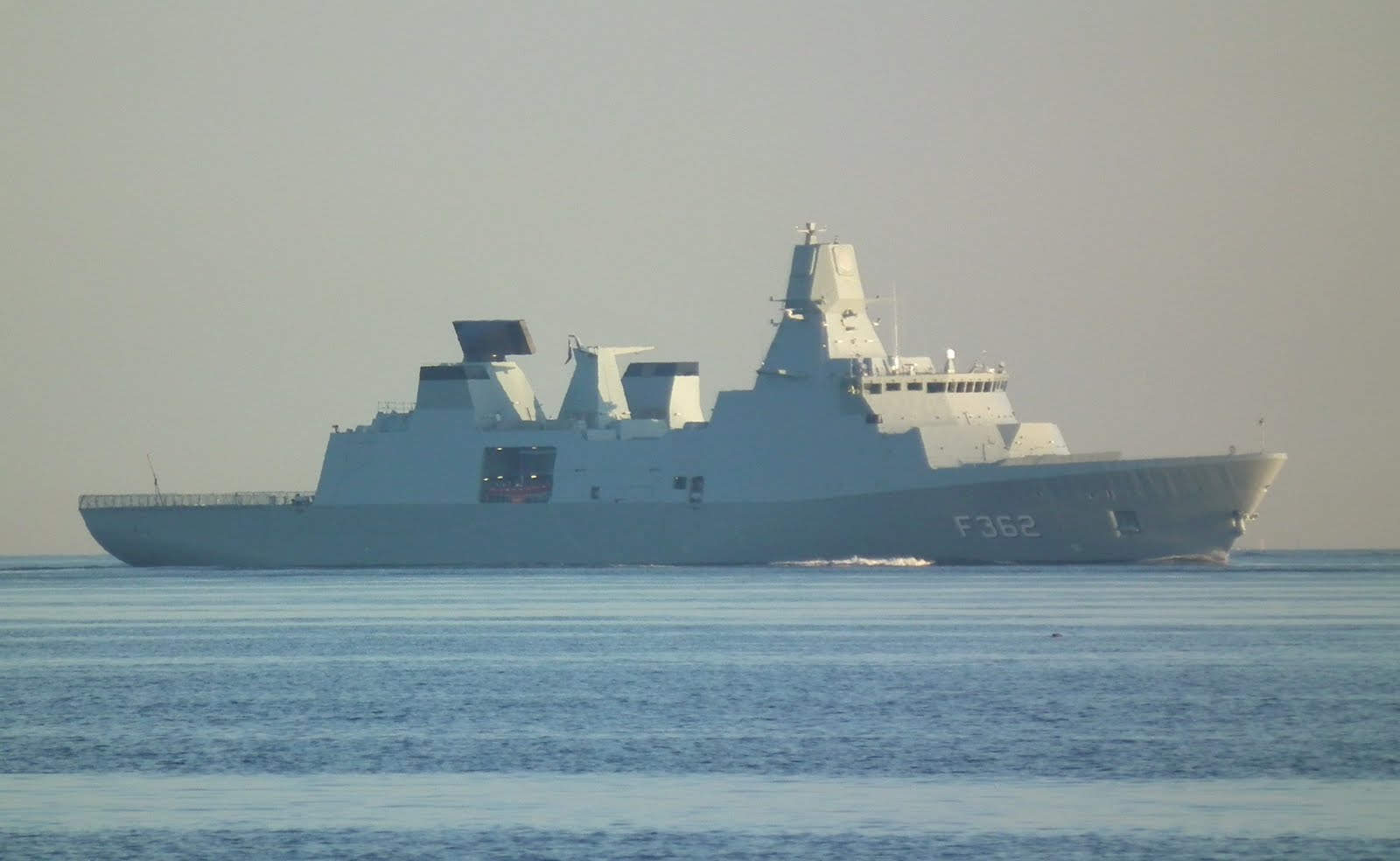
the New danish frigates were originally classified “Patrol ships”
Interestingly, the Iver Huitfeldt class frigates (6600 t!) replace the corvettes of the Niels Juel class (1320 t!).
The Iver Huitfeldt class is obviously “fully capable of a wide-range of independent warfare operations in a multi-threat environment” – and according to this definition a cruiser….
The drawing, you have linked, is a strange mix of the Absalon class and the Iver Huitfeldt class.
Here a photo of Iver Huitfeldt:
http://da.wikipedia.org/wiki/Fil:F361_Iver_Huitfeldt.jpg
By: Rii - 16th February 2013 at 15:46
Destroyer, Frigate, Carrier … all targets. :p
By: Stonewall - 16th February 2013 at 12:02
The Japanese have a helicopter carrier they classify as a destroyer.
Political reasons.
Remnants of WW2.
By: Stonewall - 16th February 2013 at 12:01
Don’t the Russians term their carriers as “aviation cruisers”, possibly as a way of circumventing the ban on carriers traversing the Dardanelles?
I remember something about that, yes.
By: Stonewall - 16th February 2013 at 12:00
the New danish frigates were originally classified “Patrol ships”

By: leon - 16th February 2013 at 07:35
Personally I prefer the RN convention, Frigates for GP and ASW (Usually sitting in the 4-7kt range), Destroyers for AAW (Sitting slightly higher at 6-9kt). For Cruisers i’d say that all round vessels above 10kt works well, maybe adding in some extra use/specialism such as the gun support of a DDG1000 (so tempting to call that a modern battleship), or the massive missile and ASAT capabilities of a Tico.
There are all round vessels with 6000 t around, therefore I do not see the sense to classify using the displacement.
I would not call any of these ships battleships. Battleships were built to fight as units of many of them against other battleships. This will probably never happen again, because aircraft carriers and land-based aircraft made such kind of battles very unlikely.
The term “destroyer” is derived from “torpedo boat destroyer”, i.e. defending the battleships against enemy torpedo boats – a task not existing anymore. It probably would make sense to get rid of this classification/term.
“Frigate” is historically a cruiser – until the RN introduced “frigate” as term for slow anti-submarine hunting ships during the Second World War. But many other navies (e.g. the USN calling the big destroyer leaders “frigates”) used the term to describe a all round ship capable of independent operations (i.e. a cruiser).
Actually most modern frigates have the size of light cruisers of the first half of the 20th century and many of them have general purpose/all round capabilities. They can be used for independent operations. Their capabilities and displacement completely overlap with ships classified as destroyers, whereas no navy built any new ship classified as cruiser in the last decades except the small number of Russian Slava and Kirov class ships. Remember that the Ticonderoga class started as DLG… I would call all the modern frigates/destroyers/cruisers either frigates or cruisers. Historically these two words have anyway the same meaning.
By: Grim901 - 16th February 2013 at 03:20
Personally I prefer the RN convention, Frigates for GP and ASW (Usually sitting in the 4-7kt range), Destroyers for AAW (Sitting slightly higher at 6-9kt). For Cruisers i’d say that all round vessels above 10kt works well, maybe adding in some extra use/specialism such as the gun support of a DDG1000 (so tempting to call that a modern battleship), or the massive missile and ASAT capabilities of a Tico.
By: Wanshan - 15th February 2013 at 19:26
Whilst basing title on role makes sense, it still doesn’t explain DDG1000. It’s role seems to fit a Cruiser role.
Or given the ship is the ultimate jack of all trades, perhaps it should be a Battleship (BB). :p
I suspect it all comes down to politics just like F-16CJ and F/A-18E/F and just like reclassification of Destroyer Leaders to Cruisers in the 1970s due to the “Cruiser Gap.”
Well, the program went from DD 21 (next century destroyer) to DD(X), and programme focus would now be on a family of advanced technology surface combatants, rather than a single ship class.
By: Wanshan - 15th February 2013 at 18:53
The Japanese have a helicopter carrier they classify as a destroyer.
Which can be explained by looking at what they are replacing (ASW oriented DDH with 3 Seaking / SeaHawk) and sensitivities surrounding flattopped ships in JMSDF. It is NOT a random naming choice.
By: John K - 15th February 2013 at 17:21
Nope. The USSR never called its helicopter carriers destroyers (“large anti-submarine ships”, similar to the original designation of the Invincible class), & S. Korea calls its flat-tops LPHs – ship numbers LPH-6111 & LPH-6112. They’re not really helicopter carriers, either: they’re amphibious assault ships, with a dock, vehicle deck & troop accommodation as well as a helicopter hangar.
Don’t the Russians term their carriers as “aviation cruisers”, possibly as a way of circumventing the ban on carriers traversing the Dardanelles?
By: leon - 15th February 2013 at 16:02
See http://www.amiinter.com/pagex.php?pg=vesseltypes
There also used to be a nice set of role descriptions in one of the Forecasting International market reports, but I’m unable to locate it. Key point: classification is based on role and cability rather than tonnage.
Ok, here is the definition from that link:
A cruiser is the largest type of surface combatant currently in-service or planned for service in world navies.A cruiser generally displaces over 10,000 tons, and is fully capable of a wide-range of independent warfare operations in a multi-threat environment.
The important part I marked in bold. Is now a Arleigh Burke class ship a destroyer or a cruiser? Or why is the German Sachsen class not a cruiser? Because she is smaller??? How is this defined?
How is a destroyer defined?
A destroyer is smaller, and less capable than a cruiser, but is also capable of operating independently in a high-threat environment
“Smaller and less capable” would be true for most older types and the remaining definition is identical to the cruiser.
These definitions do not help at all…
By: swerve - 15th February 2013 at 10:14
So does south Korea and the late Soviet Union.
Nope. The USSR never called its helicopter carriers destroyers (“large anti-submarine ships”, similar to the original designation of the Invincible class), & S. Korea calls its flat-tops LPHs – ship numbers LPH-6111 & LPH-6112. They’re not really helicopter carriers, either: they’re amphibious assault ships, with a dock, vehicle deck & troop accommodation as well as a helicopter hangar.
By: kev 99 - 15th February 2013 at 09:49
They are probably called Destroyers because when they were designed there was a much larger class of ships envisioned as cruisers to replace the Ticos.
By: hallo84 - 15th February 2013 at 00:26
The Japanese have a helicopter carrier they classify as a destroyer.
So does south Korea and the late Soviet Union.
IMHO its all semantics. Much of the consideration falls in the political realm. If a frigate sound less threatening and it fits the political objective then it will be a monster of a frigate.
By: 19kilo10 - 15th February 2013 at 00:02
The Japanese have a helicopter carrier they classify as a destroyer.
By: thobbes - 14th February 2013 at 22:28
Whilst basing title on role makes sense, it still doesn’t explain DDG1000. It’s role seems to fit a Cruiser role.
Or given the ship is the ultimate jack of all trades, perhaps it should be a Battleship (BB). :p
I suspect it all comes down to politics just like F-16CJ and F/A-18E/F and just like reclassification of Destroyer Leaders to Cruisers in the 1970s due to the “Cruiser Gap.”
By: Wanshan - 14th February 2013 at 19:36
The Arleigh Burke class replaced a number of cruisers of the Leahy and Belknap class – still they are destroyers.
Leahy and Belknap classes were originally designated as Destroyer Leaders (DLG) and referred to as frigates. As were their nuclear successors initially.
http://destroyerhistory.org/coldwar/belknapclass/
http://www.destroyerhistory.org/coldwar/leahyclass/
http://destroyerhistory.org/coldwar/destroyerleaders/
http://destroyerhistory.org/coldwar/nuclearclasses/
But anyway: what is TODAY the difference between a destroyer and a cruiser? And what is the difference between a destroyer and a frigate?
The size? I think not that this could be a logical criterion.
These classifications are today completely arbitrary, some navies call everything destroyer (e.g. the Japanese navy), others everything frigate frigate (e.g. the German navy).
I think that frigate, destroyer and cruisers fused to one type – and this starts already with the big DL in the 1950s. E.g. the Mitscher class was classified as destroyer leader, was called a frigate and had the size (and also the function) of a light cruiser…
See http://www.amiinter.com/pagex.php?pg=vesseltypes
There also used to be a nice set of role descriptions in one of the Forecasting International market reports, but I’m unable to locate it. Key point: classification is based on role and cability rather than tonnage.
By: leon - 14th February 2013 at 16:02
In the RN the distinction has for half a century primarily been decided by role rather than size alone, Cruisers were large command vessels capably of deploying anywhere in the world without escorts (big enough and tough enough to look after themselves). Apart from the three Tigers, the eight County class were effectively light cruisers, but were lumbered with the Destroyer designation to get them past the Treasury. The Type 42 destroyers were on a par with most contemporary Frigates when built, but in the RN a Destroyer is and Anti Air Warfare vessel (ie has an Area Defence missile system) whilst a Frigate is a general purpose escort with an Anti Submarine Warfare bias and point defence AAW capability only. Simply put, fit an area defence SAM system on a frigate and it becomes a destroyer.:rolleyes::eek::D
The RN classification is logical – except of the cruiser category. Bristol probably would have been also a cruiser according to this definition, but was classified as destroyer.
But the RN system is not used anywhere else.
By: Obi Wan Russell - 14th February 2013 at 15:53
In the RN the distinction has for half a century primarily been decided by role rather than size alone, Cruisers were large command vessels capably of deploying anywhere in the world without escorts (big enough and tough enough to look after themselves). Apart from the three Tigers, the eight County class were effectively light cruisers, but were lumbered with the Destroyer designation to get them past the Treasury. The Type 42 destroyers were on a par with most contemporary Frigates when built, but in the RN a Destroyer is and Anti Air Warfare vessel (ie has an Area Defence missile system) whilst a Frigate is a general purpose escort with an Anti Submarine Warfare bias and point defence AAW capability only. Simply put, fit an area defence SAM system on a frigate and it becomes a destroyer.:rolleyes::eek::D


 Sign In








 February 14, 2013 at 4:12 am
