I recently went to the Moorabbin Aircraft Museum in Melbourne, Australia and looked at their collection. They have quite a number of aeroplanes stored in the open and they are facing a constant battle to prevent those aeroplanes from deteriorating further (and I think they are ever so slightly losing).
They have a complete Beaufighter in what looks like good condition, it is under cover.
I imagine that the Beaufighter is the most valuable aeroplane in their collection and one that I imagine is a type sought after.
Why don’t they sell it and then have the funds to build a big hangar and store the rest of their collection under cover and be able to slowly get the remaining aeroplanes back into first condition, rather than just fighting to maintain the status quo.
To lose one but save many sounds like a good deal to me.
(PS I saw a similar situation at the RAAF museum at Pt Cook)

By: Proctor VH-AHY - 18th October 2008 at 01:30
Museum’s tend to provide research access to aircraft and archives for free, other than costs incurred in photocopying etc, it would be reasonable for Hendon to fully recover their paid staff costs if they did choose to open up their wing for your requirements.
Equally if Hendon wanted you to open up your wing for them you might as easily ask whats in it for you to incurr that same 20 hours of work? I dont really see the relevence to that point?
The relevance is easy, my time equally is not free and not unlimited. Someone suggested that information in the hands of restorers ends up being lost. Whilst that may be true in some cases, it is equally true in the case of museums. However, generally I find the level of technical knowledge is usually extremely high in the case of restorers especially about the current project.
Couple that with flying the aeroplane and you need to have the operational knowledge to do before and after flight inspections, and the skill to actually fly the beast.
That’s a lot of knowledge and in the circles of restorers that knowledge is maintained and passed on. Sure its not the general public, its a select group.
To join that group its a case of having a purpose of being a member and then establishing ones credibility. Having done that a wealth of knowledge is available. Tire kickers soon get short shift!
Its not just a case of a glitsy paint job and a bit of corrosion control, systems actually need to function, engines and electrical circuits need to be working (safely), things like windscreens need not only be intact, but actually serviceable
cheers
By: mark_pilkington - 17th October 2008 at 08:54
My information is readily exchanged with other rebuilders of Percival aeroplanes. Unfortunately time constraints prevent any other actions.
If for example I asked Hendon to disassemble part of their Proctor to take some photos of the inside of the outer wing panel (say it took 20 hours of work) – what do you reckon my chances would be?
Museum’s tend to provide research access to aircraft and archives for free, other than costs incurred in photocopying etc, it would be reasonable for Hendon to fully recover their paid staff costs if they did choose to open up their wing for your requirements.
Equally if Hendon wanted you to open up your wing for them you might as easily ask whats in it for you to incurr that same 20 hours of work? I dont really see the relevence to that point?
I have been associated with Proctor restorers myself, and am aware one Melbourne based restorer obtained some records from Edgar Percival himself, on the proviso that person would make them freely available to others, which as far as I know he has done. Certainly he provided a copy to Leigh Giles a close friend of mine and long term Proctor enthusiast, who then made a copy for inclusion in Moorabbin’s archives.
The Moorabbin Archives, along with its aircraft as accessible to restorers and researchers at no cost other than entry fee, as you well know from your visit that commenced this thread, and even the earlier photos taken and posted for you by me elsewhere in the forum.
That is the distinction being made here, open/public access to the aircraft / information is a role and purpose of static museums, discoveries and understandings by restorers as they deconstruct original parts, review drawings or manufacture replacements are lost to the wider public/enthusiasts if they are kept private, or only distributed between a select few, and some restorers may simply choose not to disimmenate that information, or record it in a reproducable fashion in anycase, given their focus on producing the end product, not a “how I did it” book.
Some restorers limit photography etc of their work in progress as they are concerned about those photos being published, and perhaps public debate or regulatory assessment of the identity or content of original parts, I understand that is a particular issue in the UK? I’m not so sure of a specific regulation in the US or Australia?
regards
Mark Pilkington
By: JDK - 17th October 2008 at 08:00
My information is readily exchanged with other rebuilders of Percival aeroplanes. Unfortunately time constraints prevent any other actions.
Great! The second isn’t a ‘time constraint’ but a choice based on other priorities. (Which is your prerogative – but let’s not confuse choices and priorities with possibilities.) For instance have you explored the possibility of having the rebuild documented for publication by someone else?
This is not intended as a personal criticism, but if you are really interested in preserving and presenting history, rather than indulging a personal interest privately, then there is an obligation to document and disseminate.
There are numerous books featuring aircraft rebuilds – the quality ones, rather than the lighter end, seem to originate from the major museums, rather than private builders – sometimes it seems because some private restorers aren’t comfortable with that detail of scrutiny. There are, as ever, many exceptions on both sides. Mikesh’s book on the P-51B Excalibur (now very old) was groundbreaking in that arena. My friend Melvyn Hiscock’s Hurricane inside & Out was an excellent work, in part thanks to access to Hawker Restorations (something I’ve been able to take advantage of with the workshop for our Hawker Hurricane book as well.) The only Percival work I’m aware of is the Belgian Air Museum’s book on their remarkable Gull 6 restoration. The oportunity to document a Proctor restoration is one I would be interested in, were it viable. My excuse here is the commute! 😀
If for example I asked Hendon to disassemble part of their Proctor to take some photos of the inside of the outer wing panel (say it took 20 hours of work) – what do you reckon my chances would be?
Depends what you were offering, and what you were prepared to do. No, they aren’t going to use 20 of theirs hours for free just because you asked.
However, legitimate research requests are often fulfilled. (Private owners can be helpful if they want to – but also they are entitled not to – and some are very unhelpful.) and the much vaunted private-public co-operation has hundreds of examples in aviation preservation, conservation and restoration.
If you were to gift them, ~oh, say~ a CASA Jungmann they might let you take away (to Spain, perhaps) and disassemble their Avro C-30 Rota to enable the construction of an airworthy replica with an original engine. (I don’t know why that hypothetical hypothesis arrived in my mind. :diablo: )
As to Time Team, yes, a remarkable programme. A lesson for us, is their success in broadening the appeal of what had been a minority interest:
Time Team contributor Francis Pryor has written: “Before the first series of Time Team in 1993, it was hard work starting an excavation. I can remember arriving at a building site in Fengate, where I was to cut some exploratory trial trenches. When I announced that I was an archaeologist, some wit in a JCB quipped that I had lost my way to Egypt. Much hilarity. After Time Team that same chap would be asking when I was planning to bring in the geophysics.”
http://en.wikipedia.org/wiki/Time_Team
An equivalent level of layperson’s interest in aviation history (arguably having the same relevance to people’s lives as archaeology) would be an achievement to all our benefit. A Time Team can do it, what do we need?
Regards,
By: Proctor VH-AHY - 17th October 2008 at 06:18
Where that information researched/learnt/identified is documented transparently and preserved and made available publicly, then the rebuild process, even if discarding all original parts and replacing them with parts of differing materials, will add some value to the historical knowledge of Percival wooden aeroplanes and their production and operational use, although that information is largely derived from the research and records of the restoration, (ie what is learnt along the way) not neccessarily the example of the finished product?
The rebuilder’s learnt knowledge and expertise does not transfer inside the finished product when it is sold on and flown by the new buyer, the finished product may not contain much of the original information.
My information is readily exchanged with other rebuilders of Percival aeroplanes. Unfortunately time constraints prevent any other actions.
If for example I asked Hendon to disassemble part of their Proctor to take some photos of the inside of the outer wing panel (say it took 20 hours of work) – what do you reckon my chances would be?
cheers
Ross
By: mark_pilkington - 17th October 2008 at 04:34
From my practical experience with my proctor rebuild and using the original construction drawings I think I know one hell of a lot about the design/construction of Percival wooden aeroplanes. Far more that would every be evident from a static in a museum. There is one hell of a lot of hidden detail that unless you have been involved in the construction you wouldn’t know.
Where that information researched/learnt/identified is documented transparently and preserved and made available publicly, then the rebuild process, even if discarding all original parts and replacing them with parts of differing materials, will add some value to the historical knowledge of Percival wooden aeroplanes and their production and operational use, although that information is largely derived from the research and records of the restoration, (ie what is learnt along the way) not neccessarily the example of the finished product?
The rebuilder’s learnt knowledge and expertise does not transfer inside the finished product when it is sold on and flown by the new buyer, the finished product may not contain much of the original information.
There are celebrated stories of warbirds changing hands such as a Firefly mark VI with chin cowl and merlin engine from a Canadian Avro York? being purported to be a early mark V, and the P40 with its gear welded down, and sporting T6 fin and tailplanes, both apparantly flown in to their unsuspecting new buyers, but obviously light on in “transparant and open admission” of the use of non standard parts and overall authenticity?
Where someone builds a new build FW190, and the parts are not exact copies of the original, to the point where they are not interchangeable onto an original airframe, then the new build FW190 clearly isnt really an FW190 at all, it is a reproduction/replica, and while creating the look and feel of an FW190 in the air for our entertainment and enjoyment its not playing a role in preserving true historical material at all.
This is the issue “major rebuilds” encounter, how much of the original material remains, how much of grandad’s broom was really used by him, when dad replaced the handle and I replaced the head?
I understand with the current FW190, ME262, and Oscar new productions, that their status as new construction is transparantly admitted, the problem arises when what are effectively reproductions around a data plate are presented as simple restorations, yet the materials and parts are not authentic.
I think we all seem to agree:
Flying aircraft, and static aircraft all have a role to play in preserving and displaying our aviation heritage.
Not every flying aircraft is authentic to the orginal production and condition during its historical use, and quite often neither are many static aircraft, or preserved in ideal or perfect conditions.
However a static aircraft can strive to do so, by utilising non-airworthy parts and conserving rather than restoring, and if preserved in ideal conditions can last for many years as an authentic timecapsule exampling the production and historical use configuration.
A Flying aircraft must focus on its safety and airworthiness first, and make compromises to authenticity as required. As long as those compromises are documented and known, the remaining authenticity can equal the role of the static example in exampling the production and historical use configuration.
Even a reproduction / replica plays a role in displaying the heritage of a type, but it may not be accurate enough to provide much more than the outline or colourscheme with any authenticity?
regards
Mark Pilkington
By: Proctor VH-AHY - 17th October 2008 at 03:59
JDK
Have you been watching “Time Team” on the ABC – absolutely great programme – where do you keep your trowel?
cheers
By: JDK - 17th October 2008 at 03:36
Glad to see the debate opening out!
As Galri says, supporting Ross’ early and repeated point, sometimes rebuilders salvage or recreate an aircraft that would otherwise be lost. That’s a great bonus and to be applauded.
There are issues where original and sometimes irreplaceable material is destroyed in a restoration or junked for various good paperwork or financial reasons. I’ve seen original ‘kill markings’ on wreckage that should be kept, but won’t. Museum have done this kind of thing too.
But I absolutely agree that Ross’ point that if you actually build something (or fly it) you’ll have an insight you can’t get any other way. The concept of ‘experimental archaeology’ in the sense of trying out pre-historic tools and techniques is a parallel that the ivory-tower historian used to miss out on. The creation of the modern replica Trireme is a fine example of that, proving that many historian’s beliefs were wrong and the ancient Greek accounts were possible and thus probably true, after all.
Regards,
By: Proctor VH-AHY - 17th October 2008 at 03:22
Most of the rebuild projects I know about involve aeroplanes that don’t look like aeroplanes, just a pile of bits – usually with a lot missing. The rebuilder has to track down missing bits (usually metal) and fabricate the rest.
I think that point really hasn’t been made obvious so far in this discussion, thus in the vast majority of projects I have seen restored, the ‘constructional techniques/materials’ argue doesn’t come into play.
From my practical experience with my proctor rebuild and using the original construction drawings I think I know one hell of a lot about the design/construction of Percival wooden aeroplanes. Far more that would every be evident from a static in a museum. There is one hell of a lot of hidden detail that unless you have been involved in the construction you wouldn’t know.
cheers
By: galdri - 17th October 2008 at 01:15
Hi guys,
I´ve been following this debate with great interest. I´d like to say that I´m a split personality on this one. Of course aircraft are meant to fly and should, if at all possible, remain airworthy.
BUT, and there is a big but an aircraft restored to flying status today, just like I´m hopeing to achive with my Gemini, will not serve any useful function as an educational tool about Miles construction techniques in the years to come. I´ve had to make too many changes to the original, like different plywood (the original specs no longer exist), different glue (the original was cr*p) and I´ve had to rework parts of the structure with new material. In future this aircraft will tell you very little about Mr. Miles´s construction other than it has the same basic dimensions and looks and (hopefully) flys the same as the Gemini coming of the line in 1947.
That´s where museums come in. They should preserve the aircraft in as original form as possible for use as technical references/educational tool in future years. Too see an original Gemini, we have nowhere to go today, but once the Hooton Park example is finished, we should have a museum quality example to look at.
At the end of the day, there is room for both the flying and muesum standpoint. However, if there is only one example of any given type know to be in existance, I would much rather see that one in a museum rather than flying. If the museums have no interest in it, then a private owner can restore it to flying condition just to preserve the shape.
By: kev35 - 16th October 2008 at 19:43
Why don’t aircraft museums sell some aeroplanes ….
They do……
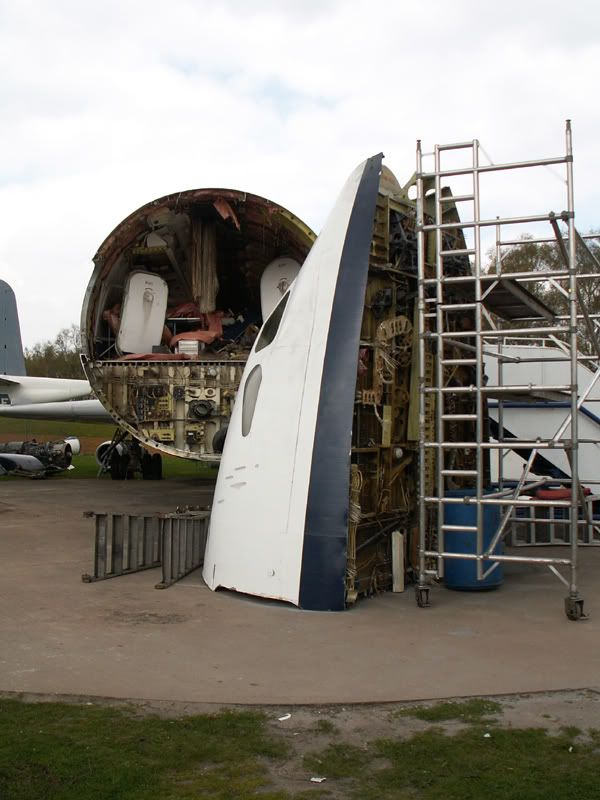
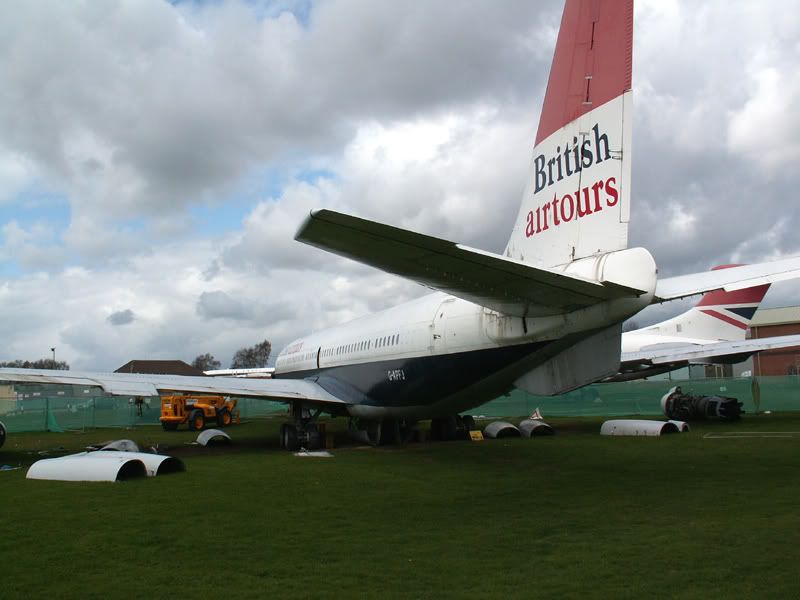
Regards,
kev35
By: Cees Broere - 16th October 2008 at 17:37
The Aviodrome sold off it’s Spitfire for an undisclosed amount of money and an imcomplete Firefly without any Dutch history to Karel Bos
It is said that on the island of Curacao, there are two Dutch Firefly wrecks that are still where they fell and are very substantial.
Cheers
Cees
By: Proctor VH-AHY - 16th October 2008 at 09:38
I think the AFM learnt its lesson with the Neptune and its unlikely that model of ownership will be used again in the near future, better models of securing the future of vintage/warbird are used.
By: mark_pilkington - 16th October 2008 at 07:33
The AFM (Australian Flying Museum) has as its basic policy that historic (older than 30 years) aircraft should be preserved and in flying condition.
Experience with the Neptune showed that unless you are able to store an aircraft under cover, restoration to flying is an uphill battle that you are likely to lose. Flyable condition is a much higher standard that as a static exhibit (usually) and that in itself is the cause of many problems.
Ross
“Old”, even “30 years old”, doesnt mean historic, there are many aircraft in Australia today operated as “Vintage” “Antique” or “Warbird” aircraft, that have little relevence or importance to Australia’s history, the operation and exhibition of those aircraft is entertaining, but its not preservation of Australia’s aviation heritage in any way or form?
Luscombes, Nanchungs, C170’s are excellent recreational aircraft, and have interesting characters and visual appeal, they are old, perhaps vintage, but not “historic” aircraft in my opinion?
There are however many historic aircraft flying within Australia, restored and owned by private individuals, some of which are the result of mamoth efforts to recover an airframe from the dead, and painstakingly restored as accurately as possible.
However many airworthy restorations have compromises to the original specification due to lack of parts availability, or improved safety or servicability, perhaps as simple as the quality of glues used, but perhaps extending to the sythetic coverings, a more modern engine (The Klemm Swallow) or simply avionics/radios.
While these are in some ways neccessary and desired, it dilutes the originality of the aircraft against the original production, or period use that it purports to represent.
In NZ you would be well aware of the wartime produced Proctor fitted with a pre-war Vega-Gull sloping windscreen, it does a wonderful job of re-creating the pre-war type, but its not an “accurate” restoration of either a Vega-Gull or Proctor from a factory production “preservation” point of view?
Theres nothing wrong with that in my opinion, as long as the airframe is not that historically significant that you are destroying history to impliment those compromises, I guess this is why we prefer to see a replica flying, rather than flying the original Southern Cross, (and yes I know it is not in its true original “Pacific crossing” condition)
An Ideal Static airframe should minimise these compromises in accuracy, hence the current consideration of the best way to present the Swoose Goose currently under restoration at the NMUSAF.
In regards to the engine within the Moorabbin Proctor, the museum is indebted to Ken Baird for his years of work to restore that aircraft, and Ken would be best placed to explain any compromise on the engine.
However I am aware of my own past discussions with him that while the airframe was restored to near original condition, the engine is only a shell intentionally restored by him to that condition, to preclude any future attempts to run this engine in the airframe.
As JDK states, volunteer museums do not have the resources of government funded service or “National” museums, to undertake exacting restorations in all cases, some of the Moorabbin aircraft are Nationally, and in my opinion, Internationally significant, others are types of notable interest but have equivalent airframes preserved elsewhere within Australia, others are representative examples but not the best of breed, some, like the Wessex, are incomplete and certainly the poorer examples in preservation, the correct job of the static museum is to put its resources into preserving the more significant aircraft within its collection.
Most Australian Static museums focus on preserving aircraft related to Australia’s Aviation Heritage, with some type of collection policy or preservation objective (there are exceptions to that, and I dont see that as a problem in itself, as long as the museum prioritises its resources and efforts accordingly.) They may not do it perfectly, but they do try.
The QVAG/AFM website indicates the Australian Flying Museum when formed, was going to preserve large flying aircraft in a group ownership arrangement, other than the Neptune, has the AFM taken on any other restoration/preservation projects, and achieved its goals with any other historic aircraft?
You are correct about the resources and efforts required to restore and operate a large aircraft such as the Neptune, I admire the efforts and achievements of the HARS who have taken on two airworthy Neptunes and former RAAF C-47’s in addition to their better known Constellation and Catalina operations.
regards
Mark Pilkington
By: JDK - 16th October 2008 at 05:26
Hi Ross,
tell me are the RAAF’s F111’s the same configuration, have the wings, tailplane , wheels as when delivered or have bits and pieces swapped for operational reasons, subject to repair schemes, refitted etc?
Please read what I said. The basic objectives, not achieved in all cases, is for preserved museum aircraft to be accurate for their operational history; it might be the beginning, middle or end of it’s operational history – that’s a museum’s choice. (I mentioned the end of service, for example, as the RAAF Museum will get a F-111 – not after it’s been b*gg***d about with by a private flyer… 😉 ) A more realistic example, vis-a-vis private flying – is the RAAF Museum’s airworthy Tiger which was chosen because it was the most original one available, not because it was the ‘best’ restored or rebuilt.
The myth is that post military use changes by owners and operators don’t matter – but they do – they are detractions from being able to represent that aircraft’s service history accurately.
If an aircraft ends up as a static exhibit in a museum, then it may be subject to change, bits swapped….
…and it’s certain to have bits changed if its rebuilt to airworthy. That’s the point – museums strive to present as original as possible, and when not flying, without certification and safety compromises.
… For example with the Proctor at Moorabbin, it certainly has the wrong cylinder heads, look like Gipsy 6 heads or Tiger Moth heads to me, so it may be that at some time in its operational life the aeroplane was fitted with a Gipsy 6 in place of the Gipsy Queen 2 or when it was being restored for the museum that was all that was available at the time.
Firstly, Moorabbin have ensured that the Proctor is on show, and available for research – unlike yours has been (it’s great you are getting yours to fly, but give credit where due – Moorabbin were happy to help you.) Moorabbin are doing the best they can with the resources at hand – they do not, generally, aim to provide the level of accuracy a national collection should aim for (again, it’s an objective, rather than the standard always achieved).
Either way it is not as per original, but who really cares (I don’t).
Exactly. You don’t care about ensuring historical originality is as high as is possible*.
People studying real history, rather than playing at Sunday afternoon fighter pilots, care. It’s not as much fun, but it’s history – not fun.
Preservation of historical artefacts is someone else’s task, and it’s lucky we also have examples preserved, documented and available for research by historians (for instance – how good were Percivals when built, rather than a modern reconstruction?) and rebuilders. Failing an example from the original user, museums naturally substitute the next best they can get; right down to replicas and models when better isn’t available. There isn’t as far as I know an unrestored Percival available. The Belgian Air Museum’s Gull 6, the Australian National Museum and Moorabbin’s Percivals are the best each museum can manage to get, as is yours, for you. Each fulfils a function, and is complimentary for understanding the history of Percival types.
You’ve restored and operated several aircraft – as you’ve said, preserved them. What steps have you taken to ensure their future when you are no longer with us? If you were to be bankrupted (heaven forbid!) what would happen to your aircraft? It’s easy and gives a warm feeling to say one’s preserved something ‘for following generations’ or that your are ‘a temporary custodian’. Very easy. The test is what has been done to secure that future against entropy?
Museums like QAM and Moorabbin do what they can, with clear, publicly accessible mandates and government endorsed management structures and liability. David Lowy set up the formal museum structure for Temora to protect the collection from his loss or bankruptcy. The AWM and RAAF Museum are government entities, with national protection. The RAAF Museum and Temora choose to operate some and all of their aircraft respectively. These choices are based on a risk-benefit and cost basis, with funding geared to ensure that continuation.
I don’t want to put you on the spot, but just for curiosity, can you show the same structures and analysis? If you are a private entity, you needn’t. If you are part of an accredited museum, my understanding is you must.
It’s a great debate, but unless one’s prepared to see that other people’s work has merit, and that maybe everyone is right on their own criteria, it’s a bit futile. No preservation is perfect either – again, it’s best compromise.
Cheers,
*Of course you do really; but it comes after practicable, safe flying, sensible for your choices. Different jobs by different people. I’ll thank you for restoring your Proctor (which I’ll be delighted to see, I hope) as I’ll thank the NMA for their Percival and Moorabbin for theirs.
By: Proctor VH-AHY - 16th October 2008 at 04:23
tell me are the RAAF’s F111’s the same configuration, have the wings, tailplane , wheels as when delivered or have bits and pieces swapped for operational reasons, subject to repair schemes, refitted etc?
If an aircraft ends up as a static exhibit in a museum, then it may be subject to change, bits swapped. For example with the Proctor at Moorabbin, it certainly has the wrong cylinder heads, look like Gipsy 6 heads or Tiger Moth heads to me, so it may be that at some time in its operational life the aeroplane was fitted with a Gipsy 6 in place of the Gipsy Queen 2 or when it was being restored for the museum that was all that was available at the time.
Either way it is not as per original, but who really cares (I don’t).
cheers
By: JDK - 16th October 2008 at 03:46
You have answered your own question, when the perceived “value” is too low, the flying aeroplane becomes static and the grass is allowed to grow around the plane. How often do you see aeroplanes sit around at airfields and deteriorate to the point they are unflyable and deemed to be unecconomic to repair.
Which of the exclusive aviation sectors are we talking here? Sure, quite often when the flyers loose interest, run out of cash etc. Usually then they’ve lost interest so badly they can’t even be bothered to throw a tarp over it or try and mothball the bits, which even the most cash strapped museum will at least attempt.
Museums are usually good enough to step in when the flyers have vanished.
The example of the ex-‘airworthy restoration’ of the DC-2 now at Moorabbin is very pertinent. I’d love to have seen it fly. There’s been at least two potential DC-2 flying restorations in Australia kicking around for the last half century, but, bluntly, to date, they’ve failed. Let’s be grateful Moorabbin have saved one of them.
As to ‘historic Australian types’ – QAM, AWM, RAAFM and Moorabbin are full of historic Australian types that the AFM can’t or won’t touch.
I’d love to be at Watts Bridge for the fly in (I was actually looking at a few more active types in France and the UK at the time, as well as various historic types) but the selection there is not as historically significant or as comprehensive a representation of Australian aviation as, for instance Moorabbin – because difficulties acknowledged, Moorabbin has a clear collecting policy and mandate.
As for changes to aircraft, as has been said elsewhere on this forum, the aeroplane at the end of its life is a different aeroplane to that at the start. Equipment is added and removed, mods are done, components replaced.
Your model is just picking a point in time and saying “lets stop here”, life isn’t like that neither are aeroplanes. They are built to fly and anything less than that is less than optiminal.
Sorry, another comforting myth of the flying fraternity. There has (for instance) never been a fighter or bomber type designed or built with the intent to have a post-military life. That’s a bit different to ‘picking a point’. Modifications from it’s military set-up in civilian life are deviations from what it was designed to do. After military use, governments intend them to be ‘reduced to produce’ and scrapped. That’s why it’s hard to get ex-military aircraft. Meant to defend airspace or attack targets, not ‘fly’. The military have never been impressed by a manufacturer saying “we’ve got a good one for you; it flies.” They want a bit more of a bang for their buck,usually. 😉
A brilliantly rebuilt (‘museum quality’ as ATFS mentions) aircraft restoration that gets to a national level collections is great. It’s not as good as one that’s lifted from the Squadron flightline on retirement, because the modern resto is not as ‘original’ – as a historic artefact (or tool) for learning or checking historical realities.
As well as to playing /flying with ex military types, there is an important role also for ensuring some examples are preserved accurately representing their design function (which is rarely just ‘to fly’).
You want to rebuild (and a big ‘good for you’ and fly – likewise) your aircraft. Great. You get my thumbs up and support. Any Proctor info or bits I get, they’re yours.
Another big, big thumbs up for sharing the experience and taking it to others. That’s a great thing to do, and there’s always more needed.
But let’s not flatter ourselves that what we prefer to do is ‘the best’ or ‘the only’ way of spotlighting aviation history.
PS: I can argue for the flying fraternity just as vehemently. 😉 However the museum sector, for various reasons need championing more, I’ve found.
Cheers,
By: ATFS_Crash - 16th October 2008 at 03:01
From what I understand this PT-17(@ 1 min 50 sec in this video ) was restored to museum flying standards by the WPAFB museum. The buyer told me he paid a mint but still got a deal for such a historical aircraft in such good condition.
It’s really cool, but I hate risking losing it in a crash. (it’s a frigging rental):eek:
http://www.youtube.com/watch?v=UOwAQsGs-dY
By: Proctor VH-AHY - 16th October 2008 at 02:47
JDK
You have answered your own question, when the perceived “value” is too low, the flying aeroplane becomes static and the grass is allowed to grow around the plane. How often do you see aeroplanes sit around at airfields and deteriorate to the point they are unflyable and deemed to be unecconomic to repair. Then its often off to the recyclers.
Keep the “Value” up by providing alternate uses and often the grass isn’t allowed to grow.
As for changes to aircraft, as has been said elsewhere on this forum, the aeroplane at the end of its life is a different aeroplane to that at the start. Equipment is added and removed, mods are done, components replaced.
Your model is just picking a point in time and saying “lets stop here”, life isn’t like that neither are aeroplanes. They are built to fly and anything less than that is less than optiminal.
cheers
By: JDK - 16th October 2008 at 02:09
The AFM (Australian Flying Museum) has as its basic policy that historic (older than 30 years) aircraft should be preserved and in flying condition.
That’s a bit vague, Ross, isn’t it? AFAIK, the collection is essentially light civilian and single-engine ex-military aircraft as collected by owner’s preference, rather than a policy driven representative ‘set’?
Flyable condition is a much higher standard that as a static exhibit (usually) and that in itself is the cause of many problems.
Not a ‘higher standard’ – different. A proper static conservation should retain as much original material and conserve as much of the aircraft as possible; not normally possible with airworthy restorations, which are never ‘conserving’ the aircraft in the originality stakes.
Flying aircraft have to be restored and maintained to an airworthy standard, which can be in conflict with the originality of the artefact. It is not true that airworthy aircraft are in ‘the best’ condition of their preserved examples. Usually, as well as the loss of original material, they have significant systems and equipment removal / updating, with the result that as historical artefacts to use for accurate reference, they are historically compromised. Not to say great work isn’t being done in the restoration game – because it is; but the Oshkosh prize winning warbirds (for instance) are ‘better’ than wartime production and do not contain that aircraft’s original equipment in most cases, but substitute pieces. Some (not all by any means) static conserved a/c are much more original. It is, as far as is generally relevant, a minor point, but real, rather than ersatz history is founded on such tiny details. Horseshoe nails matter.
Another self-congratulatory myth of the flying element of vintage aviation is that ‘aircraft were meant to fly’. Actually, most aircraft were meant, as tools, to do a job – military ones being a prime example of that. If you aren’t training military pilots, conducting a war etc. you aren’t using the aircraft as intended. It’s great to get to play with ex-military aircraft, and it’s arguably important to demonstrate them as a form of active history education, but let’s not kid ourselves that aircraft built and used by the state intended for a limited activity are being flown to the original purpose.
Some light civil aircraft are still used as runabouts, exec aircraft and for recreation, as originally – but few of them are listed as depreciating business assets to be replaced when the cost balance is right, I find. 😉
That’s not to say that airworthy vintage aircraft don’t have a place, and an important one as Ross has stated, in bringing aviation to people and demonstrating aircraft ‘in action’ to people. It can be argued that static national collections ‘fail’ in not doing that; it is, as ever a question of different, hopefully complimentary compromises, rather than one ‘right’ way of doing things. The ‘Striking By Night’ display of Lancaster G for George in the Australian War Memorial is a good example. It’s not ‘better’ than the other preserved Lancaster displays (PA474, ‘Just Jane’ the CWH example etc.) but adds a complimentary history lesson to the others.
As I’ve stated before, it’s easy to over-rate one’s own area of vintage aviation and look down on others. The longer I’ve been involved, the more I realise that it’s worth supporting all aspects – there are great cross-benefits to be had – and I do rather enjoy being a devil’s advocate, too, sorry. I’m not anti- flying vintage types – I think it’s great, but I don’t buy some of the PR.
Regards
By: Proctor VH-AHY - 16th October 2008 at 01:23
The AFM (Australian Flying Museum) has as its basic policy that historic (older than 30 years) aircraft should be preserved and in flying condition.
Experience with the Neptune showed that unless you are able to store an aircraft under cover, restoration to flying is an uphill battle that you are likely to lose. Flyable condition is a much higher standard that as a static exhibit (usually) and that in itself is the cause of many problems.
Anyhow the idea with the AFM is to undertake activities that keep the aircraft flyable, such as the annual Festival of Flight (FoF). Since FoF is a fly-in, legally no advertising to the general public is allowed. Having a big focus annually such as FoF gives rebuilders the incentive to target the event to present their new flying aeroplanes. In the past there has been engine runs. Ex military vehicle clubs and car clubs target the event and there is an extremely good turn out of interesting cars and ex-military vehicles. Usually over the weekend of FoF we get about 1000+ visitors and in excess of 100 aeroplanes. There is a dinner on the Saturday night and usually about 160+ people in attendance.
Other AFM activities include the making of aviation videos, I am involved in the making of one currently. Another activity is to foster a brotherhood of like minds in the aircraft restoration arena to allow the exchange of technical information and data.
There are many other less obvious aspects but they are the main ones
cheers


 Sign In








 October 10, 2008 at 12:42 am