Since we talk about world navies, why don’t we discuss the shipbuilding industries of the world as well? So I think we should post pictures and share info about shipbuilders too, so please post!
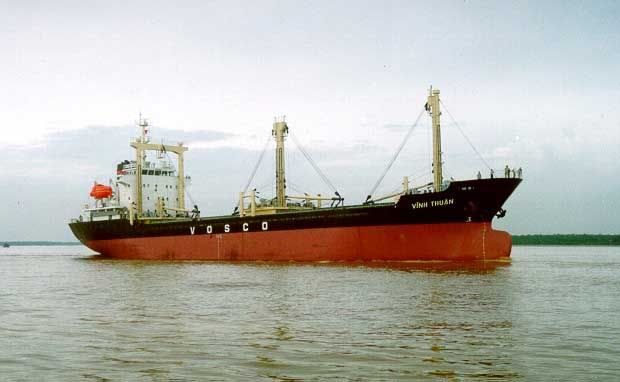
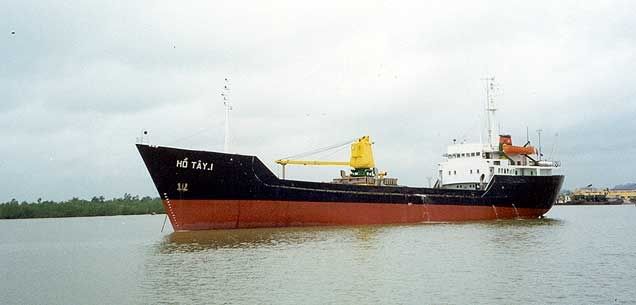
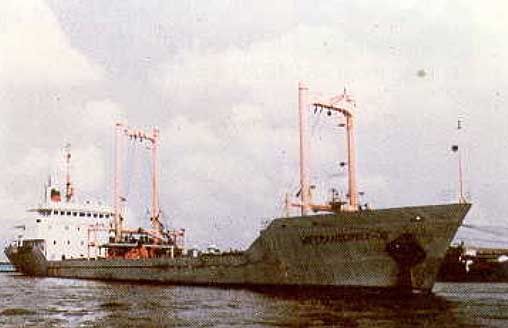
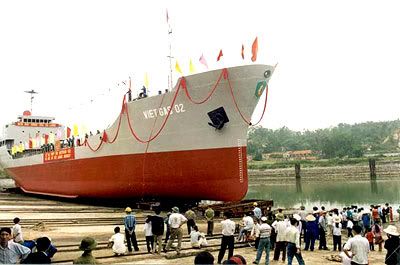
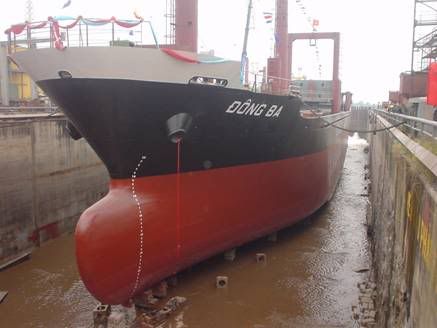
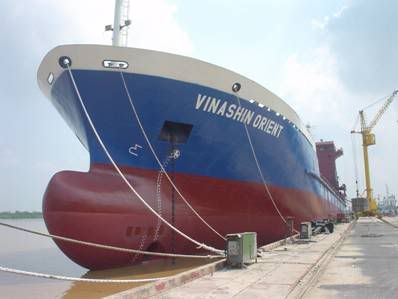
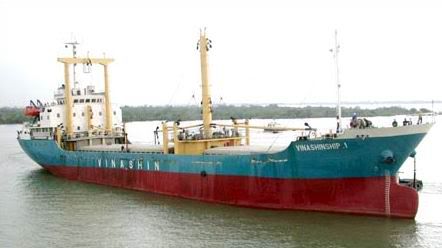
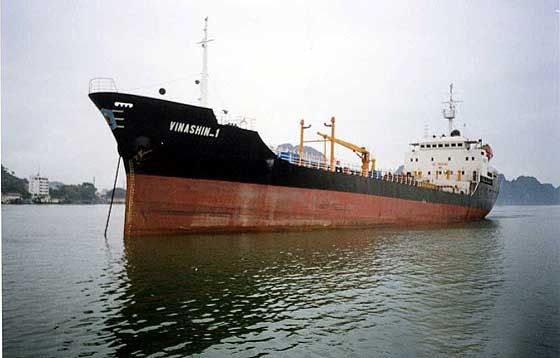
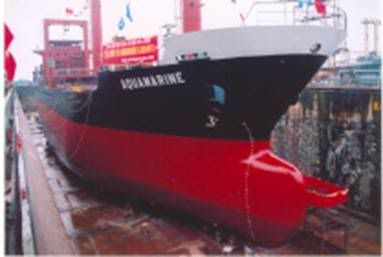
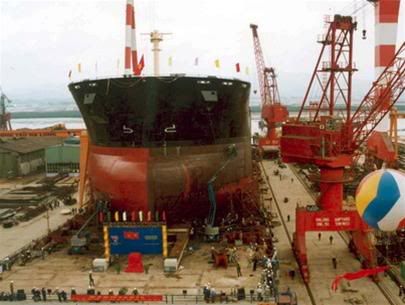
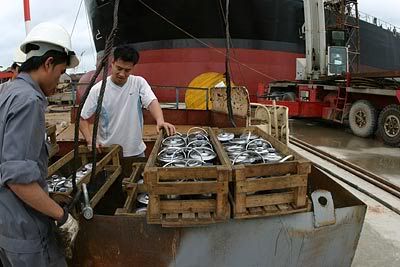
Allow me to start, VietNam is not very well known but I think it ranked 11th in the world for shipbuilding and the state-run company VINASHIN is the leading shipbuilder in VietNam. Pictures:

By: Marius Titulesc - 10th November 2016 at 09:40
even such prefabricated parts are not part of real shipbuilding capacity. As far as I know China has only delivered its first LNG carrier in 2006.
What do you mean with “tabs being kept”??
If you mean “tables of shipbuilding”, then they are indeed kept and as I have mentioned above, they are based on ordered Gross Tonnage (which is by the way a volume rather than weight)
How many LNGs were delivered in the meantime?
___________________________________________
Marius from Industrial Installation
Estimation and consultation
By: Neptune - 30th May 2006 at 06:02
even such prefabricated parts are not part of real shipbuilding capacity. As far as I know China has only delivered its first LNG carrier in 2006.
What do you mean with “tabs being kept”??
If you mean “tables of shipbuilding”, then they are indeed kept and as I have mentioned above, they are based on ordered Gross Tonnage (which is by the way a volume rather than weight)
By: hallo84 - 30th May 2006 at 01:53
Hallo84, it is possible to make such list, you can see that by ordered Gross tonnage (on which most lists are based). Being capable of building a radar or VHF radio is by no means a real shipbuilding capacity. So subcontracting to certain electronics or cargo gear manufacturers doesn’t really mean that those guys have a shipbuilding capability. If you look at Gross Tonnage you do know who the shipbuilders are.
I not taking about small disposable tolken items such as radars, but whole pre fabricated sections of a ship which are not accounted for. Such Sub-contracting between ship yards are very common as one company do not have enough resources to fabricate every component within the allotted time frame. These sectons of ships ( ie the bridge or pipe lines on LNG carriers) can be hundreds of thousands of tonnes that is in reality not locally manufactured and can not be accounted for in finished raw tonnage of a country.
How such tabs are kept or if they are kept (i don’t believe to be so) is still fuzy to me…
Btw the ship building industries have been volitile mainly due to exchange rates and introduction of new competetors in China.
In 2002 Japan has around 40% of orders for bulk carriers yet in 2 years time 20% of orders moved to South Korea making Hyundai Heavy industries the largest ship building entity…
By: GoldenDragon - 29th May 2006 at 22:33
The top three shipbuilding nations for the past decade in term of orders are Korea, Japan and China. Korea has a huge advantage with like 50% of the orders, Japan with 25% and China around 15-20%.
China is the fastest growing industry and is actually fueled by mainly internal orders. Korea makes mostly exports. Because of the way ships are ordered and built (deliveries take years and the market has to support them,) China will eventually overtake Korea for numbers built simply on capacity and the home market. Actually, the current spike in ship building even by Japan and Korea is for transports related to the Chinese economic boom.
Europe as a whole (France, UK, Germany, Netherlands, etc.) is in the top three in tonnage. This is off the top of my head from reading trade pubs.
By: Neptune - 29th May 2006 at 18:37
nothing strange about that shape…
Purpose, go fast, go dry. Container vessels have a lot of trouble with waves smashing over the bow. The containers then look like a bunch of beaten up cardboard boxes. This “hood” on the bow has to keep front dry (including the mooring gear etc.).
Here is a similar ship, Maersk Itea:
This is one of the recent built Alstom LNG’s:
Gunner, thanks for that post, very interesting! I’ve always wondered what they kept busy with except for building warships!
Hallo84, it is possible to make such list, you can see that by ordered Gross tonnage (on which most lists are based). Being capable of building a radar or VHF radio is by no means a real shipbuilding capacity. So subcontracting to certain electronics or cargo gear manufacturers doesn’t really mean that those guys have a shipbuilding capability. If you look at Gross Tonnage you do know who the shipbuilders are.
By: sferrin - 29th May 2006 at 14:54
Dismantled gantry on the Mighty Servant before it got shipped off to South Korea, more images of the dismantling process can be found here: http://www.varvshistoria.se/kranens-webbsida/bilder.htm
Geez that’s amazing. Can you imagine, “I’ve got a little project for you to figure out.” 😮
By: sferrin - 29th May 2006 at 14:41
That Norasia is certainly a strange looking ship. What is the purpose of it’s hull shape?
By: AndersN - 29th May 2006 at 10:58

The Kockums crane previously located in Malmö, Sweden, (used to live near Malmö and had some photos of it myself but unfortunately I’ve lost them) now located in South Korea and owned by Hyundai. Built in the early 70’s and 138 metres high.
Dismantled gantry on the Mighty Servant before it got shipped off to South Korea, more images of the dismantling process can be found here: http://www.varvshistoria.se/kranens-webbsida/bilder.htm
By: gunner5" - 29th May 2006 at 08:49
One of the largest gantry crane in the world HDW in Kiel….


By: sferrin - 29th May 2006 at 06:40
Just some pictures I have. BTW does anybody know who’s got the largest gantry crane in the world and maybe some pictures? Anybody have shots of the shipyards the Russian carriers were built in?
By: hallo84 - 29th May 2006 at 05:12
I don’t think a comparison of Shipbuilding Industries can be composed of individual countries.
Simply because there are too much subcontracting between different countries and firms makes it very hard for us to definately say where each ship actually was built.
I know for a fact that Hyundai Heavy industries subcontract sections of pre fabricated hull sections to Hudong ship yard in Shanghai China. The problem becomes if we count the raw tonnage that Koreans fabricated or the whole ship where parts are subcontracted to other countries…
I think we can only compare the ability of each shipyard, especially the ability with which they can produce innnovative new solutions and the technology driven by these corperations.
By: gunner5" - 28th May 2006 at 17:07
Germany is the fourth-largest producer of ships worldwide, following South Korea, Japan, and China. In total, 68 ships were delivered in 2002 with 1.2 million CGT (calculated gross tonnage). The shipyard J.J. Sietas led production levels by 14 ships built in 2002. Orders for German shipyards in 2002 amounted to 225 ships with 5.8 million RT (registered tonnage) and 6.8 million TDW (Tonnes Dead-Weight) and an investment volume of USD 7.1 billion. However, taking into account the timeframe for shipbuilding projects, these projects will be spread over several years.
German shipyards sustain their strong market position due to highly specialized and expert products that require high levels of expertise and professional know-how. Competition is based on quality and expertise rather than on price.
Unlike in many other nations, military and civil shipbuilding is combined in shipyards, which are always privately owned.
According to a study conducted by the German Shipbuilding and Ocean Industries Association VSM, 35% of submarine contracts, 68% of frigate contracts, and 72% of fighting ships and mine detector contracts are given to national marine shipyards around the world, which leave few contracts for international competition. German exports of naval products, however, account for 75% of total German marine production. The importance of naval products remains significant. German products enjoy leading positions worldwide in the fields of non nuclear-driven submarines, speedboats, frigates, and increasingly mine defense systems.
Exports of military products are subject to several political barriers and restrictions. The sale of military ships requires a long time period, which is due to the production period of several years and intensive after-sales services. Taking into account the fast changing political environment in some countries business cooperation is extremely difficult for German shipyards. Potential markets with international competition for foreign defense products are Turkey, South Africa, Israel, Norway, Malaysia, Singapore, and Taiwan.
c. Position within Europe
Due to the ownership separation between the German government and marine defense producers, the marine defense industry sees itself at a disadvantage compared to France and Great Britain. Those countries have clearly defined their goals for future developments within the European Union, as well as in international markets. Stakeholders’ interests in politics and the industry are much more closely interlinked. Unless Germany’s government and shipbuilding industry agree on clear strategies for the coming changes in Europe, German shipbuilders will not be in a position to take the lead in the market transition process or gain a competitive advantage over French and British competitors.
There is a large number of shipbuilders and component suppliers in Germany. HDW Kiel, Thyssen Nordsee Werke, and Blohm & Voss are the key players and approximately 10 other shipbuilders play significant roles within the German shipbuilding sector.
HDW Kiel
Howaldtswerke-Deutsche Werft AG (HDW), Kiel, is the largest German shipyard and the parent company of an international shipbuilding group. HDW is a leader in the international market of submarine production. One Equity Partners (OEP) bought HDW in 2002 from the German corporate group Babcock-Borsig for USD 356 million. The HDW group with all its subsidiaries is currently for sale (expected to be finalized by the end of 2003). HDW is considered a key player in the European shipyard integration, but is experiencing problems that call for structural changes; one of the problems being the group’s production costs. Potential buyers are the French Defense Holding Thales S.A., the German Thyssen Krupp Technologies AG, and the U.S. Defense Group Northrop Grumman. The German government is concerned about a technology transfer and, therefore, wants the shipyard to remain in German or European ownership, taking EADS in the aviation industry as a model. Another preferred solution is a commercial partnership between Northrop and HDW.
Together with its subsidiaries, Kockums in Sweden and Hellenic Shipyards Co. in Greece, the HDW group approximately employs 6,600. The group has its head offices in Kiel. Its main activities are concentrated in Kiel (Germany), Karlskrona (Sweden), Malmö (Sweden), Rendsburg (Germany) and Skaramanga (Greece). The Swedish HDW subsidiary, Kockums, and the American defense group Northrop Grumman Ship Systems (NGSS) have recently come to a licensing agreement concerning the unique stealth technology for warships developed in Sweden. Together with this new technology NGSS wants to apply for two significant contracts with the U.S. Navy and U.S. Coastguard.
HDW produces sophisticated submarines and naval surface vessels, frigates and corvettes, and supplies proven atmospheric air-independent transmission systems, based on hydrogen fuel cell technology and the sterling engine. The shipyard is the only German company to have developed and constructed torpedo tubes and a fuel cell unit for submarine atmospheric air independent propulsion systems. It is market leader for submarines with fuel cell actuation. In merchant shipbuilding the group provides advanced design ferries, luxury cruise liners, and private yachts as well as sophisticated container ships.
Blohm & Voss GmbH, Thyssen Krupp Werften
Blohm & Voss GmbH is a subsidiary of Thyssen Krupp Werften GmbH (Hamburg) and is directly controlled by them. All profits are transferred to Thyssen Krupp Werften GmbH. Thyssen Krupp AG concentrates on three business fields, which are steel, industrial goods and services. The sales volume for the group amounts to USD 6 billion, it has 31.000 employees.
Blohm & Voss GmbH and Blohm & Voss Repair GmbH, both situated in Hamburg, and Thyssen Nordsee Werke GmbH, situated in Emden, comprise the shipyard unit. They operate in the merchant as well as in the naval sector. Their overall performance amounts to USD 402 million with sales of USD 187 million, order intake of up to USD 361 million, and a workforce of 1,110.
Blohm & Voss builds technically highly specialized ships such as the MEKO frigates and has licensees worldwide. The Shipyard also builds the latest type of frigate, the F124, for the German Navy. HDW, Blohm & Voss and Thyssen Nordsee Werke are working in close cooperation in the naval shipbuilding sector.
Aker MTW Werft Wismar
Aker MTW Werft Wismar was founded in 1946 and is owned 100% by the Norwegian Aker Yards AS situated in Oslo. The workforce comprises of 1,328 employees. The shipyard specializes in passenger vessels, container ships, and tankers. The production program also includes product tankers, icebreakers, shuttle and gas tankers, ferries, liquefied petroleum gas tankers’ and FPSO (floating, production, storage, and offloading) vessels.
Meyer Werft
The Meyer shipyard was founded in 1795 and is privately owned. It employs a workforce of 2,500 employees. The Shipyard specializes in cruise liners, gas tankers, livestock carriers and conversions, passenger ships, and ferries.
f. Medium-sized Shipyards
Abeking & Rasmussen
The shipyard was founded in 1907. The product line includes research ships and specialized ships, such as SAR (search and rescue) craft, ocean supply ships, fast passenger ferries, patrol boats, minesweepers, and mine hunters. A&R developed SWATH (Small Waterplane Area Twin Hull) technology.
Friedrich Lürssen-Werft
Friedrich Lürssen Werft is family owned and was founded in 1875. It employs around 1,200 employees. The production line is comprised of naval vessels, such as fast patrol boats, corvettes, frigates, mine counter measure vessels and support vessels; and special ships, such as patrol boats, fast ferries, SAR and coast guard, and yachts.
Kröger Werft
Kröger Werft is owned by the Friedrich Lürssen-Werft. It has a workforce of 300 employees. The production line includes containerships, commercial ships, research vessels, and naval vessels. The shipyard also does repair and refit works, as well as consulting.
Peene-Werft
Peene-Werft is owned by Detlef Hegemann GmbH & Co (95%) and by Hegeman & Kämmerer GmbH & Co (5%). The shipyard has 737 employees, produces merchant as well as naval ships, and supplies repair and conversion services.
Flensburger Schiffbaugesellschaft
The Flensburger Schiffbaugesellschaft employs 650 employees. The Shipyard focuses on steel fabrication and system integration of components. The types of ships built are Ro-Ro (roll-on-roll-off) vessels, Ro-Pax (roll-on-roll-off with passengers) ferries, container carriers, multipurpose vessels, navy vessels, and special vessels.
2. The Supply Industry
The German marine and offshore equipment industry sector is comprised of nearly 400 mainly small to medium-sized manufacturing companies with total sales of about USD 8 billion. The sector employs about 70,000 people and the firms are mainly located in Baden-Wuertenberg, Bayern, and Nordrhein-Westfalen. More than 70% of added value of new shipbuilding derives from the supply sector. Exports account for two thirds of sales.
1. Private sector
In Germany, there are about 420 shipping companies that are all together comprised of 2,110 ocean-going vessels with a RT of 26.6 million and 34.3 million TDW. Shipping companies expectations of environmental and safety requirements for new ships are steadily increasing as are the number of EU standards. The world shipbuilding market experienced a drop in incoming orders by 50% for the year 2002, compared with the previous year. The downturn in the tourism industry, caused by the terrorist attacks of September 11th affected the cruising sector. Since 2001, existing production programs have been stretched, and demand for new built passenger vessels and cruising ships has declined. Political developments in Afghanistan and Iraq also influence developments within the tourist sector negatively. Although there is a sound demand for container ships worldwide, German shipyards face a decline in orders, due to fierce Korean competition.
2. Military sector
The German Navy accounts for 25% of total marine shipbuilding production. The Navy purchases, almost exclusively, their goods from the German shipbuilding and defense industry, apart from products where the American expertise is of essence, for example with products such as navigation systems or weapons.
In Germany, defense production is closely interlinked with national and international politics. Contracts for building military ships are not internationally posted, but given almost directly to national shipyards without consideration of costs and production prices. Thus, the possible step toward privatization of state-owned navy productions will lead toward a cost efficient decision making approach. U.S. military products have a competitive advantage. However, the European Union has agreed on a common European defense policy, which may lead to closer cooperation between European defense producers. Defense manufacturing will, therefore, remain in European hands.
By: Gollevainen - 28th May 2006 at 16:15
Our own currently serving ice breakers


Kapitan Khlebnikov
Kapitan Dranitsyn
the biggest, Taymur
Krasin
By: Canpark - 28th May 2006 at 15:41
Not a bad idea.
Do you have any idea where such a ranking can be found?
I’m trying to search.
By: AndersN - 28th May 2006 at 14:40

Sea Launch commercial sat launch platform and command ship side-by-side, built by Aker Kværner. (Russian/Ukrainian rocket and system integration by Boeing. The project has been somewhat of a failure and the four companies involved have lost a fair amount of money, although they do have some successful launches.)

Through the Suez canal on its way from Russia to Long Beach.
I remember a newspaper sending a reporter to China to ask the people on the streets what they thought of when asked about Norway, and the predominant word was “shipbuilding.”
However, norwegian shipyard activity has been reduced to something like 20% of what it was in the 60’s-80’s (numbers are probably off) as it’s simply not cost-effective to build big ships here.
Aker and some of the other big companies have been able to stay afloat by building their hulls in Romania, then towing them to Norway to complete the ships. Even then they cannot really compete with Spain, S.Korea etc. (German industry wages are also high so I believe their shipyards have been having similar problems.)
The result is that they’re specializing on specialized ships and equipment such as the sea launch vessels above, icebreakers, subsea drilling equipment, offshore supply vessels, building the actual offshore platforms and so on.
Big image of Troll A being towed out to sea, not a ship but it’s built by a shipyard and it floats, so hey 😉
By: Neptune - 28th May 2006 at 12:28
Not a bad idea.
Do you have any idea where such a ranking can be found?
Let’s start with Number one:
South Korea,
Main builders: Hyundai Heavy Industries and second Daewoo Shipbuilding and Marine Engineering (DSME). Third one in row is Samsung.
The biggest things they built are of course ULCCs, but they also build many container vessels and now LNG carriers too.
I’m actually quite interested in the French and other European shipbuilding at the moment. France used to have Alstom as a major builder, building ULCCs and also Queen Mary 2, but do they have any large wharfs and projects left? Do they still build tankers? I did see some LNG carrier from them not so long ago, but I don’t know whether she was old or not.
Other major shipbuilding in Europe is probably centered in Germany (but again I don’t know what exactly they build except for warships), Finland (cruise liners and ice breakers), Spain (tankers and what else?) and Italy (cruise ships and others?)
I wonder where they are in the list.
The specialist vessels are however more devided among specialised builders, which is most likely the only reason European wharfs still have work. Although the new trend is to let a cheaper country (China, Korea and recently the East European countries, Poland and Romania) build a cheap hull and then tow it to the country of destination for outfitting with the high tech equipment.
Some prices to share too, the common price for a VLCC (crude carrier of approx 330m length and below 300,000 dwt) costs approx $110million, in the beginning of 2004, that was only $79million ), for an container vessel of 6,200TEU (Twenty-foot Equivalent Unit), you pay about $91million.
Top 3 is all Asia, but who is 4 and next? Where is Singapore in this list? and Russia? And even US?
South Korea (hyundai, daewoo)
China (China shipbuilding corp?)
Japan (Mitsui heavy industries, Mitsubishi heavy industries, Hakodate, etc)
Welcome to Daewoo, and yes those ARE cars on the left…


Another Daewoo build:

This one was built by Hanjin, I think that is the Number 4 in Korea:
And her smaller sister.
By: Canpark - 28th May 2006 at 10:54
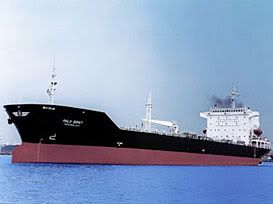
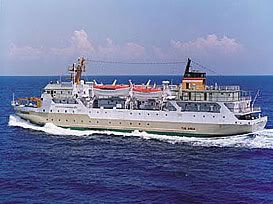
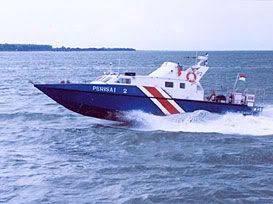
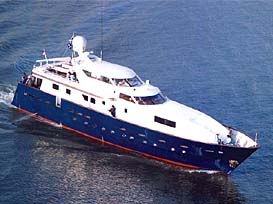
Indonesia’s PAL- pictures from www.pal.co.id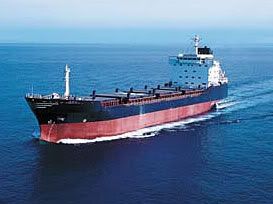

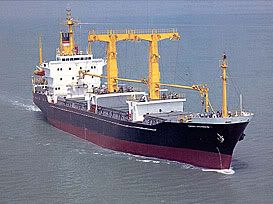
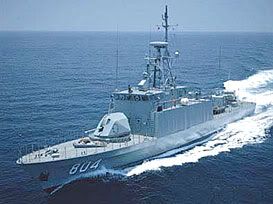
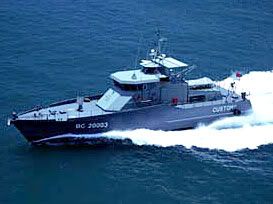
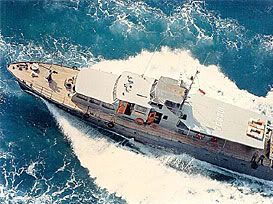
By: Canpark - 28th May 2006 at 10:46
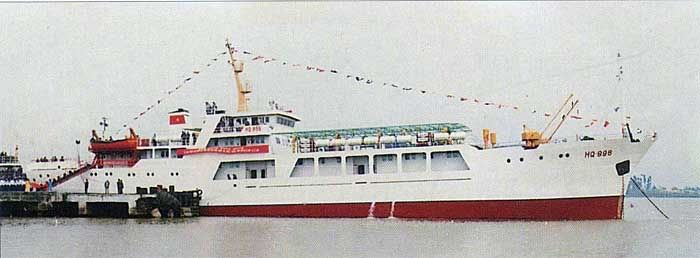
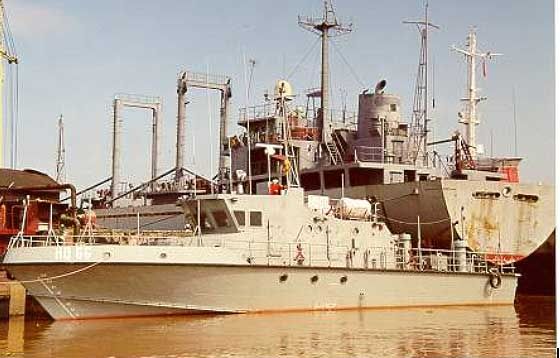
Company 189-operating under the Minstry of Defence it builds and repair ships for the VietNamese Navy.
Transport crafts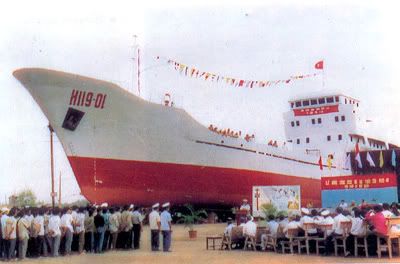
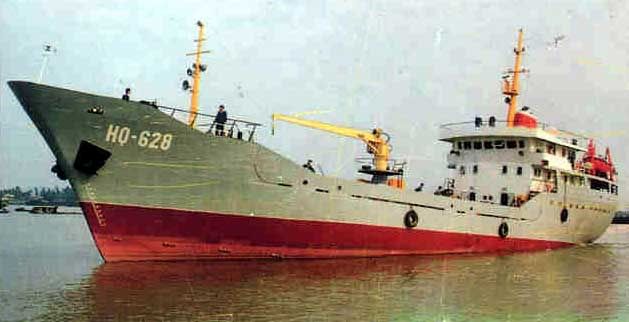
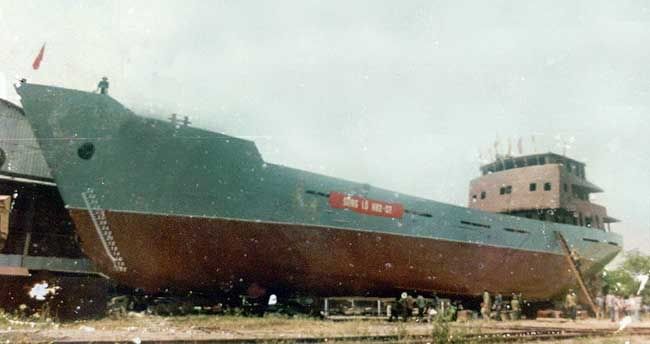
HQ-996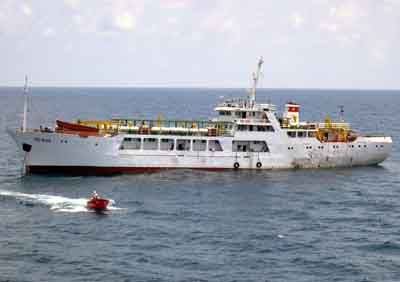
Truong Sa class logistic ship and oiler.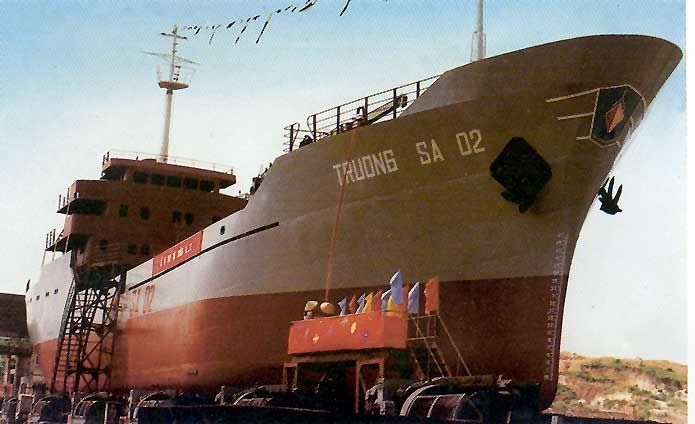
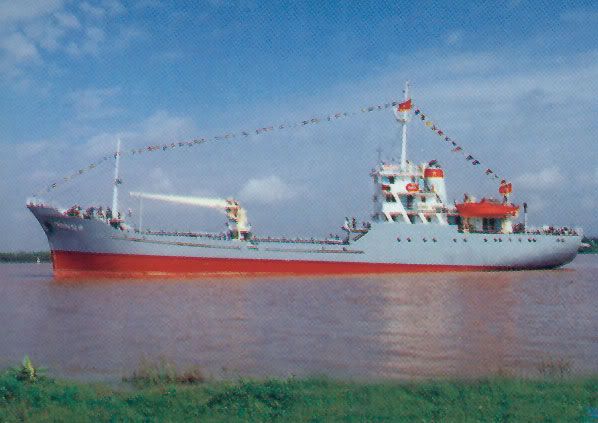
V-54 class Oceansurvey ships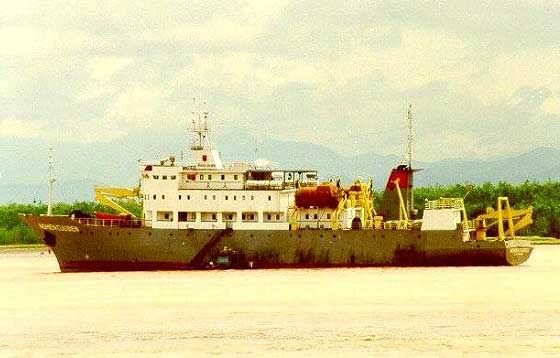
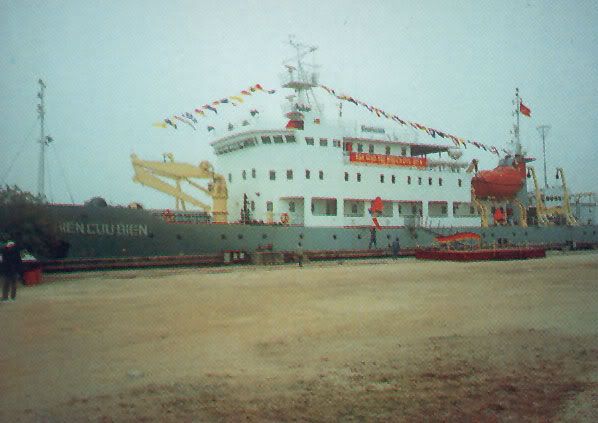
Patrol boats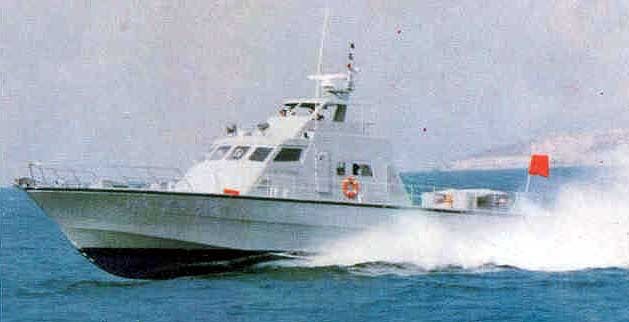
By: Canpark - 28th May 2006 at 10:33
The Florence- is by far the largest ship VietNam ever built at 50,000 tons, its part of an order from the U.K.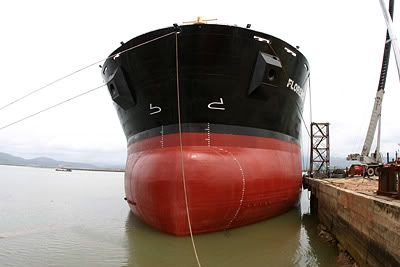


 Sign In








 May 28, 2006 at 10:16 am
