planeman6000
wasn’t it for opportunist attack on unescorted long range patrol aircraft and bombers, as per Falklands conflict?
planeman6000Thanks guys
planeman6000A. Why a mith? it was only a fact: ANA had only 5 super étendards in april 1982, transferred from France (St Nazaire) to Argentina (Puerto Belgrano) on the merchant ship “Cabo de Hornos”. They arrived in Argentina November 18th 1981. 1 was used for spares, 4 able to fly, 2da ECA was operationnal mars 4th 1982. Deck modifications were already done in 1980/81 (angle deck extension), but no trials have been conducted on board with SuE. Air refueling trials were conducted april 10th 1982. Anti-ship attack trials were conducted against ARA Santissima Trinidad april 15th 1982, against ARA Alferez Sobral april 22 1982. Based at Rio Grande naval base april 18th 1982.
1st attack: may 1st. 2nd attack : may 4th. 3rd attack: may 23rd. 4th attack: may 25th. 5th attack: may 30th.
december 1982: 5 new SuE on “Bahia San Blas” and 4 on “Cabo de Hornos” arrived in Argentina.
1st deck landing: april 18th 1983 (3-A-208)
last deck operations (on board ARA 25DM): july 19th 1986.B. About your drawing of 25 de Mayo: the carrier was fitted with a angle deck extension (165 meters lenght), there was another park deck extension behind the island for two S2 or 3 A4, and after 1984 another park in front of the island for an helo or a crane. Bow deck was not so broad.
regards
X
Thanks for the info. When I was researching that illustration post I was asking around forums trying to tie down exactly when the flight deck was extending and when/when etc. I was told, on Militaryphotos IIRC, that the flight deck was only extended in 83 and that as-of Falklands it was not SE capable. Not saying your facts are wrong, but do you have any sources to collaborate them?
planeman6000


planeman6000MANPAD version!
(Joke)

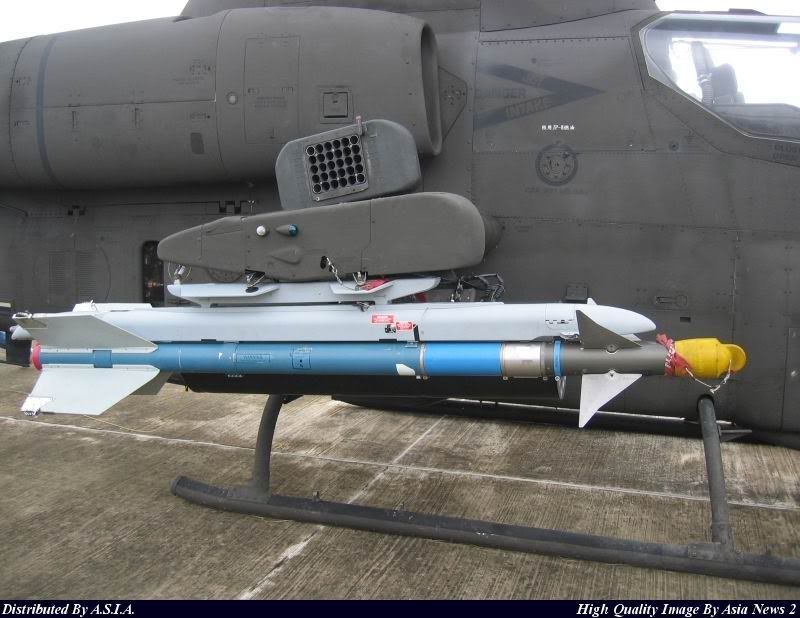
planeman6000The mentioned AH-1W
Isn’t that a “Sidearm” anti-radar missile not a regular sidewinder?
planeman6000What we have here, once again, is a dramatic display of obnoxiousness.
Yes, we can see that.
Have you ever read a car magazine comparison. Maybe they are irrelevant, after all some people own snowmobiles also? Read the first couple of paragraphs. You may be incapable of understanding the relevance of direct comparison but please don’t assume others cannot take them for what they are and keep a sense of perspective when reading them.
I don’t know why I’m bothering to respond to your arrogant drivel but I will take mild amusement in pointing out that you made some incorrect statements about the Invincible class. You state “The British ships have very little amphibious capability because they were never meant to have it” when in fact Invincible class was designed to accommodate 500 troops (some sources quote 907 troops). And the other British ship in the frame, HMS Hermes, was in fact a “commando carrier” during the Falklands but shifted role when it was decided that she was too precious too act as such and her landing craft (still carried by INS Viraat) and troops where transferred to other ships. -hence my comment in the text about assault carrier (LPH etc) and light fleet carrier requiring similar designs but implying diverging operational considerations. The specialism versus flexibility conundrum; no doubt you have a view but please don’t share it.
As for my comment regarding the Cavour being a better “harrier carrier” than Wasp or USS America (based on what we know of the latter) that means exactly what it says. It is. You may be of the view that USMC doesn’t need a carrier what with the USN’s CTOL carriers but I gather many in the USMC aviator community disagree and USS America is seen by some as a USMC carrier for F-35Bs via the back-door. Either way if you are carrying jump-jets (Harriers of F-35Bs) why not add a ski jump so that they can carry more and go further??? And if you don’t need a well deck (USS America won’t have one apparently) why go taller-and-narrower (like a LPD) when you could go shorter-and-wider making more flight deck for both jump-jet and rotor ops????
Basically if you’re a jump-jet jock in the USMC (or any navy) then the Cavour is better than a LPD.
planeman6000By the time you factor in all the differences you will struggle to find any one navy the same.
You mean any two navies the same?
Different governments and militaries respond differently to the same regional and global circumstances but that doesn’t mean they exist in separate universes, just that they see the same universe differently. Take for example the recent focus on piracy especially off Sudan. Governments and Navy’s are responding to this situation – dictated by the actions of the pirates and the shipping industry , ie macro factors.
Similarly the recent trend in close-in anti-boat weapons fits. That’s dictated by the evolving threat, again an outside influence of defence procurement.
planeman6000Yeah South Korea seems the obvious place.
planeman60003. Some harrier carrier history
You could be forgiven for thinking that Britain invented the STOVL carrier concept, and we certainly were forerunners in applying the concept, but it was a widespread idea even in the 1970s. Really, the Royal Navy (RN) didn’t want Harrier Carriers, that was until the politicians forced them out of the “real” carrier game at which point a Harrier Carrier became better than nothing. Where Britain can claim a lot of credit however is in providing the Harrier jump jet. Whilst several countries tried to develop Vertical take-off and landing jets in the 1950s and 60s, only two countries were successful in making operational types (Harrier in UK and Forger in USSR) and only the Harrier was really combat credible. Even the USMC purchased the Harrier for deployment on Helicopter carriers. In fact, ironically the USMC appears to have been the first Harrier user to routinely deploy Harriers operationally on warships from around 1971 onwards (the UK did plenty of demo flights prior). And even Spain deployed its Harriers to its small WWII vintage carrier Dedalo before the Royal Navy did its. So the Royal Navy was not alone, and not the first, but in some respects I suppose we can claim credit; The British Invincible class was the first purpose-built STOVL carrier to enter service and the second with a ski-jump. 2nd??? – yep HMS Hermes beat her there! And just to throw a couple more spanners into the works, Italy was already designing their own Harrier Carrier in the 1970s too, which ultimately became the Giuseppe Garibaldi and entered service in the early 1980s.
Also, both the Spanish and Russian navy’s deployed jump jets on warships operationally before the Royal Navy!
The Russian Yak-38 Forger was however an operational failure and certainly inferior to the Harrier. Its successor, the Yak-41 (/141) was much better however and easily a match (if not somewhat superior to!) any version of the Harrier, at least in air-air role (the Yak was not designed for an air-to ground role).
The Yak-41 was however a 1980s design, but we can assume that had the USSR continued to exist and/or it entered service, then it would have been upgraded with AA-12 Adder and AA-11 Archer missiles. Yak wanted to follow it up with a much more capable Yak-43 stealthy design (Yak was noteworthy among Russian design bureaus for their inclusion of US style stealth alignment in their concept designs of 1990s). The Yak-43 would have been equivalent to (though probably inferior to) the JSF:
Analogous with the Yak-41 programme, both UK and US considered improved Jump jets in the 1970s/80s (UK actually planned a supersonic follow-on in 1960s!). Ultimately they plumbed for the Harrier-II which was essentially the old Harrier with updated engine and new bigger (and slower!) wings. However, one of several Hawker (the original maker of the Harrier) proposals for a supersonic Harrier successor was by far the sexiest fighter-never-made:
So why am I so jaded about the great British institution that is the Harrier Carrier??? Well, really it’s just a lame replacement for the Royal Navy’s real Carriers. The Royal Navy had operated a fleet of small and full size fleet carriers in the 1950s, right up to when the last one (HMS Ark Royal R09) was decommissioned in 1978. I’ve compiled a simple chronology of post- war British Carriers:
As you can see the number of aircraft carriers in service steadily reduced from a highpoint of 12 in 1950 to just 2 today (excluding HMS Ocean). The mix also changed, with the last of the full-sized fleet carriers (HMS Ark Royal R09) decommissioned in 1978 leaving just STOVL Harrier-carriers in service.
Now Britain had planned to build two more fleet carriers to replace the WW2 generation Audacious class (HMS Eagle and HMS Ark Royal) under the CVA-01 programme. These would have been about the same tonnage as the Audacious class but significantly larger flight decks designed from the keel up as angled-flight-deck carriers. The CVA-01 programme was finally axed by a conspiracy of penny pinching politicians and jealous RAF staff officers. Sad days. A quick scale comparison of the CVA-01 with the older Ark Royal and Argentine 25 de Mayo carrier which saw service during the Falklands war:
“But, the Harrier carriers did serve the country well in the Falklands” I hear you cry. Yes, but we’d have been better off with even one fleet carrier still in service. Even the ancient Ark Royal. Royal Navy fleet carriers ultimately carried a mix of Phantom FG1 multi-role fighters and Buccaneer S2 strike bombers. These aircraft are much longer ranged and more potent that the Harrier. And the large carriers had another massive advantage, they carried fixed-wing AEW assets in the form of Gannets. A quick gauge at the difference in combat radius of a Harrier Carrier and a fleet carrier in the context of the Falklands:
Note that combat radius is great than typical range of combat air patrol. Also, that Buccaneer also operated as a buddy-buddy tanker thus significantly extending possible strike distances beyond that shown).
As you can see raids on the mainland would have been feasible and time over the Falklands much longer allowing 24-7 air-superiority, something the Harrier Carriers could not provide.
And the Phantom also carried a far heavier missile load of both medium ranged Sparrow and shorter ranged Sidewinders. It not too farfetched to suppose that RN Phantoms would also have the more advanced Skyflash missile by 1982 (it entered service with RAF Phantoms in 1978). This would have given the Phantom an unquestioned dominance over the Argentine Mirages.
To the Harrier’s credit though it did conclusively win air-air engagement against the Argentine aircraft including the Mirage III radar-equipped fighters which on-paper should have wiped the floor with the Sea Harrier. But the overall loss rate, including accidents and ground-fire, tells a different story:
Statistically the highest loss rate was among the RAF Harrier GR3s(!) not any Argentine type and Sea Harrier was prone to tragic accidents. The most successful type was probably not the Sea Harrier (which gets credit for its air-air success) but the Argentine operate French built Super Etendard anti-ship fighters which not only suffered zero losses but also managed to sink two mayor ships (HMS Sheffield and MV Altantic Conveyor) with their Exocet missiles.
On the other hand, if we look at the capability map of the Phantom and Buccaneer (bottom, above) we can see that not only is the Phantom by far the most capable air combat fighter, but that the Buccaneer too has a significant advantage over the equivalent Argentine types. It’s fair to say that the Buccaneer is one of the finest low-level strike platforms ever!
Falklands Myth 1: It’s a myth that the Argentine navy could operate Super Etendards from their carrier 25 de Mayo during the war; suitable modifications were only made in 1983 after the conflict. Instead Super Etendards had to operate from shore bases.
Falkland Myth 2: HMS Invincible was not sunk by the Argentineans. That’s just ridiculous propaganda. However several other warships were sunk.
Falklands Myth 3: Atlantic conveyor was not hit by two Exocets. One was enough.
War brings out the best in technical innovation however and the Harrier did offer British planners interesting possibilities that would not have been possible with conventional take-off aircraft. With a shortage of aircraft carriers Britain explored several improvisations, taking the concepts much further than any other navy:
Although merchant conversions proved invaluable during the Falklands war, the Arapaho system proved completely unsatisfactory for peacetime operations, even just for Helicopters. One more extensive conversion that was a success was HMS Argus. This was officially a training ship to better prepare pilots for carrier ops, but also doubled as an ASW carrier (with Seas Kings) and capable of limited Harrier VTOL ops. It was used as an assault carrier but proved inadequate for carrying large numbers of troops in peacetime comfort so a dedicated assault carrier, HMS Ocean, was commission and Argus became primarily a casualty evacuation/hospital ship. Ocean is based on the hull of the Invincible class and frees up the Invincible from assault carrier role (in Falklands the carriers had to be kept too far from the landing zone to operate effectively as both light fleet carriers and assault carriers – in effect the two roles require similar platforms but imply contradictory operational doctrines). HMS Ocean would require modest modification for sustained Harrier ops and is only used as a helicopter carrier. This may be politically motivated – in war it’s easy to imagine Ocean being modified with a ski-jump, blast resistant deck coating and weapons lifts in very quick order!
The advantages and disadvantages of STOVL
STOVL (Short Take-Off, Vertical Landing) is a mode of operation where a ‘jump jet’ takes off via a short run, typically up a ski-jump, but lands by hovering. The advantages of this mode of operations for a several:
1. Relative to ‘pure’ vertical operations the aircraft can take-off with more weight
2. No catapults or arrestor gear is required (reducing maintenance/material cost of ship)
3. Can land in worse weather than ordinary operations (as proved vital in Falklands war)
4. Several aircraft can land virtually simultaneously
5. Aircraft can be queued up for take-off and depart at a much more rapid rate than catapult launched aircraft
As a side note to the landing in bad weather point, a Falklands war pilot famously commented that it is easier to stop and then land, than to land and then stop. But, one of the harriers did drop over the side of the carrier whilst taxing.
There are also some disadvantages to using Jump jets:
1. Generally the fighters cannot take-off with as heavy a load as a catapult launched aircraft, which reduces endurance and weapons load
2. The fighter often has to ditch ordinance before landing (depending on fuel load and what is carried etc).
3. There are relatively few makers of jump-jets so the export user tied to certain political aligencies
4. Potential role conflict between the fighter jets and other air assets
This last point is quite important. All the current operators of STOVL carriers have good political relations with UK/USA and are dependent on the Harrier family of fighters. For the future the only ‘new’ jump jet fighter becoming available is the US lead JSF (F-35B) programme. Russia did build an operational STOVL fighter called Yak-38 “Forger” which was employed in the Kiev class cruisers. Whilst the Forger was something of an underachiever, the follow-on Yak 141 ‘Freestyle’ was extremely promising and would certainly give the Harrier-II a good run for its money had it not been killed off by the collapse of the Soviet Union and financial neglect that followed.
The F-35B will massively close the gap between STOVL carriers and CTOL in quality of aircraft if not quantity, but at the same time modern fighters are becoming shorter take-off and STOBAR configurations are real challenge.
planeman6000Obi Wan Russell’s price analysis is well researched and makes a strong argument. I think there’s some truth to the notion that the cancellation of the CVA-01 programme decision, in light of the subsequent naval acquisition/upgrade decisions, somewhat hypercritical.
planeman6000Frankly that is a stupid question, there is no such thing as ‘todays environment’, that is determined by the operational requirements of individual navies. If you want this thread to work you need to provide us with a navy first..
Stop trying so hard to be frank. Of course there is such a thing as today’s environment. Navies operate in the context of the world geo-political and threat environment and those that fail to inevitably are less prepared for the challenges that arise than those that don’t. That’s what caught the USN out at Pearl Harbour, the Brits in the Falklands and so on; they suffered losses they should have and could have reduced/avoided if they’d stayed abreast of “today’s environment”.
planeman6000In the Irish EUFOR camp in Abeche Chad, there is a battalion of Irish soldiers and a few platoons of Dutch Marines.Both operate on week long patrols together and there seems to be no problem what so ever with language as most of the Dutch speak English..
That doesn’t explain how they managed to communicate with the Irish though.
planeman6000Having the hanger underneath the flight deck makes sense to me.

planeman6000


 Sign In