 sainz
sainzMongolian air force
http://www.photoblog.com/bagabandi/2008/09/23/mongolian-air-force.html
And some older shots from my archive:
http://forums.airshows.co.uk/viewtopic.php?f=40&t=4634
sainzsainzEven the road-site operations were not trained frequently.
Road-site operations were not trained in Romania, Hungary….
It was common practice in SSSR, Poland and GDR(rarely).
Rough-field operations is other story.
I will spare you….
Good Luck !
sainzuhummm….
Currently, many ex-WP countries are in the NATO.
And when these ex-WP pilots went to AF Academys to the US or to UK in late 90s, they generated some surprises.
There were some opened brandnew files…especially about WP fighter-units readiness-system and rough field capabilities…..
sainzDo you have any idea how many special trucks were in a War-Pac fighter-regiments inventory?
One of the main differences NATO vs WP….
The question is – Where are you going to find the necessary RUNWAY, fuel, munitions, spare parts, facilities etc…on a destroyed NATO airbase ?
sainzHuAF MiG-21PFs at Kiliti in 1981:
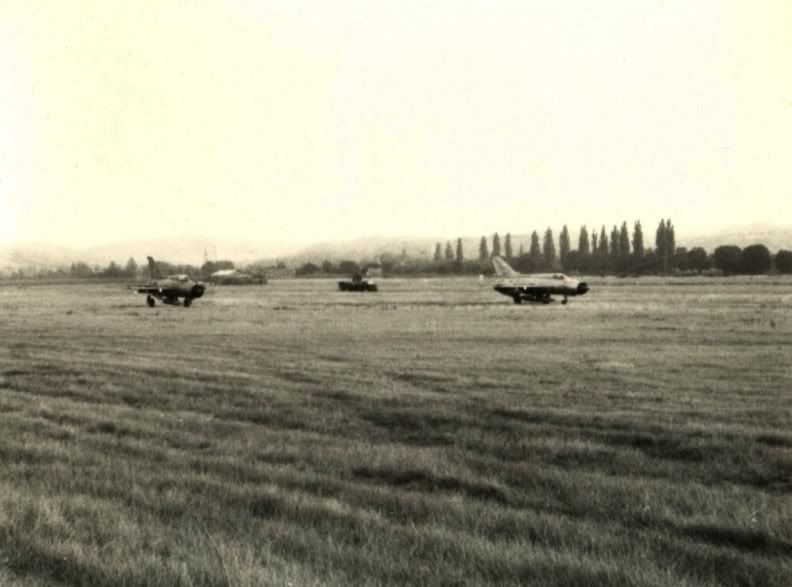
It was the grassy training airfield for the Taszár based fighter-regiment in the Cold-War Era.
The favorite spotting place for Western “diplomats” in that time…..
The black cars were moving on the nearby road-65 always, day & night.
Probably, they have much more photograps in their archives than anywhere else(including all Hungarian sources).
Today it is a small commercial “airport”:
http://maps.google.com/?ie=UTF8&ll=46.855496,18.091736&spn=0.028819,0.077248&t=h&z=14
Rough field capability is (nearly)nothing without qualified pilots….
sainzEmergency landing of a Ту-124 on the Neva-river, 1963:
http://www.webpark.ru/comments.php?id=45524
to translate:
http://www.webpark.ru/comments.php?id=45524
http://rustran.com/
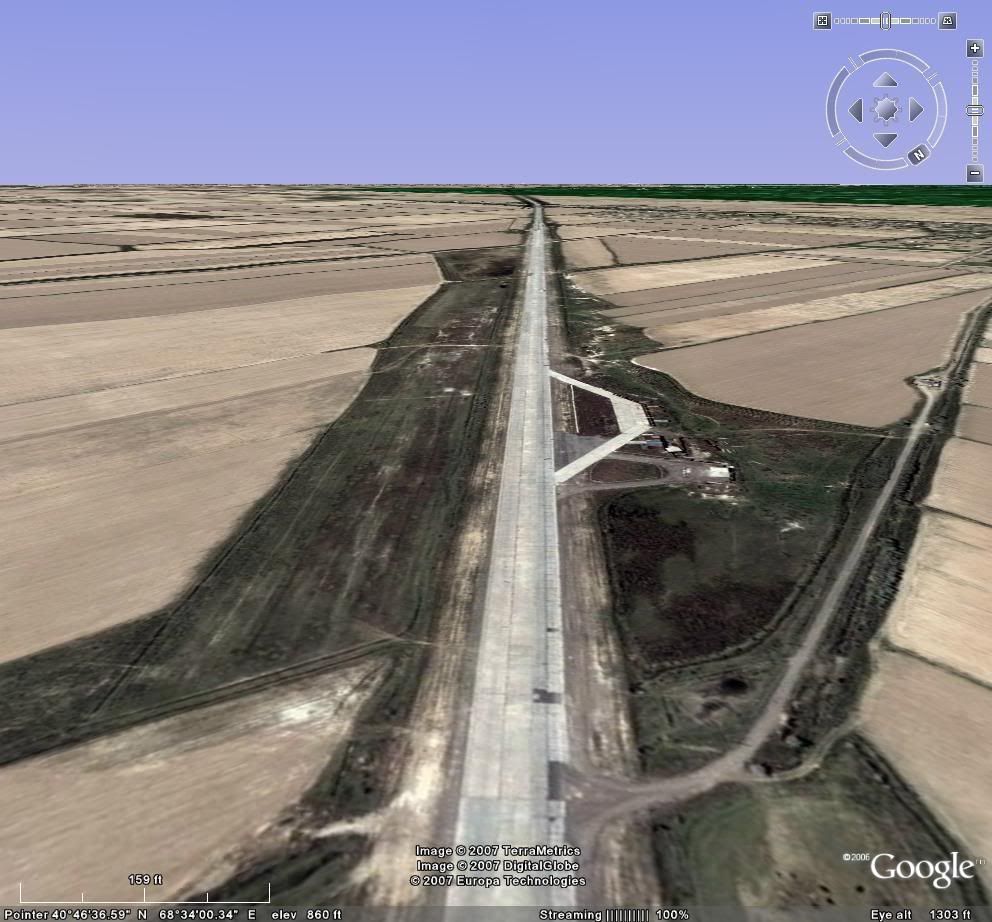
sainzAlso, there were a lot of operations from highways in the War-Pact.
In Poland, GDR, Western part of the Sovietunion were many highway sections, where they practiced the operations from these narrow “runways”.
Like this one on the Tashkent-Samarkand highway,here observed for example Su-25s many times:
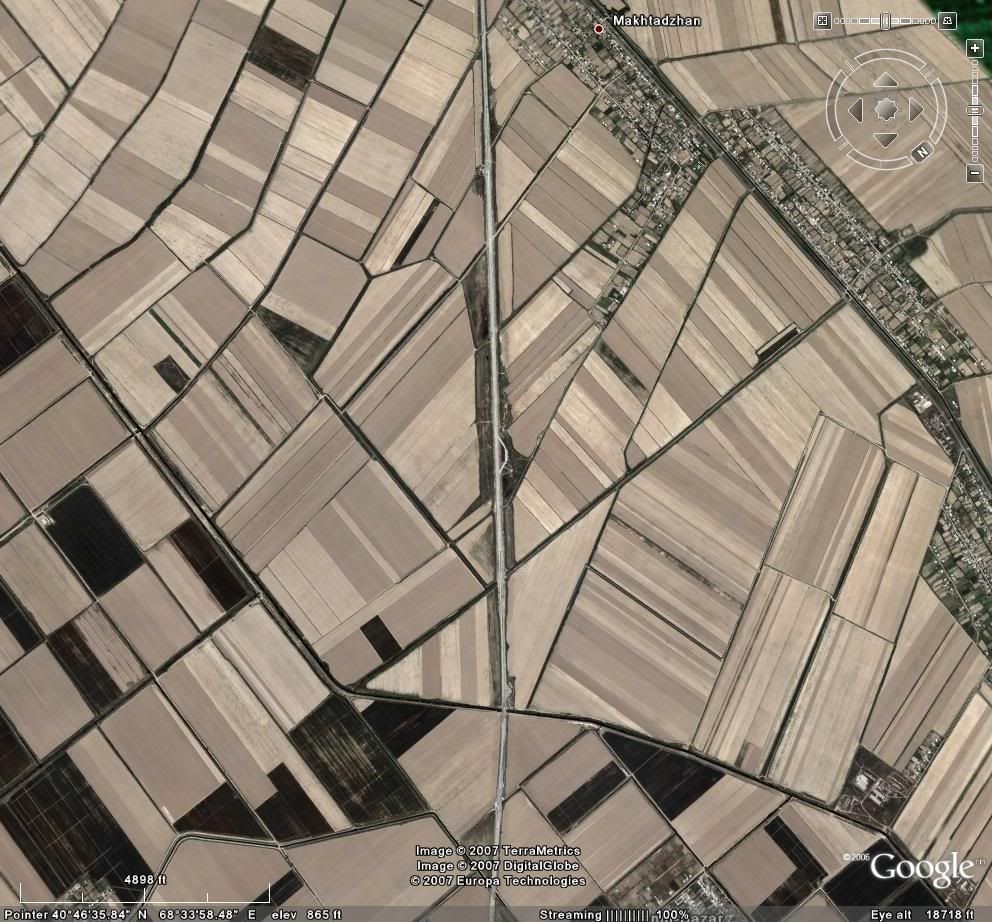
Same sections on the Brest-Minsk, Lvov-Striy….. highways.
On many Soviet AF airbases were yellow painted signs on the runway, to help to practice the operations from narrow roads.
” Back in March 1993 I was driving on a single lane dirt road in the deep forests of Estonia. Estonia was considered part of the Soviet Union until just 19 months before that, and there were still Russian troops around. Whole parts of the country – for instance the Paldiski peninsula (Soviet nuke submarine base) – were still completely closed Russian military facilities.
Suddenly the narrow track straightened up and seemed to widen enormously.
I stopped and checked. Under the snow was a 200 feet wide concrete lane, two miles long. On both sides there was about a quarter mile distance to the trees.
After those two miles it was a single lane dirt track again.
The locals confirmed my assumption. In addition they told me that it was a terrible ecological disaster. Underground fuel tanks made of concrete had cracked and leaked enormous amounts of fuel. They would have to pump up astronomic amounts of polluted ground water for decades to clean up the area, and for the foreseeable future they had no money for that. “
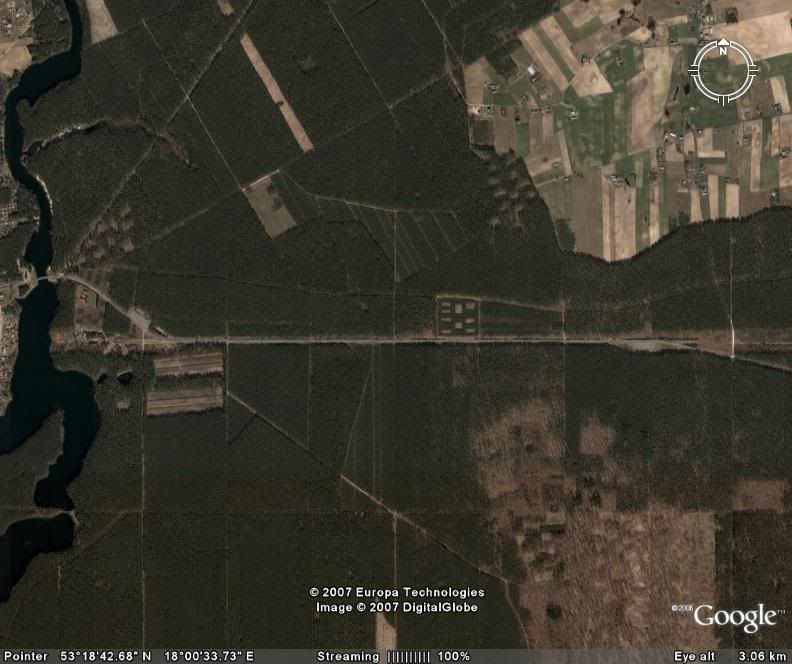
In Poland:
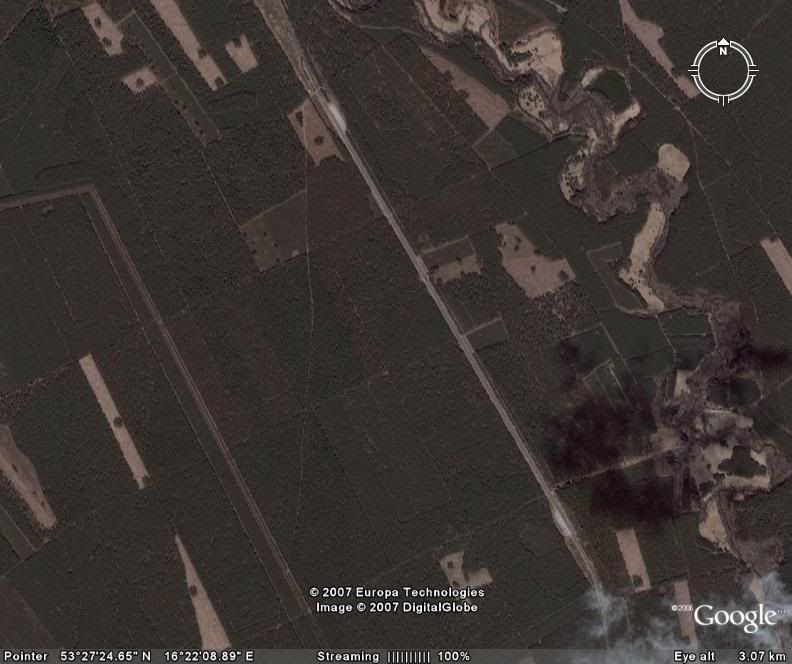
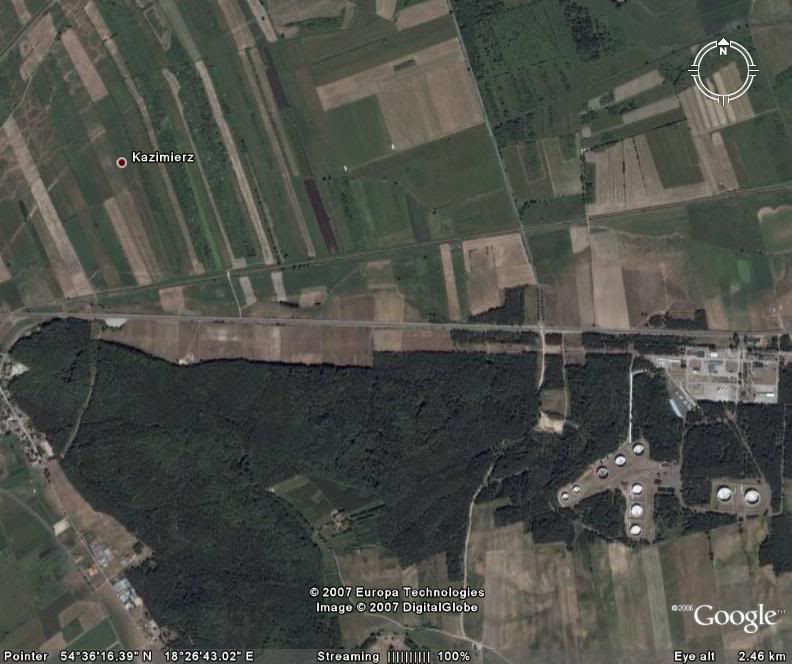
In GDR:
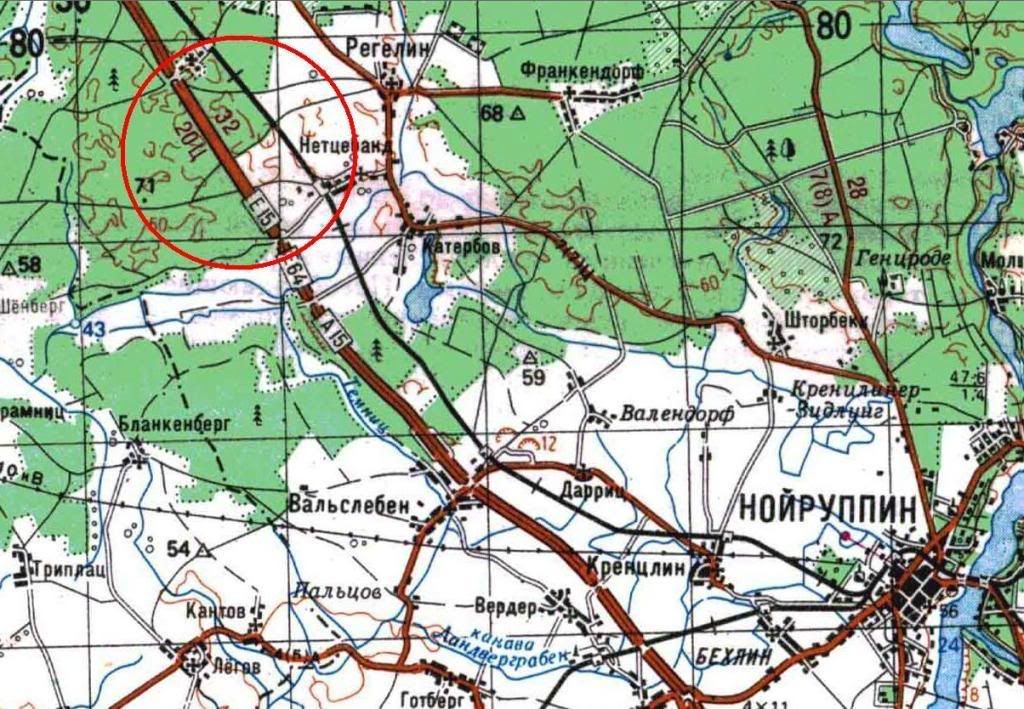
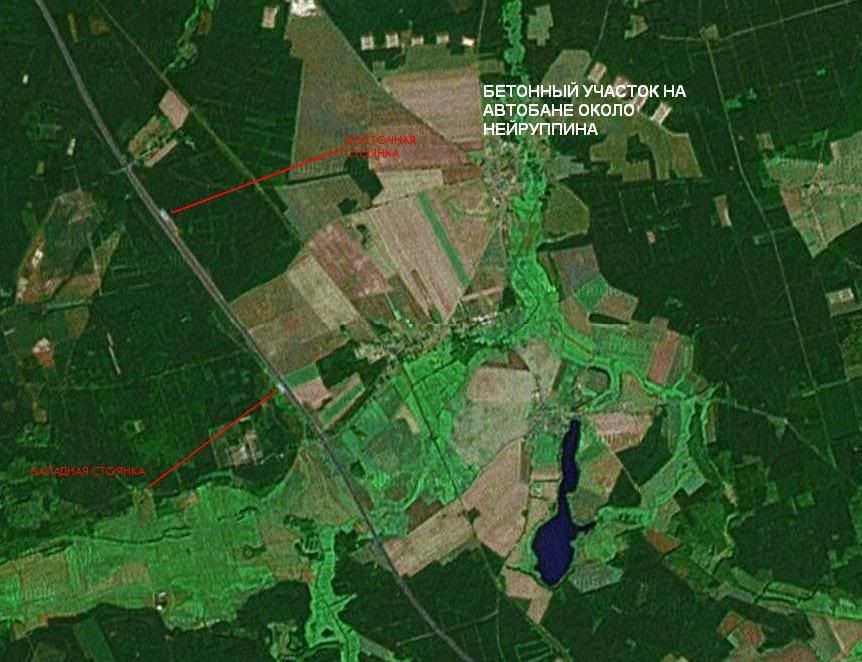
Laage – connection with the “Autobahn”:
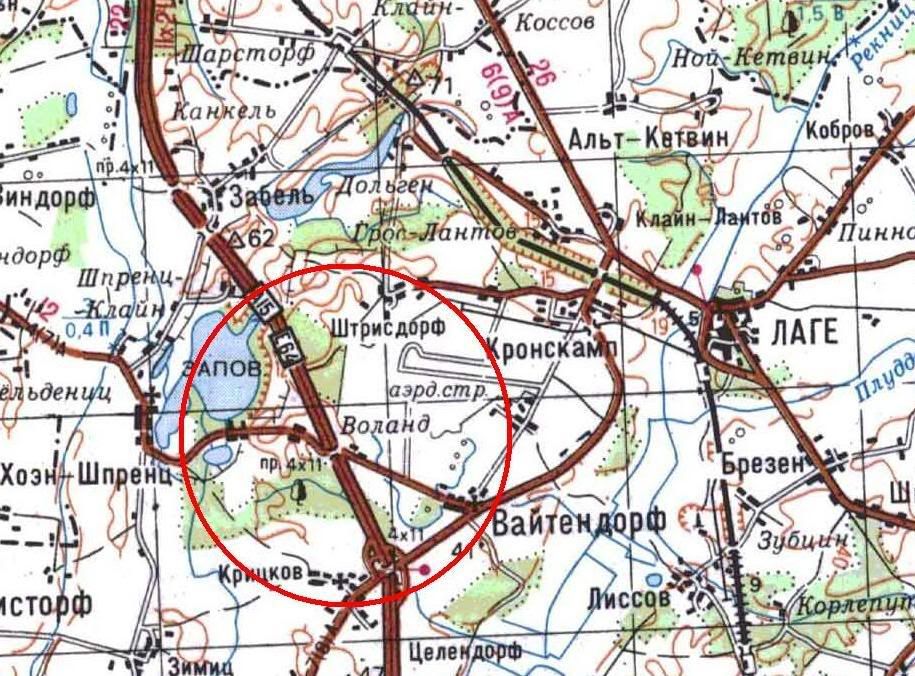
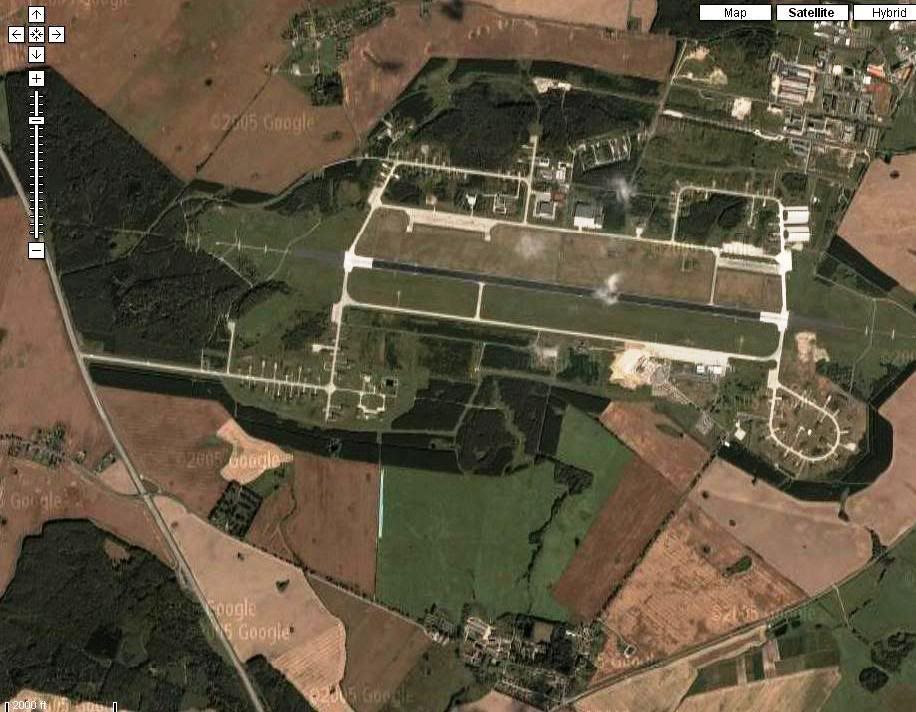
sainzThe personal reports of that time do show, that it was not the case. It was rarely done for special events and the pilots had a special training for that.
The road-side landing was trained once a year to keep that option.
Check the personal reports from the Western “diplomats” – in GDR,Poland,Hungary…- from the 70s, 80s.
They observed these activities.
And please, read my post as personal report too……..
“special training” ???
Most of the War-Pact pilots started to fly from rough-fields at the flight-schools in the SSSR with the MiG-15UTI, MiG-17, MiG-21, L-29, L-39….. up to the mid 80s.
Later, they only need to keep in practice their pilots few times in a year…
Just a few samples:
July 17 1984, 515.iap. at Tapioszentmarton “rough-field”:
http://maps.google.com/maps?f=q&source=s_q&hl=hu&geocode=&q=tapioszentmarton&sll=47.353245,18.425789&sspn=0.028086,0.076561&g=csakvar&ie=UTF8&ll=47.312933,19.779339&spn=0.028107,0.076561&t=h&z=14


They had a wartime “spare” at Csakvar with concrete runway too:
http://maps.google.com/maps?f=q&source=s_q&hl=hu&geocode=&q=csakvar&sll=37.0625,-95.677068&sspn=33.626896,78.398437&ie=UTF8&ll=47.353245,18.425789&spn=0.028086,0.076561&t=h&z=14&iwloc=addr
The 1.gv.apib. based at Kunmadaras AB Hungary, they had 4! peace-time dirty-airstrip for training and 11! other for wartime use only.
Sometimes they flown from absolutely unprepared wheat-fields after reaping.
1988 Summer, 1.gv.apib. Su-17M2s at Puspokladany:

1973 1.gv.apib. Su-7Bs at Oroshaza:
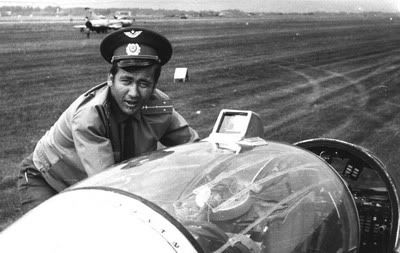
3rd sqn. of the 1.gv.apib. at Foldes, you can see the dust-cloud in the background:
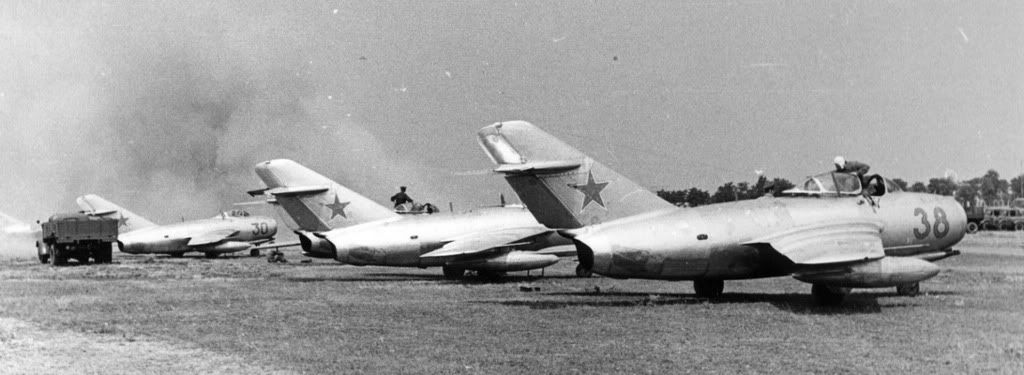
And a “dusty” Su-15:
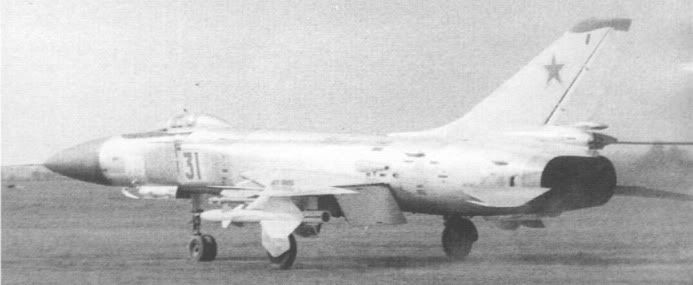
In the Cold-War Era common practice was to use the other War-Pac countries “spares” also.
For example, this one in Czechoslovakia visited many times by HuAF MiG-21s in the 70s:
http://maps.google.com/maps?f=q&source=s_q&hl=hu&geocode=&q=Kouty,+Krava%C5%99e,+Cseh+K%C3%B6zt%C3%A1rsas%C3%A1g&sll=46.870989,17.41127&sspn=0.056682,0.153122&ie=UTF8&ll=49.929538,18.069849&spn=0.013343,0.03828&t=h&z=15
And interestingly, the operations from rough-fields was part of the training in HuAF to the mid 90s, you can see the new roundel on these MiG-21s at Kenyeri grassy airstrip:
http://maps.google.com/maps?f=q&source=s_q&hl=hu&geocode=&q=kenyeri&sll=49.929538,18.069849&sspn=0.013343,0.03828&ie=UTF8&ll=47.372605,17.148285&spn=0.028075,0.076561&t=h&z=14
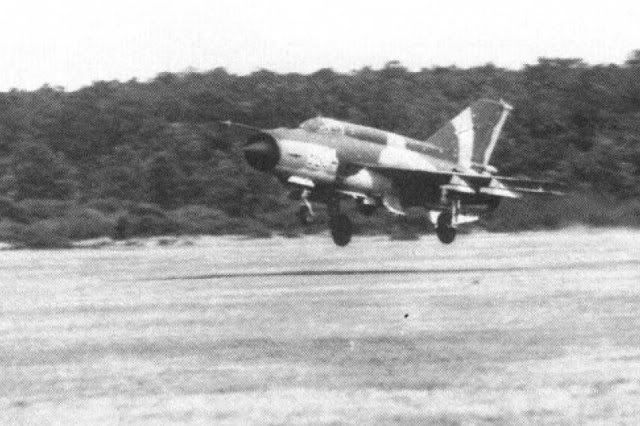
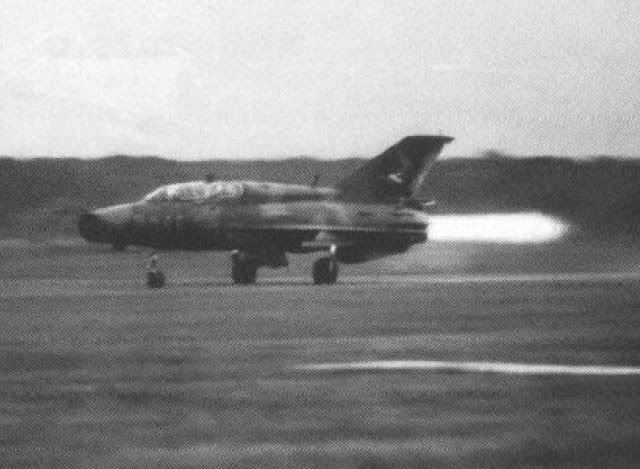


And some pre 1990 photos:


sainzmagyaralba!
One of the last modifications on the F-4D Phantom, was the installation of the AN/ALR-69(V)-2 RHAW radar system.
The undernose pod of the F-4D became the mount for six antennas.
Retrofitted since 1981 during PDM cycles.
The six sensor nodes on the chin fairing and two sensor nodes on the tail cone covering the parabrake compartment led to this system being referred to unofficially and not so complimentary as the “herpes mod”.
sainzHere are two photos from my archive, 1977 SSSR, Primorsko-Atharsk, basic training on L-29.
Operations from grassy – rather soil – airfield.
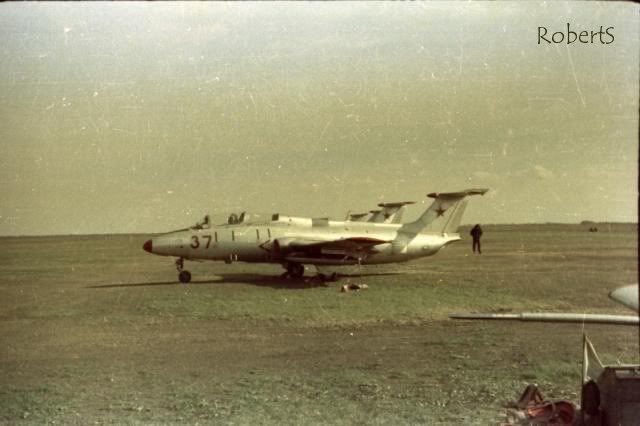
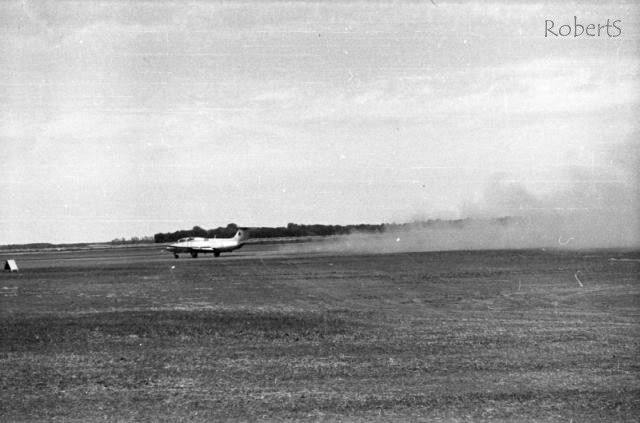
In the Soviet & WP AFs the operation from rough field was everyday business.
The pilots, maintainers practiced it many times a year.
Every unit had a grassy airfield for training, and many others for wartime use.
All combat aircrafts – MiG-21 -23 -27, Sukhoi fighter-bombers, An-12 -26 were capable to operate from rough fields.
An interesting video, Polish AF MiG-21s operate from a very narrow road:
http://video.google.pl/videoplay?docid=-413384952047559304&hl=de
Many of the landing planes are the MiG-21PF sub-type, without the SPS system, these had really high landing-speed, compare to the later Fishbed variants.
RobertS
sainzsainzsainzsainzIf this is all what you call different between Bis and previous sub-types, then those Bis airframes are even more identical to previous sub-types as far as internal structure goes than I thought.
Sainz, I`m working for an a/c MRO shop, you wont tell me what is LEGO, what not. 😀
We are talking about my daily bread.P.S. I do not mind if Iraqi Migs in Yugoslavia were BIS, but unless I see some serious evidence, not fuzzy photos, I`m not sure.
” Sainz, I`m working for an a/c MRO shop, you wont tell me what is LEGO, what not. 😀
We are talking about my daily bread. “
If somebody tell this for me:
” inlet lip ring can be removed and reinstalled with a other one at the regiment maintenance shop level “
I must to say something “hard”.
This is mission impossible with the 21bis intake, especially at regiment maintenance level.
Sorry, if it was too strong for you….
There were many “mix” in MiG-21 familiy – MiG-21SMT back-built with 21bis spin-tank, MiG-21SM with R25 engine, MiG-21UM with 21bis wing etc….but there were NO any “home-work” with the nose section of the 21bis….


 Sign In







