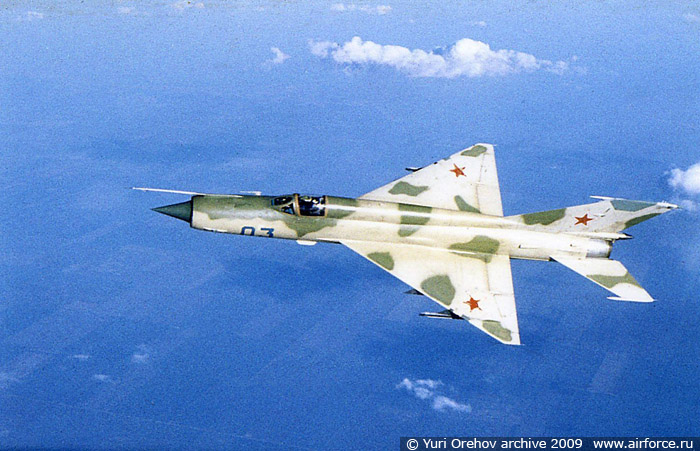
sainz
sainzHow good were Soviet pilots sent to Egypt in late 1960s/very early 1970s? They were trashed by Israeli pilots flying Mirage IIICJs (roughly equivalent to a MiG-21MF in terms of technology) and F-4Es.
Here you can read about their preparation, pre-training, a lot of details, straight from the pilots:
http://www.hubara-rus.ru/egypt_period.html
Just one of the details, which tells a lot:
Soviets planned to send them to fight in Egypt. Probably for fierce dogfights with the Israelis. Their live-firing exercise(with gun) to La-17 drones was with the older MiG-21PFM, with fixed, WW.II. era gunsight for the gunpod. While they had MiG-21SM, MF in that time, with built-in 23mm and with gyro-gunsight…and in Egypt they flew(fought) with the gyro-gunsight equipped subtypes.
Or was this before 500 series exercises?
Yes.
sainzAlso the Warpac members historically always had good quality fliers, so in don’t think that would be much different during the Cold War. What they badly lacked imo though, were upgrades for their frontline aircraft, especially MiG-21s, but others too including MiG-23. I’m thinking of things most soviet VVS aircraft had like chaff& flare dispensers and good RWRs like SPO-15, and up to date A-A missiles, as many MiG-21MFs for instance were still flying with R-3S and RS-2US missiles.
Very good sample. Various invest nation by nation:
HuAF – MiG-21MF’s retired with R-3S and RS-2US, while there were large stocks of R-13M, R-60.
NVA-LSK – R-60 capability even to MiG-21PFM at regular overhauls
etc.
sainzWhat a pitty a nonsense claim again. All parties learned from the events in Vietnam and the Middle East.
Try to have fun with his sarcasm 😀 20 years after the collapse of the ‘Wall’ he thought: ‘500s’ = ‘Russian Top Gun’ in Mary
All parties learned from the events in Vietnam and the Middle East.
The question is: when? And how did they respond to?
US & Soviets – Comparing Apples to Peaches…
The Soviets chose a fleet-wide unit level program to ‘shake-up’ their fighter community. It was the ‘500s’, most of the VVS fighter units went through on it to mid-summer of 1971 and started to send whole units to the Mary-center. They shared the ‘500s’ with their WP allies too, but for non Soviet WP pilots had no training in Mary except for some selected few. And from the mid ’70s the arriving of the MiG-23 generated a kind of chaos in this system for a short period.
US Navy, USAF(USAFE) – this is relatively public.
Just an unusual thought about the Top Gun: an excellent program from the spring of 1969, but with very slow fleet-wide effect(Keep in mind: the main threat was the Cold-War, the large scale scenario in Europe. Vietnam, that was a limited playground only.) AFAIK even those, who has air victory in 1972 not everyone was Top-Gun graduate…
sainzAs I expected. You have no any idea about the real numbers, about the real pilot training…..probably 😎
The flight hours of the Soviets were probably pretty decent in the 70’s, but come to the end of the Iron Curtain it was much different.
You have hard statements based on what? Probably…
That’s fine and dandy if we’re talking Hungary AF, but that isn’t the CCCP.
>
1st:
HuAF
And you cite a single logbook.
While you cite some fabulous comments 😎
Gentleman-style…first time you can see the real data and you can not accept, you can not say a simple – ‘thanks’
Do you think it’s ordinary, public info?
I would be grateful for at least a few same pages from USAFE and Luftwaffe F-4 pilot logbooks from the same period…
That’s fine and dandy if we’re talking Hungary AF, but that isn’t the CCCP.
I help you >
HuAF – the smallest and poorest WP airforce.
At any time in the Cold-War era the Soviets flew much more than the HuAF. More flight hours, more exercises, more live firings etc.
sainzTo have some comparision at all, we have to compare the number of landings for every pilot.
Agree..
All we need is few dozen pages from the logbooks from both sides from the same period in the Cold-War. Then we can see the structure(weekly-monthly) and intensity of the pilot training. But it’s in the ‘dream-category’ more than 20 years after the collapse of the wall 🙁
sainz1st:
HuAF – the smallest and poorest WP airforce.
From the logbook of a young captain who flew on MiG-21bis. The yearly flight-hours in the late ’70s >
1977 – 133h 36m
[ATTACH=CONFIG]216407[/ATTACH]
1978 – 171h 3m
[ATTACH=CONFIG]216408[/ATTACH]
1979 – 139h 17m
[ATTACH=CONFIG]216409[/ATTACH]
Repülések száma = Flights
Nappal = Daylight
Éjjel = Night
Befüggönyzött kabinban = under curtain
Felhőben = in clouds
Korlátozott látás… = at restricted visibility
Please quote same Soviet data, data from other WP nations pilot logbooks, etc…
sainzSome of us were actually alive during the Cold War.
There’s nothing here that relates to your age…
Funny how someone can say I’m wrong then babble on about unrealistic numbers of flight hour per month, let alone in a year for Soviet training.
Please quote your reliable source for those VVS flight-hours in the ’70s & ’80s!
Are you ever talked to a Soviet pilot who flew in the 16.VA in GDR in the ’70s? Did you see the related pages in his log-book?
All we know the ‘Net-BS’ already….Let’s talk about facts!
sainzHi Robert, do you have info when, where(which IAP) was the foto taken? thanks
That’s all I know: Bagram, Afghan AF MiG-21bis with R-13M & R-3R(probably pre-flight checking by Afghan pilot)
sainz” The CIA gave us a flare dispenser from a Frogfoot [Su-25] that had been shot down in Afghanistan. We gave it to maintenance – it was just a thing with wires coming out of it. Four hours later they had it operational on a MiG-21. That proved to be a very important test. In 1987 we had the AIM-9P, which was designed to reject flares, and when we used US flares against it would ignore them and go straight for the target.
We had the Soviet flares – they were dirty, and none of them looked the same – and the AIM-9P said ‘I love that flare’.
Why’d that happen? We had designed it to reject American flares. The Soviet flares had different burn time, intensity and separation. The same way, every time we tried to build a SAM simulator, when we got the real thing it wasn’t the same.
I use the AIM-9P because it is out of the system and I can talk about it. The same thing happened to a lot of things that are still in the system and that I can’t talk about.”
http://www.aviationweek.com/Blogs.aspx?plckBlogId=Blog%3A27ec4a53-dcc8-42d0-bd3a-01329aef79a7&plckPostId=Blog%3A27ec4a53-dcc8-42d0-bd3a-01329aef79a7Post%3A1253fb8a-3b45-4f68-b273-fff9b8f2f73d
In 1987 we had the AIM-9P
&
which was designed to reject flares
Are you sure he’s talking about the AIM-9P version?
sainzWould you think this is the same dispenser as in your picture?
Here you can see on Afghan AF MiG-21bis >
http://s12.postimage.org/muwid1rhp/aso.jpg
sainzregarding the mysterious chaff&flare dispensers on MiG-21, so they supposed to be installed in wartime as well? Where were they fitted on the aircraft?
Simple system, fits to RATO connections, works by the wires and switches of the RATO.
http://forums.airforce.ru/attachments/raboty-na-saite-www-airforce-ru/23606d1269615138-2-.jpg/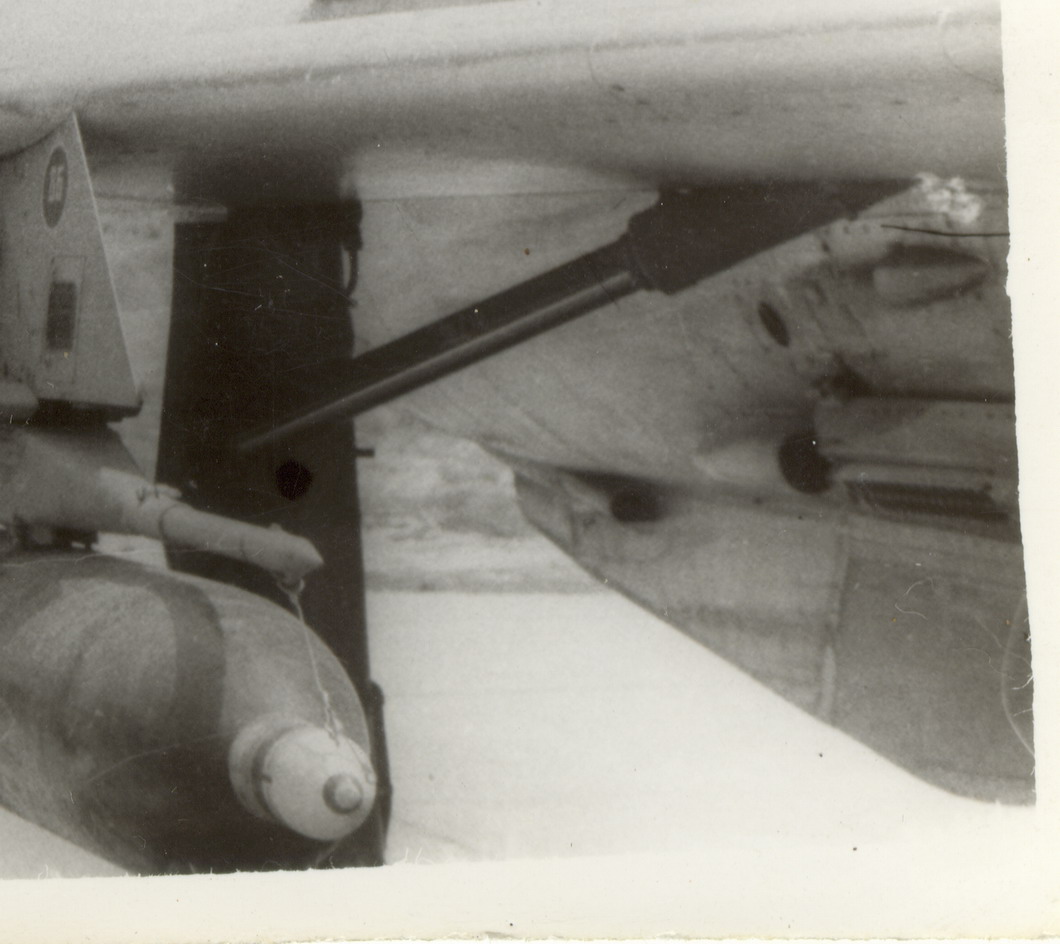
” The CIA gave us a flare dispenser from a Frogfoot [Su-25] that had been shot down in Afghanistan. We gave it to maintenance – it was just a thing with wires coming out of it. Four hours later they had it operational on a MiG-21. That proved to be a very important test. In 1987 we had the AIM-9P, which was designed to reject flares, and when we used US flares against it would ignore them and go straight for the target.
We had the Soviet flares – they were dirty, and none of them looked the same – and the AIM-9P said ‘I love that flare’.
Why’d that happen? We had designed it to reject American flares. The Soviet flares had different burn time, intensity and separation. The same way, every time we tried to build a SAM simulator, when we got the real thing it wasn’t the same.
I use the AIM-9P because it is out of the system and I can talk about it. The same thing happened to a lot of things that are still in the system and that I can’t talk about.”
http://www.aviationweek.com/Blogs.aspx?plckBlogId=Blog%3A27ec4a53-dcc8-42d0-bd3a-01329aef79a7&plckPostId=Blog%3A27ec4a53-dcc8-42d0-bd3a-01329aef79a7Post%3A1253fb8a-3b45-4f68-b273-fff9b8f2f73d
😀
Hang on a sec, something very, very interesting for me… so the “wartime” MiG-21’s were supposed to fire chaff from the gun ?!
Some non-soviet WP airforces purchased this, others do not…spec-ammo came with the MiG-21bis.
sainzI have to smile.
Have a nice day! Pleasure for me to entertain you, always 😉
sainzWhat were the missions of MiG-23 in VVS and what tactics were adopted by them to counter NATO fighters
At these Links you can find some public details from ex-Soviet pilots, exercises at ‘Russian Top-Gun’. These are not exactly what you need, in most of the ‘fights’ the MiG-23 played F-15 vs MiG-21’s, but these are interesting.
‘AWACS hunting’ – MiG-21bis vs AN-12 ‘AWACS’ & MiG-23ML >
http://forums.airforce.ru/sovremennost/3667-planirovanie-vozdushnogo-boya-3/#post73501
MiG-21bis vs MiG-23ML(act F-15 with AIM-7F) >
http://forums.airforce.ru/sovremennost/3667-planirovanie-vozdushnogo-boya-3/#post73583
http://forums.airforce.ru/sovremennost/3667-planirovanie-vozdushnogo-boya-3/#post73611
x4 MiG-21bis vs x2 MiG-23ML >
http://forums.airforce.ru/sovremennost/3667-planirovanie-vozdushnogo-boya-3/#post73511
The online-translating does not work perfectly, but it helps:
http://translate.google.com/
” Late May to early June, 1985g. Mary-I. Proverka 927iap.
Free dogfight zvena. Veduschaya pair: regimental commander-zampolit. Vedomaya pair: zam.komandira-st.shturman. “Enemy” is a pair of MiG-23 local air group.
Battle plan was developed in three versions, depending on the construction of the battle formation of the “enemy.”
Converged on a collision kursah.Para “enemy” has opened at the front with an interval of 2-3km.Komandir determined: “Option number 2.”
At a distance of “the enemy” 30-35km team: “maneuver.”
The leading pair of GS-23 guns shoot projectiles dipolyami. After shooting – a 180 *, the leading pair of right-led vlevo.Vysota 1500-1800m. “Enemy” is higher.
Watching sblizheniem.Na range 15-20km – “maneuver.” Shooting IR-traps ASO-2I and perevorot. Na exit the horizon leading the pair: “The purpose of the left at 45, range 3” – “observed attacks.” Led the pair: “The purpose of the right to 45, range 3” – “observed attack”
Everything went like notam.Pobedili.
At the command post airbase commander asked me, “What is the option number 2 and what maneuvers were performed?” I replied that I can explain gruppy.Esche after landing, he asked: “How many options for a fight?” I said, “Three.” To which he nodded approvingly and no more questions asked.
P.S. Mog not quite correctly specify “range” and “high.” It is too proshlo.Zdes the forum there are members of the test, they have to correct. “
Some standard ‘tactics’ for close-combat:
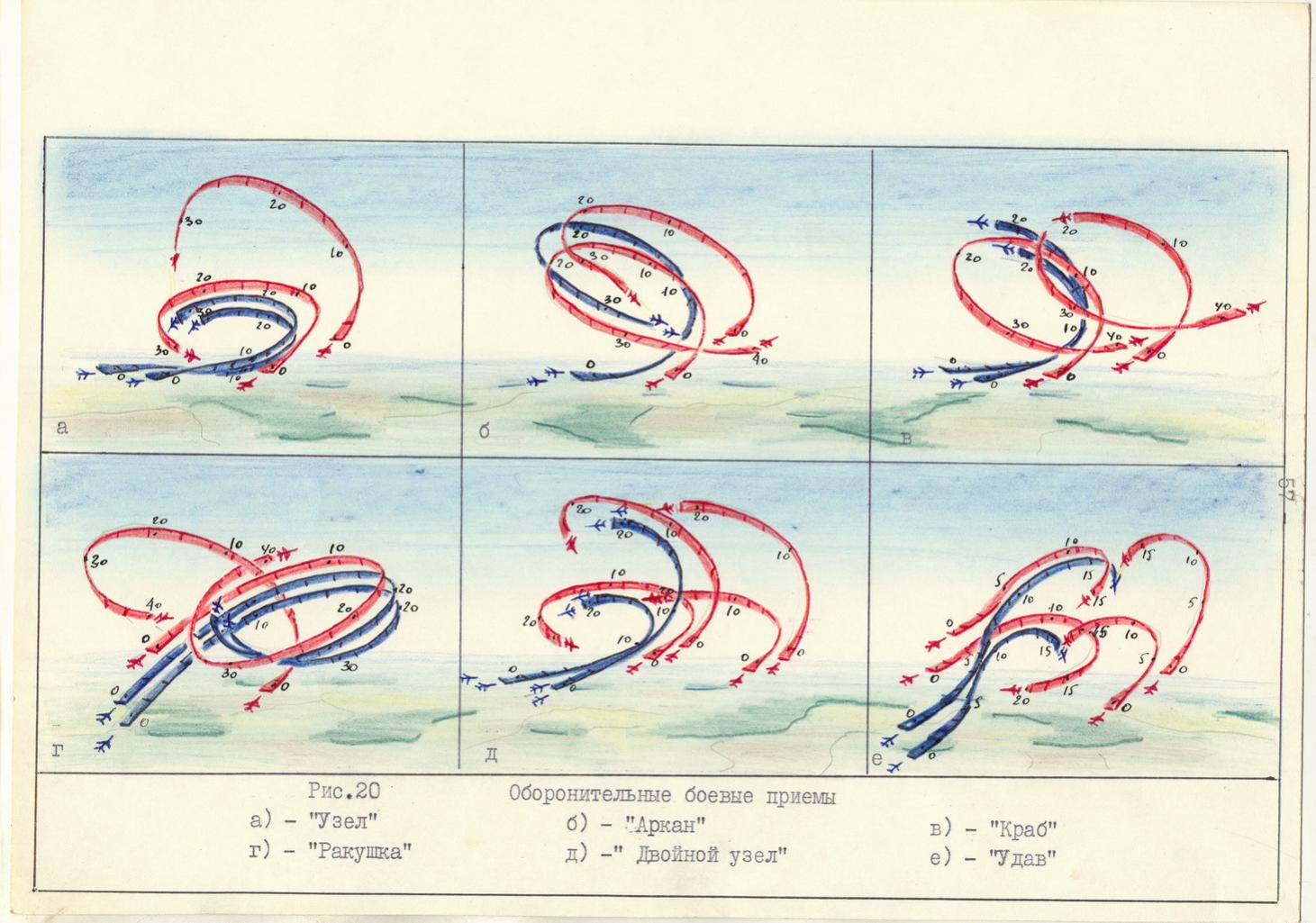
‘Arkan’ , ‘Uzel’ , ‘Krab’ etc. became standard at VVS fighter units from the early ’70s. These came with the unit level ACT program ‘500s’
Just for example one of the check flights(in two seater trainer) for these ACM’s was the exercise no.523 ‘O’
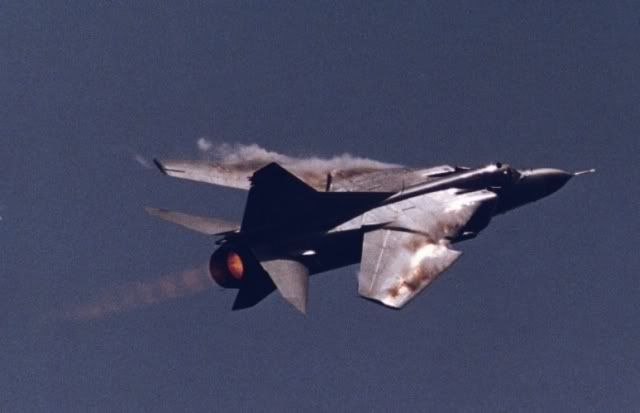
sainzCan’t have too many vapor pics….


 Sign In