More good news:
leehamnews.com
Flight test results for the Bombardier CSeries show that the economics of the airplane not only are meeting the economic and performance guarantees, they are “favorable” to the marketing brochures that have promised 15% better operating costs and 20% better fuel burn than today’s in-production Airbus A319s and Boeing 737-700s
the payload/range and fuel burn is more favorable than expected. This will enable the operators to either carry more passengers at the same advertised 2,950nm range or carry a typical passenger load farther.
Noise tests are done and also came in better than guarantees. Noise factors are critical for Toronto City Airport and London City Airport, where runway performance is also crucial. Noise tests are 1db better than the brochure. There was a margin of 5db between the brochure and the contract guarantees
who are info-step.ru ?
Makes the post meaningless
Not really. The question of whether and how the 757/767 are replaced will directly affect the main single-aisle market.
CS300 first flight later today.
Since when has a Boeing 767 been a narrow body?
Its not… but I decided it was worth including when writing the first post.
This is maybe a good image of the Su-25 nacelles…
[ATTACH=CONFIG]235578[/ATTACH]
I was going to suggest podding them underwing might have made even more sense, but then seen the undercarriage is mounted in the nacelle/fuselage join.
Those engines are close enough to the centreline for asymmetry not to be a significant issue. The rudders and vertical fins are sized to deal with it and more.
Having said which, the SAM strikes on the SU-25 are by definition going to mess up the fuselage (which is why the thickness of the fuselage skin is so apparent), whereas on an A10 its just going to pop an engine.
Possible to say the A10 design is more innovative but then the Su-25 layout is similar to the Northrop YA9 so probably more of a utilitarian approach:
There is a very good reason for that (engine placement).
Spot the difference:
[ATTACH=CONFIG]235571[/ATTACH]
[ATTACH=CONFIG]235572[/ATTACH]
But something like manpower attrition is a serious concern and here I can sympathise with Dassault..if they train HAL employees and then eventually leave the organisation or are moved to other programs (and HAL’s plate is full), then it will impact timelines. HAL may need to come up with some internal procedures to deal with this. A lot of private sector firms poach HAL employees regularly since there is a dearth of trained manpower in the aerospace sector in India.
I would have thought an agreement on the basis of:
If HAL cannot hold onto their trained people, then the delivery schedule slips to allow for training of new personnel. But quality guarantee remains.
If HAL transfer their people off to other jobs to take advantage of their new skills and stick new engineers in to get Dassault training, then the guarantees and schedules no longer applies.
Basically – if everyone is upfront and honest, then accept that sometimes sh_t (==delays) happens. But play silly ******s, and the guarantees are off.
I’m not sure it equates to the Mirage 2000.
It doesn’t equate – hence my almost.
Tejas is cheaper, but also not as good in most (all?) performance parameters.
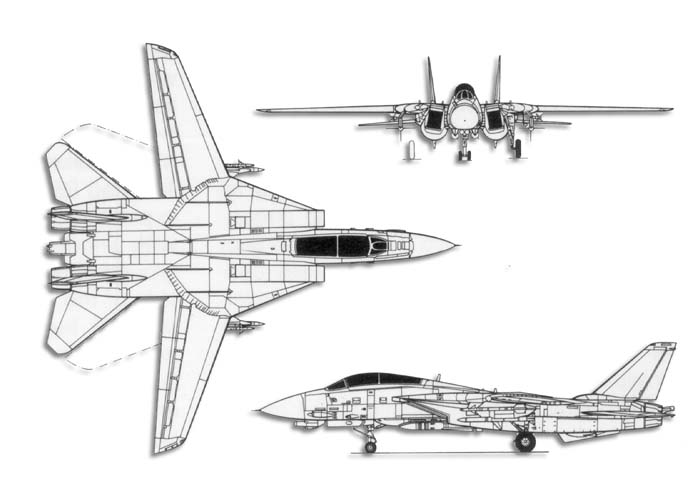
While I know that replacing the F-14 with the -18 is a mistake on the USN’s part, the swing wing design does come with added and unnecessary complexity for non-carrier operations.
Therefore, a fixed wing variant of the Tomcat would have been more useful for any non CATOBAR naval customers. The F-15 is to a degree this, but doesn’t quite have the aerodynamic potential of the Tomcat’s fuselage.
Does anyone want to know what a fixed wing evolved F-14 looks like?
Well it is a success story in the sense that India has managed to stand up an aeronautical industry after having nearly wasted all its experience post the HF-24 Marut. Hiccups, yes, delays, yes, but not a failure as you’d like to project it.
Stand up an industry based on Tejas?
HAL have existed for over 70 years. You know, the age gap from say, Boeing, to HAL is about 25 years. In those 70 intervening years, HAL have not closed that 25 year maturity gap.
At the end, they’ve produced something that almost equates to the Mirage 2000… which has only been in service for over 30 years. [Which is even worse considering Dassault and Snecma both helped out in the earlier days.]
No, its not a failure in that they’ve got a fighter fit for some front-line use. It has also developed some foundations for the future and even some technologies to a reasonably high level. But nothing is cutting edge and most of the technology base is still 10+ years off current.
AND, HAL is not the agency that alone was responsible for the Tejas. If you don’t know much about who did what and when on the Tejas program, that really isn’t my issue.
In the real world, no single entity is responsible for any complex project. HAL are “just” the prime contractor.
——————-
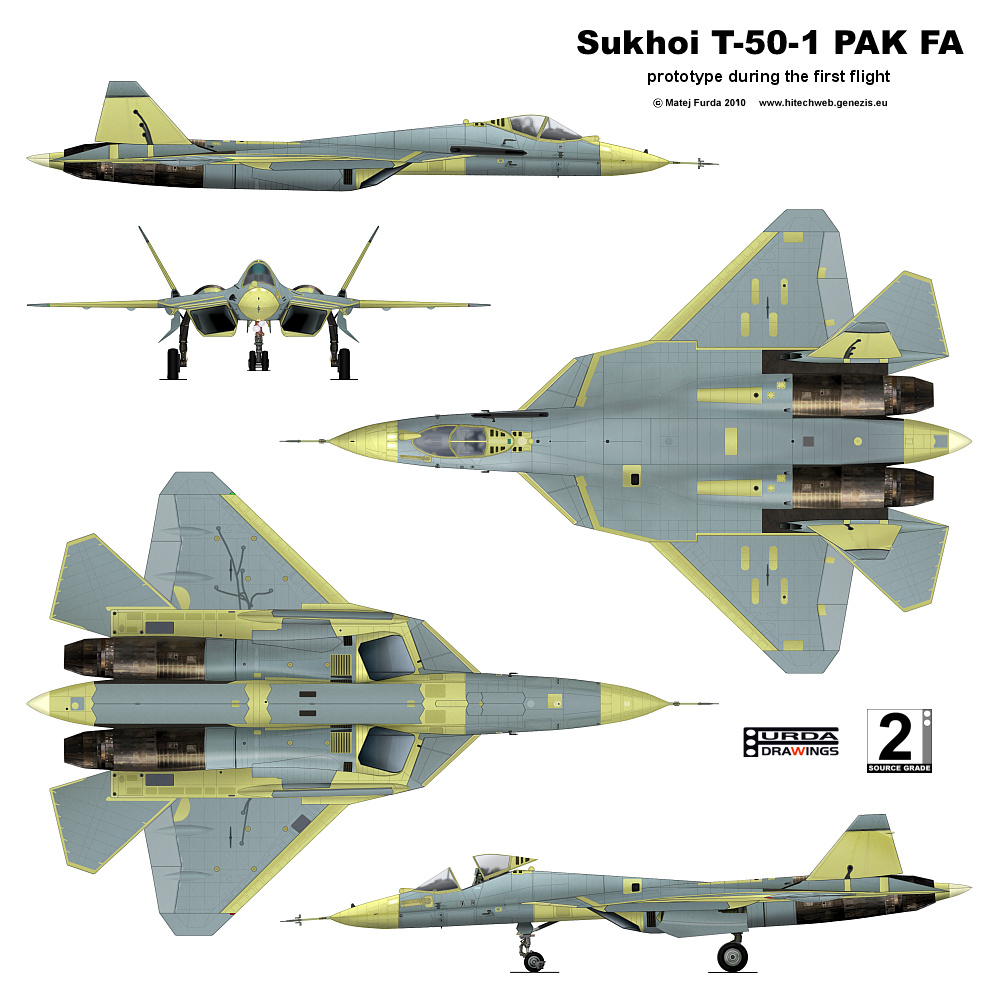
But, all that said and done; they’re moving in the right direction – and depending on whether involvement in PAK-FA or MRCA gives them more foundations, perhaps the first UCAV for India will be indigenous.

Hardly expect you to understand that since in your opinion only HAL can screw up and all OEMs are gold standard.
Yes, and that’s why Tejas is the success-story that it is. :stupid:
A canard adds weight, cost and complexity
1. A canard can (and usually is) sized smaller than an elevator due to the fact the designer has more freedom with the moment arm. This reduces the weight of the control surface. A 9g rated fighter needs a relatively heavy fuselage anyway to carry the radar and cockpit, so the loadpath from main wing to canard is not overly affected.
2. All aircraft in a realistic comparison have FBW, therefore control software complexity is not significantly different. The below also has cost implications in favour of a canard.
3. The actuators for a canard are not situated in close proximity to the heat of the engine, reducing somewhat the need for heat soak resistance.
Canards induce higher drag in cruise through their wake affecting the main wing, they also can have radar cross section implications.