 Amiga500
my apologies I thought you were having a characteristic rant.
Fixed that for ye :dev2:
😎
I’m way prone to jumping in and reading then posting within 30 seconds without taking (having!) the time to consider my point of view more rationally… and verify what is in my head.
Amiga500The ship didn’t have visual on the airbus so physical appearance is irrelevant.
Whooosh.
That was entirely my point. About the only thing you could do to be sure of differentiation (on a radar screen) would be to make civilian aircraft non-fixed wing.
Hard, even for the stupidest of trigger-happy cowboys, to mistake that dirigible moving at 30 kts as an attacking fighter eh?
Amiga500Anyhoo…
seen this earlier and thought of this thread:
DARPA is on the case… or rather, should be. Its a pretty obvious extension of requirement for weapon release. The trick would be having:
– easily accessible internal volume for payload (missiles)
– means to cycle through the payload in flight for release of disparate weapons (rotary launcher).
I’m sure you can see where this is going.
External hardpoints for oversized carriage and release of weapons/satellite bearing rockets, internal rotary launcher through co-located hole at hardpoint for sized weapon release. The rotary launcher is then re-loaded from underneath through the bomb-bay.
Could these requirements be reconciled with a C-5 replacement?
Amiga500Don’t want to hijack the thread but hve a look here and make your own mind.
Are you being serious?
The boat thought it was a f**king Tomcat.
Just in case you are unaware of what they look like…
A300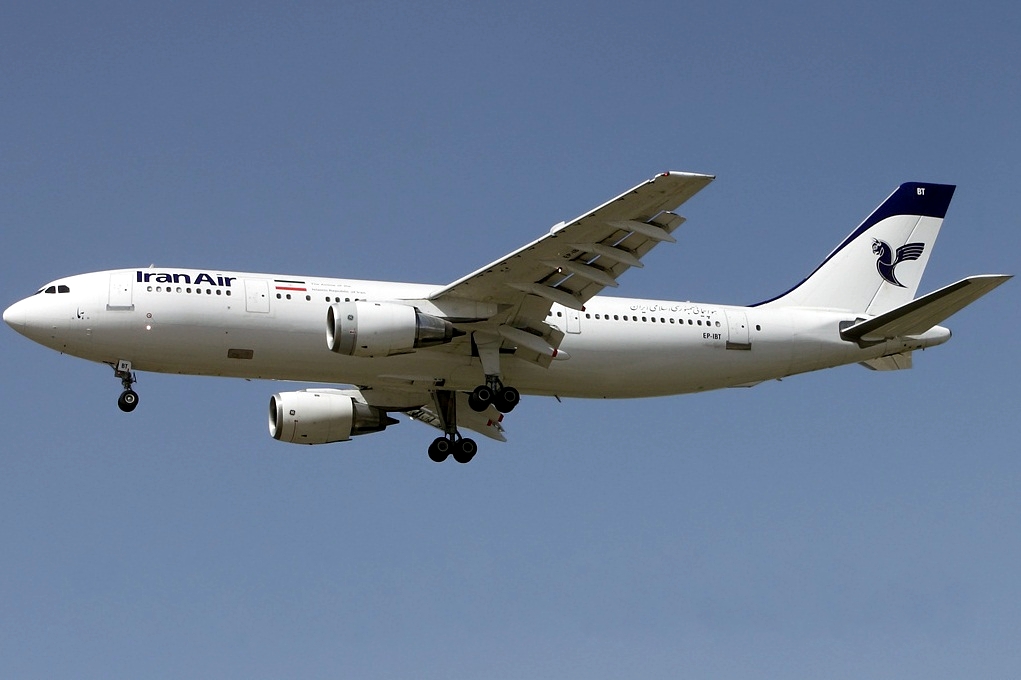
F-14
Now – if a design requirement is to make military aircraft and civilian aircraft clearly differentiable to the USS Vincennes, then perhaps civilian aircraft should be airships only… or failing that, never leave the ground to prevent shoot down… and drop the “air” off “airbus”.
Amiga500It is a concept that has received frequent studies, but no takers. That suggests that there are problems, either real or potential.
Consistent and controlled weapons release would be an absolute pain in the backside.
Amiga500The fact that some firms hve studied, made proposal and worst of all, published artistic image of the concept, tells you a lot abt what was the average level of IQ among top executives in those company.
Now, I gotta admit that passed over my head…
What? :confused:
Amiga500They are bound to stretch it up to take on the A319/A320 more directly – even though I have heard absolutely nothing concrete on the subject. BA have copyrighted the CS500 and CS900 names… likely for this purpose.
It will never be a competitor to the A321 in passenger capacity.
Obviously, the A320/B737/E-jet families will not be its only competitor. There are others… some of which may or may not see the light of day.
Amiga500does the UK need to bring this capability back?
Nope.
The Type45 has space for TLAM VLS tubes.
The Type26 will have TLAM onboard.
The carriers are supposed to enable the fleet air arm to do the same job overseas. [Despite my reservations over the equipment.]
Amiga500A major plus for the Gripen’s flexibility with dint towards any adaption of the sort talked of here…
Flight software is completely disconnected from mission-orientated software. Thus the functions of mission-orientated software are not (almost) automatically tied into being DAL-A/B/C. But instead, the functions are more likely to DAL-D/E.
Amiga500Soviet did not give much priority to lengthen engine life. If WW3 would have broken out the life of most aircraft would have been a few weeks…
Which was more than enough given the expected life of an airframe over the Fulda gap. Don’t assume that automatically more = better.
Also, don’t directly compare the overhaul times as they are apples to oranges. Soviet stuff was designed for rudimentary maintenance in the field, and swapped out for any kind of major work which would occur back in the factory.
By contrast, the Western approach was more complex maintenance in the field with relatively fewer full overhauls in the factory.
Which approach is better depends on availability of qualified staff, of machinery for the airfields and of operational doctrine. Do you really want your limited front line staff trying to fix big problems or do you want them concentrating on turning round as many planes as soon as possible? If the quicker approach is getting a replacement engine in ASAP and shipping the broken one back home then so be it.
But then – the Soviets had direct train lines from East Germany to their factories. The US didn’t. R-R and Snecma could hardly be expected to overhaul GE and PWs…
Personally, in a (non ICBM) WW3 scenario; I think the Soviets had it much more right than NATO, even if in individual small scale battles, their equipment looked inferior.
For instance, in the 80s NATO were mostly emphasising the Aim-7. It had the potential to be quite a potent approach, but had an indifferent track record. The Soviets on the other hand were looking at the Archer and HMS on the Fulcrum. Less potential in paper – but most likely far more effective in the inevitable furballs over Western Europe.
Amiga500Failure? Not at all, all control surfaces combine to produce a left roll command at very slow speeds.
http://www.youtube.com/watch?v=b7kP7_vViSk
at around 9:27, during the first turn of the flat spin there is a similar levcon motion.
Erm. Actually the configuration is pretty much different in every way.
The elevators are different. In the photo they are nearly neutral. In the vid they are highly asymmetric.
The LE slat are deployed on one wing in the pic, in both on the vid.
The outer aileron on the outside wing of the turn (in this case the right wing) are deflected in the photo, not deflected in the vid.
The inner aileron is deflected upward in the photo, downward in the vid.
In the flat spin you show in the youtube (nice vid btw), the inner (left) wing has much more camber on it from the levcon and the aileron to produce similar lift to the outer (right) wing despite the slower speed (due to the rotate in the spin).
In the pic, the levcon and aileron on the aircraft left wing (right side of the photo) are working against each other. I’d be 90% sure its either a failure or a test of failure condition, most likely the latter as that is pretty much what flight testing is for.
Amiga500Having to wear a suit, shirt and tie is not something I look forward to these days, given my age
You speak as if us comparatively young cubs do not enjoy wearing suits too… 😉
Enjoy Londinium.
Amiga500Way more down then in any demo etc… Looks more a failure (or a photoshop, check colours) then intended (no bad intent, happens to any plane)
Maybe an intended “failure” – a routine part of testing the flight control system.
Also – there is a pointer to how much lift the levcon may generate.
One fully deflected levcon could require full (outer) aileron reversal and deployment of LE slats to counter the rolling moment invoked by the levcon. Given the moment arm of the levcon relative to the ailerons and the slats – I find that impressive.
Note also – asymmetric slat deployment for augmenting roll maneuvres.
Amiga500Let me just start by saying that this is getting painful. It is well past time for you to cut your losses and move on.
Wrong again:
“The flying qualities of the F-16 with CFTs are essentially unchanged when compared to a non-CFT equipped airplane,” said Stephen W. Barter, chief F-16 test pilot and company CFT project pilot. “For most combat flight conditions, it’s as if the CFTs are not even there. The surest way for me to tell if CFTs are installed is to look over my shoulder.”
“The CFTs have very little adverse affect on the F-16’s renowned performance,” said Maj. Timothy S. McDonald, U.S. Air Force project pilot for CFT testing at Eglin. “The aircraft retains its full 9-g capability and flight envelope with the CFTs installed. The drag impact is very small – less than one percent in combat configuration at cruise conditions.“
Yep, prob time for me to shut up.
Serves me right for trying to do too many things and run arguments from distant memory.
‘Tis 10-15% of the equivalent centre-line tank drag rise. Not 10-15% of absolute aircraft drag.
= 1-2.25% drag rise.
Under one set of conditions it did not. I never said the CFTs were without penalty, only that it is perfectly plausible that their drag impact at cruise could be little to nothing. (and indeed, slightly reduce drag)
Pressure surface CFT/FAST packs can come with zero drag rise. Suction surface typically not (apart from this case).
Putting it another way, if two nearly identical planes depart on a mission, one of which is carrying 3,500lbs more fuel and has slightly less drag[1]. When they get to the area of operations that means that one jet will have ~3,500lbs more fuel. Want to guess which one will have better endurance?[2]
[1]That would depend on what speed they cruise there at – the data presented doesn’t allow for use beyond the stated cruise condition. We could make inferences. If they cruise there slower, then its likely the CFT aircraft will retain similar drag characteristics, but not certain – the data point could be a quirk of transonic phenomena.
[2]That would depend on what speed they then circulate at. Same reason as above and also, if its so slow as to involve lift device deployment (flaps), then the interaction of the changing flow with the CFTs could render the data presented void.
Nobody serious is still thinking about the F-14.
Yep. The F-14 has had its day and is gone.
However, the SH is still a retrograde step on an equivalently funded Tomcat development program in pretty much all areas. Range, payload range, speed, endurance, potential combat persistence, radar power (bigger nose = scope for bigger better radar).
Bull, the Super Hornet performed very well in Afghanistan considering the scenario.
Apart from imposing severe demands on air tankers to carry a pitiful bomb load to the target.
The USN’s premier ground attack aircraft, fairly new off the drawing board at that point, outperformed by a “1960s aircraft” that was being adapted to the role. Says a lot for improving the carrier’s capabilities and expanding its sphere of influence doesn’t it?
I’ve probably dug my hole deep enough at this point – and I’ve a billion things to be doing. So prob won’t get the chance to get back on here for a few more days.
Amiga500As usual around here people seem happy to believe what they want to believe…. and then they want to be taken seriously. You have already made a fool of yourself by spouting off on this subject repeatedly without knowing what you were talking about. Your opinion isn’t really worth much.
If it was a drag polar with curves of Cd0 and k against Mach… y’know – something actual engineers deal with – rather than a mere point in space for the uninitiated, then it might be worth paying attention to. As it stands. PR guff.
This has nothing to do with how “good” or “bad” the Super Hornet is.
The results achieved with these CFTs are not that different from the results achieved with the F-15 and F-16, neither of which experienced a large increase in drag at subsonic speeds. Again, take some time to educate yourself before spouting off and you won’t end up looking foolish.
Yes it does. FAST packs (or later, CFTs) increased subsonic drag on the two aforementioned by around 10-15%.
It didn’t increase drag on the SH at all. Go figure. [just to prevent another facepalm moment – that is not because the CFT designers have suddenly learned how to better design the wetted surfaces.]
Cruise performance is most certainly critical as it plays a huge role in determining an aircraft’s range, endurance and carrying capacity.
Range – probably – it’d be nice to be able to plug the info into the Breguet range eqn, but alas we don’t have enough data.
Endurance – no, we can’t say that due to the data presentation format – the airspeed for max endurance will be quite a bit lower than M0.8
The F-14 was a cool jet, but its retirement is a reflection of the fact that its mission disappeared and hasn’t been missed for better than twenty years now. The F-14 was designed to combat specific Cold War era threats with a specific concept of operations. That threat has since disappeared and the F-14/AIM-54 combination is thoroughly obsolete. The best argument anyone was able to make for keeping the F-14 around had nothing to do with needing a long range interceptor, but was instead based on the F-14’s potential as a long range striker. Ultimately the cost couldn’t be justified and the F-14 was retired.
Funnily enough, in the middle of that I did mention: “Better to have 10 carriers with more effective air defense and payload-range attackers than 11 with marginal.” But I guess your more focused on reading what you want to read than what is actually written.
In Afghanistan, the limited payload-range of the SH was shown up quite badly.
There has been talk of using F-15s with modified PAC-3s for ballistic missile intercept in boost phase. Of course, F-14s from carrier decks would have been ideal for the role. Not an option now that missile platform is gone.
The move from the -14D to the SH marked a significant retrograde step in the carrier’s defensive sphere of influence. No amount of bluster from folks such as yourself will change that.


 Sign In







