 Inst
InstWell, in BVR, the latest Chinese Flanker-derivatives are superior. Both the J-16 and J-11D run AESA, good enough for around 450 km detection vs 0 dBsm, although it might be lower in the former case as the figures are for the J-11D’s AESA. Irbis-E, by comparison, boasts 400 km range vs 4.8 dBsm, or the equivalent of 300 km range vs 0 dBsm. The Chinese also have their new PL-15 missiles (the PL-12 derivative, not the interceptor missiles) which should be able to outrange R-77 by 40-90 km.
As to WVR, the Russians are clearly ahead; your point about lack of PL-10 ASR integration with HUDs is correct, and no Chinese Flanker sports TVC.
Funny thing is, if you bin together all Chinese 4th gen designs and all Russian 4th gen designs, the Chinese (793) actually have more 4th gen fighters than the Russians (589, 670 with naval aviation), albeit the Chinese are a bit too heavy on the J-10s (323) compared to MiG-29 inventories (120), and if you include the MiG-31s (135), the Russians come out slightly ahead (805).
InstWhere Russia is ahead is in terms of airframe design and engines, but China seems to be ahead in terms of airframe construction, RAM, and avionics. The J-20, after all, is purportedly ultra-lightweight using more advanced construction methods, Chinese radar is either at or nearly at US parity in some measures, and the Chinese have made recent, interesting advances in RAM.
The most important thing for the Russians, though, is that a RAM-coated J-20 has hit IOC and is in series production. That means that J-20s can be spared for DACT for Russian pilots whose 5th generation aircraft has not yet hit IOC. In the Chinese experience, they spent a lot of time criticizing 5th gen capabilities, but when they actually tested the aircraft, they found that 5th gen aircraft have a decisive advantage over their 4th gen counterparts.
InstHere are the equations I’m using, where a is acceleration, v is velocity, and p is pi.
180a/(v*pi) = deg sec
a = deg sec * (v*pi) / 180
a*180 / (deg sec * pi) = v
This roughly indicates that if the F-22 is G-limited at 9G, it can perform 28 degree / sec turns at up to 650 km/h, or mach .56 at 15000 ft.
Other interesting results are that a 9G turn at Mach 1.5 at 15000 ft only gives you 10 degree / sec maneuver, or it’d take 18 seconds for you to make a full 180. This answers questions I raised in other threads: while subsonic maneuverability is about lowering your corner speed and attempting to get good sustained performance at low speeds, supersonic maneuverability is about your ability to decelerate and accelerate; i.e, you’d have to deliberately bleed energy in an attempt to increase degrees per second maneuverability, then use your acceleration ability (high T/W, low drag) to regain the energy you lost.
InstIt should be China News Agency, rather. It’s not very credible, but it’s extremely promising. The WS-15 could be delayed to 2022 or later; the Chinese need modern engines now. The Russians have the TVC-enabled AL-41F engine with reasonably good thrust ratings in the 147kN range. Loan 6-12 J-20s to Russia, on the understanding that this loan is a disguised sale for the sake of Russian national pride, and that the Russians will help work on the FCS, since the Russians have extensive experience with TVC. Get the J-20 modified for TVC immediately, instead of waiting on the WS-15, and let the Russians maintain an operational J-20 squadron for experimental purposes and to bridge the gap until the Su-57 is produced en masse. For technological security, finalize the deal about the same time as the second-generation J-20 radar is ready, so the Russians get saddled with obsolete radar. Perhaps import some AL-41s to supplement WS-10Bs while China waits for the WS-15 to hit IOC.
InstWell, according to ATimes the Chinese media claims 15 ton empty weight, 20.77 length and 13 meter wingspan. A more interesting report is that the China News Service is claiming that China is going to relax its ban on the J-20’s exports and consider sharing the aircraft with Pakistan and Russia. Pakistan is somewhat silly, given its relatively close ties to the United States, but it’d be very entertaining to see the Chinese export (or more likely, loan) the J-20 to the Russians. The latter generally have more air combat tradition, if experience has been lacking due to the collapse of the Russian economy.
InstWe can use the canard length as a reference for perspective distortion here. Versus satellite, it’s a +-1.2% difference.
Inst@latenlazy: doing it from multiple methods (drone pictures, telephoto pictures), you get roughly in the 1.25 to 1.3 meter range. See this picture, for instance. Use the 12.88 figure, measure the radome versus the wingspan, and you get about 1.31 meters of radome length.
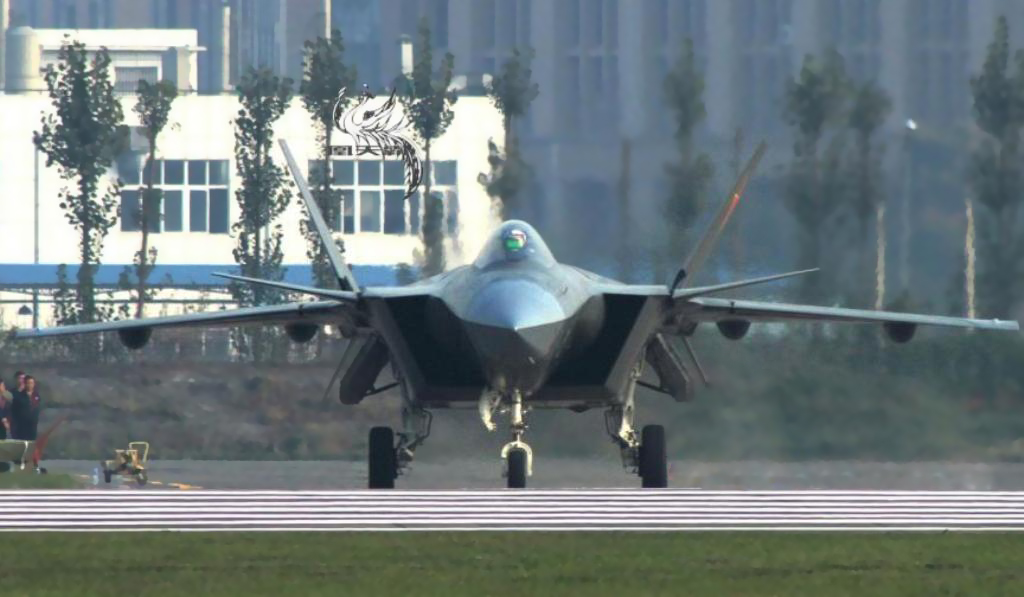
InstThing is, RCS thickness is constant, ignoring scale. A bigger aperture requires more RAM, true, but the thickness lost to RAM is less in terms of percentages.
This is another possibility:

I’ve been measuring the radome from the satellite image at 30 pixels. The banded area is strange; if it corresponds to the black area on the F-35’s radome, then it’s the actual beginning of the radome and we get 33 pixels instead, giving us a nice comfortable 1.41 meters width.
As to why the J-20 emphasizes radar, larger radars are supposed to be able to jam smaller radars. The APG-81 has a diameter of about 725mm, while the J-20’s radar ranges from 950mm to 1050mm. If the technology level is the same, the J-20’s radar should be able to transmit twice the power.
Inst1.275 to 1.285m wide.
See, that’s the part that makes no sense for me. The PAK-FA has a radome of about 1.31 m^2. The J-20 is supposed to have the largest radar of any fifth gen, so what’s actually going on here?
InstHow do you get 55cm depth? I measure the bay as about 2-2.5 meters wide, with the bay being about 30-40cm deep, assuming that maximum depth is one-eight of the bay width.
If you use a cubic method, i.e, finding the distance from the arches of the bay to the joint, then moving it down to a line parallel with the length axis of the J-20, then moving it to the wingspan axis, you can get roughly 5% of wingspan, which gives you over 60 cm. That’s incidentally enough for the JSM. The big problem is the length of the weapons bay: if it’s roughly 4.5 to 4.6 meters, it won’t be able to fit a 7-meter long YJ-12. But if there are AShMs designed for the J-20, it should be able to carry a tolerably capable anti-ship missile.
For reference purposes, JSM is roughly 40 cm in diameter, including fins but not the wing.
This sort of sets Blitzo’s argument that the J-20’s bays are too shallow for it to be a striker on fire, and we’re back to a striker (small wing area), as opposed to a fighter-interceptor.
InstYou don’t actually need to align the lines; just use the Pythagorean to adjust the lines before you do the calculation. In honesty, the +10 -20 errors I see with the J-16 are remedied when the J-16 is adjusted, so the figures on the J-16 actually match the listed ratio for the Su-27, almost precisely. That implies the J-20 is about 20.85 meters long with a 12.9 wingspan.
@mfranjic:
The problem with engines isn’t so much the copied design; basic and workable schematics are quite common and easy to steal with espionage. The problem with engines is the metallurgy: designs are built specifically for metallurgical compounds, whose manufacture is extremely difficult to duplicate. That’s the Chinese problem, and they claim they recently made breakthroughs in Rhenium alloys. As to whether those are real breakthroughs or pseudo-breakthroughs is another thing.
InstQuantumFX: I think it’s possible we’ve missed something wholly obvious. The funny thing is, we DO have a grid. The bloody blocks on the tarmac constitute roughly a 4×5 grid, but I’m not sure if they’re actual meter measurements.
What I’m trying to avoid is the fact that the J-16 is somewhat of an unknown quantity: the radome could have been modified to accommodate Chinese electronics, while the tailboom could have been modified likewise. Do we have ANY information on the tile sizing of Chinese airstrips? If we do, we can skip the J-16 as a measuring block and just go straight to the tarmac, which gives us clear information, independent of relative sizing.
InstConsidering that one of my opponents was an avowed racist who chased me around making non-sequitur attacks on me that called into question his sanity, I’d consider his harassment an honor.
It is the great virtue of fools that they find confidence in their blindness.
Are we talking about you or about me? I think you’re self-describing.
InstLet’s put this another way. The J-20 purportedly, according to some Chinese general cited on SDF, will have the largest radar of any 5th generation fighter. Even with the smaller figures, the J-20 has a larger radar than the F-22. However, once you put in the PAK-FA, the figures get tricky, since with the smaller 12.88 wingspan, you no longer exceed the PAK-FA’s radome size (i.e, you’re counting on the Russians to suck).
My issue with you, latenlazy, is that for all your talk of objectivity, you’re very much a Chinese aircraft fanboy. You play the aggrieved party, and you’re right insofar as the West is often too negative on Chinese aerospace developments, but remember the time you admitted that you didn’t understand that Kopp’s RCS simulation was a 3-dimensional polar diagram, not a dispersal diagram. China has come a long way since the 80s, but it’s behind in many respects and the people on the ground know it. You’d be better off if, for a week, you repeated to yourself in front of your bathroom mirror “CHINA SUCKS CHINA SUCKS CHINA SUCKS”. You won’t end up joining the Heritage Foundation or getting financed by NED, but it’d do wonders for your objectivity.
The J-20 has many advantages over existing aircraft in terms of performance; its radar is larger, with the proper engines it will have better high speed performance, but it also has deficits, such as its roughly 10 dBsm stealth inferiority, or that it’s not likely to outmaneuver the PAK-FA or F-22 at low speeds. Nor can it run, most importantly; its rear stealth is abysmal (which is actually one of the best arguments against the J-20 as an interceptor); the J-20 is essentially little different than the PLA troops that were chained to their machine guns in Chosun, if they do not win, they die.
InstWing loading with the same aerodynamic formula, all other factors being equal, determines maneuverability.
In either case, I’ve crushed the problem. See, the nice thing is that the Su-35 and Su-27 do not have the same listed wingspan. The Su-35’s wingspan is listed for being WITH the wingspan pods, while the Su-27’s wingspan is listed without mentioning the wingspan pods. Funny thing is, I don’t seem to have any information about the Su-35 having extended the Su-27’s wingspan. If it has, then I’m mistaken. But if you measure the Su-35’s wingspan with and without the pylons, you get what’s roughly the listed figure for the Su-35 versus the listed figure for the Su-27.
That means that if we use the J-16s in the background as a measurement, we measure from wingtip to wingtip, ignoring the pylons. With the high-res image, we get 342 pixels, while the J-20 is about 496 pixels long. This puts us at roughly 21.32 meters, with the wing length being 13.2 +- .1 meters long. The wing area then comes out to 78.6 square meters. So, from the evidence and deduction, what we get is long fighter, not crap fighter. Radome length is now around 1.35 meters, keeping the figures we need.


 Sign In







