 panzerfeist1
The US version of Avangard.
https://bmpd.livejournal.com/3733106.html
New data on the promising US Army LRHW hypersonic missile system bmpd August 10th, 11:53
At a symposium of representatives of the US defense industry on space and missile defense (Space and Missile Defense Symposium) on August 7, 2019 in Huntsville (Alabama), representatives of the US Department of Defense released new data on a ground-based hypersonic missile weapon system created in the interests of the American army LRHW (Long Range Hypersonic Weapon). Recall that for the first time some details about this system were disclosed in May 2019 at a conference of the US Army Association (AUSA) in Honolulu.

In fact, this LRHW system is a universal solid-propellant medium-range ground-based ballistic missile AUR (All-Up-Round), equipped with a universal, maneuverable planning hypersonic warhead of the Common Hypersonic Glide Body (C-HGB) performed by Block 1. Both of these system components created by the Sandia National Laboratory of the United States Department of Energy with the participation of the United States Missile Defense Agency. The C-HGB hypersonic warhead is being developed as a whole to equip weapons systems of three types of the US armed forces (army, air force and navy). The AUR missile will also be used by the US Navy.
The AUR missile has a case diameter of 34.5 inches (887 mm). The rocket will be launched from a transport and launch container with a length of about 10 m from a ground-based towed towed two-container mobile launcher with an Oshkosh M983A4 tractor unit (8×8). The launcher semi-trailer is a modified M870 semi-trailer of the Patriot SAM launcher launcher. The missile system will use the standard American fire control system for missile forces and artillery AFATDS in version 7.0 for fire control. The battery of the LRHW system will include four dual-container launchers and one fire control vehicle.
Presumably, the C-HGB hypersonic warhead is based on the Advanced Hypersonic Weapon (AHW) experimental hypersonic warhead developed by Sandy National Laboratories for the US Army, flight tests of which were conducted in 2011 and 2012 and reached a speed of 8M. An AUR rocket is also possible, based on an accelerator rocket used to launch AHW.
The US Army plans to start the LRHW tests in 2021 with test launches about once every six months. Already in the fiscal year 2023, the deployment of LRHW missile systems batteries as part of the Strategic Fires Battalion divisions and their deployment to “pilot combat duty” is expected to begin.
The LRHW range was not officially disclosed, but the AHW range was claimed at 3,700 nautical miles (6,800 km), and a number of unofficial estimates give an effective LRHW range of about 5,000-6,000 km
panzerfeist1I have to agree. They have really ruined this forum – they haven’t a clue what they are talking about, I’d say.
Got anything worth contributing or nothing as usual :stupid: I got bored so I sent your buddies an invite here to spice it up. http://www.f-16.net/forum/viewtopic.php?f=38&t=55959&p=425226#p425226
panzerfeist1@moonlight
“1.
IF satellite can keep track of all ships all the time by radar or image THEN they won’t have trouble finding missing ship.
BECAUSE, they still have issues with finding missing ship, THEN we know satellite can’t keep track of everything on the ocean.
GLOBAL FISH WATCH track fishing ship by using the Automatic Identification system https://en.wikipedia.org/wiki/Automa…ication_system, it is a transponder that you gave to fishmongers, they put it on their ship and publicizing their locations.
A military ship can choose to not publicizing their locations, like how a stealth fighter can turn of their transponder.”
Yes it keeps track of AI messages, but also read this part https://www.smithsonianmag.com/smart-news/tracking-fishing-vessels-reveals-industrys-toll-ocean-180968250/
“Most fishing happens near coastlines, where countries tend to stick within their own economic zones, but there are hot spots in open ocean, writes Carolyn Gramling for Science News. Those spots include the northeastern Atlantic and spots off the coasts of South America and West Africa where nutrient-rich waters well up from deeper waters. As Gramling writes, just five countries — China, Spain, Taiwan, Japan and South Korea — are responsible for more than 85 percent of fishing that happens on the high seas, outside of their own economic zones.”
I think they figured out that these 5 asian countries did 85% of all fishing by tracking their fishing boats. They still have issues finding missing ships than why is it so hard for you to post sources? I dont know about you but I think Naval vessels are bigger and easier to spot than small fishing boats and I also think militaries from both countries with a huge amount of satellites focus more on their adversaries.
2. “I have provided you with links but you didn’t bother to read them then you complain that I told about something completely different to the quote.”
Those links have nothing to do with S/N ratio. Well of course its completely different from the quote because the quote mentioned noise and how its lowered 100 times improving the S/N ratio which “””””only”””””” talks about signal and background noise but god knows where you came up with the idea of internal or external noise.
“tell you what is SNR and they also explain what is external and what is internal noise.”
http://www.radartutorial.eu/18.explanations/ex08.en.html
Oh look a source you actually provided me defining the the S/N ratio but absolutely no mentions of external background noise or internal background noise like you have mentioned before.
My definition of lowering noise 100fold and improving S/N ratio is lowering the background noise, since this is the only noise mentioned in the definition of S/N ratio since of course the chinese have said the noise will be lowered 100 times, not the signal.
your definition: “You can find the definition of external and internal noise if you look hard enough.” You never really elaborated anything further from this.
Your source.
“The sources of noise arise from inside and outside a circuit. Along with the signal power, a noise power (interference power) is received by the radar antenna.”
talks about noises from inside and outside a circuit, along with measuring the signal power to noise power(which causes interference) and this is received by the antenna.
I have been talking about this the entire time not the circuits but the difference between the signal and noise and that being the noise interferes with the received signal. Holy shit I think I have been telling you this the entire time!
“This interference power comes from extraterrestrial radiation sources (galactic or cosmic noise), mainly in the Milky Way, absorption of electromagnetic radiation in the atmosphere, and the noise temperature of the Earth.”
They have refered to this interference power as noise according to your source.
Define: Background noise or ambient noise is any sound other than the sound being monitored (primary sound). Background noise is a form of noise pollution or interference. Background noise is an important concept in setting noise levels.
Extraterrestial radiation counts as background noise for causing interference of the signal being heard or monitored.
More from your source:
Since this noise can’t be seperate from the backscattered radar signals, the received noise will be amplified like the radar signals in all stages of the radar receiver, too.
Now this goes back all the way to what the Chinese have said in their source, which is the noise is lowerered 100 times improving the S/N ratio. S/N ratio is defined as measuring the signal from the background noise or noise or interference however you want to say it. Chinese said the noise is lowered not the signal. However this draws the conclusion sigals are better heard if noise is lowered.
https://phys.org/news/2014-03-fully-…sed-laser.html tell you all about photonic radar, when you scroll down, you will see the part where they explain how internal noise is reduced with photonic radar.
photonic radars send signals than receive signals. When the signal comes back it will be monitored. Electrical circuits cause interference with this signal than compared to using fiber optics. You remove this interference and the signal is better monitored on radar. No noise loss when doing frequency conversion is another benefit.
I made sure this explanation was as simple and easy to understand for you or anyone else reading this. I like your source its explanation was the same way I have perceived it to be. Remember I am not taking the chinese too seriously because I have not yet found a source directly from the russians, but I did find sources that have said from them that the noise is lowered(not 100fold like chinas source) and I am lingering with a theory that FICS based satellites using supercomputers and software to track low altitude targets is much better than MMIC based satellites using supercomputers and software because of a drastic drop in noise interference which might relate to China’s claim but thats about it.
“you ask for the source but you don’t read them, you fixing on words instead of meaning.”
The kettle is calling the pot black. I see the images of harpoon going up and aircrafts carrying LRASM. Where in that image shows a before or after images of LRASM ascending not on the aircraft :rolleyes: but when its fired. And is there any news article that “shows any” mentions at all of air to ground anti-ship missiles(does not have to be limited to LRASM) descending and acending when in flight? If you can’t than drop this point already.
panzerfeist11.Why do you think it is a good idea to post that link about Global fish watch? It debunked your argument. Global fish watch has to rely on individual ship publicizing their own location through the radio beacon. If constant coverage of satellite is possible that beacon will be redundancy
Satellites and photonic radar balloons are a future concept. Since you are only worried about irrelevant interests of the DOD there will be satellites to be improve finding fishing boats in the dark because they seem to be more difficult to find.

If you don’t think the DOD for the US or any Russian intelligence team does not focus on each others military than I don’t know what else to tell you?
2. Signal/Noise ratio = Signal / ( internal + external background noise)
I get it your trying to save face from the embarassment by not providing a definition but adding your own words like internal and external to try to prove you know what your talking about although there is absolutely no mentions of this on the quote the chinese have used or even on the definition of S/N ratio itself on any online dictionary but you still go on talking about your 2 words by saying, “hey this is what the defintion means.” Yes that is what the definition means but your talking about something completely different and irrelevant to the definition and the quote itself……..This what are argument has literally been about the whole freaking time even I know when to quit acting like I know I am right and those were conversations with GarryA and atleast he acknowledged things he did not know when I brought up resolution of OTH radars. And we both know when to stop talking but here you are carrying this charade to your grave.
Photonic radar has lower internal noise because it isn’t suffer from the frequency up/ down conversion.
There is no noise loss in the conversion there would be noise loss if this was done on conventional radars.
.It isn’t because photonic radar use optical fiber. It is all in the study I provided, instead of talking about how many sources you have. How about really digest and understand them?.
Using light or electrical sources for signals matters especially when a source says there is a lot of noise on electrical signals than light signals.
LRASM and Harpoon are both anti ship missiles. Do you want to me to prove aerodynamic force will work on cruise misile’s wing the same way they work on plane wing?
One is used on a damn aircraft and the other is used on an ship. The reason for the LRASM max range is the high to low altitude flight profile. Go high to low(if you designed it that way) will burn more fuel and effect the range but just like the definition of S/N ratio you cant find a single source of a anti-ship air to surface missile either going from descending to ascending correct?
4. How many countries have more than one aircraft carrier?.
I am talking about the USN this entire time since I started this whole conversation with you.
panzerfeist1“1. If satellites can provide constant coverage at all point on the globe, it won’t be hard to find a missing ship or missing plane, you will know their last moment before they sink into the ocean.”
Again tell me why the DOD would be interested in keeping track of commercial airlines or merchant ships. https://www.outsideonline.com/207622…recks-all-time Most of the ships I here about gone missing was the days before we had no satellites.
https://www.popularmechanics.com/spa…lites-fishing/
In order to circumvent this shady behavior, Global Fishing Watch started supplementing beacon locations with data from earth-observation satellites. The National Oceanic and Atmospheric Administration’s Visible Infrared Imaging Radiometer Suite (VIIRS) maps cloud cover. But with some smart processing, Global Fisher Watch used their data to locate small, bright patches at night, such as floodlights used for squid fishing.
A whole constellation of satellites means that ICEYE can track bergs, or vessels, in near real time. Not only can you spot an illegal fishing boat, you can track it and identify it when it turns on its radio beacon.
2. “You can find the definition of external and internal noise if you look hard enough.”
How does any of this have to do with the definition of S/N ratio? You only defined 2 words that are not a part of S/N ratio in what the chinese mentioned.
Photonics radars are mean to reduce the internal noise from the up-down conversion instead of external background noise.
Yes photonic radars have less noise interference than conventional radars because they do not use electrical signals but light signals from fiber optics which makes it easier to monitor targets because you receive more noise using electrical signals than you do using light signals. I got plenty of sources for this.
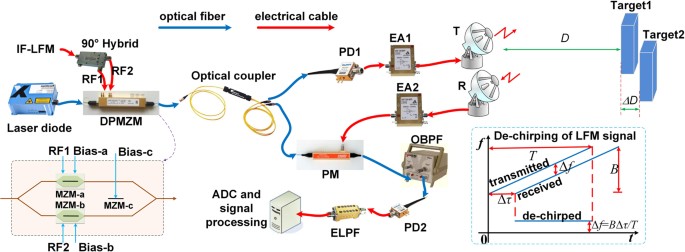
3. LRASM will climb better than Harpoon because it has larger wings and can generate more lift.
You have no proof that it can do this. Your comparing a air to ground missile to a ground to air missile for christs sakes
4. Ship can intercept the missile, but it can’t attack the aircraft.
Thats why ships travel in pairs and some carry aircrafts on them after the missile was intercepted.
I think you are screwing with me on purpose. I will just follow PeeDs get back on topic comment.
panzerfeist1https://www.globalsecurity.org/space/systems/leap.htm
SM-3 I guess differs with a projectile.

The Lightweight Exoatmospheric Projectile (LEAP) is a miniaturized kinetic kill vehicle that, once delivered on a path towards the ballistic missile target, detects, acquires, and homes in on that target. LEAP destroys the target missile by force of impact. Efforts to pursue advanced, lightweight, low-cost components for space-based and ground-based ballistic missile defense interceptors have generated significant progress in the LEAP program in the early 1990s. The LEAP program succeeded in developing several miniature kill vehicles all weighing under 20 kilograms. These LEAP vehicles have undergone a series of hover tests to demonstrate their abilities to “fly” and, using optical seekers, acquire and track ballistic missile targets.
The Lightweight Exoatmospheric Projectile (LEAP) interceptor is a highly modular, lightweight, space tested kinetic kill vehicle (KKV) designed to defend against medium- and long-range ballistic missile attacks. Raytheon began development of the LEAP Kinetic Kill Vehicle (KKV) in 1985. The LEAP KKV had been validated in over a thousand simulation runs, over a hundred ground tests, several hover tests and several space flight tests.
The goal of the LEAP program, as originally conceived in 1985, was to develop and integrate the world’s first advanced, miniature kinetic energy interceptors and associated technologies; and then to demonstrate their capabilities through extensive ground testing. The technologies were intended to enable development of ground-and space-based systems in support of the then-proposed Strategic Defense System architecture.
In 1985, the Strategic Defense Initiative Organization (SDIO) began the LEAP program, pioneering the development of small, miniaturized kill vehicle technology. At that time, the program’s focus was to drive down weight and size of a kill vehicle for application in electromagnetic gun and rocket interceptor weapons. A year earlier, the U.S. Army demonstrated a successful exoatmospheric kinetic energy kill vehicle in the Homing Overlay Experiment. The kill vehicle in that experiment weighed over 200 kilograms and was about the size of a refrigerator. The challenge the LEAP team accepted was to drive down that weight by more than an order of magnitude to roughly ten kilograms”
I guess 10kg flight vehicle.
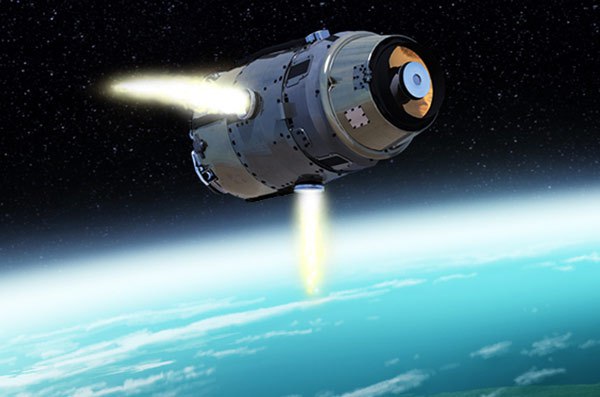
A certain user at a certain forum was talking about how great the range is on the sm-3 in comparison to the s-500. I wonder why that is.
panzerfeist11. They don’t, it is still very hard to find a missing plane or missing ship , don’t you see?
Well yeah if they sink to the bottom of the ocean which is what happens on the news 1st anyway than starting the search.Like who the hell wants to keep track of every commercial airline out there. The majority of satellites are used for military and intelligence purposes for example the Russians already knew that the US navy was by the coast of Syria when Israel began their strikes on Damascus. I heard chinas laser satellite can have a 500 meter depth detection.
“you can’t distinguish internal and external background noise.”
1. https://mil.news.sina.com.cn/jssd/2019-05-01/doc-ihvhiqax6102967.shtml
“The official propaganda of the Russians is generally the same: the detection distance is too far, the energy conversion efficiency is as high as 60%, the traditional radar is only 30%, and the noise is 100 times lower than the conventional radar, which greatly improves the signal-to-noise ratio, and the theoretical detection distance for the stealth target. More than 500 kilometers!”
wiki: Define S/N ratio: is a measure used in science and engineering that compares the level of a desired signal to the level of background noise.
S being the signal. N being the level of background noise. Ratio is the quantitive difference between the 2. Is the signal better heard if you lower the background noise? There is no definition out on the web of S/N ratio the way you described it. Internal noise meaning the signal and external background noise meaning the noise outside from the internal noise being measured? If thats what your trying to say than I agree.
2. I am able to find Chinas claim about the percentage of energy loss from Russias sources but I cant find where they found the 100 noise level reduction in any of russias sources. I can find sources that say the noise level can be reduced but not describing the 100fold reduction. Than this slipped through my mind.
I tried to find sources that show firecontrol radar satellites being able to track low altitude targets until I stumbled upon RTI’s latest article. And that is firecontrol frequency satellites being able to track low altitude targets. Yes they have described noise interference being too high to allow the ability to track low altitude targets but thanks to software and supercomputers calculating algorithms it is now possible. But the question is how come it was not possible before with their current radars especially when they lag behind in MMIC technology against the west? I think that noise interference must have been lowered to allow the software and supercomputers to track low altitude targets from space especially with a company that specializes in producing FICs and using radar prototypes based on them. What do you think?
3. Search Harpoon terminal maneuver. Cruise missile can climb upward.
Please do not tell me you are actually comparing this missile to the missiles you have described as being the same thing.:(
4. LRASM range: 1000 km
SM-6 range: 260-300 km
how can the ship retaliate?
LRASM is high subsonic so below but close to mach 1 speeds. There is a 300km distance. 1km/s is like mach 3. But we need LRASM to be able to go 3 times as fast to get there in 300 seconds so instead it will take 900 seconds or in other words the ship has 15 minutes to intercept this target for being in its weapon range. SM-6 is mach 3.5 so its a little over 1km/s in speeds.
LRASM will fly towards its target at medium altitude then drop to low altitude. I have no idea what range LRASM would drop to low altitude and how far it would be from the ship.
http://members.home.nl/7seas/radcalc.htm Lets say from 300kms it flies 5 meters above the sea so put .005km on h1 you will get 9km radar horizon to intercept the target. 1. I dont know the reaction time of an/spy-6 to track the target and than launch SM-6 but if it cant be done in 36 seconds than there is a good old CIWS will be there to the rescue. Now with .005km on h1, put 1km on h2 the radar horizon will be like 140kms meaning your ship now has 420 seconds or 7 minutes to intercept the sea skimming target than compared to 36 seconds needed. Yes you can use aircrafts to keep track of low altitude targets but the purpose of the balloon is to save money on flight hours, maintenance and operations. If something looks stupid, but works its not stupid. I will be taking a break from you for now, maybe I will later respond to you if you have better points on why a photonic radar balloon should not be used.
panzerfeist11. You can’t, ship move and there are many ship at sea.
So you dont think LEOs MEOs and GEOs cannot provide constant coverage for ships? I am pretty sure that atleast the US and Russia have a nice amount in orbit that give 24/7 SAR coverage.
a) cruise missiles are drones with explosive. Ascend or descend is depend on how you control them. You can also look at their terminal maneuver, anti ship missiles can even climb straight up. Cruise missiles aren’t glider bombs
Again this is an issue. I can bet you that in order for those missiles to get a max 900km range they would have to slowly descend from a high altitude to achieve it. If you are going to slowly descend and than climb back up you are definetly using more fuel which of course will effect your range especially with a 1000lb warhead. If you dont have any sources of the missiles you provided to climb back up than this is a waste of time like trying to help you with the definition of S/N ratio and what its used for. Maybe you can get a 700-850km range if you launch at a 14km altitude to a 1km altitude immobile target less range than a 14km altitude to a 10 meter immobile target. But there are still good chances the ship will intercept the missile heading to the balloon and than start retaliation.
b) we don’t know that because we have no real number about your hypothetical system. If it ever materialize
Comparing the purpose and range of the SM-3 to the purpose and range of the SM-6 the SM-6 is definetly a good missile to intercept the missiles you described and with future naval radars there is a great chance these missiles will be intercepted.
panzerfeist11. The ballon and the ship will be at the same location. You find the ballon then you know the ship exact location. The ship will ballon will be detected at longer distance.
So you can use satellites to identify where ships are at be it with or without a balloon all over the globe.
2. The ballon is a slow moving big target without any ability to maneuver. Attack it is no harder than a ground target on mountain height
I got atleast 3 things to say about this.
1. Can you show me examples or sources of any these missiles being able to engage aerial targets? To me these missiles rather descend to their targets and if your firing from a long range they will descend. I do not think they are designed to ascend towards aerial targets.
2. Lets say they can engage the balloon. The ship will have atleast a 500km distance which will give enough time to intercept the missile before touching the balloon.
3. Since it is quite obvious that ships travel in groups and they consider the flying missile as an act of war. An aircraft carrier nearby will definetly go send an F-35 in an air to air loadout to engage whoever the hell launched the missile.
panzerfeist1https://en.wikipedia.org/wiki/Tethered_Aerostat_Radar_System
7 km Aerostat, 15 km aircraft
Radar horizon: 850 km.
LRASM range 1000 km
MALD range 925 km
SM-6 rang3 260-300 km
MALD and LRASM. I mean a ship that has a photonic balloon radar will be targeted the same way as a ship that does not have one but the one with the balloon will have more reaction time to intercept low altitude targets.
I hope your not referring the MALD and LRASM will be used against the balloon. I hope you have not forgotten the balloon is an aerial target and I don’t think the MALD and LRASM are designed to engage aerial targets.
panzerfeist1Huh with the ballons, everyone and their friend know exactly where you are from thousands of miles ?
I am going to go to sleep now. I will go look back at RTIs articles and I believe the max height is 1km for the floating balloon meaning it can’t be tracked 1000 miles away because of below the radar horizon. If you want to attack the balloon I am sure a USN ship missile has more range than what your aircrafts carry.
panzerfeist1“They didn’t lower background noise by 100 times, they lower the internal noise from frequency conversion by 100 times.
Background noise includes external noise from surface clutter and cosmic background radiation.
”
I will ignore this because we have been over this already on another topic. https://forum.keypublishing.com/forum/modern-military-aviation/3839792-air-launched-ballistic-missile/page2
Photonic air balloons are so far into the future that they aren’t even worth mentioning, nonetheless, all tactics have drawbacks, lifting them up in the air will increase your radar horizon, but it also harder to hide these ballons, they become juicy targets
Only 1 prototype from RTI exists on it because have went through a small fraction of their pdf articles because its tiresome using google translate. I have not read much into mig-31bms missile range dependency on altitude example But lets say there is a photonic radar balloon on a ship. I get more time tracking time against low altitude Kaliber missiles and anyone that needs to attack my balloon from a high altitude the an/spy-6 + SM-6 will take care of the target. if you fly at a low altitude and the balloon is high up your missiles will lose more range than they are when your at a high altitude. But if your at a high altitude to avoid the balloon you will make it easier for the an/spy-6 to track you…….
I would not use a balloon radar as the only source. I will use another radar to cover the high altitude from below. This solution will definitely save the Navy a lot of money than just sending aircrafts out.
Sky wave, long range but with blind sector
Blind sectors exist because HF waves bounce up and down. Take a wide jump and from where you were standing to where you landed on your jump that is what you have covered. but the area that you have not covered was because your feet has not landed. but your clone that is 1ft away from you before you took the jump takes the same leap and covers the blind spot or area you have not covered.
That is one way to cover blind spots.
panzerfeist1Thank you for those weapons sources 😀 I only wish I was set with the load out carry for the JSOW-ER, MALD-X and JSM on the F-35
I will not insult you at all on the radars just like you were kind to not insult me on my mistakes of the weapons.
1. S-400 radar doesn’t track targets from 3000 km, you want longer range, there are cost you have to trade.
Mobile radars do not have the power output ground radars have. Go find out the amount of power ground radar like the Voronezh draws in comparison to a S-400 radar. The more juice you have the better the range.
2. Voronezh is difference because it is a sky wave radar, sky wave radar is not limited by radar horizon but instead have a bind sector of 1500-2500 km right in front of them.
Voronezh radars are brand new ground radar installations for A-235 system and a great integration for their entire defense network. They are not skywave radars there is a radar for that which is developed by RTI called Container. Voronezh, sm, dm,vp,work in vhf, uhf and shf. Blind sectors exist but because of russias land mass distance I am sure far distant placed container radars can cover the blind spots the other container radars have missed.
panzerfeist1That is an anti-ballistic missile radar rather than an air defense radar and why use short-range glide bombs while in that case, they can use JASSM-XR, MALD-V or at least JSM
yes and these radars can be used against cruise and aircrafts. anti-ballistic missile radars are not just limited to tracking only just ballistic missiles. Spudman says 5th gens can get closer which I agree with him but they can be in as much of a get 100% tracked if the right weapons are not used the same way as a 4th gen. I agree with you with the weapons of choice because I chose them in my post as well.
panzerfeist1@moonlight
For points 1 and 3 I am trying to find sources for unless you got some of them being launched at low altitudes to achieve those ranges?
“only 2500 km shorter than your proposed number because you are referring to anti-ballistic missiles radars.”
yes radar horizon limits their ranges I have take this into account they will still track aerial targets that are within 500kms depending what altitudes they are at.
they are designed to detect and engage ballistic missiles with vastly different characteristics from a fighter aircraft such as significant Doppler shift, very high altitude with no clutter, you deal with a different kind of target the waveform you used is different and the Doppler rejection threshold is different. No one wants their ballistic missiles defense radar to track Mach 1 targets.
S-400 radars are designed to detect and track cruise missiles, jets, ballistic missiles, etc. There are sources that show voronezh radars track aircrafts as well. What I am showing is simply its performance in detection and tracking.
b) the range don’t take jamming into account.
OK I know you did not read what I posted at all:rolleyes: but just like spudman i dont blame you. I stated before I did not include jamming from land radars like krasukha or airborne jammers like the barricuda.
These radars will be attacked by very long-range missiles such as JASSM-XR or AGM-183A instead of JSM or SPEAR
By all means tell me what kind of operation you will use to achieve this but I hope your not assuming its a simple task and that there is no air defense network protecting these radars.
SBX is indeed a powerful radar and I will definetly include it next time after this upcoming maks airshow for the SU-57 like I will include the Voronezh-SM for the F-35. And just like the DM version I hope good old RTI gets there hands on them.
4. s-350s, s-300, s-400 , A-135 can intercept hypersonic targets as in ballistic missiles but they aren’t designed to intercept hypersonic missiles like scramjet missile. I don’t think buk-m3s can intercept either ballistic missiles or hypersonic missiles. Ballistic missiles can be as fast or much faster than scramjet missiles but they follow more predictable course and easier to intercept
Buk-m3 is designed for 3km/s targets is this speed hypersonic to you? Scramjets are basically ballistic missiles that can fly at lower altitudes to me similar to hypersonic glide vehicles. http://www.deagel.com/Artillery-Systems/S-400_a000371001.aspx The 9M96 is an extremely maneuverable surface-to-air missile intended to engage both air breathing and ballistic threats at ranges of up to 120 km. Airbreathing is basically another name for scramjet missile designs http://www.deagel.com/Artillery-Systems/S-500_a002423001.aspx The Mars mobile advanced radar system has been identified as a key sensor associated with the S-500 missile system. The advanced radar system will make possible to engage stealth and unmanned aircraft as well as ballistic missiles, hypersonic cruise missiles and low Earth satellites


 Sign In







