 panzerfeist1
So I am assuming the cracks were intentionally being displayed to offer the audience at the airshow there an explanation or what? Although cracks happen time to time I wonder if some coating jobs have improved to lessen this effect.
panzerfeist1TR1 You have been acting lately like the Russian version of AJ. Any reason for it? Don’t get me wrong I am getting a kick out of it :highly_amused:
panzerfeist1F-35 was only intended to counter threats for approximately 30 years, with parity in forces occurring in approximately 2030. Threats include evolved S-300 and Su-27, which we see today as S-400/500/HQ-9 and SU-35/57. F-35’s short combat radius is its biggest downfall in countering post-2030 threats.
This reminds me of the time the US thought it would take Russia 10 years to develop nukes and in the next 3 years we can all guess what happened next. I am not putting a lot of high hopes when someone develops a weapon system to believe they have superiority over said amount of time. I never take boasting from any country too seriously not bashing just the F-35 but also the s-400 just people that think its the greatest thing since slice of bread.
panzerfeist1“Chinese radars”
My answer is no on this in regards to the next few to 5 years.. Sure asian countries like Taiwan, South Korea and Japan are considered top ranking in the semi-conductor industry, than western europe and the US tail behind them. But I have run into some interesting news that might push the Russians way passed these countries.
https://uanews.arizona.edu/press-release/ua-selected-photonics-project
“Frank Jaworski, program manager for emerging technology at Raytheon Vision Systems, added: “Raytheon regards the integration of photonic integrated circuits with focal plane arrays as a critical path for the development of future Department of Defense imaging systems vital to the nation’s security. We look forward to the University of Arizona’s leadership of the consortium and utilizing their expertise in developing this key technology.”
Neil Supola, chief of the infrared focal plane array branch at the Army’s Night Vision and Electronic Sensors Directorate and government program manager for AIM Photonics, said: “This program is a great opportunity for the Department of Defense to leverage advances in integrated photonics manufacturing being realized by the Manufacturing USA program together with its state, industrial and academic partners. The scope of industrial participation on this project highlights the relevance photonic integration has within the Department of Defense community, and this project’s inherent potential to make a large impact.”
“- In your opinion, what are
domestic prospects
radiophoton component base?
– The prospects are good. Opening the veil of our plans, I note that
we are going to actively apply
radio photonic technologies for deep modernization of existing
Radar and the creation of advanced radars. This will allow to realize
promising synthesis methods
radiation, reception and processing of radar signals (including
ultra wideband) based
new competitive domestic products: radiophotonic
super fast analog digital
converters (ADC), photon
digital processors, electron-optical signal generators,
optical delay lines, parallel optical supervisors, optical-electronic systems
antenna control and calibration.
Integrated application of photonics
in the AFAR equipment will provide a scientific and technological breakthrough in the field of
radar, communications and electronic warfare, will provide
Consumers have significant advantages over traditional
hardware.
Develop radiophotonics in JSC “RTI”
planned primarily at the base
production capacity
Connector Optics LLC and OJSC
“OKB-Planet”. The existing competencies of these enterprises make it possible to organize a complete
serial process chain
production of VIL and semiconductor modulators in microchip
performance.
As for semiconductor
modulators in microchip
performance, then in 2019 the research
work on this topic in which
OKB-Planeta OJSC is an industrial partner.
Within three to five years is possible
organization of the development, design and production of photonic
integrated circuits (FIS) both in packageless execution, and in the case.
The implementation of these plans will allow
JSC “RTI” take a leading position
in development and production
advanced domestic radio systems based on component
radiophotonic bases.”
The russians so far atleast have a time estimate on their production date for FICs I cant find any sources as of yet other than this 2017 source of Raytheon being interested in manufacturing FICs. I dont know where other countries besides the US and Russia stand on this however both KRET and RTI did admit they are behind on MMIC technology but they seem to believe they would be ahead of everyone when they start integrating to this.
panzerfeist1I heard Turkey is claiming if they are kicked out of the program the price for the F-35s would go up. Does anyone know by how much or if there are any solutions to keep them low cost just in case global customers don’t start changing their minds on orders?
panzerfeist1https://translate.googleusercontent….D9fuQF5nPVDB8A
“”Radio Engineering Institute named after Academician A.L.
Mintsa, a member of the RTI group of companies, is developing technologies for creating radar systems for building space systems for radar observation of the Earth’s surface and near-Earth space, which makes it possible to detect low-flying targets.
In 2018, flight tests of airborne radar complexes (BRLK) for remote sensing of the Earth with models of BLCC X and P – wavelength ranges were successfully conducted. The key technologies are aimed at reducing costs and development time. These include technologies for creating a number of BRLCs based on a typical structure with unified control equipment, signal shaping and processing, as well as modular AFAR of the centimeter and decimeter wavelength ranges.”
RTIs latest book issue, only thing I found interesting was this.
https://itech.aorti.ru/upload/iblock…compressed.pdf
“America, China, Canada, Italy, Argentina and many other countries have bases, but Russia does not … So it turned out that the previously launched satellites had already worked out their resources, and a few new ones were launched, but for various reasons they did not reach the specified specifications. “Russia has no technological lag,” says Anatoly Leukhin. – Our country has the necessary personnel, technology, solutions. In the near future we will return the lost positions. We will have a whole constellation of satellites equipped with a SAR RSBM.
UNIQUE DEVELOPMENTS OF RTI In 2018, the institute successfully conducted flight tests of spaceborne radar complexes that are equipped with active phased antenna arrays of the centimeter and decimeter wavelength ranges. This development was created at the expense of the institute itself. – The growth of the market for services related to remote sensing of the Earth determines the urgency of the task of creating and using radar observation space vehicles effectively. Our experts are working to improve the informational content of the BRLC. Today, a complex of work is underway on the dual-frequency BRLC of the centimeter and decimeter wavelength ranges, which has no operating analogs in the world, ”says the general director of the RTI them. A. L. Mints, Alexander Osipov. – The institute has the necessary scientific, technical, software-algorithmic and technological for
affairs for the creation on a single structure of the latest BRKK for spacecraft. In the model of the BRLC, which was created at the institute, important are technologies for raising informativity: the use of innovative probing signal designs, the method of expanding the shooting range, innovative methods for detecting moving objects, superresolution algorithms, methods for processing and integrating radar data. – The basic principles of radar are well known to scientists around the world. It is very difficult to come up with qualitatively new solutions in this area, but we succeeded. With the help of a supercomputer, we have developed deep mathematical analysis algorithms that allow us to detect moving targets. This is a very difficult task that no one has yet solved for us, ”says Anatoly Leukhin. – The fact is that when we look at the Earth with a locator, we see not only rivers, oceans and cities, but also a huge amount of interference. Because of them, it is sometimes very difficult to see even moving objects. The ability to track moving objects is an essential step in the development of radar. This technology can be widely used for both military and civilian purposes. For example, to create systems
aircraft from space. This will bring the level of safety of flights around the planet to a new level. RTI is conducting tests of its space-based BRLC in flight experiments on the experimental test-flight complex created. Anatoly Leukhin claims that the data obtained confirm the efficiency and effectiveness of the technology created at the institute. The next step is the creation and launch into space of a full-fledged spacecraft equipped with the latest BRLC, which was developed at RTI. The Institute is ready to cooperate with the Ministry of Defense of Russia and various civil customers.”
I am more curious about the tracking capabilities of RTIs proposed radars and how their integration would help their military. I am not really a subject matter expert on military satellites but I have a question about this statement, “
The fact is that when we look at the Earth with a locator, we see not only rivers, oceans and cities, but also a huge amount of interference. Because of them, it is sometimes very difficult to see even moving objects.
” I know there are current fire control frequency radars in space but can those military sats offer the capability to track low altitude targets or do they only offer SAR? I am just wonder if military satellites tracking low altitude targets is an old or new concept?
panzerfeist17) Russia’s much touted ROFAR is a counter to stealth.
This is theoretically true – but the extent remains to be seen. Use the calculator again but with frequency set at 110GHz. The skin depth for gold is now only 227 nanometers. This means that all of your layers are now thicker relative to skin depth – which means that they are more reflective. Everything. Your RAM paint, canopy coat, all of it. Possibly too reflective. (And this shows that more RAM is not better. If the technicians apply the coats too thick it actually degrades stealth.
Now go back to airpoweraustralia’s stealth analyses and you will see a large reason why they were so wrong
)
According to the Chinese they say the noise level drops 100 times lower and looking at the latest RTI source that I have provided earlier the head chief says the size reduction of obtaining FICs would be 12 times smaller. So I wonder if the 100 times lower noise is just ROFAR or having the same amount FICs as an aircraft has MMICs if that is so than I wonder if they can put 12 times as much FICS into their aircraft to lower the noise even further
8) ROFAR could let one see a pilot’s face.
False. It would be the lower frequencies which would penetrate through the canopy. They don’t have the resolution to produce more than a blur. The Russians do have a habit of exaggeration.
I found sources that have said 1hz and 1ghz and KRET’s head official saying UHF frequencies. There are radars that use lower frequencies this has been shown even by Chinese research papers that ultra-high resolution is achievable at long ranges.
https://spie.org/news/zhang-photonic…solution?SSO=1
More experiments done by them.
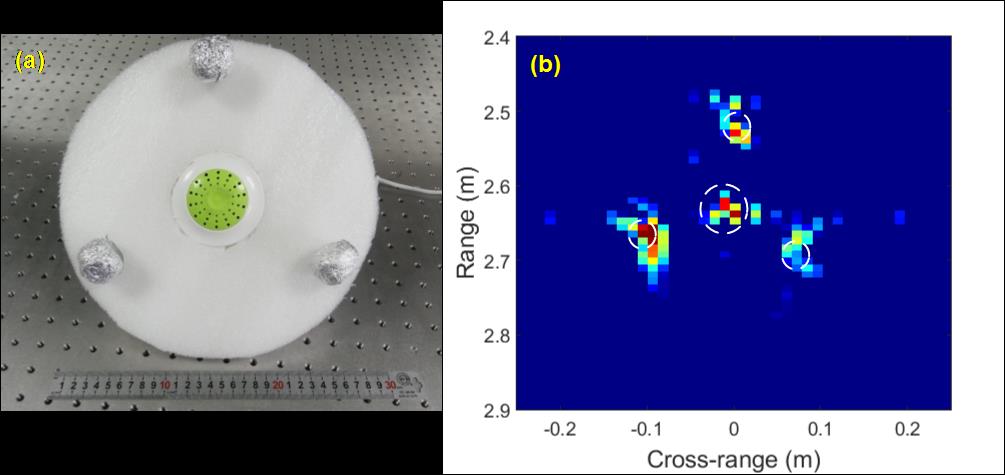
They confirm ultra-high SAR is achievable at long ranges but I am sure everyone is curious to see RTI’s radar prototype for their aircraft designs. Went through one of their articles they have tested radar balloon prototypes to track low altitude targets faraway and seem to also be working on expanding the frequency to the terahertz range. They use Photodetectors multiply frequency and modulators to de-chirp their frequency. This is their summary, ”
In summary, we have designed a novel photonics-based radar applying photonic generation and de-chirp processing of broadband radar signals. The radar has great potential in real-time target detection and imaging with an ultra-high resolution.”
As you said lower frequencies are needed to penetrate the canopy but in their summary they can multiply broadband radar signals and than de-chirp them without having to worry about a signal to noise loss doing it.
More of their experiments
https://www.osapublishing.org/Direct…eq=0&mobile=no
the words are all screwed up for me to post their quote in that source. but on number 4 discussion and conclusion they have tested a 4ghz bandwidth on a regular radar and have demonstrated a ka-band radar with a bandwidth of 12ghz having better range resolution than just the phased array radar.
more of their high frequency radar tests using lower bandwidths achieving high resolution
W-band inverse synthetic aperture radar (ISAR) imaging systems are very useful for automatic target recognition and classification due to their high spatial resolution, high penetration and small antenna size. Broadband linear frequency modulated wave (LFMW) is usually applied to this system for its de-chirping characteristic. However, nearly all of the LFMW generated in electronic W-band ISAR system are based on multipliers and mixers, suffering seriously from electromagnetic interference (EMI) and timing jitter. And photonic assisted LFMW generator reported before is always limited by bandwidth or time aperture. In this paper, for the first time, we propose and experimentally demonstrate a high-resolution W-band ISAR imaging system utilizing a novel logic-operation-based photonic digital-to analog converter (LOPDAC). The equivalent sampling rate of the LOPDAC is twice as large as the rate of the digital driving signal. Thus, a broadband LFMW with a large time aperture can be generated by the LOPDAC. This LFMW is up-converted to W band with an optical frequency comb. After photonic-assisted de-chirping processing and data processing to the echo, a high-resolution two-dimension image can be obtained. Experimentally, W-band radar with a time-bandwidth product (TBWP) as large as 79200 (bandwidth 8 GHz; temporal duration 9.9 us) is established and investigated. Results show that the two-dimension (range and cross-range) imaging resolution is ~1.9 cm × ~1.6 cm with a sampling rate of 100 MSa/s in the receiver.
US
https://www.sciencedirect.com/topics/engineering/x-band
The feasibility of a photonics beamformer at L- and X-bands has been demonstrated [65]. The use of one beamformer capable of operating at widely separated bands of frequency is a major achievement.
Photonics-based beamformers can have an instantaneous bandwidth extending from 3 to 6 GHz and are 75% lighter and smaller than their electronics counterparts, and the incurred loss of about 14 dB is tolerable [66]. The weight and volume advantages of photonics-based beamformers make them attractive for airborne/satellite-borne applications.
A 5-bit photonic switchable delay line for a wideband array has been reported for an airborne application [67]. The array occupies an area of 0.9 × 2.8 m2 and consists of 96 elements. It is designated to operate in the 850–1400 MHz range and follows the contour of a jumbo jet fuselage. The 96 radiating elements were divided into 24 columns with three combined into one subarray which was controlled by a 5-bit time shifter. The photonic time shifter provides the coarse delay steps ranging from 0.25 to 7.75 ns while a 6-bit electronic delay line in the T/R modules provides refined differential delays ranging from 0.01 to 0.5 ns. The array has a 50% instantaneous bandwidth and the L-band module has a 38 dB loss, but efforts are being made to reduce this.”
This was back in 2000, and if the Chinese and Russians see feasibility in photonics I am sure the US has made the efforts to already reduce the noise loss. if you read further in this source even the US also referenced them as FICs photonic integrated circuits and speak of the same benefits of it as well.
https://uanews.arizona.edu/press-release/ua-selected-photonics-project
Frank Jaworski, program manager for emerging technology at Raytheon Vision Systems, added: “Raytheon regards the integration of photonic integrated circuits with focal plane arrays as a critical path for the development of future Department of Defense imaging systems vital to the nation’s security. We look forward to the University of Arizona’s leadership of the consortium and utilizing their expertise in developing this key technology.”
Neil Supola, chief of the infrared focal plane array branch at the Army’s Night Vision and Electronic Sensors Directorate and government program manager for AIM Photonics, said: “This program is a great opportunity for the Department of Defense to leverage advances in integrated photonics manufacturing being realized by the Manufacturing USA program together with its state, industrial and academic partners. The scope of industrial participation on this project highlights the relevance photonic integration has within the Department of Defense community, and this project’s inherent potential to make a large impact.”
panzerfeist1[USER=”9270″]Levsha[/USER]
“
You have no evidence to suggest that the Su-57 has a greater ferry range or combat radius than the F-35 (except at supersonic speeds)”
F-35 by default is a smaller aircraft than the Su-57. Does the F-35 even have a range past 3,500kms? I even doubt the 20% more range on the supposed advent design would be past the 3,500km ferry range on the older engine of the su-57 this is not counting the izdelie 30 which I am very sure has an even farther range than 3,500kms.
panzerfeist1“While the J-31 has a fourth-generation engine, the Su-57 fifth-generation engine. The combat range of Su-57 1100 km / 1500 km, the range of J-31 900 km / 1200 km
The level of combat effectiveness is fighters of different generations”
I am curious why Levsha thinks there is a possibility the J-31 would be better than the Su-57 engines when the Chinese themselves were reliant on their engines and the Russians are undergoing tests with a better newer efficient engine for the SU-57. I am not doubting if they can close the gap really quick because that can also be a possibility for Russia’s electronics industry when producing FICs later. Anything is possible but I just don’t see or cannot find evidence the engines on the J-31 outrange the SU-57.
panzerfeist1[USER=”959″]Deino[/USER]
I am talking about the Chinese having possible future contracts until the SU-57s comes in decent numbers.
[USER=”9270″]Levsha[/USER]
“nor its type of engine were officially revealed, however following the
latest reports it is not unlikely a special custom-tailored version based on the Salut AL-31FM2.”
https://webcache.googleusercontent.com/search?q=cache:5gVwF_PkfU8J:https://www.globalsecurity.org/military/world/china/j-31-engine.htm+&cd=9&hl=en&ct=clnk&gl=us
“A Russian-made RD-93 engine will power the Chinese J-31 fifth generation fighter, Rosoboronexport official told RIA Novosti 10 November 2014. “J-31 with the Russian engine RD-93 is considered to be an export program, able to compete with the American F-35 fifth generation aircraft on the regional markets,” Rosoboronexport’s Air Force Equipment Export Department Head Sergey Kornev said. “The program is ambitious, but very real, especially considering the high cost of F-35 and some problems with its development,” Kornev added. Russian RD-93 engines are a variant of the RD-33 engines, initially developed to power MiG-29 fighters. The RD-93 was developed by Russia’s Klimov design bureau specifically for the FC-1 fighter, known in Pakistan as the JF-17 Thunder.”
I am siding with xb-70 on this one.
panzerfeist1“
So it will soon be a real threat to Su-57’s exports”
I mean what countries do you think the Chinese plan on selling the J-31 that is considered a threat to su-57 exports? Looking at their ongoing su-35 purchases, depending on reduced costs of the Su-57 it wont be a surprise to me if the Chinese themselves start purchasing the Su-57s.
panzerfeist1https://tass.ru/armiya-i-opk/6598983
Specialists of RTI have tested a prototype model of a radiophotonic radar of a new generation. The general director of the RTI group, Maxim Kuzyuk, said this in an interview with TASS on Thursday in the framework of the Army-2019 forum.
“The prototype model and software work, there is a specific result. We conducted experiments, and the radar is already building the trajectory of the aircraft,” he said.
According to the CEO, now the specialists are faced with the task of creating an imitation-modeling stand and improving the hardware and software of the locator, including the creation of integrated photon circuits.
Radio photon locators have significant advantages in noise immunity and resistance to electromagnetic radiation. “The obvious advantages of photon radar stations are a significant increase in accuracy, reliability, a decrease by several times in energy consumption and a decrease in the size and weight of the antenna by dozens of times,” said Kuzyuk.
The use of radiophotonic technologies will allow to achieve breakthrough results in the development of radar systems. Radiophotonic radar will have increased range and accuracy of tracking, as well as significantly smaller dimensions compared to the “traditional” stations. Moreover, due to the use of photon technologies on the radar screen, the targets will not be displayed in the form of points, but images. That is, the operator will see the real goal – an airplane, a rocket, a drone or a meteorite.
Earlier, the press service of the RTI group announced the launch of the production of vertically emitting lasers in 2018, one of the main components of the radiophotonic radar.
hmmm no points on radar screen but images. I guess we can all say goodbye to this in the future.

So basically any pilot operating this will only see pictures and nothing else? A mock-up being presented at the maks 2019 airshow would sure be nice if thats possible.
panzerfeist1Got this information from here http://www.russiadefence.net/t2547p450-russian-radar-systems and if anyone knows about this radar or the name of it please let me know.
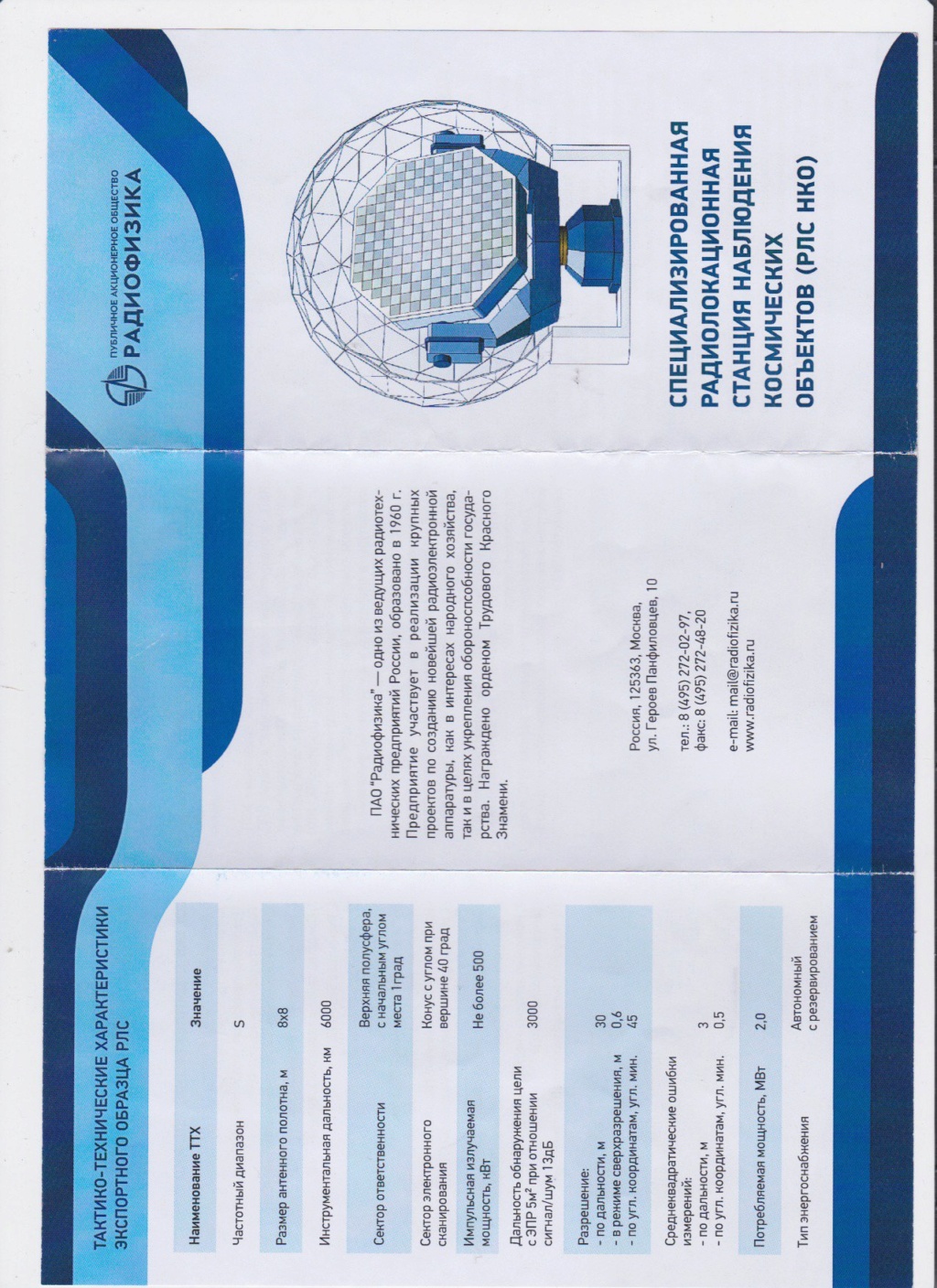
Band: S
Dimentions: 8x8m
Instrumental range: 6000km
Scan sector: +/- 20 degrees
Impulse power: 500kWt
Range vs 5m2: 3000km
Resolution: 0,6-30m in range, 45min angle
Errors: 3m range, 0,5min angle
Power consumption: 2MWt
Also if possible can any Russian speaker translate this whole thing(not just the specs)? Other information that I am assuming is that it has 196 t/r modules by counting them in that picture and assuming the dimensions are referring about the antenna size which is 8 by 8 meters the size would be 64 meters divided by 196 would mean each module would be 0.326 by .0326 meters so I am assuming each module size is 1ft by 1ft and dividing 2 megawatts by 196 each t/r module consumes 10.2 kilowatts although its the power consumption I am wondering if it is referring to max power consumption or not. This radar was presented in the 2019 forum.
panzerfeist1Got the info from
magnumcromagnon
http://www.russiadefence.net/t2547p4…-radar-systems
In case the majority of people did not get any news update more info regarding ROFAR.

The age of the RTI’s CEO shocks me.
panzerfeist1
https://tass.com/defense/1065451 korsar drone going from a 50 to 70hp engine.
https://www.youtube.com/watch?v=idprk-J_YiQ Can anyone translate the description of the owl drone? I believe the image of it is implying it is being used to fool satellites getting information thinking its just a bird instead of a drone while getting info on ground targets.
https://bmpd.livejournal.com/3686030.html lancet drone has increased payload.


 Sign In







