 LowObservable
Aurcov – Each EODAS sensor stares at one-sixth of the universe – 60 x 60 degrees. That’s not far from the FOV of a cellphone camera. The EODAS sensor is about 1MP. Cellphone cams are 5MP. 4MP would equal 2x the linear resolution.
Try as I may, I can’t see more detail than I have pixels.
Unlike you, I have seen the shipboard EODAS work, live. (And I doubt that I would have done if it had as much magic in the sensor boxes as you and Spud seem to think.) It’s what you’d expect – the sensors wired into a COTS processing and display/control suite. And you’d be surprised how many “hot” objects there are in the sky and on the ground, and how you have to go about telling which of these blobs are threats and which are not.
LowObservableSpud – That’s an interesting but odd description of how EO-DAS works.
I’d have thought it would be rather difficult for the units to detect and track separately, given the whole point of the claims made for DAS is that it can continuously track all targets within range (and thereby, for instance, retain the position of other flight members).
So how do separate units do this when the platform is maneuvering vigorously (or as vigorously as it can) and the targets are all passing through multiple EO-DAS sensor fields of view inside a second?
In that kind of timespan, where a target is inside FOV for under a second and the background (the IR world is a noisy place) is also dynamic, how does an independent EO-DAS have time to process out false alarms and establish a track?
You would, I think, need a central EO-DAS processor, but does not that run counter to the rest of the architecture?
Aurcov – I’m not saying you can’t detect subpixel targets. And of course range depends on energy versus background (quite sensitive looking up from 30,000 feet, able to see 3000 lbs/sec of LOX and RP co-altitude at 800 mi).
Now look at it the other way: Suppose I can really see everything in the sky for 800 miles… but in a completely two-dimensional way with no range information? Can we say “clutter”, mes enfants?
LowObservable“The only thing that remains is to integrate the data provided by the EODAS into the rest of the mission systems.”
Exactly!
It’s just part of a rather big “only thing” that is merrily falling behind schedule.
The EBAPS sensor in the helmet is low-light, not IIR, and it is not a back-up but provides the level of acuity required for parts of the operation.
LowObservableNo system (or combination of systems) on a Gripen can produce a 360 IIR view of the battlefield; keep track of every WVR object in the sky passively (especially in a furball); be used to not only cue a missile shot but also provide updated tracking info for the missile in flight; detect, geolocate, track, and designate targets of AAA & SAM; detect & geolocate cannon, mortar, rocket fire, etc; negate the need for NVGs, provide live BDA, etc.
To be scrupulously honest, the EO-DAS &c can’t do that yet.
Passive air-to-air tracking will be a remarkable achievement if it can be done. However, resolving ambiguities and false alarms to the degree required to perform a LOAL shot (particularly outside the pilot’s direct view and at ranges where the target is subpixel) could be a tad hairy.
And while JSF does not have NVGs, it still has the second high-rez sensor on the helmet.
LowObservableSpud – Try to stay current. There is no published IOC target for the Block 2B. Not even the Marines are stating a date now.
If JAS 39E remains on schedule, something that the Swedes have an annoying propensity for accomplishing, it will be in service before Block 3F.
There are no grounds for assuming that because a capability is not on the (short) public list of major items missing from 2B/3I versus 3F, that capability will be operational on 2B. So assuming that MALD or EODAS will be fully operational on 2B is not justified.
EODAS is physically constrained to about one-half the resolution of a cellphone camera. (Do the math – megapixel sensor and field-of-regard.) From what I have seen in the literature, there are some basic challenges in the way of increasing the pixel density of an IR FPA, and increasing the size of the FPA in EODAS would be difficult.
LowObservablemeow
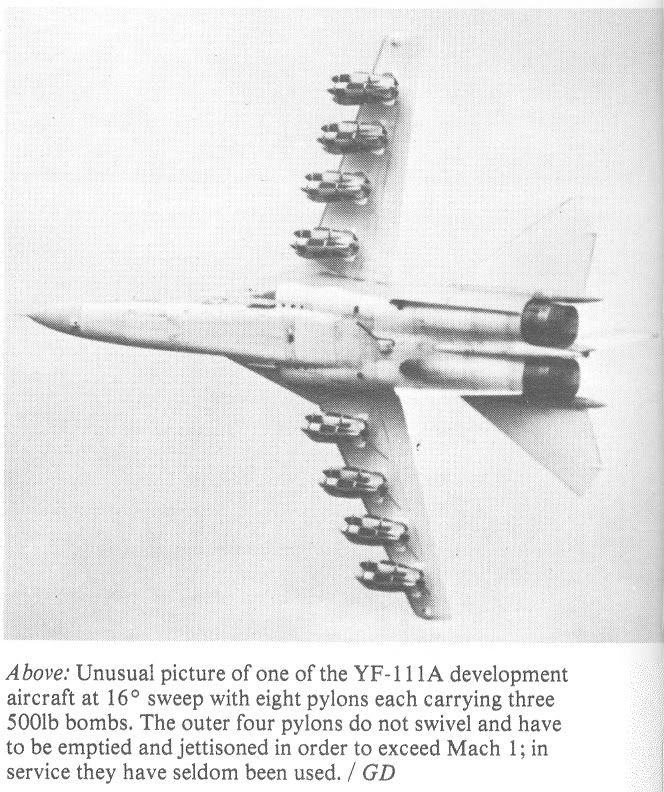
LowObservableThose images remind me of the pic below. Given the Norway range data, the small increment of range with external fuel and what that tells you about drop-off of specific range (mpg if you will) with weights above clean TOW and external stores, any external load-out pretty much has to start with fuel.
LowObservableIgnoratron aimed at moon_light… charging… 100 per cent… ZZOT!
That’s improved the viz. Now, Spud, Spud, Spud… Are we not a tidge premature talking about Block 6, when there is no IOC for Block 3 and the only uncertainty appears to be what gets pulled out of Block 3 to meet IOC?
And may I remind you that, back in the day, you were equally confident that Porky would be in service with six internal AMRAAMs with Block 4 or 5 in 2015, IIRC (which I usually do).
As for your assertion about the superiority of SA & survivability of an externally loaded F-35… Let’s see when that happens, and where the capes of the SC4G (so-called 4gen) fighters are at when that long-distant day rolls around.
If it ever does, that is.
LowObservableTwinblade – Thanks for checking.
Ironside – Interesting. They talked about a two-seat command aircraft briefly in the C/D days, but as part of a C/D formation.
The mixed group does two things. It adds V/ELO to the mix, without driving the cost of the fighter through the roof, and it addresses NLOS LPI LPD comms, which is the Achilles heel of the UCAV.
The Frogs have thought about it, too. They use the analogy of hunting dogs.
LowObservablekirtap – that makes more sense. But 39-8 was supposed to fly late this year.
LowObservableFirst Flight of Gripen-E in May-2013. 4 test aircrafts would be made. If necessary, production aircraft can be used for testing and changes applied throughout the lot.
May 2013? You sure you heard that?
LowObservableThe hidden factor in the F-35’s mil-power initial cruise altitude is the relationship between net wing area (the size of the wings) and gross (area defined by the wing edges projected to the centerline). We don’t normally worry about this because the net/gross relationship is usually pretty similar across any class of aircraft, but the F-35A/B planform is an outlier, with very high wing loading based on net area.
IIRC data supplied to Norway on an optimal cruise long-range mission showed that the max altitude was 25,000 feet.
LowObservableThat nasty pylon that looks quite ‘stroadinarily like one of these…

LowObservableBelethor – Well someones [sic] got rather touchy on the M1 and F-16 subject
Since the “all weapon systems have been criticized this way” meme gets trotted out pretty regularly in defense of JSF, it is important to remind people that the F-16/M1 cases were very different.
– you wouldn’t happen to be one of those critics who was so dead wrong about them would you?
Nope. I was broadly on the side of those who questioned the utility of a clear-weather fighter/dumb-bomb dropper in Central Europe in the 1980s. This was entirely valid, as seen by the rapid improvements to the F-16.
And dunce cap pictures because you have adifferent point of view to the poster, very mature!
Again, nope. Different viewpoints, fine. Deliberate disregard of history and context, not fine. I have another one for you if you want it.
LowObservableScoot –
Nobody is leaving the program and the few cut backs have much more to the Very Poor Global Economy. Than the capabilities of the F-35.
Er, no. The SDD and production programs have received all their requested funding. US production has been slowed because of the utter failure to execute SDD within eight years and $20+ billion (and counting) of the objective. Export customers are delaying their buys because there’s no point paying for a jet that you can’t operate for seven+ years.
I personally remember all the negative comments about both the F-16 Viper and M1 Battle Tank during there [sic] development.
So do I, and so what? By this point (16 years of serious-money development) the F-16 had seen combat use, and fixes to the early and real gaps in its capability were in production. The Abrams followed the same path – 16 years after start, the improved M1A1 was in production. However, much of the criticism legitimately focused on the gas-turbine engine, a solution which I do not believe has been considered for any subsequent tank or large armored vehicle – in fact, last time I looked, there was a running study of backfitting M1s with diesels.
***removed by moderator***


 Sign In







