Well, the Indian Navy has 45 MiG-29Ks between 2 squadrons. So the MiG-2K is the fighter that will embark upon the INS Vikrant (IAC-1) for the foreseeable future. The choice of a new imported carrier fighter will not be made anytime soon and will not be available for at least 3 years from its selection. So I would assume that even if things went smoothly on that front, we won’t see a Rafale M or Super Hornet flying off INS Vikrant till 2025 at least.
The IN is going to evaluate the Naval LCA Mk2 fighter, when it is in flight testing. After that, a decision will be made on whether to continue with it or not.

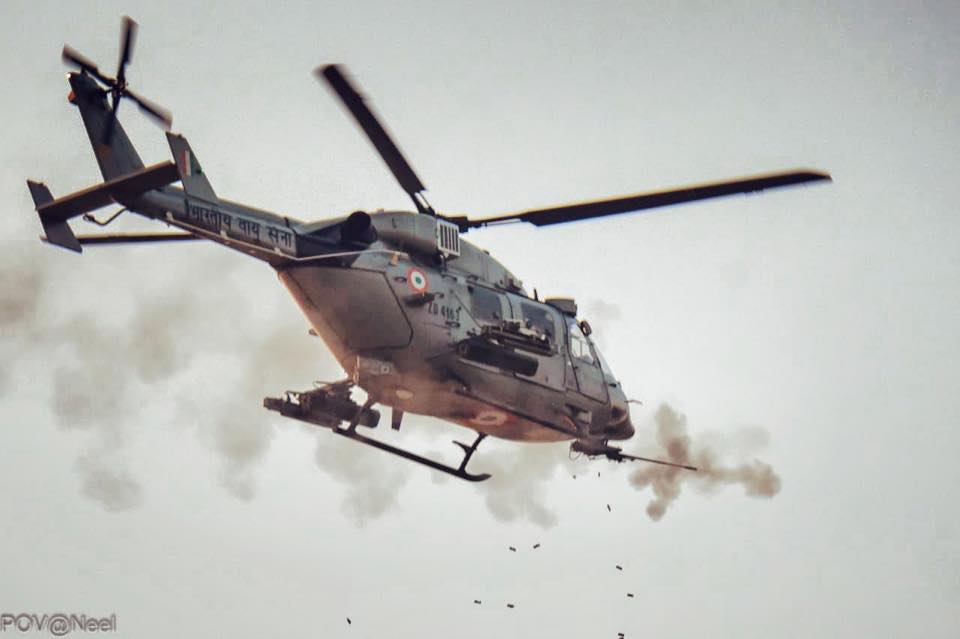
HAL Rudra popping up targets during Vayu Shakti 2019 with its M621 20mm Automatic Cannon mounted on a Nexter THL-20 Turret. M621 cannon fires NATO-standard 20×102 mm ammunition and is quite versatile in targeting bunkers, pillboxes and armored vehicles on the run.
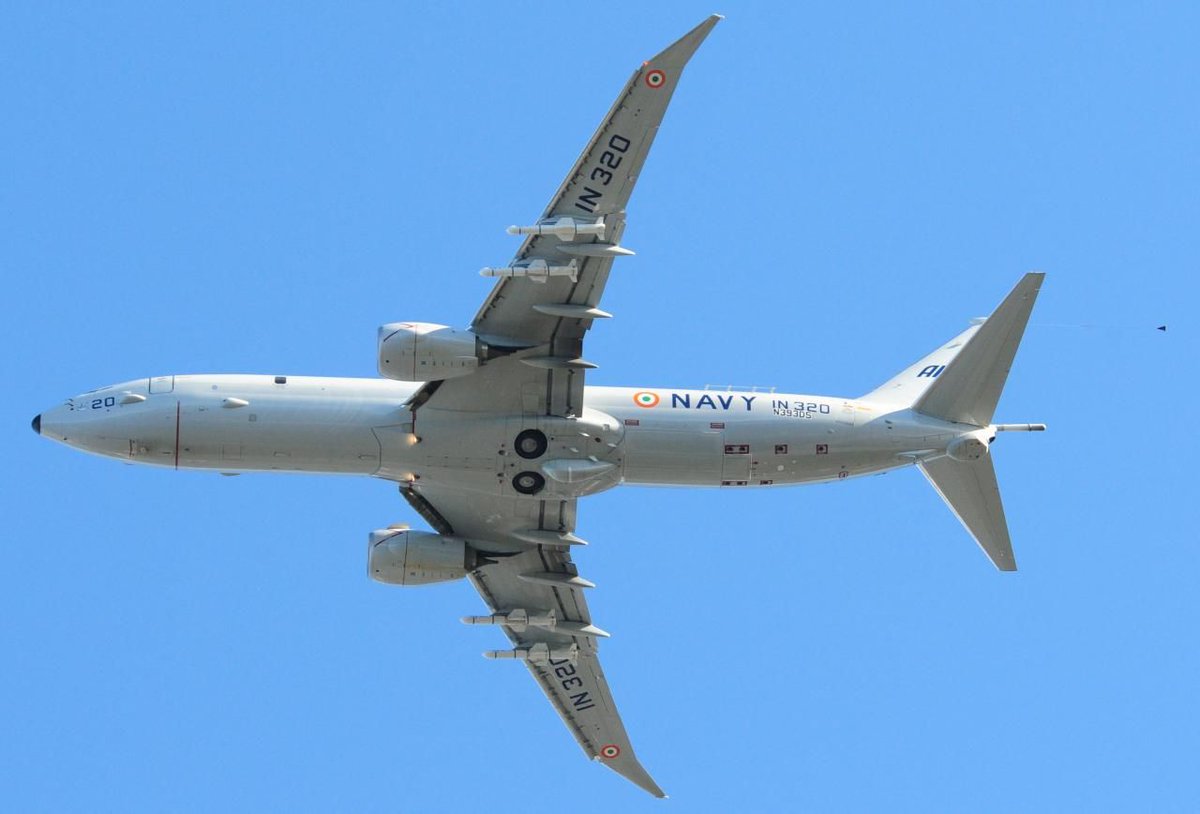
P-8I with 4 Harpoons

Naval LCA Mk1 is a Technology Demonstrator. We all knew it for more than a year and half.
Naval LCA Mk2 will be the one that the Navy will evaluate to see if it meets its requirements.
Smart to look for an integrated system for air dominance instead of “i want XX planes” isn’t it?
Not necessarily, IMO. Switzerland cannot even maintain 24/7 watch of its own airspace currently. Dominance is hardly something to aim for when you cannot even scramble a single jet in response to an air violation for several hours of the day and instead depend on your neighbors to do it for you.
The first target has to be adequate number of airframes and pilots to be able to meet a 24/7 QRA requirement 365 days of the year.
All of the contenders are more than adequate for the task, capability wise. But with such lack of will to get such a basic defense requirement met, it seems to me that the cheapest solution that meets your needs should do. The Gripen E will be more than enough for most of the roles that a neutral Switzerland will ever require of it. High availability, lowest cost of operation and maintenance (being a single engine jet with a reliable engine), an extremely capable long range BVRAAM (Meteor), modern WVRAAM (IRIS-T and R-Darter) and the ability to support and deploy a wide range of ground attack weapons if needed.
Capability over a certain baseline is overkill for Swiss needs. They’ll never need to use it. Affordability and the ability to work in a network comprising ground radars and air defence missile systems will be the key. Add the ability to operate from Swiss airfields and use their extensive tunnels.

Naval LCA prototype moves for final phase of shore based trials
The twin-seat trainer naval variant of the Light Combat Aircraft (LCA-N) is moving to a test facility in Goa for the final phase of its trials even as uncertainty hangs on the future of the project for an indigenous aircraft carrier-based fighter jet.
In 2017, the Navy cited its unhappiness with the LCA-N programme citing that both Mark 1 and Mark 2 variants were underpowered, to opt for an import of carrier-based fighters.
The navy is likely to seek requests for proposals (RFP) from western manufacturers of carrier-based jets like the F/A-18 and the Rafale-M later this year. The Navy will spend over Rs 50,000 crore to import the aircraft over the next five years.
ADA, meanwhile, has continued LCA-N development. Naval Prototype-1 (NP-1) as the trainer variant is called, flew two sorties in Bengaluru on April 24 with two new featuresan arrestor hook and pilot controlled LEVCONs.
Leading Edge Vortex Controllers(LEVCONs) are flaps that open up on the side of the aircraft like air brakes, allowing the aircraft to reduce landing speeds. Last year, the single-seat fighter variant, NP-2 underwent landing taxi trials at the Shore-Based Test Facility (SBTF) to prove its arrestor hook system.
…
The Navy’s decision to import fighter aircraft saw the conversion of the LCA-N into a navy supported technology demonstrator. The ADA project team has used the two prototype aircraft as technology demonstrators to master the two most complex technologies- landing and taking off from a deck less than 200 metres long.
The project team says that while they have mastered take-off, they are yet to perfect landing the LCA using its arrestor hook which explains the new round of tests in Goa.
Officials at the Aeronautical Development Agency (ADA), the DRDO-organisation that runs the project say if they meet all project, the technology demonstrator project can be closed by the year-end.