 BlackArcher
India has expressed interest in leasing another Akula class submarine from Russia.
India has expressed interest in leasing another nuclear attack submarine from Russia to supplement the Akula class hunter-killer that was inducted last year and the two sides are now ready to start negotiations on the project, the head of the top Russian design bureau for nuclear submarines has said.
Tentatively christened INS Chakra III, the new submarine will be a variant of the Akula class of stealthy nuclear-powered submarines that are capable of spending months under water but is likely to be equipped with more lethal weaponry, including a vertically launched Brahmos missile system.
Vladimir Dorofeev, head of the Malachite Design Bureau, which is the main centre for nuclear attack submarines in Russia, has said that the negotiations that India and Russia did during the 2012 lease of the Chakra would help in a smooth process for the acquisition of the new submarine. He also told The Indian Express that India has expressed an interest in acquiring the submarine and both the Russian design bureau and the shipyard that will construct it are ready for negotiations.
The submarine is likely to be reconstructed round the hull of the Iribis, a Russian Akula class submarine that was never completed as funds ran dry after the collapse of the Soviet Union. Dorofeev said that the new submarine could also benefit from the design efforts that Russia had put in its latest class of Yasen nuclear-powered attack submarines.
“The fourth generation of Yasen class submarine has been tested successfully, including the firing of a cruise missile from the submerged vessel. We can use that experience for the second Indian submarine. The launch was done using a new vertical launch system that can be used for the next submarine,” Dorofeev said.
The universal launch system that has been tested can launch several types of missiles from a submerged vessel and can carry 4-5 missiles per salvo. However, the design bureau head refused to go into details of the project, saying that technical requirements for the next submarine would be discussed after the India comes up with a set of technical requirements.
“If a political decision is taken then we as an industry should have no difficulty in delivering what is agreed to,” he said, expressing confidence that the matter would be discussed in future talks between Russian President Vladimir Putin and Prime Minister Manmohan Singh.
He, however, refused to comment on Russian assistance for the indigenous INS Arihant class of submarines that India is constructing in Vizag, saying that joint cooperation or technology sharing would depend on political negotiations between the two nations.
BlackArchertypical exaggerated claim not deserving to be taken seriously. Swerve has got it right, there were 2 shot down, not 5. Too many holes in his claims, all exposed.
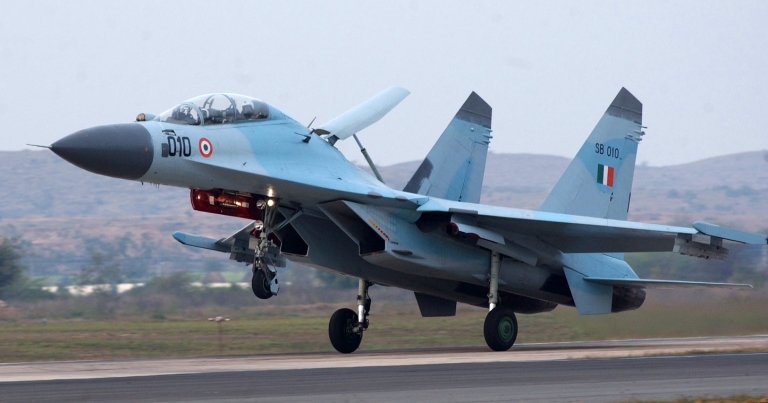
BlackArcherRussia in talks with Ethiopia on 18 ex-IAF Su-30Ks.
Google on-line translate.
Those airframes were heavily used, since the IAF was trying to work up a large number of aircrews for the first Su-30MKI squadron..they’ll definitely need overhaul and some structural upgrades to add flying hours. I miss those jets in IAF roundels though..they had a beautiful camouflage scheme, very attractive when compared to the drab Tipnis-grey Su-30MKIs.
BlackArcherso no answer as yet on whether the FA-50 has an AShM integrated or whether that is in the works for a customer like PAF that has a primary interest in anti-shipping capability.
BlackArcherIndian Navy’s first Hawk AJT was test-flown by HAL.
On June 11, 2013, Aircraft Division, Bangalore achieved another milestone in production of Hawk AJT with successful first test flight of first Navy Hawk AJT. The aircraft with tail number IN001 took off at 14:04 hrs and landed at 15:09 hrs thereby recording a successful first flight of 1:05 hrs. As per the Hawk AJT contract between HAL and Indian
Navy, a total of 17 Hawk aircraft are to be delivered to the Indian Navy. Five of these are required to be delivered during FY2013-14 with the first aircraft scheduled for delivery in July 2013. Aircraft Division is very much on target to meet delivery requirements of the Indian Navy.
BlackArcherIndia’s first indigenous aircraft carrier IAC-1 to be launched on August 12.
India, looking to boost its naval presence in the Indian Ocean, is one step closer to putting its first indigenous aircraft carrier (IAC) into the water—as soon as August.
The first sea trials are likely to follow 10 months later, says a senior government official. Still, the IAC, named INS Vikrant after India’s first carrier, will not see deployment for another five years.
The carrier is being constructed at the Cochin shipyard and the vessel “will be floated out on Aug. 12 and taken to the repair dock to carry out remaining work,” says Commo. K. Subramaniam, chairman and managing director of Cochin Shipyard Ltd. Hull work will be completed by June 2014, he adds.
The carrier is expected to be handed over to the navy for induction by January 2018.
The 45,000-ton IAC is estimated to cost $5 billion.
Cochin shipyard personnel have been working with the navy on the vessel for more than six years. The contract for the construction of the aircraft carrier was signed in 2007, and the keel was laid in February 2009, Subramaniam says.
The IAC was originally slated to enter service in 2014. Through last year, Indian officials insisted it could be commissioned in 2017. But a number of factors led to construction delays, including lack of adequate and appropriate steel from Russia and technical issues in the gearbox and other systems, a defense ministry official says.
BlackArcherDoes the FA-50 have a anti-ship missile integrated? Or is it in the works? Philippines could do with at the very least a couple of squadrons of fighters that could attack enemy naval surface combatants even if its only in defence. That is where the Gripen with the RBS-15 already in service offers a good option. Taking on Chinese fighters operating at the edge of their combat range would be possible if the PAF had a large enough force to attack high value targets like tankers, but since that isn’t possible, really the only use for the PAF’s combat fighter force would be to be able to take on Chinese naval targets.
Instead of looking at brand new Gripen C/Ds or E/Fs, the PAF should look at the mothballed Gripen A/Bs (AFAIK, there were some still available) upgraded to C/D standards. Ideally, that should be backed up with at least 2-3 AEWACS as well, to give early warning to the small fighter force and provide some ability to fight where they choose using smart tactics, but it may all be too expensive for the Philippines.
But if their military budget is to remain so small, then they have very little hope of offering any credible deterrance to a Chinese threat..
BlackArcherIn terms of size JF-17 is essentially a single engine version of F-18A/C, and so is more nimble and could likely come on top in WVR engagement with F-18E. Due to smaller size and DSI, JF-17’s frontal RCS is much smaller than F-18E and so even though F-18E has a bigger radar, the two should be comparable in BVR engagement. F-18E Block 2 has AESA, something JF-17 is not yet upgraded with. JF-17’s KLJ-7 radar is essentially a smaller version of APG-73 which was fitted in upgraded F-18C and F-18E Block 1. SD-10 and AIM-120C are comparable weapons.
the F/A-18E/F with APG-79 AESA and AMRAAM is “comparable” with a JF-17 with KLJ-7 PD radar and SD-10 combo ? ok, whatever makes your day.
In nearly every way except up-front acquisition and operating cost (being a single seater, the JF-17 will be cheaper), the F/A-18 E/ F is superior to the JF-17. Only biased JF-17 fanboys would not agree with that.
BlackArcherSome more news on the Astra. Dr Avinash Chander claims that a test-firing from a Su-30MKI will happen later this year. The re-designed missile has cleared captive flight trials on a Su-30MKI in April this year and as he puts it “we’re over the hump now”..hopefully that really means smoother sailing.
India’s first air-to-air Astra missile is finally back on track now after an excruciatingly long delay due to technical glitches. The beyond visual range (BVR) missile, with an eventual strike range of over 100km, will be fired for the first time from a Sukhoi-30MKI fighter this year.
DRDO chief Avinash Chander candidly admits there are major technical problems in development of the Astra BVR missile, which sometimes pose bigger challenges than even nuclear-tipped ballistic missiles. “The missile was repeatedly failing since the aerodynamically controlled interactions were very severe,” he told TOI.
“Finally, we changed the entire missile configuration. It has now undergone three successful ground trials. It then underwent captive flight trials in a Sukhoi-30MKI this April. We are over the hump now. We hope to actually fire it from a Sukhoi-30MKI by year-end,” said Chander.
With these “developmental flight trials” slated to soon kick off, which will involve a battery of tests covering the entire flight envelope, the aim is to make Astra ready for induction by mid-2015 “if there are no further surprises”, added the DRDO chief.
Astra will have a Mark-I version with a 44-km range, which will be followed by the over 100km Mark-II version. “Astra will be a state-of-the-art missile that will first be fitted on Sukhoi-30MKIs and then Tejas Light Combat Aircraft, followed by others. We are pretty confident it will happen soon,” said Chander.
BlackArcherUpdate on the Tejas from an interview with Dr.Avinash Chander, new head of DRDO.
courtesy Livefist blog
The first two to three full-rate production LCA Tejas Mk.1 fighters for the Indian Air Force will roll out HAL’s production facility in Bangalore in December, marking a major milestone in the trouble’s programme’s final leg. The aircraft will be the first of an order of 40 placed by the IAF of the Mk.1 variant slated to enter squadron service by the end of next year.In an exclusive interview to Livefist, the DRDO’s new chief Dr Avinash Chander, said, “I feel very confident that LCA is within a visible range for production start. The target is that production should start this year. We should see two-three aircraft rolling out this year itself.”
After taking over as the DRDO’s new chief last month following years at the Advanced Systems Laboratory (ASL), where he found renown as the spearhead of the Agni strategic missile programme, one of the first things that Dr Chander did in his new capacity was fly down to Bangalore and chair a series of meetings with officials from the Aeronautical Development Agency (ADA), CEMILAC, National Fight Test Centre, HAL and the handful of other agencies involved in the development and certification of the LCA Tejas. His message was simple, yet clear: the air force, and indeed the country, would not wait any longer than the end of next year for the Mk.1. He told them, in no uncertain terms, that the next 18 months needed to be the fight of their lives. No excuses. Tejas needed to leave the DRDO stable, he impressed, because there were bigger, more challenging aircraft to build for the IAF. The DRDO, he told them, simply couldn’t be stalled with the programme any longer.
With over 2,200 test sorties on the board, the Tejas has 140 hours of test flying left before it achieves the second phase of its initial operational clearance (IOC-2), indicates Dr Chander, a special set of test points deferred from the first in January 2011. “The residual tasks are quite minimal. Some weapon release trials we have to do, some modifications we have done need to be tested. The radar has to be tested for operations. A total of 140 hours are planned in the next few months for IOC-2. With that the aircraft will be cleared for production.”Final operational clearance (FOC)), the final step before induction into an IAF squadron, is set for November-December 2014. “We will complete the FOC by 2014 end. There are some issues when you touch the boundaries of performance, which have been identified and come out only during flight test. Those will be rectified. For FOC, there will be a variety of weapons, all weather clearance.”
Right about the time that the Tejas Mk.1 achieves IOC-2, two more naval prototypes will roll out, followed by a first flight before the end of the year. “The test facility is getting ready. I am confident that the LCA Navy will be on schedule,” says Dr Chander. The first prototype, which took off in April last year, hasn’t flown for nearly a year now, with the platform’s undercarriage undergoing a major re-design with the help of EADS as a technological consultant.
“The safety record of the Tejas during testing has been absolutely superb. No other aircraft has this record,” Dr Chander says with pride.
The new DRDO chief has asked for an update every alternate day on the LCA programme, and will be briefed by his special team entrusted with keeping things on track over the next 18 months.
BlackArcherI believe it was you who started it with flame bait with theories about India wanting to seize Pakistan and what not.
Believe me, no one in India wants anything to do with Pakistan, except certain peaceniks (like the current dummy PM) and those who were from a generation ago, that were born in what was pre-partition India but is now Pakistan. Integrating Pakistan back into India is the last thing anyone wants, Akhand Bharat or not.
Also, what Teer said is correct- who will believe that a Mirage-2000H/TH is a bigger threat to the PAF than the Su-30MKI? You may spin theories but really, I don’t think anyone would buy them since they’re mostly wrong.
Anyway, just keep India and the IAF out of the Pakistan Air Force thread and it should stay alright.
BlackArcherUnlike the LCA, right? How long now? The same can be said of why India needs Rafales if the MKI is so great.
Good ole Chuck Yeager was counting PAF crashes vs. IAF crashes at the time he made the comment.
shall I remind you once again of which era that particular comment was from? 1971, a time when Chuck Yeager was the US Defence Rep in Islamabad, Pakistan.
One sometimes says things to please one’s hosts. 😉 and despite carrying out a pre-emptive strike on IAF air bases, the PAF ended up being pretty much neutralised by the war’s ending days.
And Chuck wasn’t fond of the IAF..after all his Beechcraft aircraft blown to bits by an IAF aircraft while it was sitting on the ground at Chaklala AFS in Pakistan.
“In 1971” says Ingraham, “Yeager arrived in Pakistan’s shiny new capital of Islamabad to head the MAAG. Yeager’s new command was a modest one: about four officers and a dozen enlisted men charged with the equally modest task of seeing that the residual trickle of American military aid was properly distributed to the Pakistanis. All the chief of the advisory group had to do was to teach Pakistanis how to use American military equipment without killing themselves in the process. The job wasn’t all that difficult because the Pakistani armed forces were reasonably sophisticated.”
He goes on, “One of the perks of Yeager’s position was a twin-engined Beechcraft, a small airplane supplied by the Pentagon to help keep track of the occasional pieces of American military equipment that sporadically showed up in the country. Farland, however, had other designs on the plane. An ardent fisherman, he found that the Beechcraft was the ideal vehicle for transporting him to Pakistan’s more remote lakes and rivers, with Yeager often piloting him to and fro.”
Speaking of the worsening situation in East Pakistan, Ingraham says, “We at the Embassy were increasingly preoccupied with the deepening crisis. Meetings became more frequent and more tense. We were troubled by the complex questions that the conflict raised. No such doubts seemed to cross the mind of Chuck Yeager. I remember one occasion on which Farland asked Yeager for his assessment of how long the Pakistani forces in the East could withstand an all-out attack by India. “We could hold them off for maybe a month” he replied, “but beyond that we wouldn’t have a chance without help from outside⦣”. It took the rest of us a moment to fathom what he was saying, not realizing at first that “we” was West Pakistan, not the United States.”
He continues, “The dictator of Pakistan at the time, the one who ordered the crackdown in the East, was a general named Yahya Khan. Way over his head in events he couldn’t begin to understand, Yahya took increasingly to brooding and drinking. In December of 1971, with Indian supplied guerrillas applying more pressure on his beleaguered forces, Yahya decided on a last, hopeless gesture of defiance. He ordered what was left of his armed forces to attack India directly from the West. His air force roared across the border on the afternoon of December 3 to bomb Indian air bases, while his army crashed into India’s defences on the Western frontier.”
“It was the morning after the initial Pakistani strike that Yeager began to take the war with India personally. On the eve of their attack, the Pakistanis had been prudent enough to evacuate their planes from airfields close to the Indian border and move them back into the hinterlands. But no one thought to warn General Yeager. Thus when an Indian fighter pilot swept low over Islamabad airport in India’s first retaliatory strike, he could see only two small planes on the ground. Dodging antiaircraft fire, he blasted both to smithereens with 20-millimeter (sic) canon fire. One was Yeager’s Beechcraft. The other was a plane used by United Nations forces to supply the patrols that monitored the ceasefire in Kashmir.”
“I never found out how the UN reacted to the destruction of its plane, but Yeager’s response was anything but dispassionate. He raged to his cowering colleagues at a staff meeting. His voice resounding through the embassy, he proclaimed that the Indian pilot not only knew exactly what he was doing but had been specifically instructed by Indira Gandhi to blast Yeager’s plane. In his book he later said that it was the Indian way of giving Uncle Sam “the finger” “.
Ingraham’s suggestion that “To an Indian pilot skimming the ground at 500 mph under antiaircraft fire, precise identification of targets on an enemy airfield might take lower priority than simply hitting whatever was there and then getting the hell out” was met by withering scorn from Yeager.
“Our response to this Indian atrocity, as I recall,” adds Ingraham (tongue firmly in cheek), “was a top priority cable to Washington that described the incident as a deliberate affront to the American nation and recommended immediate countermeasures. I don’t think we ever got an answer⦣”.
Ingraham says that Yeager’s movements and activities during the subsequent conflict remained uncertain, but “A Pakistani businessman, son of a general, told me excitedly that Yeager had moved into the big air force base at Peshawar and was personally directing PAF operations against the Indians. Another swore that he had seen Yeager emerge from a just landed jet fighter at the Peshawar base.”
So really, don’t take Chuck’s word for a gospel truth without understanding the situation behind it. Unless you’re a Pakistani of course, in which case of course that is the most important statement anyone’s ever made on the PAF.
As for the JF-17 vs the Su-30MKI, I’m sorry it doesn’t stand a chance. Not as a platform or sensors, not as far as weapons or payload, not as far as range or endurance, not in one-one or even two-on one combat. its totally outclassed any way one wants to look at it except for its smaller size and consequently lower visibility in visual range combat.
Also IAF pilots are not PLAAF pilots. Pakistani posters may want to believe whatever they want, the facts won’t change.
BlackArcherany idea which type?
BlackArcherMiG-29 Fulcrum and the Mirage-2000 as far as I’m concerned from contemporary aircraft
Spitfire and the Hunter from older generation aircraft.
BlackArcherNo reliable information is available on the JF-17s airframe life, IMHO, although I have seen it in the early stages mentioned as 4000 hours, but then there was some news about extending airframe life by reducing Gs to 8 for operational purposes, and then there were airframe strengthening developments and additional static testing…
But overall, the PAF prefers a Western standard and do not share the Soviet philosophy. They like to run their jets, for what seems like forever. The JF-17 is designed from the ground up for ease of maintenance and overhaul, not as a disposable asset.
Actually, the JF-17’s design service life is 3000 hours as per an interview with Col. Babar Ali of the PAF published in a Croatian magazine.
Regular maintenance of the JF-17 is based on a 100-hour inspection. “Each 100-hour inspection is a bit more complicated than the previous one and so on until the plane reaches 400 hours. This review demanding than the basic 100-hour and 800-hour is the most demanding. Afterwards everything is reset and the plane starts from scratch, so to speak, and so the end of life, “added the colonel. According to available information, the life of JF-17 is currently 3000 hours but this is subject to change depending on the trend of spending dragon plane.


 Sign In







