 BlackArcher
The second R-73 was just the seeker. the rest of it was gone. And the area where the R-73 warhead is was completely missing.
BlackArcherAll Lt. Commanders or Commanders???
Yes.
BlackArcherConfirmation from Janes Defence Weekly on the Naval Strike Missile (NSM) that India is seeking with its MH-60R Sea Hawk helicopters. India will be the first operator that will use the NSM with the MH-60R. the article confirms that a separate deal will be done for the NSM.
The Indian Navy appears poised to become the first customer for the Kongsberg Naval Strike Missile (NSM) in a helicopter-launched application.
According to US Defense Security Cooperation Agency (DSCA) documentation, the missile will be integrated into Lockheed Martin/Sikorsky MH-60R multimission helicopters that India is looking to acquire under a Foreign Military Sale (FMS) case.NSM was originally developed by Kongsberg to meet the Royal Norwegian Navy’s requirements for a highly discriminative, low-observable surface-to-surface guided weapon able to penetrate shipboard defences and operate effectively in blue water and littoral environments. Capable of ranges up to 200 km, it combines GPS-aided midcourse guidance with an advanced dual-band imaging infrared seeker.
NSM has been sold for ship-launched and coastal battery applications. However, Kongsberg has for some time been positioning the same missile, which has been designed from the outset to be capable of air launch, as a natural successor to the helicopter-launched Mk 2 Mod 7 Penguin anti-ship missile on the S-70B/MH-60R family of helicopters.
A missile fit check with the MH-60R was completed in mid-2014 (the NSM mechanical interface would use the existing Penguin integration with one pylon-mounted missile carried on either beam). Kongsberg has been actively supporting MH-60R export sales campaigns.
A DSCA notification published on 2 April advised the State Department’s approval for an FMS sale of 24 MH-60R helicopters to India. The package includes two NSM emulators and four NSM captive inert training missiles (CATMs).
No operational NSM missiles are included in the FMS case. Jane’s understands that these would be supplied under a separate sales agreement.
As well as NSM emulators and CATMs, the DSCA notice also revealed plans to supply Indian MH-60Rs with Lockheed Martin AGM-114 missiles and BAE Systems’ Advanced Precision Kill Weapons System guided rockets. The Indian Navy had previously fielded the BAe Dynamics Sea Eagle anti-ship missile from its fleet of Sea King Mk42B helicopters. However, Sea Eagle was retired from service in the 2000s.
the Indian Navy will then operate the following anti-ship missiles:
NSM,
Brahmos AShM,
Harpoon (for P-8I and Jaguar IM operated by the IAF)
Exocet (for its Scorpenes),
Klub AShM
Kh-35 (for its MiG-29K)
In addition, there are coastal P-15 Termit/Styx batteries as well.
BlackArcherExcellent news! Something I’ve been eagerly awaiting for years now..
Confirmation of the Indian request for 24 MH-60R helicopters and 1 MH-60B/R EDA USN Legacy aircraft.
Not enough weapons ordered with the fleet, which would indicate a bigger follow on order will come in later for weapons. Need to stock up a much larger number of sonobuoys, Hellfires, APKWS and Mk54 torpedoes. Interesting to see the 2 NSM Emulators ordered..seems like the IN will be ordering more of the Naval Strike Missile in the future, given the current order is only for 4 NSM Captive inert training missiles..
India- MH-60R multi mission helicopters
The Government of India has requested to buy twenty-four (24) MH-60R Multi-Mission helicopters, equipped with the following: thirty (30) APS-153(V) Multi-Mode radars (24 installed, 6 spares); sixty (60) T700-GE-401C engines (48 installed and 12 spares); twenty-four (24) Airborne Low Frequency System (ALFS) (20 installed, 4 spares); thirty (30) AN/AAS-44C(V) Multi-Spectral Targeting System (24 installed, 6 spares); fifty-four (54) Embedded Global Positioning System/Inertial Navigation Systems (EGI) with Selective Availability/Anti-Spoofing Module (SAASM) (48 installed, 6 spares); one thousand (1,000) AN/SSQ-36/53/62 sonobuoys; ten (10) AGM-114 Hellfire missiles; five (5) AGM-114 M36-E9 Captive Air Training Missiles (CATM); four (4) AGM-114Q Hellfire Training missiles; thirty-eight (38) Advanced Precision Kill Weapons System (APKWS) rockets; thirty (30) MK 54 torpedoes; twelve (12) M-240D Crew Served guns; twelve (12) GAU-21 Crew Served guns; two (2) Naval Strike Missile Emulators; four (4) Naval Strike Missile Captive Inert Training missiles; one (1) MH-60B/R Excess Defense Article (EDA) USN legacy aircraft. Also included are seventy (70) AN/AVS-9 Night Vision Devices; fifty-four (54) AN/ARC-210 RT-1990A(C) radios with COMSEC (48 installed, 6 spares); thirty (30) AN/ARC-220 High Frequency radios (24 installed, 6 spares); thirty (30) AN/APX-123 Identification Friend or Foe (IFF) transponders (24 installed, 6 spares); spare engine containers; facilities study, design, and construction; spare and repair parts; support and test equipment; communication equipment; ferry support; publications and technical documentation; personnel training and training equipment; U.S. Government and contractor engineering, technical and logistics support services; and other related elements of logistical and program support. The total estimated cost is $2.6 billion.
BlackArcherPilots of the Indian Navy Air Squadron (INAS) 300 ‘White Tigers’ that now fly the MiG-29K and previously flew the Sea Harrier.

Veteran aviators with young ‘White Tigers’ of 300 Naval Air Squadron. We flew Sea Hawks & Sea Harriers from Vikrant & Viraat. They burn the skies in supersonic MiG-29Ks fm Vikramaditya – doing things we could only dream of. Sqn CO at extreme rt & mascot in middle. [B]Lionang beware!
[url=[/B]https://twitter.com/arunp2810/status/1076100256260149251%5DTwitter link[/url]
BlackArcherThe problem is of course no one is going to give up the capability. I would expect there would be more test like that, and yes more debris.
One cannot improve the weapon or capability without having more tests.
I doubt that those nations that have proven they possess the capability will test again.
As for other nations, only nations that have BMD capability in the works or in existence can actually carry out such a test. It is not something that any nation that as ballistic missile program can carry out. But yes, it may make a few other nations evaluate their choices.
I would also fully expect a regime to be put in place that bans actual kinetic testing of any kind in outer space to be put into effect in a few years’ time. A club like the P-5 or N-5 that demonstrated atomic weapons before a certain date.
BlackArcher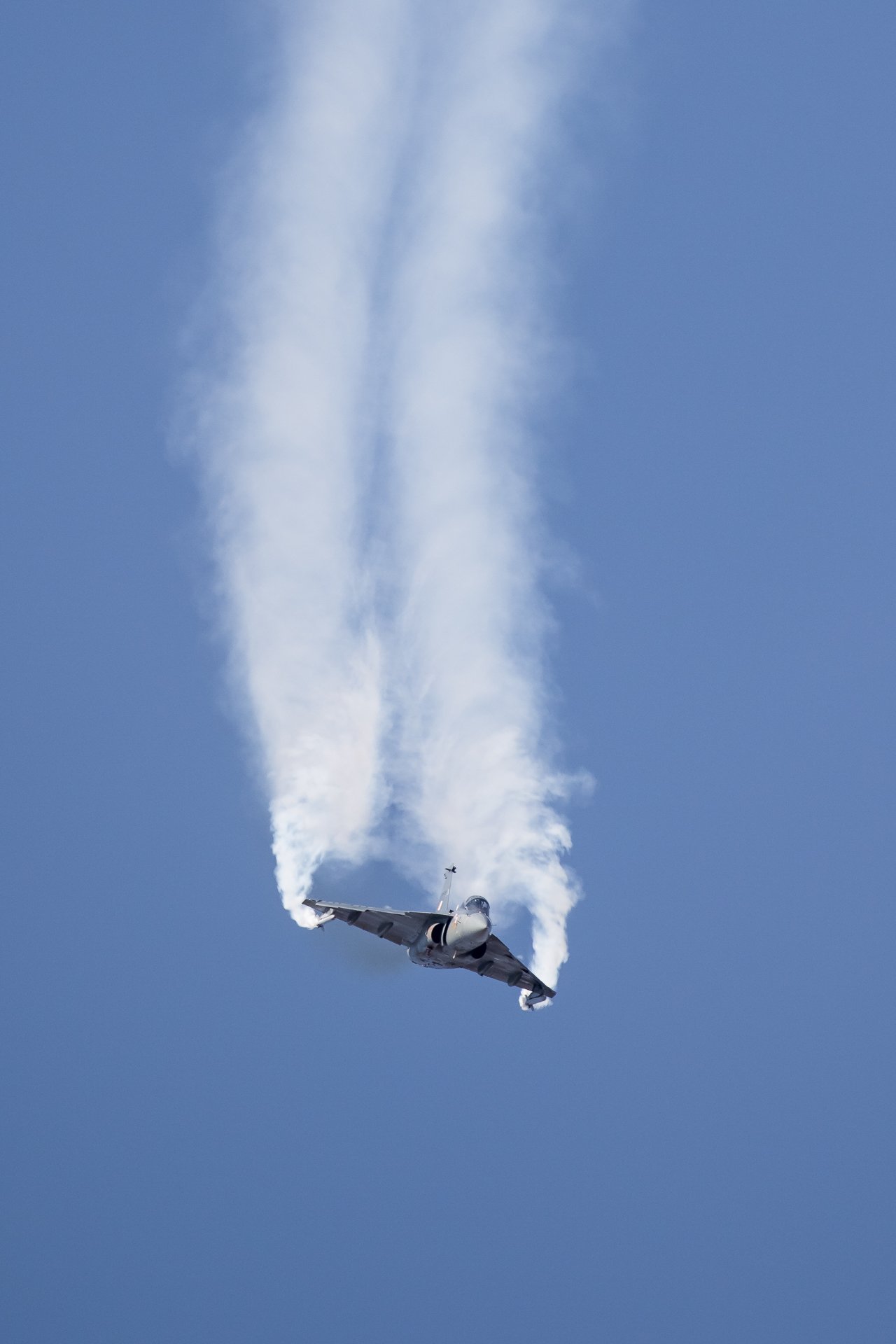
from LIMA 2019
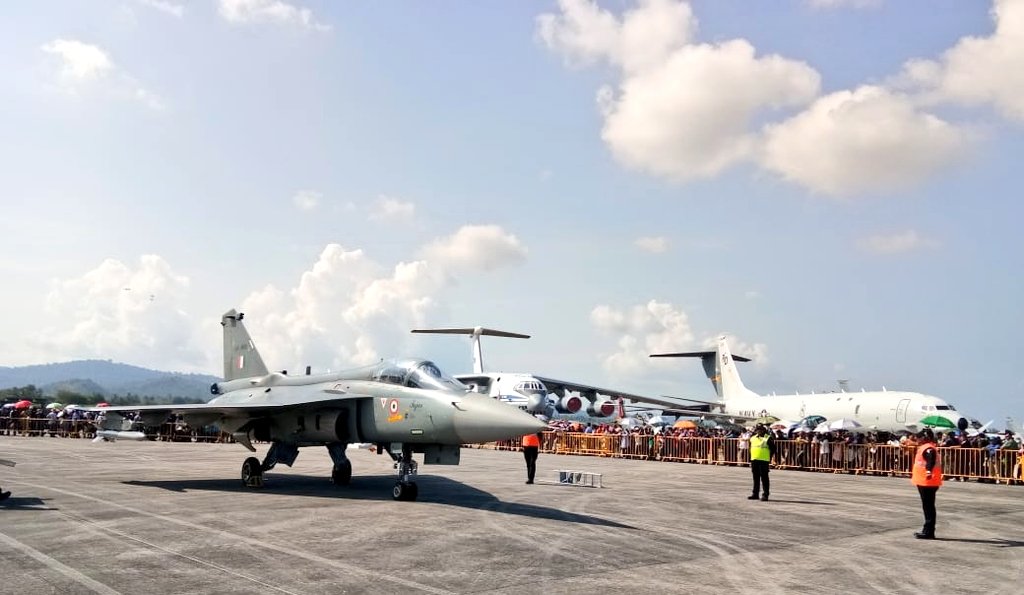
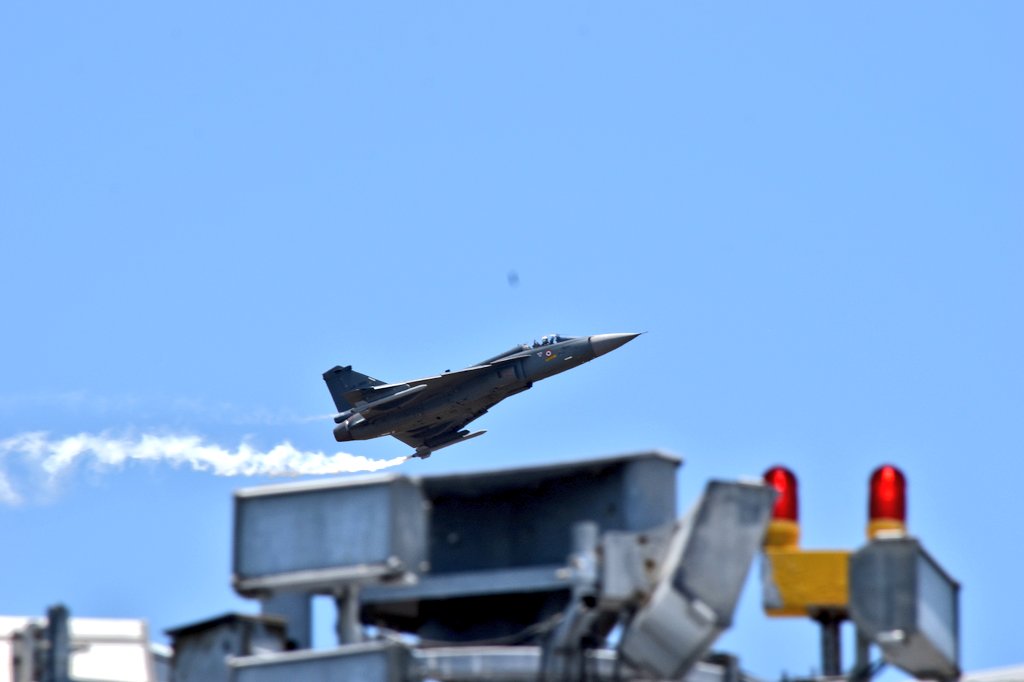
BlackArcherTejas Mk1 of the No.45 Squadron of the IAF at LIMA-2019
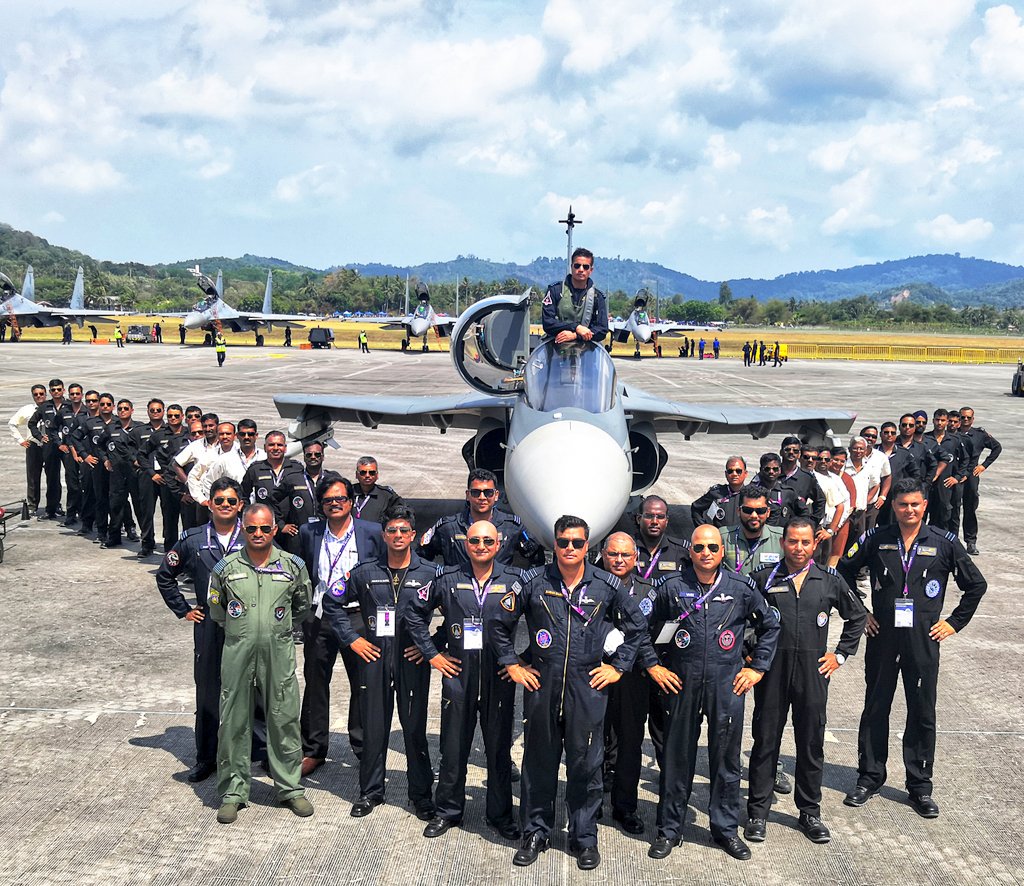
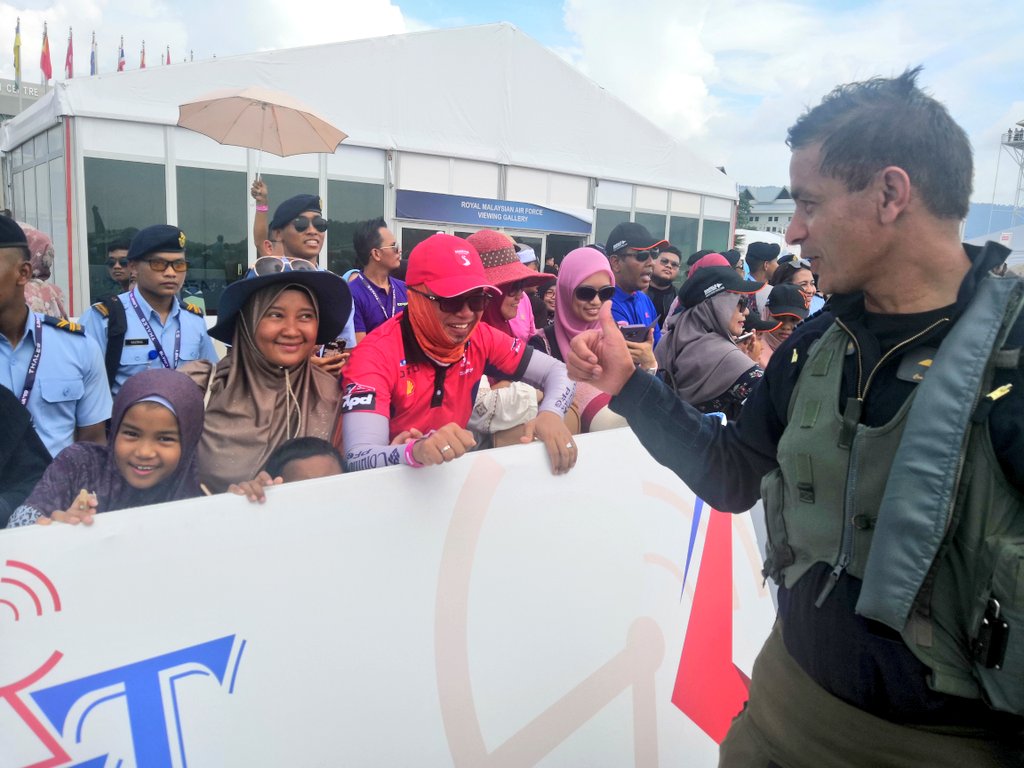
CO of No.45 Squadron, Grp Cpt Samarth “Danny” Dhankar. He was the first IAF pilot (non test pilot) to fly the Tejas Mk1 when it entered service with the IAF
BlackArcherBlackArcherBlackArcherYou see, the problem always has been the hypocrisy of the US and other Western nations. Don’t test out things that you don’t want others to test. Thousands of nuke tests, and then preach non-proliferation to others. Test out anti-satellite missile capability and then tell others how dangerous it can be because it creates space debris. Pollute the earth at a staggering pace for several decades in the mad rush for industrialization and now preach about the effects of exactly the crimes that developed Western nations committed against the environment.
If the US did not set the precedent, no one else may follow or attempt to emulate. Display responsible behaviour by not doing this in IN THE FIRST PLACE!! rather than expect that others will simply listen to what you preach, after you have proven to yourself that you have the capability.
NASA- debris field created by India’s ASAT test
The doomed satellite was at an altitude of approximately 300 kilometers (185 miles) when it was destroyed, a height low enough such that the debris should “decay and fall back onto the Earth within weeks,” claimed India’s foreign ministry after the test. Precedent, however, suggests it could take much longer than that; in 2008, the U.S. destroyed a defunct satellite at an altitude of 250 kilometers (150 miles), and it took about 18 months for all the material to fall back to Earth, according to SpaceflightNow.
Such activities are placed at risk by these kinds of events, he said, and “when one country does it, then other countries feel like they have to do it as well,” he said. The NASA chief is worried about a copycat effect, in which other countries will now feel compelled to demonstrate their own anti-satellite capacity. (Of course, NASA tested its own anti-satellite weapon in 2008.)
NASA, along with the military’s Combined Space Operations Center, estimated that the risk to the ISS increased by 44 percent over a 10-day period. That said, Bridenstine assured the town hall audience that the six people currently on board the ISS aren’t in any immediate danger. The ISS is “still safe,” he said, adding the ISS could be maneuvered if necessary, a contingency he described as having “low” probability.
..


 Sign In








