BlackArcher
More details on the Astra BVR AAM that is slated to enter into IAF service by end of 2019. Will be integrated with the Mirage-2000, MiG-29 and Tejas fighters apart from Su-30MKI. Uses the same Vympel launcher that is already used on these types, allowing for quicker integration. And being a completely made in India missile, will be significantly cheaper than the MICA and Meteor which is emerging as a silver bullet AAM for the IAF. IAF could order significantly larger stocks of Astra for all its fighter types at a much more affordable cost.
Prior to this series of user trials from a batch of 50 LSP Astra missiles by BDL, 27 successful tests had been carried out. The 3 successful ones in this series makes it 30 test shots.
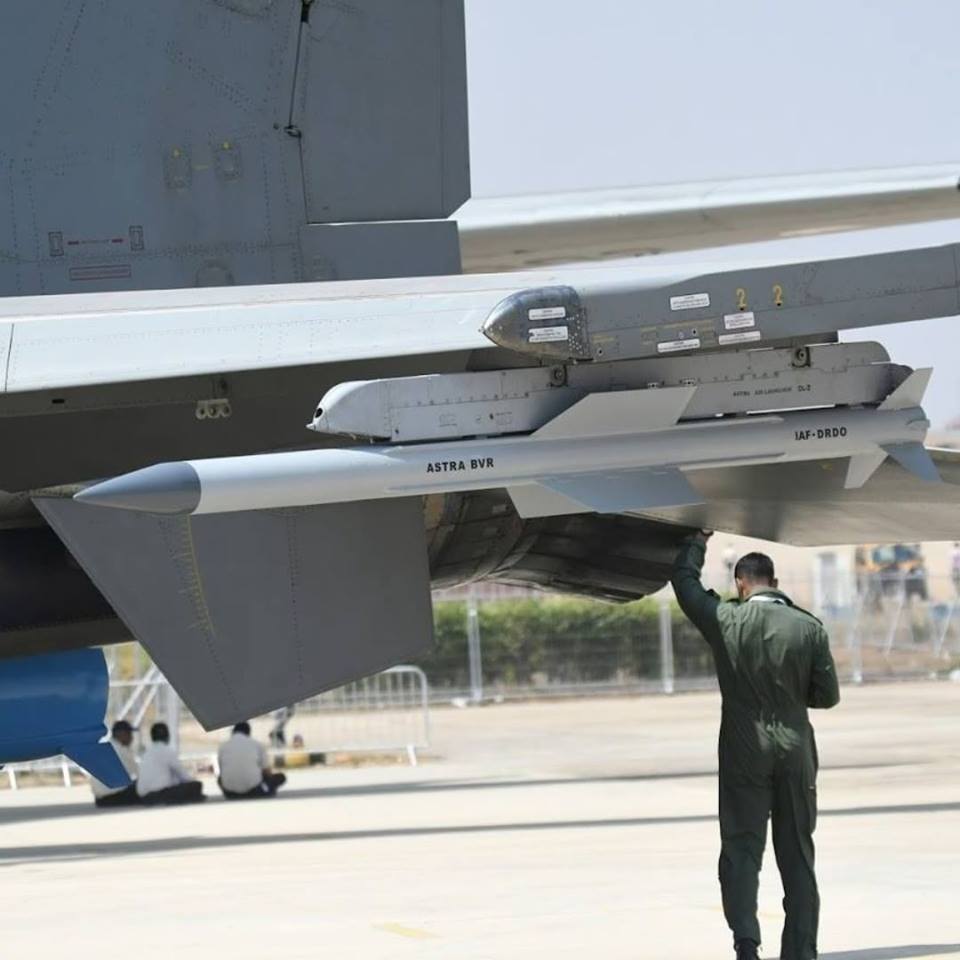
India successfully develops its first BVRAAM
India has successfully developed the ‘Astra’, its first all-weather Beyond Visual Range (BVR) Air-to-Air Missile (AAM) and leaped into a group of few nations that have a weapon system of this capability and performance. The Defence Research and Development Organisation (DRDO) initiated concept studies for developing an indigenous AAM in the 1990s.
The Government of India sanctioned the Astra project in March 2004 with a budget of 995 crore. The Hyderabad-based Defence Research & Development Laboratory, a Missile System laboratory under the DRDO was designated as the design and development (D&D) agency for the Astra missile. During its development, the design of Astra missile went through several iterative changes for improving its control, guidance and propulsion systems as also reduction in weight. Ground testing of the Astra began in December 2012 and the missile was cleared for captive flight trials on the Su-30MKI combat platform in April 2013. The first Astra missile was launched from the Su-30MKI in May 2014 and so far, 27 missiles have been test fired to ascertain and validate its performance.
The Astra is designed to carry 15 kg high explosive pre-fragmented warhead, which is activated by a Radio Proximity Fuse. The missile has good Electronic Counter-Countermeasure (ECCM) to enable unconstrained operation in an Electronic Countermeasure (ECM) environment. The Astra Mark 1, which successfully completed the trials recently, has a maximum head-on launch range of 100 km, a speed of 4.5 Mach and is cleared for launch up to an altitude of 20 km (66,000 ft). The Astra could be launched either by the mother aircraft or fired in buddy mode. The extensive and rigorous trials have successfully validated the Astra missile’s warhead capability, its maximum launch ranges against both head-on and maneuvering targets, its long-range target engagement capability, clear missile-separation at supersonic speeds, launch under high ‘g’ forces and multiple missile launches at multiple targets.
During the trials, the Astra missiles were launched across the entire flight envelope of the Su-30MKI and all of these successfully engaged, hit and destroyed all assigned manoeuvring and non-manoeuvring aerial targets besides meeting with all mission objectives.
After launch, the Astra initially uses ‘Inertial Mid-Course Guidance’ through a secure data-link from the mother aircraft followed by ‘Active Radar Homing’ from its seeker head for terminal guidance.
To absorb delays in the development process of the indigenous active radar seeker, it was decided to develop the Astra missile with Russian ‘Agat 9B1103M’ active radar seeker for terminal guidance. The entire D&D of Astra including the firing trials up to the year 2017, were conducted with the Russian active radar seeker. The decision to use the Russian seeker for D&D and trials phases was a very prudent one as it enabled concurrent engineering and development of both, the missile and its active radar seeker independently.
The Indian Ku-band active radar seeker was developed by DRDO and is now fully functional. This form-fit indigenous seeker has now been installed on all Astra missiles. Thus, today India has its first indigenously developed BVR AAM with indigenous active radar seeker. The Indian Air Force (IAF) being satisfied with Astra’s development and performance, is in the process of placing initial order for 100 missiles in the prototype version on the manufacturer Bharat Dynamics Limited (BDL). Induction of this weapons system into the IAF will commence later this year.
Performance and kill ranges of the Astra Mark 1 is slightly better than the BVR AAM currently employed by our adversaries.
The Astra is already integrated on the Su-30MKI and the IAF will certainly integrate this weapons system with the upgraded Mirage 2000, the MiG-29, light combat aircraft Tejas and may be with the Rafale jets that are expected to start arriving in September this year. The Astra is the first Beyond Visual Range, Air-to-Air Missile that is designed, developed and manufactured by the Indian aerospace industry. Its successful induction will greatly boost the BVR combat capability of the IAF.
After the successful development of the Astra Mark 1, the first BVR AAM, the IAF and DRDO have already started the process to develop Astra Mark 2, an improved version of Astra Mark 1. The Astra Mark 2 will have a head-on launch range of over 100 km along with the capability for ejector launch. It is certain that the Astra Mark 2 will be one of the best BVR AAM capable of outperforming all current BVR AAM except the European Meteor that is coming with the 36 Rafale fighters.
Astra Mk2 will be a dual pulse motor missile. There is another Solid Fuel Ducted Ramjet technology demonstrator that was recently tested out. Will probably mature into an operational AAM in the next 5-6 years.
BlackArcherThird successful test firing of Astra BVRAAM from a Su-30MKI off the coast of Odisha. This time the missile was tested against a live aerial threat at a range of 90 kms.
DRDO Sources: Third firing of Astra Beyond Visual Range Air to Air Missile was successfully carried out by Air Force and Defence Research and Development Organisation today. The missile hit the live aerial target near Odisha at maximum range of approximately 90 km.
BlackArcherInteresting pic from Air Marshal Anil Chopra, former Mirage-2000 pilot.
This was in the year 1999, after he had flown aboard a MiG-31 in Russia. I recall persistent reports back then about the MiG-31 being offered and possible IAF interest in the platform. The interest didn’t translate into anything concrete anyway. The MRCA competition started a few years later.
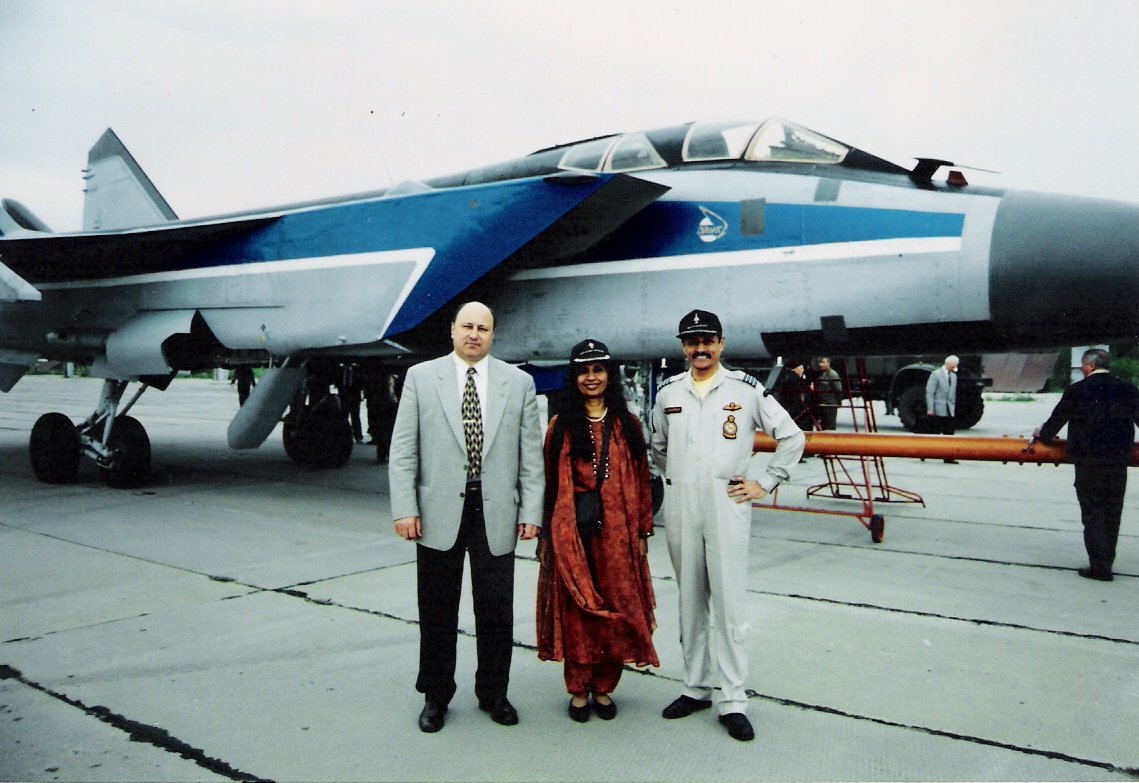
A few days back, someone wanted me to put a picture of the day I flew the MiG 31 in 1999 in Russia. In this picture @NMenonRao our then DCM is Moscow and later Foreign Secy and US Ambassador, and Mr Pankov, Director General of the MiG plant in Nizhnie Novgorad.
BlackArcherNice. clearly the Su-30MKI Will still have a long life forward.
Oh no doubt about it. The Su-30MKI MLU is also planned for sometime in the 2020s. Will keep the oldest MKIs flying for another 15 years at least, and with new ones still being delivered, the IAF will still be operating Su-30s into the early 2060s (given a 40 year/6000 hours service life).
New weapons will keep getting integrated. Next BVRAAM will likely be the i-Derby-ER if Russia doesn’t put a spanner into the plans. Then there’ll be the next Astra variant, the dual pulse Astra Mk2 followed by the SFDR ducted ramjet BVRAAM that is in development. Plus more indigenous air to ground weapons as well. IAF’s hopes of getting Meteor on the Su-30 won’t work out though.
BlackArcherAstra BVRAAM fired from a Su-30MKI successfully engages live aerial target over Odisha coast as part of user trials.


[FONT=Times New Roman][SIZE=16px][COLOR=#222222]Air-to-Air missile, ASTRA, has been successfully flight tested on 16 September 2019 off the coast of Odisha. The missile was launched from Su-30 MKI as a part of User trials. The live aerial target was engaged accurately demonstrating the capability of first indigenous air-to-air missile.
The mission profile was executed in a text book manner. Various Radars, Electro-Optical Tracking System (EOTS) and Sensors tracked the missile and confirmed its engagement with target.
[/COLOR][/SIZE][/FONT]
BlackArcherBlackArcherBlackArcherBlackArcher
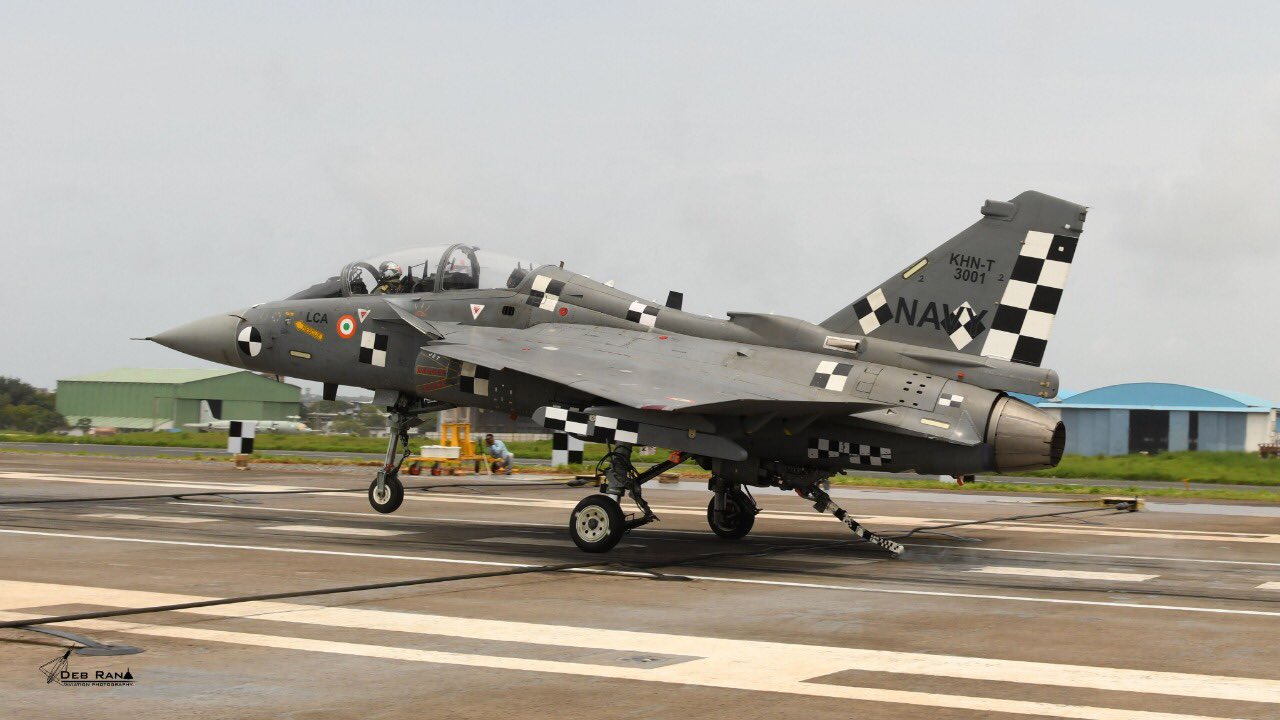
Read more about this beautiful livery here
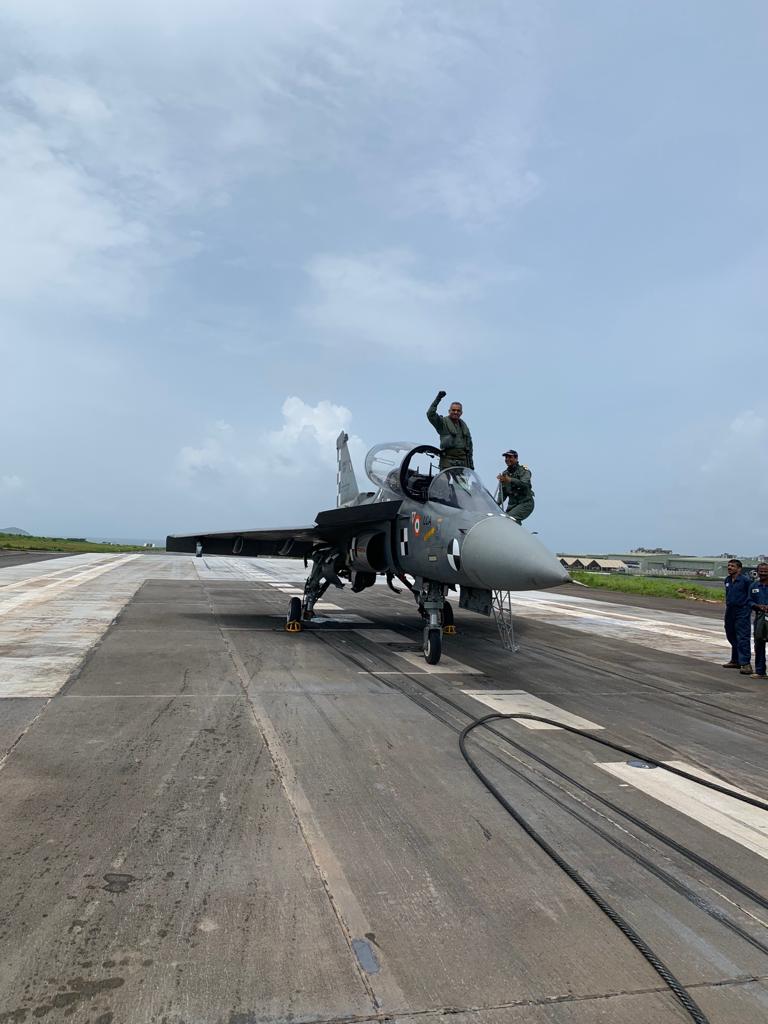
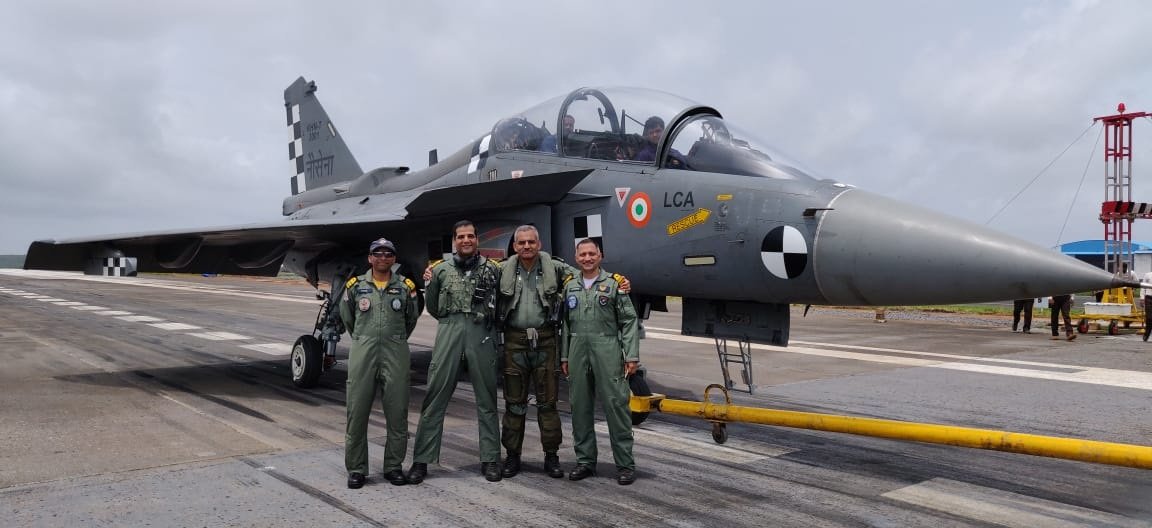
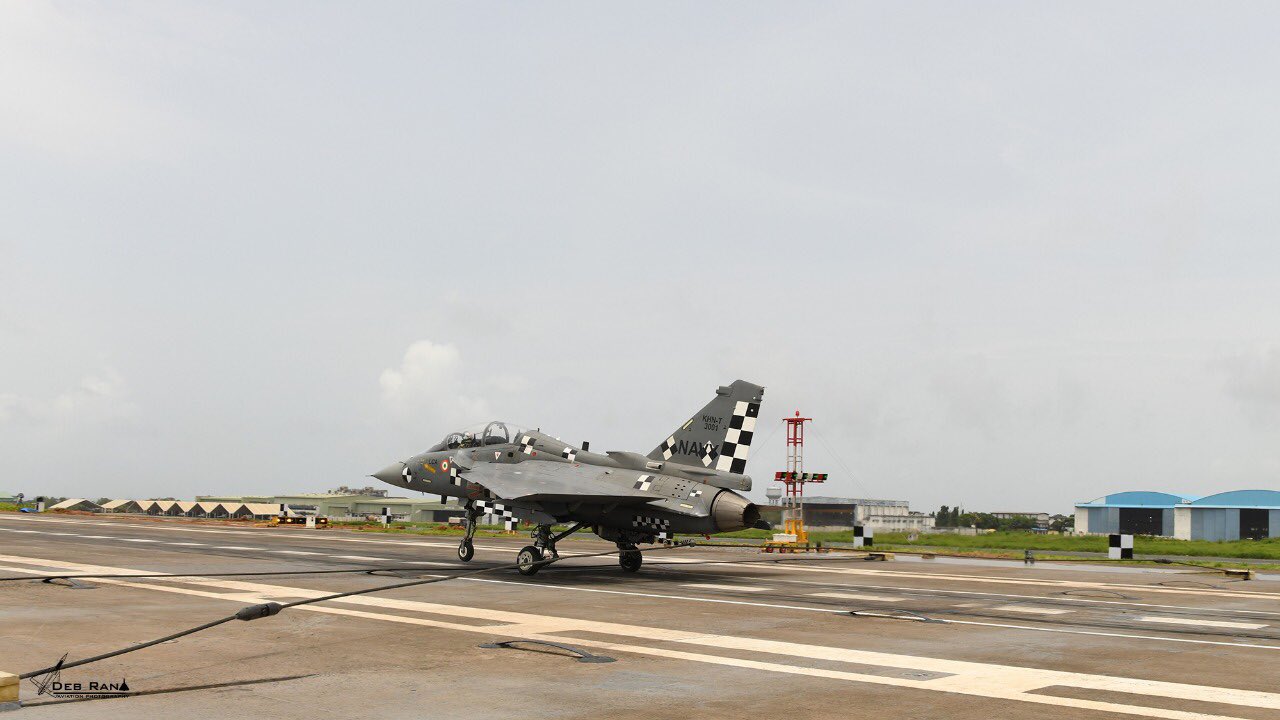
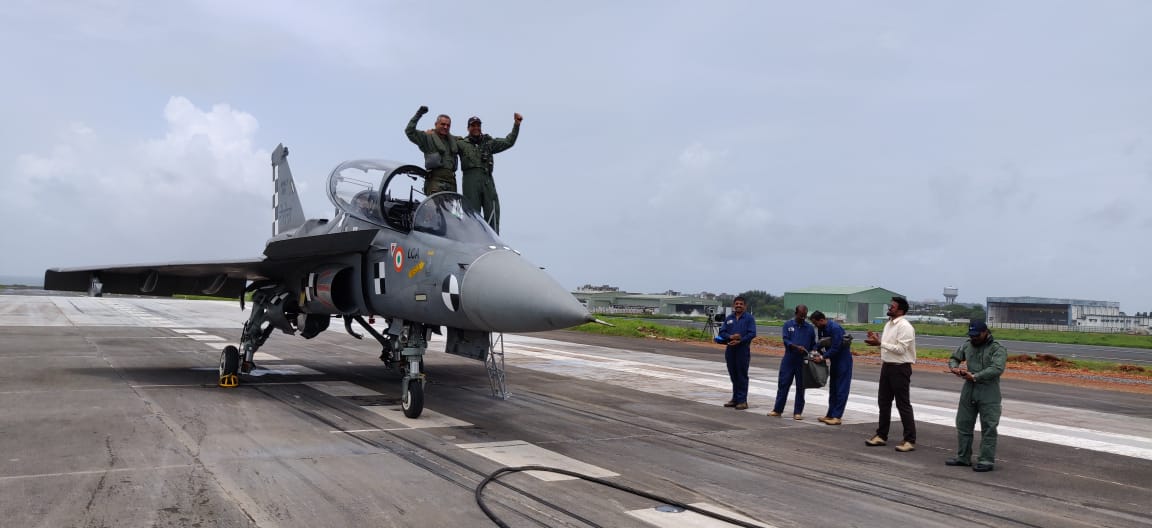
BlackArcherAnother image of LCA Navy NP-1 just after the successful arrested landing trial
BlackArcherIAF places another huge order for Akash SAM systems with Bharat Electricals Limited (BEL). Total of 7 Squadrons worth. Deliveries to be completed in 3 years time.
MR-SAM (Barak-8), S-400 and Akash deliveries will mean the IAF’s SAM systems will see a quantum jump in capabilities in the coming 3-4 years. All tied into the IACCS network so that all radars and SAM systems are able to see the same picture.
BEL bags Rs 5357 crore defence ministry contract for Akash missile system
BENGALURU: Navratna Defence PSU Bharat Electronics Limited (BEL) Friday said it has won order worth Rs 5,357 crores for seven squadrons of Akash Missile System for the Indian Air Force.
BEL has signed a contract with the Ministry of Defence on Friday for procurement of seven squadrons of Akash Missile System for the Indian Air Force, the company said in a statement.
This was a turnkey contract with specialist infrastructure, it said.
According to BEL, the total value of the contract is Rs.5,357 crores and the delivery will be completed in three years.
These systems will be commissioned at seven Air Force locations spread across the country, it added.
BlackArcherLCA Navy Mk1 prototype NP-1 achieved the first arrested recovery ever. The first for an indigenous Indian airplane. Joining a select group of nations that have done it with their own naval fighter designs- US, Russia, France and the UK. I don’t count China in this since the J-15 is a reverse engineered Su-33.
Image credits to their respective owners.


 Sign In