 parleegee
i read somewhere that the exhaust plume(ionized gas) of the SR-71 had a very large RCS. Because of the large RCS, ample time would be given to the enemy to hide sensitive assets before SR-71 can overfly the intended targets. Airport civilian radars can detect the SR-71s at hundreds of miles away.
Is there any truth to this?:confused:
parleegeephoto of moon’s surface taken by Japan Kaguya lunar orbiter:

Source: jaxa.jp
parleegeering laser gyro (for aerospace applications) from Japan:

Source: jae.co.jp
parleegeemore news on China first lunar probe:
Chang’e-1 completes long journey to moon successfully
November 07, 2007China’s first lunar probe, Chang’e-1, completed its 1,580,000-km flying journey to the moon successfully on Wednesday morning and entered its working orbit.
The probe, following instructions of the Beijing Aerospace Control Center (BACC), started its third braking at 8:24 a.m. and entered a 127-minute round polar circular orbit at around 8:35 a.m. after completing the braking.
The TV pictures showed gray-haired Luan Enjie, chief commander of China’s lunar probe project, and also silver-haired Sun Jiadong, chief designer of the project, wearing smiles and holding hands together tightly.
“It puts a successful end to the probe’s long flight to the moon,” Luan said.
“The satellite entered the designed working orbit just in time and very accurately today,” said Sun, who has joined hands with Luan for more than a decade to develop, test and carry out the country’s ambitious lunar probe project.
“The probe will travel along the orbit at a stable altitude of 200 km above the moon’s surface. In each circle, it will always pass the two polars,” said Wang Yejun, chief engineer of the Beijing Aerospace Control Center (BACC).
The round orbit is also the final destination of the probe, where it is supposed to start carrying out all the planned scientific exploration tasks.
It was originally designed to stay on the orbit for one year, but a researcher estimated that fuel saved by smooth operations and precise maneuvers may prolong its life span.
Chang’e-1, named after a legendary Chinese goddess who flew to the moon, blasted off on a Long March 3A carrier rocket on Oct. 24 from the Xichang Satellite Launch Center in southwestern Sichuan Province.
Source: gordonblade@CDF
parleegeehere are some answers for you
The Python 5 has a new inertial measuring unit with a fibre optic gyro, produced by IAI. This FOG IMU gives the missile its new Lock-On After Launch capability (LOAL) by providing midcourse guidance. …
IMHO, most likely a Honeywell ring laser gyro. Honeywell manufactures a complete line of ring laser gyro.
parleegeeThe F-22 Raptor still carries a 20mm cannon. Wonder why?
parleegeeNope.
Can’t remember Hobson’s ‘Vietnam Air Losses’ mentioning even one US blue-on-blue kills during the Vietnam war. Matter of fact, BVR launches were strictly forbidden in the rules of engagement.
Can’t think of any fixed-wing air-air combat fought out with machine guns either, btw. Cannon, yes. And still plenty of missiles.
The original F-4 Phantoms did not come equipped with 20mm cannons(or .50 cal machine guns). It just relied totally on Sidewinder missiles to engaged enemy aircrafts. Something happened during early part of air war caused US to add cannons to the F-4s. I believed it was attaching a gun pod beneath the fuselage.
Moral of story, just make sure who or what you’re shooting at before opening fire.
parleegeeRegarding Post # 220, 221, 222:
There’s no mention of AESA radar. Is F-16I equipped with AESA radar?
parleegeewinner of the contest F-16I will shot down the J-10 any time since the Python is better than the PL-9
It’s very possible the F-16I can shoot itself down.
From the above diagram, what’s going to prevent the Python from locking on and striking the tail end of the launch aircraft, if it missed the first hit opportunity?:o
parleegee… The J-10 only represents a threat in dogfight with guns
During the Vietnam War, American planes were accidentally shooting down other American planes with missiles, because at far distance they can’t see if the target is friend or foe. So in the end, many of the air combats involved just using the plane’s machine guns, because of fear of shooting down friendly aircrafts.
parleegeeChina’s lunar probe:
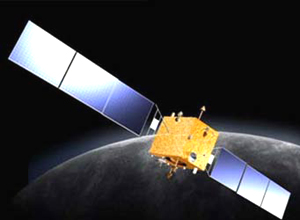
BEIJING, Oct. 29 (Xinhua) — China’s lunar probe Chang’e-1 completed its third orbital transfer on Monday afternoon, one more step forward in its 1,580,000-km journey to the moon. Instructions for the orbital transfer was issued by the Yuanwang-3 space tracking ship in south Pacific at around 5:56 pm. At around 6:01 pm, the probe was successfully transferred to a 48-hour orbit with an apogee of 120,000 km, up from the former 70,000 km. It will stay on the orbit until Oct. 31, when it is expected to enter the earth-moon transfer orbit, a critical point that may determine whether the satellite can fly to the moon successfully or not, according to experts at the Beijing Aerospace Control Center (BACC). Ultraviolet image sensors installed on the satellite will begin to work to collect information on the earth and the moon after it enters the 48-hour orbit, Wang Yejun, chief engineer with the BACC told Xinhua. It’s the first time that an ultraviolet image sensor is put into actual use on a satellite, though a few countries had tested them on the ground, Wang said. The images Chang’e-1 collects will be transmitted back to the earth when it enters the lunar orbit, Wang said. Since Saturday, surveillance posts, on land and sea, and four astronomical observatories have kept watching over Chang’e-1. According to the data received so far, all systems of the satellite have been working normally. The lunar probe completed its first orbital change on Oct. 25, in which it was transferred to a 16-hour orbit with a perigee of about 600 km from 200 km. The probe completed its second orbital transfer on Oct. 26, which made it move on a 24-hour orbit with an apogee of 70,000 km, up from the former 50,000 km. Chang’e-1, named after a mythical Chinese goddess who, according to legend, flew to the moon, blasted off on a Long March3A carrier rocket at 6:05 p.m. on Oct. 24 from the Xichang Satellite Launch Center in the southwestern province of Sichuan. The 2,300-kg satellite is expected to arrive in the moon’s orbit on Nov. 5. It carried eight probing facilities, including a stereo camera and interferometer, an imager and gamma/x-ray spectrometer, a laser altimeter, a microwave detector, a high energy solar particle detector and a low energy ion detector. It will fulfill four scientific objectives, including a three-dimensional survey of the Moon’s surface, analysis of the abundance and distribution of elements on lunar surface, an investigation of the characteristics of lunar regolith and the powdery soil layer on the surface, and an exploration of the circumstance between the earth and the moon.
The satellite will relay the first picture of the moon in late November and will then continue scientific explorations of the moon for a year. China’s lunar orbiter project has cost 1.4 billion yuan (187 million U.S. dollars) since research and development of the project was approved at the beginning of 2004.
The launch of the orbiter marks the first step of China’s three-stage moon mission, which will lead to a moon landing and launch of a moon rover at around 2012. In the third phase, another rover will land on the moon and return to earth with lunar soil and stone samples for scientific research at around 2017.
China carried out its maiden piloted space flight in October 2003, making it only the third country in the world after the former Soviet Union and the United States to have sent men into space. In October 2005, China completed its second manned space flight, with two astronauts on board. The launch of Chang’e-1 came shortly after Japan launched its first lunar probe, Kaguya, in mid-September, while India is planning to send its own lunar probe into space next April, sparking off concerns of a space race in Asia. But Luan Enjie, chief commander of China’s lunar orbiter project, said that “China will not be involved in moon race with any other country and in any form.” “China will, in the principle of pursuing a policy of peaceful use of airspace, share the achievements of the lunar exploration with the whole world,” he told Xinhua.
parleegeethis is the forerunner of the J-10, the J-9:
Chengdu J-9
J-9: The J-9 project ran in parallel with the J-8 project but used a completely new airframe. The design target maximum speed was Mach 2.4 at above 20,000 metres altitude. In order to achieve this target the J-9 was fitted with an 8,500kg thrust turbojet engine and the 601 Institute initially used a tailless delta design. Development at this point shifted to the newly built 611 Institute and the Chengdu Aircraft Factory. At the beginning of the 1970s, the 611 Institute proposed a new design using a canard ahead of the delta wing (not dissimilar to the Swedish Viggen), but because it required new materials and know-how plus engine performance problems it wasn’t until 1975 before the design could be completed. The new J-9 design was quite advanced with air intakes on the fuselage sides featuring variable inlet geometry to alter the compression mixture. It used a 12,400 kg wet thrust turbofan engine and featured a Type 205 radar (search range about 70km) and four PL-4 radar-guided air-to-air missiles. The J-9 plan was discontinued in 1980. However, the effort was not totally wasted as the J-9 development enabled Chinese engineers to gain experience with the canard layout type, experience that would prove useful in the J-10 project.
Source: china-defense.com
… According to some sources, the design of China’s Chengdu J-10 fighter was influenced by the Lavi, with Israeli cooperation. However, the designer of the J-10, Song Wencong, has denied any connection whatsoever with Lavi program, pointing to similarities with the J-9, which predates the Lavi.
Source: wikipedia.org
apparently the J-9 predates the Lavi by at least 5 years.
… The Lavi project began in February 1980, when the Israeli government authorized the IAF to present it with a list of technical specifications for the development of the IAF’s future fighter. The development stage began in October 1982, with the choice of a Pratt & Whitney engine already having been made.
Source: wikipedia.org
parleegeeI believe the Israeli traveled back in time, in their time machine to 1945, and then copied the canard layout from the Japanese.
J7W1 Shinden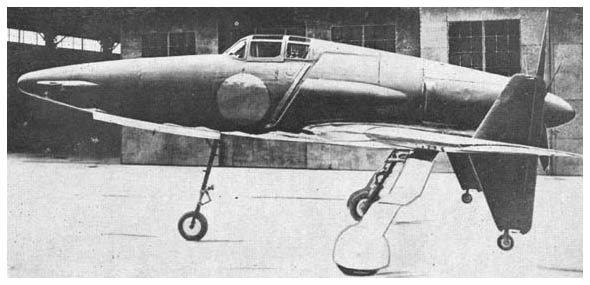

Typical of aircraft designed towards the end of WWII, this particular one never got beyond the planning stage. In fact, the aircraft it is based upon, the J7W1 Shinden, only made three flights before war’s end. The J7W1 was designed to be a high performance interceptor, whose goal was to be able to quickly rise to meet attacking bombers and to have sufficiently heavy armament to bring them down.Initial testing was done using MXY6 gliders to see if the unusual canard configuration was workable. One of these gliders was later powered by a small engine and proved the feasibility of the design. Work was then started on the prototype in June 1944. and completed in ten months, a very quick pace for any new aircraft. Armament was to be 4 30mm cannon, more than enough for the job. A supercharged 2,130 hp Mitsubishi MK9D 18 cylinder radial pushing a six bladed propeller was installed in the aircraft. Despite not having flown, the type was ordered into production, however the end of the war prevented that from reaching fruition.The three flights made in August of 1945 showed a strong torque pull during takeoff and a great deal of vibration in the prop due to the required extension shaft. A second prototype was built, but not flown. This aircraft was taken to the US and I believe is part of the NASM collection in Washington DC.The J7W2 Shinden-kai was to be a jet powered version of the J7W1. The radial engine was to be replaced by a 2,000 lb thrust Ne-130 turbojet. The type was never constructed but would have been a logical progression. A similar conversion from piston to jet aircraft was done in Sweden when the Saab J-21 piston engined fighter was adapted to a jet engine and produced as the J-21R
Source: modelingmadness.com
parleegeeMy own theory is that the J-10 is based on Japan’s FSX, not Israel Lavi.

Having said that, here’s a list of aircrafts with canard layout:
*[[AEA Silver Dart]]
*[[Atlas Cheetah]]
*[[B-1 Lancer]]
*[[Beechcraft Starship|Beech Starship]]
*[[Berkut 360]]
*[[Chengdu J-9]]
*[[Chengdu J-10]]
*[[Cozy MK IV]]
*[[Curtiss-Wright]] CW-24B
*[[Curtiss-Wright]] [[XP-55 Ascender]]
*[[Dassault Rafale]]
*[[Eurofighter Typhoon]]
*[[Grumman X-29A]]
*[[IAI Kfir]]
*[[IAI Lavi]] the “Chosen One”, so they must invented it
*[[Kyūshū J7W|Kyūshū J7W1 ”Shinden”]]
*[[McDonnell Douglas]] (now [[Boeing]]) [[F-15 S/MTD]]
*[[Mikoyan-Gurevich MiG-8|MiG-8 ”Utka”]]
*[[Miles Libellula]]
*[[SM-64 Navaho|North American SM-64 Navaho]]
*[[North American X-10]]
*[[Peterson 260SE]] (a [[Cessna 182]] with an added canard for [[STOL]] operations)
|
*[[Piaggio P180 Avanti]] (fixed canard)
*[http://ibis.experimentals.de RJ.03 IBIS]
*[[Rockwell-MBB X-31]]
*[[Rutan Defiant]]
*[[Rutan Long-EZ]]
*[[Rutan Quickie]]
*[[Rutan VariEze]]
*[[Rutan VariViggen]]
*[[Santos-Dumont 14-bis]]
*[[Saab Viggen]]
*[[JAS 39 Gripen|Saab Gripen]]
*[[Steve Wright Stagger-Ez]]
*[[Sukhoi Su-30 MKI]]
*[[Sukhoi Su-33]]
*[[Sukhoi Su-35]]
*[[Sukhoi Su-37]]
*[[Sukhoi Su-47]]
*[[Sukhoi T-4]]
*[[Tupolev Tu-144]]
*[[Velocity SE]]
*[[Velocity XL]]
*[[Wright Flyer]] Wilbur and Orville should be given credit for the canard
*[[XB-70 Valkyrie]]
source: wikipedia.org
parleegeeOf course the great irony is (and these are not my words) that the result thus far has been that China has developed one of the most effective industrial espionage infrastructures the world has ever known producing an endless supply of usable knowhow and technology that far exceeds what could ever have been obtained taking even the most open of legal roots, and the Chinese can do what they like with it once they have it.
Can’t really blame the Chinese. The “spies” are unscrupulous American citizens working in the defense industries willing to sell secrets to anybody with cash.


 Sign In








