 Stan
StanFloat plane prices sound about right from memory- if you can get on a trip when they are dropping off or collecting from Gozo. Two water landings and take offs on the same journey:cool:
StanIf you take the Bus to Hal far from Marsaxlokk .
Having visited on several occasions, unless you really want to go out of the way, take the bus anywhere. They are cheap, frequent and once you see Maltese driving and parking……
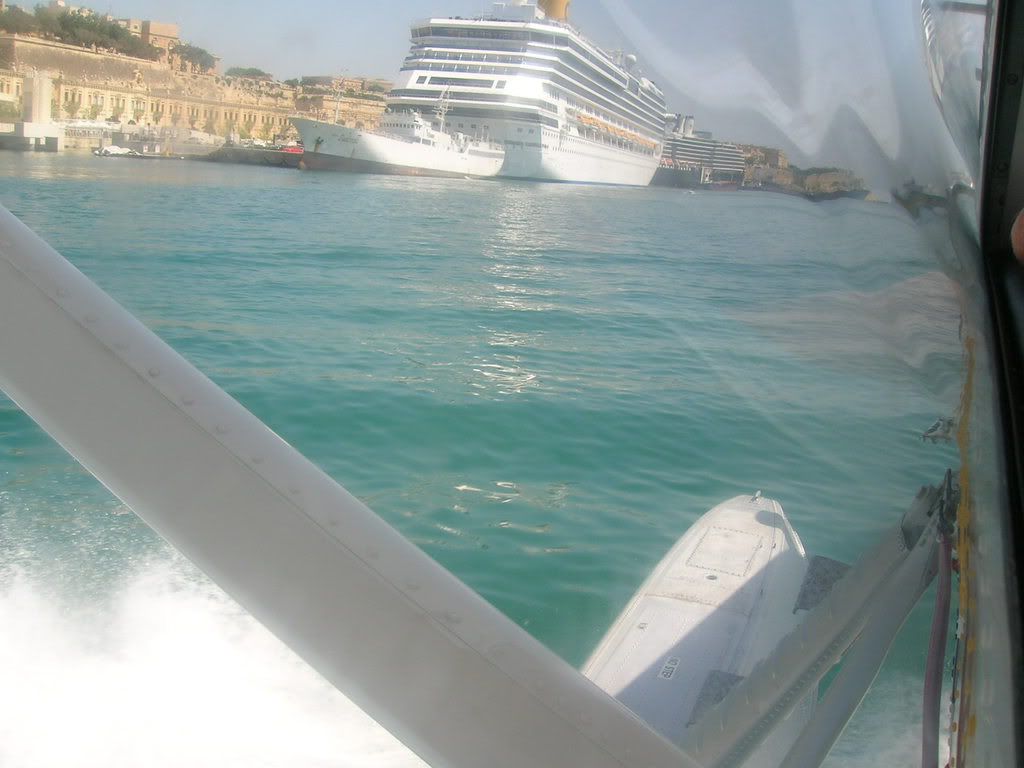
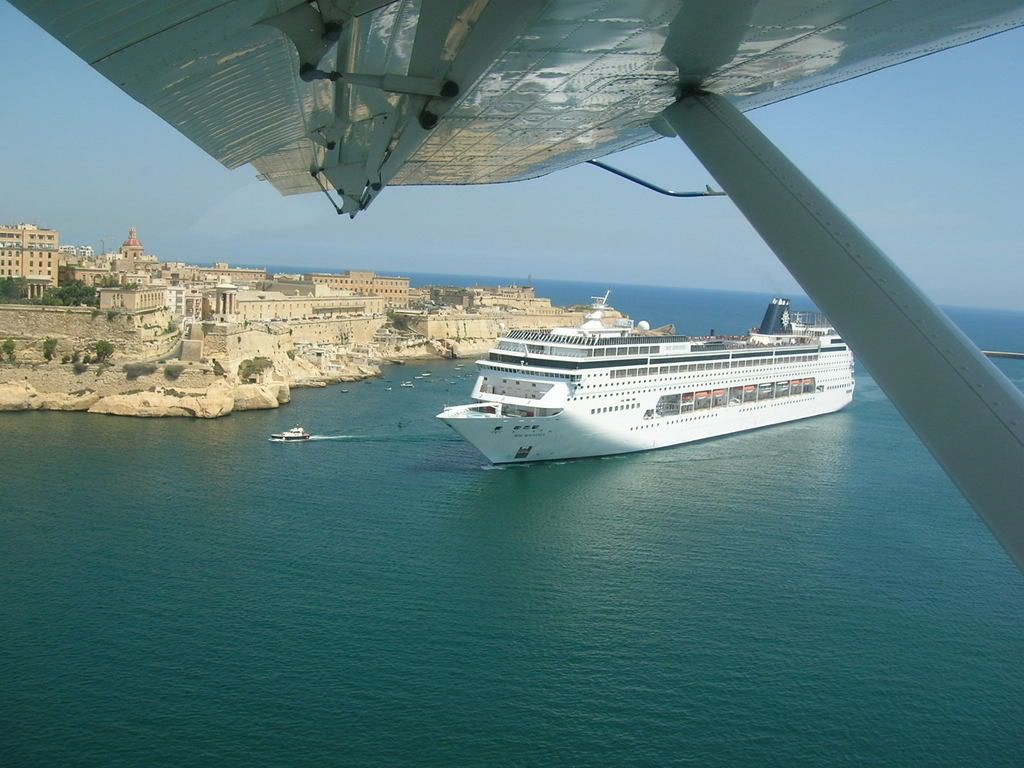
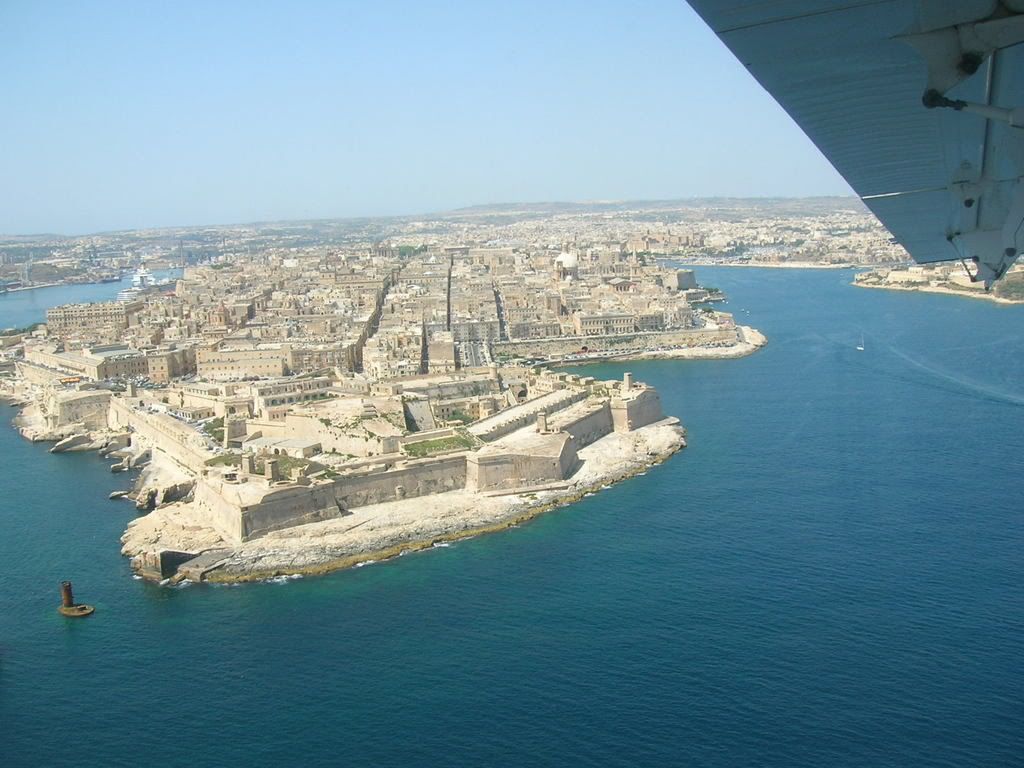
I don’t know what your budget is but if you can run to it take a trip with Harbour Air out of the Grand Harbour- either sightseeing or to Gozo. Landing and taking off in the Grand Harbour has to be one of the great aviation experiences (Rather like the old landing at Kai Tac but on water!). You can pay a little extra to sit up front with the pilot but it books up early so you may be better to do it in advance.
I’m trying to find some of the photos I have of Ta’qali- if there’s an appetite for more I’ll post them later.
I know this should really be over in modern, but given the thread I hope you’ll forgive me this once!

StanMartin
I’m quite well travelled but it’s my favourite place on earth- be warned though it’s a little like Marmite; you’ll love it or hate it.
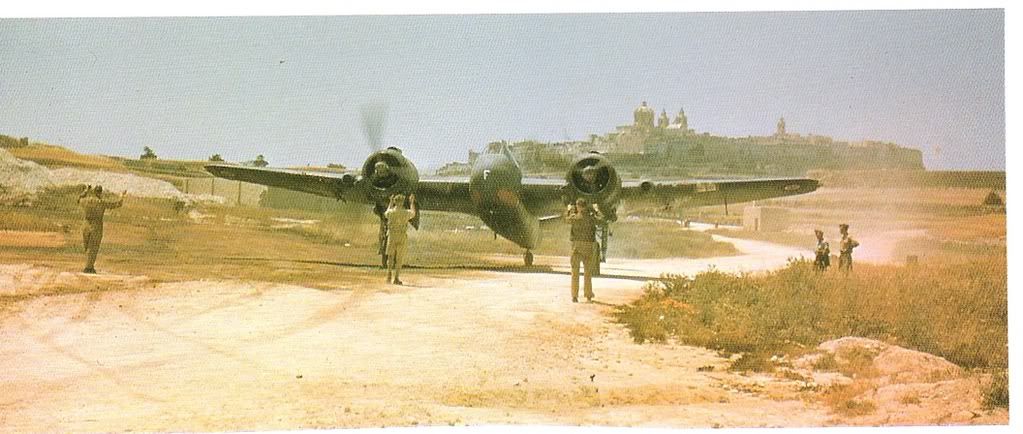
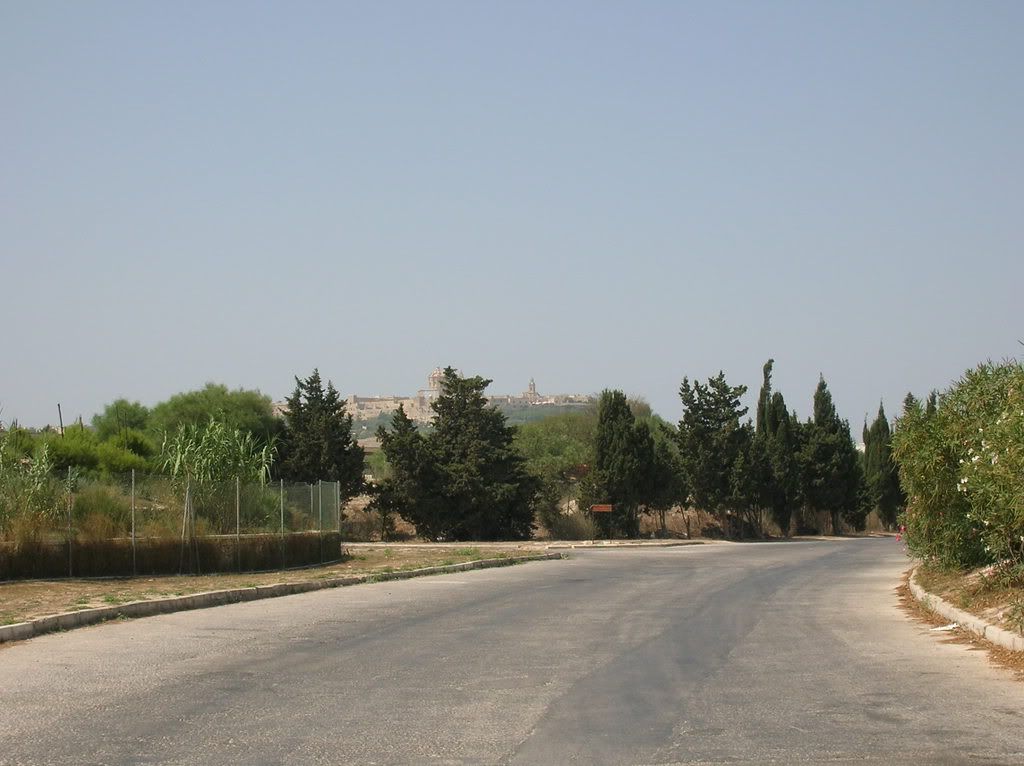
There is plenty to see, Ta’qali is a major tourist draw with a craft village occupying plenty of old RAF buildings and the runway being part of the main road. It’s awhile since I went to Hal Far, but I think industrial estates have built up around it- it too is home to a tourist draw- the Playmobil Park.
The Malta Aviation Museum is world class and the capital, Valletta has something for everyone. We haven’t booked anything yet so I’m quite jealous.
Although it’s not quite spot on this may stimulate your appetite:
StanI think that the brevet is post war- it certainly isn’t connected with the Observer’s brevet as you suggest. At the outbreak of WW2 there were only two categories of aircrew; pilot and observer. (Air gunners were an ad hoc trade). In September 1915, a brevet consisting of a half wing joined to the letter ‘O’ was authorised for wear by qualified officers who performed the duties of second aircrew member. Two months later the wearing of the brevet, often referred to as the ‘flying ********’ for obvious reasons, had been extended to qualified Warrant Officers and NCO’s. At this time the role of the Observer was to act as second navigator and to undertake the roles of gunner, bomb aimer and perform any other sundry tasks such as photography. The reduction of RAF strength in the post First World War period led to return of the pre 1915 situation whereby the only fully trained crew member was the pilot, all others being part timers who received a minimum of on-squadron training. The introduction of more modern aircraft in the 1930’s and a change of philosophy, led to a re-appraisal of aircrew training. One outcome was the re-introduction in October 1937, of the ‘O’ brevet. Qualification for wearing the brevet included:
• Passing an Observer’s course
• Serving on a squadron for six months
• Flying 50 hours as an observer
• Recommendation by squadron commander
This solved the problem for a short while, but meant that an Observer was a highly trained individual capable of, in modern parlance, multiple tasking. Whereas an individual trained in navigation, wireless operating, bomb aiming, photography and basic flight engineering was an acceptable solution in the aircraft equipping the RAF at war’s outbreak. It was a very costly and time-consuming method of training crews for the complex heavy bombers that emerged as the war progressed. For this reason other trades were introduced and the observer’s classification was finally withdrawn in 1942.
StanAs the above posts I’m afraid that the answer to exactly how isn’t going to come easy. There is a two volume work ‘The Distinguished Flying Cross and How It was Won’ by Carter (Get it from the library as it’s well over £100- if you can find a set), if a citation has been found and commercially published it will be in there; but chances are it will repeat the Gazette details already listed above.
About 21,000 DFC’s were awarded in WW2, not all citations were recorded in the London Gazette and not all of the remainder have survived. Those that exist are held at the National Archives but unfortunately they aren’t listed alphabetically in one section- they are spread amongst other files by Theatre, Command or Group. If you really wanted to go down the research route at the very least it would be a trip to the National Archives or you could employ a private researcher to do the work for you. Looking at the Squadron Operations Record book may give some clues, but again you will need to visit the National Archives and spend some time looking through it.
It’s not impossible to achieve but at the end of this effort I would suggest that you’ll probably end up with something along the lines of: ‘This Officer has completed X number of sorties over enemy territory and at all times has shown exemplary leadership and coolness’
None of the above in any way whatsoever minimises the amount of courage shown by your friend or other DFC winners. To quote an oft used phrase ‘there was a war on’, keeping paperwork for future generations simply wasn’t high on the agenda.
StanI think Ian is spot on with his identification. Honour The Air Forces (roll of WW2 RAF awards) shows only one Phillip Bentley
187574 Philip John BENTLEY. P/O 158 Squadron London Gazette 27/3/45 page 1645. (General citation)
In Brave Company by Chorley (158 Squadron History) lists Bentley on its roll as an Air Bomber. He isn’t indexed as featuring in the text but the book may be of interest anyway- probably second hand or your local library should be able to order a copy for you to borrow.
I may be putting two and two together and making five but Air Bombers weren’t usually first in the queue for either commissions or awards so I’d go for recognising a large amount of operations flown rather than one act of bravery.
StanThanks Jim/Barf
Much appreciated
StanLooks like it’s a Friendship, sunk for divers (about 4/5 of the way down this page)
http://www.vrcurassow.com/2dvrc/sscuracao/alm/ALM_history.html
StanFor what it’s worth
‘Footsteps in the sands of time’ (list of Bomber Command POW’s) has two Savages listed, but no Alan:
Savage CT 622 Squadron
Savage R 434 Squadron (RCAF)
‘Unsung heroes of the RAF’ (Far EAst POW’s) has no Savages listed at all.
Of course he could have belonged to another Command, or flown in a different theatre of Op’s.
StanIs it a Transport Command Crest?
StanTry contacting the voice archive at the Imperial War Museum, they may be able to help.
StanThanks; from the posts above, a search on Google earth shows that someone has linked a ‘Panoramio’ shot ‘View from Tunstall Hill over Ryhope..’ that shows some ‘chalk walls’ (clearly geology not my thing!) on the embankment which just about matches some shots at the Yorkshire Air Museum of the crash site. So the question still stands- is it worth an afternoon poking about?
StanSorry- should have been more specific, I was referring to the Barton VC crash at Ryhope.
😮
StanI’m no expert on flying clothing but I am lucky enough to own the archive of Beadon’s Wireless Operator John Mason and have looked into Beadon’s career as a result. What follows below is mainly a combination of Beadon’s Daily Telegraph obituary, extracts from Graham Pitchfork’s ‘Shot Down and on the Run’ and a small amount my own research.
I have a nice letter from Beadon to his ex- W/Op after he arrives at Air HQ in which he talks about the survival work he’s engaged in. Shot Down and on the Run features a couple of stories involving Beadon suits (and is worth a read anyway).
582, I’d be interested (by pm if you prefer) what a Beadon Suit goes for and/or if anyone else has any leads on a decent example.
Clive Vernon Beadon was born at Conoor near Poona, India, on April 15 1919. He was the elder son of Col. Vernon Beadon MC, of the 9th Gurkhas, and his wife Beryl Martin, a member of the banking family.
Beadon was educated at the Imperial Service College, Windsor, from where he won scholarship to Sandhurst – but he then elected, to his father’s dismay, to go to the RAF College, Cranwell. Commissioned in 1939, Beadon began his career in No.101, a Blenheim training squadron.
After the outbreak of the war he moved No 502, a Whitley bomber squadron operating for Coastal Command from St. Eval in Cornwall. In September 1940 Beadon qualified as a flying instructor at the Central Flying School and spent the next two years training pilots. In September 1942 he was posted to No. 1 Middle East Ferry Control, and three months later moved on to India where he flew Wellington bombers with 99 Squadron against the Japanese in Burma.
Beadon completed his overseas tour on the operations staff at HQ Air Command, South-East Asia. He was one of the first officers to recognize the need for improvements in survival aids and was assigned the task of developing this discipline on his arrival at Air HQ New Delhi in March 1943. With F/Lt Brathwaite he produced Under the Greenwood Tree and the Jungle Hiker- booklets aimed at promoting survival for downed aircrew.
He recognized that the clothing worn by aircrew was entirely unsuitable for flying over jungle terrain. The existing pattern of flying clothing was too hot and heavy and aircrew had taken to wearing shorts and alight shirt. Many wore soft suede or ‘desert boots’ that proved totally useless in the jungle. Beadon decided that he would design a lightweight flying overall in khaki drill, which would meet the three basic requirements of:
1. Protection in the air against fire
2. Protection on the ground
3. Providing a means of carrying survival and escape aids
The overall had to be capable of carrying a much-enhanced range of survival and escape aids. These fell into four categories: a comprehensive range of medical, marching and survival aids and the overall itself.
Fitting the overall to take sufficient pockets to take the small containers of aids solved the problem of stowing them in a convenient place in the air so they were not left behind when the aircraft was abandoned. Beadon incorporated a satchel, which fitted into the back of the suit with webbing shoulder straps and a belt, and could be detached once on the ground. Normally the aids were carried in flight in the pockets, and on landing they were transferred to the satchel, which could be carried comfortably as a small haversack. For aircrew flying bomber and transport aircraft , a small haversack with snap fasteners was added into which the bulk of equipment was packed and kept close at hand in the air. In an emergency it was clipped onto a belt or the parachute harness. Officially it was known as the Mark III kit, but it was universally known as the Beadon Suit. It was advised that British Army marching boots should also be worn.
In 1944 Beadon flew a Liberator bomber at low level to attack Japanese supply trains on the Bangkok-Chiengmai railway. His aircraft was hit by Japanese anti-aircraft fire, its tail destroyed, its gunner killed and the rear portion set ablaze. Beadon struggled to maintain height and somehow succeeded in piloting the burning Liberator more than 1,000 miles back to base.
He was still on active service in South-East Asia when his DFC was gazetted in August 1945, and was therefore unable to attend an investiture at Buckingham Palace. He did, however, meet King George Vl on a later occasion. “It is to men like you,” the King told him, ‘that we owe our freedom.”
In 1946 he came home to HQ Bomber Command, and then went to the Air Ministry on the training staff.
But his exploits as a pilot were not over. In 1950 he was appointed commander of 297 Squadron. Three years later by now a Wing Commander he was sent by the British Government to Entebbe on a mission to bring home the Kabaka of Buganda, whose life was under threat. The Kabaka did not leave willingly, and was hustled on board with a coat over his head while Beadon kept the aircraft engines running.
Beadon served as British air attache in Caracas from 1954 to 1957′ when he joined the administrative staff at RAF Colherne. In 1962 he went to the Ministry of Defence as a specialist on pilot conditions before being appointed assistant air attache in Paris. He retired from the RAF in 1966.
Subsequently, Beadon became an authority on dowsing and vice-president of the British Association of Dowsers. Over the years he succeeded – sometimes with only a map, a pendulum, and a small container of crude oil – in pinpointing large deposits of oil in Africa and South America.
To assist his work as a dowser, Beadon invented a pendulum and what he called a “spiral of tranquillity”, both acrylic models containing small gemstones of his own selection. Their function, he explained, was “to correct the Earth’s unbalanced energy lines within their immediate vicinity”; in addition, he claimed, they could cure insomnia.
In 1996 Beadon appeared on the ITV programme The Paranormal World of Paul McKenna and announced that he had located “between 50. and 75 million gallons of oil” in Windsor Great Park, south of the castle and north of Frogmore. But he held that the oil could only be extracted at the risk of polluting London’s water-supply.
He died in 1997 and his papers are held by the IWM accession number 97/12/1
Stan74279 LAWRENCE (note spelling) John Clive W/Cdr MBE (military division) London Gazette 1/1/46 page 35. No unit given.


 Sign In







