No doubt about it, that single (AP?) cannon shell finished the whole high-altitude bombing (and possibly reconnaissance) effort with the Ju86 over Britain, without the Luftwaffe actually losing an aircraft.
According to the project website the aircraft is ‘40% complete’ and presumably the intention is still to complete it to be airworthy as was the original plan. I guess completing it for display would go against those plans and cost has brought the (building) programme to a (hopefully temporary) stop.
The chap with the photographs mentioned the lighting. And the Bomber hall was mentioned because that’s where one of the photographs was taken.
Moggy says it all really….
Sorry, you’ve lost me there.
Rocketeer did say that the light from the new glass wall didn’t penetrate to the other end of the B-of-B Hall but made no specific complaint about that causing problems for photography there (or anywhere else). Moggy suggested that the (very good) photograph of the Lancaster was proof that the lighting was adequate even though the Lancaster isn’t where the lighting is (IMHO) bad!
I may have also misunderstood your initial post; were you suggesting that the light was deliberately low to avoid damage to the exhibits?
No pics of Handley Page’s finest?
Sorry, too DARK in there! :diablo:
Before I read your comment I was just thinking how appropriate the lighting was for nightfighters!
I presumed that you meant for night-fighters to operate in…..rather than be displayed in! 😀
That appears to be a matter of opinion, rather than fact…
While I agree my opinion doesn’t make it fact surely your statement ‘every time the Hendon Museum is mentioned…somebody has to start whining about the lighting’ would lead us both to believe that it is a commonly held view.
The accusation of bad lighting doesn’t get made about Airspace or The American Air Museum at Duxford (or any other part of the site for that matter); I haven’t noticed any large number of complaints about the lighting in Cosford or any other national collection for that matter either. Recent statements by the management at Hendon have indicated that they are aware of criticisms of the light levels in the B-of-B Hall and if they weren’t concerned about light levels can you offer an explanation for the expensive recent ‘improvement’ to the hall with the addition of a glass wall?
Fact? Maybe not, but if the opinion of many is that the lighting is bad surely it should be addressed.

The first Ju86R bombing missions were flown over Britain by two aircraft on 24th August 1924 and the last Ju86R operation seems to have been the interception at 43,000 feet on 12th September 1942.
So between 26th June and 15th September 1942 there were a least seven interceptions leading to the loss of two, and the damaging of at least three, high-altitude Ju86.
I had thought that the Luftwaffe had given-up with the Ju86 very quickly over Britain but it seems the decision to stop using it was based on more widespread interception (of the relatively few operations flown).
I’d always assumed the Mediterranean operations came later in a ‘safer’ theatre.
With regard to the protection of the aircraft exhibits from ‘damaging’ light why is it that only one end of the B-of-B Hall has this problem? Are the Sunderland, Seagull and Lysander being damaged by the light flooding in through the new glass wall?
Yes, they have to dim it like a cinema and perhaps disturb with the noise the thoughts of those looking at the other displays, but then think about getting ordinary people to learn about the BoB. Isn’t engaging all of people’s senses with a film instead of making them read dense information boards the best way of enthusing them about this seminal piece of our history?
There is a perfectly serviceable ‘cinema’ area in the Sunderland area of the B-of-B Hall where unobtrusive seating was provided for people to watch a large-screen TV. While I was there (5th January 2010) more people used this than the ‘cinema’ at the other end (although the museum was understandably quiet). The operation of this display didn’t interfere with anybody’s access to the aircraft in any way, there was no need to adjust the lighting, nor was there any disturbance from the audio track.
Dates indicate when aircraft were available for operations.
20th May 1982
XV789
XZ963
XZ972
XZ988
XZ989
XZ997
1st June 1982
XV778
XZ133
8th June 1982
XW919
XZ992
Thanks for all the replies so far.
Does anybody know if the word ‘cowling’ has any nautical meaning (to do with sailing ships or yachts)?
Just that I don’t remember there being a raised gallery or anything around the Lancaster’s nose?
Also worth pointing out that the Lancaster has its tail elevated to more-or-less flying attitude so Rocketeer’s photograph wasn’t taken from as high up as you may imagine. I don’t remember the Lancaster being in that position last time I visited but irrespective of the attitude of the aircraft it is still an excellent photograph.
How do you take the photograph on a monopod, by the way, remote shutter or timer?
How do I make that image show in the post?

Edit: Ah, like that!
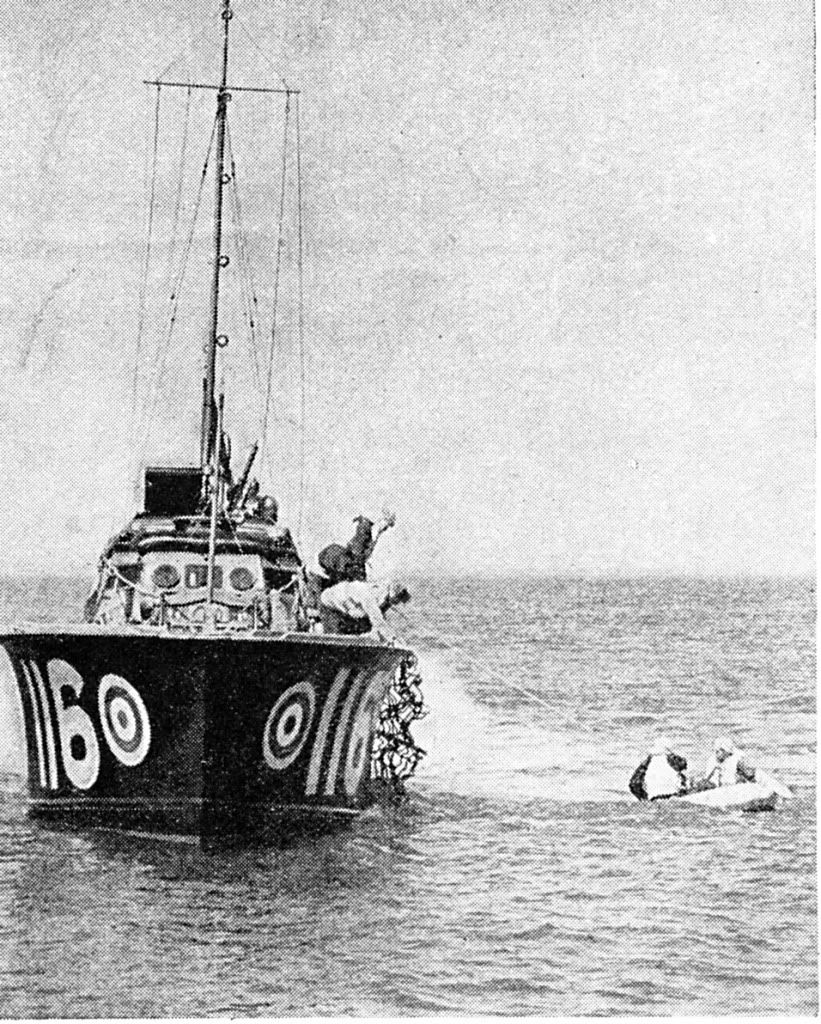
You mean this one?
http://img.photobucket.com/albums/v369/RedToo/Rescue-Launch.jpg
I don’t know if it has already been suggested…..but how about displaying XL319 in that attitude? 😀
That was the image I had in mind – I think?
Do we know its source/origins? I’d like to track down a first-generation image.
Sorry, can’t help with the source as it was found with an ‘RAF Rescue Launch’ search on Google Images.
Looks pretty official (posed?); can’t imagine anybody just happened to be out there with a camera to take such a great photo…
…so probably available from ‘official’ sources (?) and you’d know more about that than me. 🙂
Wish I’d had the chance to see it…..BBC4 is, at best, a bit ‘sporadic’ around here (Freeview) and there seems to have been quite a lot of interest scheduled recently.