ananda
Get F-18 C/D or Shornet if already available or Argentina can afford them. Argentina seems still harbour the need to have at least one CV. Liquidated Armada Air Arm, and have both land and carrier capable fighters like F-18, operated by the Air Force.
Seriously though, even like Aeronavale and Fleet Air Arm are going redundant if you talking about only having one or two carriers. Let the navy provided the carrier and let Air Force provide the Planes.
anandaThe way things appear to be going, Gaddafi isnt going anywhere and will be in charge of Libya for a long time to come, so who will he be buying airplanes from?
He will buy it from Sarkozy 😉
anandaRecent modernisation of their armed forces has been very interesting, certainly a Russian procurement bias at the moment but I do get a vibe that Western especially European manufacturers would be interested in that market.
I think it’s not just Russian procurement bias, but with overwhellmingly Vietnam armaments is Russian origin, to switch to western standard need a lot of effort. Example from other SEA nations like Malaysia and Indonesia which recent years before try to reduce Western armaments show that switching to Russian origin wass not just a simple procurement. Recent trend of procurement from Malaysia and Indonesia show the trend to get Chinese or Russian (non-western) standard being reduced somewhat, showing problem on integrations.
I believe that’s what happen also with Vietnam (on opposite condition), they perhaps willing to considered Western weapons, but I do believe it will not big if any procurement from west will happen.
anandaWell I wasn’t sure if you were serious.
In that case I’ll simply say I disagree, I think Gripen is not in the same level as Tejas and JF-17. They have similar weightclasses but that’s about it imho… Until the next block of Tejas and JF-17 come or something at least.
With do respect, I don’t want to provoke anything, but if based on what they (HAL) put on the production Tejas, then I think it can be classified as same as 1st gen Grippen.
F/A-50 if they (KAI) managed to get approval from Lockheed for AESA radar and more advance electronic, then it can be classified close to Grippen NG.
F/A-50, Tejas, and JF-17 in the end will try to take on same market (replacement for Mig 21 and F-5) in which realistically some of the users of Mig 21 and F-5 also (espeially the ones with more budget) think Grippen. Well Thailand certaintly did.
Those three will be in same catagory whille Grippen will be in the higher end of catagory. In such Grippen can be competing with F-16 Block 50+/60, Rafale, Eurotyphoon, but in alaso can compete for those three market.
anandaLIFT actually stands for Lead-In Fighter Trainer, not Light Fighter. But anyway, since the details on teh deal are still somewhat sketchy, I’ll choose to believe you that its the T/A-50 variant that is being purchased and not just the T-50.
Agree that LIFT is not Light Fighters, but trainers with some light fighter capability. I put T/A-50 since Indonesian AF clearly want attack capable trainer and according to KAI definition it’s T/A-50.
Still the border of advance trainer/ LIFT with Light Fighter increasingly blur by some users. In the 80ks when Hawk Mk 50’s come it’s classified Advance Trainer. However since it’s wired for Sidewinder some users like Indonesia use them as secondary/emergency point air defence. Hawk Mk 100’s family was introduced in the 90’s as LIFT, however since it’s reasonably wired for surface attack and surveilance some user like Indonesia use them more as ground attack and surveilance asset rather than LIFT. In short the usage for LIFT and Light (secondary line) fighter increasingly mixed this days.
anandaAnanda, so you’re basically saying that the deal will be for 16 A-50 jets and not the T-50 LIFTs ?
T-50 LIFT is T/A-50. Yes the deal is for LIFT and not just plain trainer. Thus in KAI book that’s I believe T/A-50. With the definition of T/A-50 from KAI that’s mean radar equiped and can be optimes for light attack just that defensedaily source that I put in my previous post.
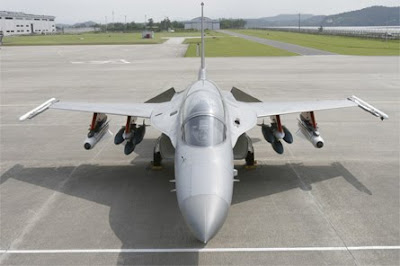
T/A-50 seems for trainer that can done some Light Fighter duty (LIFT), whille F/A-50 that supposed to come out next year is for Light Fighter that can be use as LIFT. F/A-50 that actually aimed to replace the F-5 class in the world market by KAI.
Note:
Indonesian AF (TNI-AU) now in the process looking for F-5 replacement. KAI now in deep talked with DI/IAe on further development of next phase in T-50 (or T/A-50) deal. Whether this could end up with F/A-50, will still to be seen. Pakistan and China already marketed FC-1 as potential candiate to replace F-5. However with more deep cooperation Indonesia has with ROK (first KT-1B, now T/A-50), the odd seems favor more cooperation with KAI.
anandaOn the interview in the April with local media in here, The Indonesia AF Chief stated that T-50 that will be buy from KAI, will be optimised not only for trainer but also for attack role (included for surface attack sensors). Thus with KAI already prepared Armed T-50 (T/A-50), I believe the versions that will be exported to Indonesia is T/A-50 and not just T-50.
USD 25 mio is also only in the paper. The deal between Indonesia and Korea (South) is actually an overall packages that included barter, ToT (Transfer of Technology) and streched on several projects that actually connected. Even the Korean admitted the actual deal is below USD 25 mio in the paper.
This’s from Korea Times on early April :
Jakarta also requested Seoul purchase four more CN-235s under a barter deal, the sources said.
The Seoul government is reviewing the offer positively as it has fought an uphill battle to gain the first exports of the jet following back-to-back defeats in trainer contests in the United Arab Emirates and Singapore.
The per-unit price of the CN-235 plane, built by the state-owned PT Dirgantara Indonesia (PT DI), is $25 million, similar to that of the T-50, jointly developed by Korea Aerospace Industries (KAI) and Lockheed Martin of the United States. The T-50’s price is presumed to be around $20-$25 million.
Under the envisaged new deal, if approved, the value of the original $400 million contract to sell 16 T-50s to Indonesia could be lowered to less than $280 million.
The value could be further reduced because KAI is obliged to share profits with Lockheed, which has technology export license over the T-50.
“Such a trade deal would certainly be disadvantageous for South Korea, but there are very few options since Seoul has been pressed to get the first overseas sale of the trainer jets,” an informed government source told The Korea Times on condition of anonymity
From DefenseIndustry Daily on T/A-50
The 2nd is the TA-50 lead-in fighter trainer (LIFT) variant. It adds Lockheed Martin’s AN/APG-67v4 multi-mode radar, derived from the radar that equipped Northrop’s F-20 Tigershark. It also has provisions for radar warning receivers and specialty pods, sports a 3-barreled M61 20mm cannon, and can carry Sidewinder air-air missiles, rocket pods, AGM-65 Maverick missiles, and Mk80 family bombs. If the specialty pods have surveillance and targeting capabilities, it is likely that laser-guided bombs and rockets could be added to their arsenal.
The contest that Indonesian AF has in which the final 3 contenders (KAI T-50, Yak-130, and L-159 ALCA), is for LIFT and not just Trainers.
Now some Unconfirmed report also say that the deal actually can be trasnfered to F/A-50. Personally I have doubt on this, since I more inclined that the deal is for T/A-50. But this is the excert on F/A-50 from defenseindustry daily.
Instead of Selex Galileo UK’s Vixen 500E AESA radar, therefore, the first 4 F/A-50s will use IAI’s popular EL/M-2032 multi-mode radar, installed by Lockheed Martin. It will be coupled to additional datalinks, a weapons management system, radar warning receivers, and a MIL-STD-1760 databus. F/A-50s will also be able to carry additional electronic countermeasures equipment, and specialty pods like LITENING or Sniper ATP for targeting, surveillance, etc. Weapons will include the same lightweight 3-barreled M61 20mm gun, AIM-9 Sidewinder air-air missiles, rockets, Mk80 family bombs, and AGM-65 Maverick missiles carried by the TA-50. The enhanced radar, databus, and related systems will expand the F/A-50’s range of potential weapons by adding GPS-guided weapons like JDAM bombs, WCMD cluster bombs, JSOW glide bombs, etc. They’re also likely to enable the addition of AIM-120 AMRAAM air-air missiles, anti-ship missiles, and other advanced armaments.
So it’s clear that KAI will not offered plain vanilla T-50 for export. They already now that potential sales of T-50 is more as LIFT (T/A-50) or LIFT Plus (F/A-50).
anandawhat is “Checzh” and “Aerovodochy”???
Sorry Miss spelling. No other intentions 🙂
Just to show a ‘concern’ from ex ‘potential’ customers of L-159 which found L-159 was and is an economical and capable LIFT, but have doubts of long term future of the aircraft. In short, Indonesian Air Force choose not to take L-159 as they do not want to be a lone customer of L-159, whille in the same time the Czech also not showing long term commitment for L-159 continue productions for their own use.
anandaThe L-159 purchase has actually been in the works for two years. It sure dragged on long enough. I just think its a great choice at this stage for the Iraqi AF.
What’s the future of L-159 ? Is there going to be strong commitment from Checzh for continue productions for L-159 including maintanance support facilities ? Seems L-159 that’s being offered now is comming from Checzh Storage Inventories, I know that’s what Checzh offered to Indonesia before.
Based from Indonesian Air Forces sources on the evaluations of 3 contenders of Indonesian LIFT contest (sorry no-online link); L-159 scores high on Economical, Yak-130 scores high on the adaptability, whille T-50 scores high in technological (the contest then won by T-50 more to the basis of long term potential cooperation with ROK in Defense). What makes L-159 droped was the ‘doubt’ on the Indonesian Air Force technical team with the long term future of the aircraft (especially since Checzh herself didn’t show their own willingness to get more aircraft in productions for their own uses), whille the traditional Eastern Block trainers that Aerovodochy have with L-29 and L-39 already gone with the comming of Yak-130.
anandaI wonder why they didn’t go in with the Pakistani forces like the capture of the Kuwaiti dude Khalid Sheikh Muhammad. All American operation has more political milage I guess.
Much more went on than what Pakistanis are admitting, for obvious reasons to reduce reprisal attacks on them.
I think PAkistan just did not want to take any responsibility if anything goes wrong in the operations. They do not want to get blame by US right wingers/Republican hard liners if they involved in the operations and something goes wrong.
For reprisal, well what ever they do, they will got domestic reprisals anyway from Pakistani Talibans.
anandaUnless they achieve another source of funding for the engine, most likely it will go nowhere. That engine is too big to fit into any other single engined fighter and far too big to fit into twin engine fighters and besides which GE/RR aren’t willing to self-fund the USD$3b needed to finish the development anyway. Can’t see anyone else being willing to at the current time…
How close can it be to finishing, when it STILL requires USD$3b in funding to complete?
Perhaps they can offer the engine to the Chinese for their J-20. It’s seems the fighther (J-20) will be big enough to accomodate the engine.
I wander though, the KFX design called for twin engines of GE F-414 or SNECMA M-88 class. If the prices right (and if the US willing to give the access) perhaps KFX designer can change the design to accomodate singgle engine of that class. It’s still (the design) on the initial stages anyway.
anandaI still think they’d be better off building another 50 or so F-2.
Completely agree with that. Development of F-2 or even present F-2 still can offered what Shornet and Typhoon can offer. Also with some of the F-2 (especially the twin seaters) are destroyed or damaged by Tsunamis’s, this can be use to continue F-2 production line with additional order for F-2 development as F-X.
If time is their considerations, also improving their Aerospaces Industrial based, I still don’t understand why Japan did not considered this (F-2 or Super F-2) options.
anandaOne of the selling points of the Spey was reliability, BTW. That’s one reason why it was selected for AMX rather than a newer design.
Adour is a purely military engine, but the Spey also has civilian applications, & as well as the AMX, civilian aircraft (including some with military users) were still being built with Speys until the late 1980s, so I can’t imagine that the long-term future of the engine could have been considered a problem back then. Total sales were much greater than the Adour.
BTW, the last I heard, the Spey was still being licence-built in China for the JH-7.
As for ‘old design’ the first runs of the Spey & the Adour were 4 years apart.
If my recollection correct, seems at that time BAe bring RR guarantee that Roll Royce will continue full support with Hawk 100/200 latest Adour for at leat 2-3 decades with potential modifications if need be.
Whille AMX Spey was Underlicense build by Piagio from Roll Royce, in which by Sout East Asia potential buyers still considered less dependable for long term than RR.
Perhaps the winning results of Hawk 100/200 in SEA against AMX more to the marketing and lobying capabilities of BAe compared to Aermachi/Allenia. However since this thread talking about Hawk 200 vs AMX, perhaps we can’t discounted the perceptions of better long term support of BAe compared to Aermachi/Allenia.
anandaAnd it must be cheap to operate. Thousands of Speys have been built, for example, it’s a reliable & economical engine, & there’s generally less aircraft to maintain than with an F-16.
But how cheap the Spey will be on the late 90’s and 21st century environment ? It’s old design engine. In the late 80’s and early 90’s, AMX was marketed extensively throughout South East Asia, and loosing out to Hawk 100/200 with one of the reaons, Adour considered more depandeble and economics for some time in the future compared to Spey.
anandaF135 or F136 engines will not fit into an F-16/F-2 airframe. Not without a complete redesign of the aft and center fuselage. They would probably use a F110 variant.
But that’s what McDonald/Boeing (later on) done when developing Shornet from original Hornet. If they only end up with Typhoon or Shornet, developing further F-2 will be more beneficial for domestic industry and politics. In the mean time they will get a domestic fighter than can match whatever Shornet and Typhoon can offer (for Japanese operational environment).


 Sign In