 kilcoo316
Airport Fire Service Appliances need, as Andrew has said, off-road capability, and may have to, god forbid, drive through wreckage to get to an aircraft, and they may have to go ‘across country’. You only need to see the video of that SAS Dash 8 with a landing gear collapse and see one of the fire engines bound across the grass – it couldnt do that with a plough on the front. I shall try and find the video.
I disagree with the underlined bit.
– with the design of the tenders focusing on having good clearance angles on the front and rear – incorporation of a plough onto the front is relatively easy.
Going back to the big picture I posted earlier, the system would be mounted on hinges at the back of the bumper mounts (underneath the cab and in-line with the low-level lighting. An hydraulic ram would lower and raise the blade in an identical fashion to a mini-digger.
Its quite a straight forward modification, and would sacrifice very little of the vehicles capabilities, while dramatically increasing its versatility.
*Neat vid BTW 🙂
kilcoo316Is a snow plough even the right answer to the type of weather we experience in the winter?
I don’t think it is. Most of the snow we get causes slush at worse, but more normally slippery, icey conditions that make operating aircraft rather dangerous.
With a heavy snow squall you can just plough the snow out of the way in one fell swoop. Ice and slush, at only borderline freezing temperatures, is much more dangerous and much harder to clear away.
You think grit/salt would be a better way of dealing with it?
Its even easier to stick a salt trailer on the back of a fire truck :diablo: 😀
kilcoo316Sounded like it…
Sorry, my sentences must have been poor 😮
That is the same thing I’m saying. It was designed as such, but in practice it ended up not being that effective due to improvements in Soviet radar technology.
And the exhaust out the back end.
Is the 737 a direct competitor to the 747? Similar aircraft performance data, but different “markets”. The B2707 was a nearly 300 passenger jetliner. You don’t buy a 747 when a Learjet will suffice, do you?
Its still a very small niche market, if both had come to enter service, they would undoubtedly have taken sales from each other.
I wish I could settle for “just” a learjet! 😀
Oh they would have kept them, but the accountants? Those guys would have been more than a little irate…
😀 😀 😀 feck the bean counters.
The Concorde also wasn’t helped by the rampant increase in oil prices in 1973 that led to an awful lot of order cancellations, either.
very, very true.
kilcoo316I like smart people. Please add some important details.
What distance covers a SR-71 per second?
@ Mach 3 at 70,000ft?
In the tropopause the speed of sound is approx 295 m/s, thus at Mach 3 an SR-71 will cover approx 885 m/s or 0.9 km/s
What accuracy do surveillance radars have over a distance of some hundred km? (height , distance, direction f.e.)
You know as well as I do that is dependent on each individual system – their wavelength, antenna gain, output power, the algorithms of the processing end, the power of the processing end, the radar signature of the target (for the relevant radar wavelength and azimuthal angle), the atmospheric conditions at the time etc etc.
You like detailed answers, but if you knew the detail involved you wouldn’t be silly enough to ask for them!
kilcoo316??? (Source OKB Sukhoi)
Looks a bit like the wing on a vulcan 🙂
kilcoo316You have no idea what stealth does mean, do you?!
What does stealth mean Sens?
Does it mean you design an airframe to have a low RCS, but then waste that by having a massive underexpanded jet full of shockcells behind it?
Or does it mean you have an end product that can sneak in and around FC radars?
By my definition (the latter), the SR-71 is not stealthy.
The main advantage of effective stealth is, that it delays the detection by “fire-control-radars” to point till that becomes useless the possible reaction time in mind. That can be added by an powerfull EW-suit.
Doesn’t make a damn bit of difference what the airframe is doing if you have that jet exhaust.
If you’ve an F-22 thats running around trailing a big aluminum ball behind it, its not going to be sneaking anywhere.
There is no radio chatter! (See “traffic lights” at the belly of the KC-135Q and some other items too)
uh-huh.
The KC-135Q is not stealth and the typical pattern of that can be spotted.
But that did not matter because it is not the”target” in search for.
If you know where something is at any point in time, you can quickly figure out where it can be X minutes from there. While not a track, it serves to give your air defence a good heads-up.
When the SR-71 lights up its afterburners to climb to altitude you know exactly where it is, and due to the heads up, your ready for it*.
*which is only useful if you have missiles with the necessary Pe to make the kill.
kilcoo316And yet, the Blackbird was still designed as a low-RCS aircraft, a fact that people don’t want to deal with for some strange reason…
I’m not saying it wasn’t.
I am saying, in practice, it was not a stealthy aircraft as it was easily detectable.
The B2707-200 was to be bigger and faster because it was not intended to be a direct competitor to the Concorde, which had already secured (and later lost) a host of orders from various airlines and was much farther along in the development process. It was supposed to be made of steel and titanium, which did help to drive the cost right up.
Also, there were 6 aircraft commited to by both British Airways and Air France. Looks like at least some Europeans saw merit in the concept at one point.
Ach Sean….
Not a direct competitor? How many other SSTs were there in the western market at the time? 🙂
Yeap, as a concept no doubt it was great – bigger, faster, further… but marketing (and some pollyticians too) were making promises no engineer could keep.
The concorde was scuppered by the laws brought in dealing with SSTs over land. Indeed, to this day, the biggest obstacle facing SST development is getting a clear answer from governments around the world what constitutes acceptable overpressures.
kilcoo316The average aluminium tail lift on a 7.5 or 17.5 tonner adds another half a ton to the weight of the truck (slightly more in some cases). I suspect a large, solid, 3 foot high steel plough with large, solid mountings would add somewhat more than 500k’s!
Not a chance dude.
The front bucket (not incl arms) on a 3CX wouldn’t weigh a ton (infact, the max lifting weight is around a ton on the front end), and its coping with much, much heavier loads than a plough.
You seem to be basing your theory on this one picture?
Nah, just generalisation. It would be very easy to do. It isn’t much of a grand theory either – its more a simple ad-hoc fix solution that no-one seems to have bothered with.
OK, some may have winches, but many/most won’t. Leave the winches on and put ploughs on the ones that don’t.
It would also be the kinda thing that the maintenance engineers will jump at – a chance to build yer own doo-hickey equipped with widgets 😀 – Heck, the fire crews would probably want do it to offset the tedium of sitting on their arses during a normal shift.
Plus what about ground clearance. Aircraft dont always crash on tarmac, off road capabilites need to be achieved at any time. A snow plough on the front would mean it would be very hard to ensure ground clearance whilst still remaining effective. If you are going to talk about lowering/raising it for ground clearance, then you have visibility issues and yet more weight to the front of the tender.
You ever seen the blade on a mini digger? Since the blade isn’t actually having to lift anything besides its own weight, the moving mechanism won’t be much addition in terms of weight. Proportionally, its even less than a mini digger as that blade can be used for stability.
As you point out, the issue will be visibility, but for the headlights, the driver’s eye line is too far above the ground to be an issue. Thus, it probably would require moving the headlights to the roof-line or better addition of more worklights to the roof-line and leave the headlights where they are – which is no bad thing anyway, you can never have enough light.
A very fair point. Let’s leave the specialised equipment alone to do the job (or hopefully not to do the job) it was designed for.
And have airports closed because of a few mil of snow? :confused:
I’m sure big airports have dedicated ploughs, but smaller ones can’t always afford to duplicate equipment when a common solution could do the job of both.
kilcoo316Yes and I believe it would block some equipment such as winches and the small joystick operated hose nozzle which is mounted below windsheild in the middle on most tenders?
Good idea but build up of snow on the front could cause problems with visibility etc. Plus i doubt firefighters would be keen to add to their workload?
No winches on most of them…
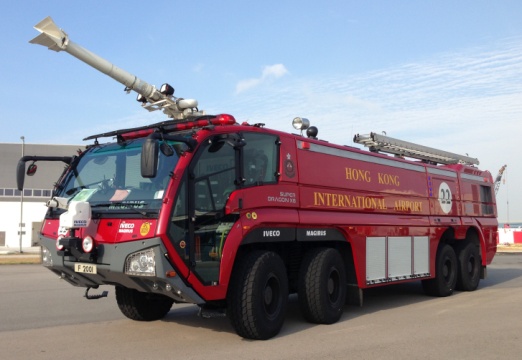
The plough does not have to be any more than 3ft tall guys! On the tender pictured, it would all be mounted below the bumper. Only the lower lights would be blocked (and from experience, they are too low to be useful anyway – they should be mounted on the roofline).
kilcoo316Would that not add weight and make them slower?
Paul
The difference would be negligible.
Your talking adding maybe 500 kilos to a 30+ tonne vehicle.

Would handle a plough no problem.
kilcoo316I am not sure the Foxhound can do, or the B-1. The problem encountered are two-fold: engine overheat and airframe overheat. Above Mach 2 the airframe temperature becomes a huge issue and can only be avoided by using special materials, like done on the SR-71 or the MiG-25. The SSTs didn’t fly so fast and didn’t need special materials.
Mach 2.2* is about where Aluminium structures top out at.
Above that you need exotic material.
That was a key reason in the failure of the American SST program (being American, it had to be bigger, better and faster than everyone else – physics didn’t cooperate though :diablo: ).
*Approx
kilcoo316Update for y’all.
Flightglobal.com has obtained an image of the first Airbus Military A400M flight-test aircraft resting on its own landing gear at the final assembly line near Seville, Spain. The transport is awaiting installation of its composite wing and empennage, together with its four Europrop International TP400 turboprop engines.
kilcoo316Whats incredible is that a bit of snow can close two airports in November,I read BBC news and it said that there was only 18mm of snow ,in I think it was BHX and it shut,god help us when the real stuff comes.
Paul
Its pretty pathetic to be honest.
It wouldn’t be a big job to fit each and every fire unit on a commerical airport with a snow plough on the front would it? [Of course it wouldn’t, if there was the will to do it, it could be done in half a day]…
Those fire tenders are not the typical lorry you find at a local firestation, so would have no problem ploughing even in deeper snow.
Stick a towbar on them and you can then run a salt trailer on the back of them.
kilcoo316<<<>>>>
For all your arrogant lecturing there you’ve managed to contradict yourself quite a few times.
First you say the exhaust is ionised and hence visible to radar.
Then you say the SR-71 was stealthy (which is directly contradicting paragraph 1). No point having stealthy wings on a B-52 is there?
Then you make the earth shattering statement that radar does not work in the visible spectrum (no ****, otherwise radar stations would be lighthouses).
You then go back again to saying the SR-71 was stealthy (which is still directly contradicting paragraph 1).
Then you state that China could not track the SR-71 from take-off. That may be true, or may not – a typical Blackbird flight involved mid-air refuels = radio chatter = easy to locate. Hence its feasible the Chinese got the take-off time from spies, got the refuel position from triangulation of radio intercepts and then detected the SR-71 on radar as it nudged over into supersonic flight before climbing into its mission flight profile.
You go on to make the statement that the footprint may be “hundreds of feet if not miles behind the SR-71” – which would mean the “glowing flame” (the ionised bit from paragraph 1) is miles behind the aircraft… As the S2A missiles close in on the SR-71, they will undoubtedly detect the airframe itself, the question is were the seeker algorithms smart enough to separate plume from aircraft.
Then you say the shock wave (alluding to the bow shock with the figure of the bullet) is easy to detect… ignoring the shock cells in the burner (yes, the “glowing flame”) that are much stronger and easier to detect.
Arrogant posts =/= Knowledgeable posts.
kilcoo316Check all the engagements between Soviet designed aircraft against Western designed aircraft since 1980, they charge head-on approaching the merge. The Soviet aircraft do not fire radar guided missiles as they approach the merge!
Even the first engagement between an F-16 and a MiG-25 ended with the F-16 firing a Slammer down the throat of the MiG-25.
Uhm… I don’t think any combat pilot with more than a single-digit IQ is going to merge with his MiG-25 versus an F-16.
The Soviets no doubt knew the limitations of the Foxbat, and were somewhat aware of the abilities of an F-16. Thus, they would have launched everything at the Viper from distance, then cleared off (before maybe turning and repeating the feat from distance again).
The Iraqi pilot flew extremely stupidly and paid the price as a result – you cannot expand that out to encompass Soviet pilots!


 Sign In







