 Kramer
a MiG-29KUB twin seater destined for the Indian Navy crashed in Russia yesterday, killing its 2 man crew, both of whom were company pilots. 🙁
Was possibly undergoing pre-delivery test flights. the IN may ground its MiG-29K fleet pending information on what caused the crash.
New Delhi, June 24 (IANS) Against the backdrop of a twin-seater MiG-29KUB combat jet meant for the Indian Navy crashing in Russia, the navy said Friday it will consider grounding the planes it already has if there was a technical reason to do so.
Indian Navy chief Admiral Nirmal Verma told reporters here that the force was yet to get feedback from the Russians on the air crash involving the MiG-29KUB plane in south Russia’s Astrakhan region Thursday.
The aircraft is the trainer version of the MiG-29K that the Indian Navy fleet will operate from the aircraft carrier INS Vikramaditya (erstwhile Admiral Gorshkov) when it joins the fleet in 2013. The navy has purchased 16 planes, of which 12 are single-seaters and four are trainers.
“We did get this input (air crash) yesterday (Thursday). So we have sought a clarification from the Russian company…because this aircraft was still with the company and was being flown by its own pilots. At the moment, we have not got the feedback,” Verma said.
“If they (MiG Corporation) feel there is a technical reason to do it, which demands grounding, that would be done,” he said.
Verma said an Indian Navy team was present in the MiG Corporation factory to oversee the aircraft’s manufacturing and the naval headquarters here was in constant touch with it.
“So if there is any reason to believe that there is some technical reason, we will address it at that time. At this point of time, that is not the case,” he said.
Both pilots were killed in the Russian crash. The Russian defence ministry has already grounded its entire MiG-29K fleet till the investigation into the crash was over.
KramerIAF begins An-32 upgrade work at 1 Base Repair Depot, Kanpur. A remarkably cheap upgrade for the IAF’s main transport workhorse.
Indian Air Force is undertaking AN-32 Life Extension Programme in India.The project was innagurated by Air Marshal P V Athawale, commanding-in-chief, maintenance command, at Air Force Station, Chakeri. The upgrades will be carried out at 1 BRD, Kanpur. 1 BRD is a part of IAF’s indigenisation group 1. The group includes 1 BRD, 3 BRD, 4 BRD, 5 BRD, and 11 BRD. 1 BRD has the task of Major overhaul, Capital repair, Medium repair on transport aircraft or Russian origin & their avionics and mechanical aggregate.
The pilots and technical staff have already been trained at Antonov’s facility in Ukraine and are now scheduled to finish the task indigenously at Kanpur.
India recently re-inducted the first of the four AN-32′s which were upgraded in Ukraine. The new designation of the aircraft is An-32RE.
An-32′s were first inducted in 1984. In June 2009, India signed a $398 million contract with Ukraine to improve the life span of the 104 AN-32s in the IAF fleet. The aircrafts will be upgraded in a phased manner by 2017. India had inducted 118 AN-32s and 14 have been lost in crashes.
KramerAs expected, the IAF is all set to order 6 more C-130J’s, taking the fleet size to 12 stretched C-130Js.
DATE:22/06/11
SOURCE:Flight Daily News
PARIS: India set to order six more C-130Js
By Greg Waldron
India is poised to sign a letter of request for six additional Lockheed Martin C-130J aircraft, which would bring its total fleet of the type to 12.The company is confident of concluding the deal for additional aircraft this year,
said Jim Grant, vice-president of customer engagement for air mobility and special operations programmes at Lockheed Martin.
Grant was speaking to journalists in the cargo hold of the USAF C-130J on static display.
KramerIAF to participate in Exercise Anatolian Eagle with Turkey? Will that be possible when the PAF may also participate?
Our yearly engagement with Singapore continues, in addition to the Republic of Singapore Air Force (RSAF) participation in the GARUDA 2010 at France making it the first trilateral version of the exercise. Red Flag and Cope India with USA, Anatolian Eagle with Turkey and other exercises with friendly countries are all on the anvil.
Kramerso how many were sold ? 34 million pounds sounds like a very very small figure..
KramerEveryone in this thread could be a better Aerospace/defense Jounrno than these idiots.
DDM (desi dork media) are really plumbing the depths now..just unbelievable.
KramerThe last part of your comment is rather divisive and racist please delete before I have little option but to report you.
you’re joking right ?!
since when did asking someone to eat a rather tasty gujarati dish become racist ? Is it racist to say “don’t worry, eat curry” ?! Or did Aspis raise the racism bogey when Griffon39 mentioned mussakas and how horrible they tasted ?! 😀
Kramerthe Indian Navy’s P-8I Neptune
KramerWonder what the mk2 range would be with the more powerful engines.
the Mk2 also has additional fuel tanks that should offset any higher SFC of the F-414INS6 engine.
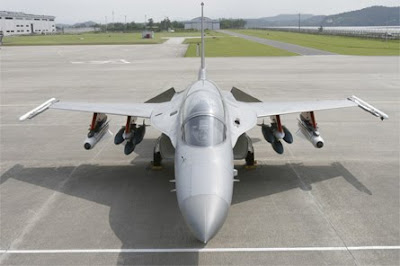
KramerSome sort of confirmation that the version being sold to Indonesia will be the TA-50
Korea Aerospace will build the 16 aircraft and fly them in South Korea before dissembling them for shipping to Indonesia, where they will be reassembled and put through their final acceptance trials, an industry official says.
Although not announced as such, the version to be built for Indonesia is evidently the TA-50, which can be used as an attack aircraft. The official says the aircraft will have a gun and weapons pylons, features of the TA-50.
KramerT-50 LIFT is T/A-50. Yes the deal is for LIFT and not just plain trainer. Thus in KAI book that’s I believe T/A-50. With the definition of T/A-50 from KAI that’s mean radar equiped and can be optimes for light attack just that defensedaily source that I put in my previous post.
T/A-50 seems for trainer that can done some Light Fighter duty (LIFT), whille F/A-50 that supposed to come out next year is for Light Fighter that can be use as LIFT. F/A-50 that actually aimed to replace the F-5 class in the world market by KAI.
Note:
Indonesian AF (TNI-AU) now in the process looking for F-5 replacement. KAI now in deep talked with DI/IAe on further development of next phase in T-50 (or T/A-50) deal. Whether this could end up with F/A-50, will still to be seen. Pakistan and China already marketed FC-1 as potential candiate to replace F-5. However with more deep cooperation Indonesia has with ROK (first KT-1B, now T/A-50), the odd seems favor more cooperation with KAI.
LIFT actually stands for Lead-In Fighter Trainer, not Light Fighter. But anyway, since the details on teh deal are still somewhat sketchy, I’ll choose to believe you that its the T/A-50 variant that is being purchased and not just the T-50.
Kramerwow an F414 engine would make that thing zippy! guess the FA-50, if it comes under 30 mill, will poop poop the FC-1 and Tejas
the F-414 is costlier than the F-404 and the cost of the Elta 2032 radar, other avionics, datalinks and what not will mean that the F/A-50’s price will more than likely be higher than $30 million in the export market.
Apart from price, what makes you think that the F/A-50 will “poop poop” the Tejas Mk2 ?
KramerAnanda, so you’re basically saying that the deal will be for 16 A-50 jets and not the T-50 LIFTs ?
KramerI would say pretty reasonable, considering Jf-17/FC-1 comes a little bit cheaper at around 20mil (rumored). Tejas, with the same engine and radar comes at around 30 mil (rumored). Of course T-50 doesn’t come with ECM, advanced data-links but is good enough for smaller airforces looking for a light, cheap aircraft for air patrol and COIN for replacing their f-4’s and mig-21’s. Small aircraft market is getting too competitive nowadays 🙂
First of all, the Tejas Mk1 doesn’t come in with the same engine. the Tejas Mk1’s F-404 IN20 is a more powerful variant of the GE F-404 engine (@ 83.2 kN max afterburner thrust) than the F-404-102 (@ 78.7 kN) which powers the T-50 Golden Eagle.
Besides, as Boom pointed out, the T-50 is a LIFT, not a true fighter, which the F/A-50 aims to achieve by adding radar and weapons. Developing, testing and integrating these equipment costs time and money which obviously percolates down to the cost of the fighter. When you add all the avionics that a true fighter has to have nowadays and add up the cost, it will be significantly more expensive than $25 million.
the T-50 LIFT has no radar, and no weapons capability other than dropping dumb bombs/rocket pods for training pilots.
KramerIndian Army to greatly add to its firepower by adding Aviation Brigades comprising of gunships and helis to its 3 main strike corps as well as buy Aviation Brigades for its 10 pivot/defensive corps.
the WSI Dhruv would be a good fit for the tactical recon and CASEVAC role.
Attack Choppers to Add Teeth to Indian Army’s Strike Corps
By N.C. Bipindra
New Delhi
May 18
With the rapid evolution of battlefield concepts, the Indian Army is preparing to shore up its aviation wing with attack and tactical-lift capabilities to increase the punch of its three potent strike corps, a concept fine-tuned during a just-concluded war game in the Rajasthan desert close to the Pakistan border, defence analysts say.With the strike corps tasked to slice through the enemy’s defences, the helicopters will supplement this by the quick insertion of fully-armed soldiers and their heavy weaponry, as also provide close air support to the troops and the armoured elements, a senior officer of the army’s Ambala-based 2 Kharga Corps explained.It was this transformational doctrine that was validated during the month-long exercise Vijayee Bhava (Be Victorious), even though the army does not operate any attack helicopters in its aviation wing at present and has to depend on the Indian Air Force (IAF) for them, the officer added.
“The strike corps trains for rapid mobilisation and resolute application. Mechanised (battle tanks and armoured personnel carriers) manoeuvres are the essence of offensive operations. In the future battlefield, air assets will play a decisive role. With the exponential increase in the air assets with the army and the air force, these will be employed in an integrated manner to gain a decisive edge in combat. This is the first time we have used the combat air assets in such an exercise,” the officer told IANS, but speaking strictly on condition of anonymity as he was not supposed to speak to the media directly.
As per the army’s plans for its aviation wing — mooted in 2007 and to be implemented over a 15-year period ending 2022 — the three strike corps would be beefed up with an aviation brigade comprising two squadrons of 12 attack helicopters each, apart from two squadrons with 15 choppers each for tactical battle reconnaissance and casualty evacuation, top army sources said.Apart from the 1, 2 and 21 strike Corps, the army will also provide aviation brigades to each of its 10 pivot or defensive corps, but these would essentially be in the nature of tactical lift capabilities, with some offensive elements.
At present, the army relies on two squadrons of Mi-25 and Mi-35 attack helicopters and Mi-17 medium-lift choppers of the IAF for testing its transformational concepts.
Defence ministry officials, when asked about the army’s aviation plans, said the IAF would continue to play a “strategic” role while the army would acquire its air assets for a “tactical” role.
The army, obviously, wants to have “full command and control” over the “tactical” operations of air assets so that it could meet its rapid deployment needs and for combat air support.
The army is already looking at procuring 114 of the indigenously-developed light combat helicopter (LCH), which took to the skies for the first time in March 2010, and 64 of which IAF is buying.This apart, the army is in the process of acquiring 133 light utility helicopters for USD 1.9 billion, along with the IAF’s 64 for USD 960 million, as part of a 197-chopper deal for which Eurocopter’s AS550-C3 Fennec and Russia’s Kamov Ka-226 are in the race. These would replace the 150 Cheetah and Chetak helicopters of 1970s vintage in the army aviation fleet which are extensively used for transportation in high-altitude areas, including the Siachen Glacier.
(N.C. Bipindra can be contacted at [email]nc.bipindra@ians.in[/email])
–IANS


 Sign In







