Kramer
Right now this is just a rumour and we’ve seen what value rumours hold in this competition.
While it is true that the F-16IN configuration was superior to any Block 52+ that the PAF was receiving, and that no Block 52+ can be built into a Block 60 (Air International article) due to the major changes in airframe and avionics, it is also true that among the MRCA candidates, the F-16 is probably the one on the weakest legs when it comes to future upgrade possibilities. The airframe is already quite heavily modified from the earlier versions and space is really at a premium which might be an issue when more capability insertion may be required down the line.
That said, in the past IAF chiefs have said that they had no issue with the F-16 participating in the MRCA when the PAF’s main fighter was the F-16. Some people have raised the point about how the PLAAF’s and IAF’s main fighter is also based on the Su-30 and the IAF doesn’t seem too concerned about that.
But the way in which the PAF has been handed over new Block 52 F-16s and its aging fleet upgraded ostensibly to be used in the “war on terror” is what has been viewed very negatively in India and while the ACM will be unable to express it in public, in private I’m sure they hold the view that such sales really help skew the image of the F-16 negatively. Especially the fact that these are part of packages and either heavily subsidised or paid for by the US entirely alongwith huge weapons transfers like 500 AMRAAMs and hundreds of JDAM and other bombs.
Statements by LM execs like “the IAF version will be more capable than those given to Pakistan” don’t assuage anyone much in this regard. And if a US type is selected, the PAF may clamour for an equal-equal treatment from the US like Pakistan did for the nuclear deal that India and the US signed. So, who is to say for sure that 5-6 years down the line the US, under Pakistani pressure, won’t offer subsidised F-16 Block 60s to the PAF when the IAF would be inducting its MRCA. At that time, the IAF will be kicking itself that it didn’t take the opportunity to knock the (cheaper and likely L1 in the tender) F-16IN out of the competition earlier itself and buy a fighter like the Typhoon/Rafale/Super Hornet that the PAF will never be able to afford to buy.
After all, if the F-16IN goes through all the rounds, it may well end up being L1 and win the competition. Then the IAF will have no choice but to take what it gets.
Some suggestions are that the IAF is pushing the MRCA towards a twin-engined heavier fighter and that may be another reason as well for the sidelining of the F-16IN.
The Boeing F/A-18 E/F doesn’t suffer from that image and it might be a good idea to keep one of the US fighters in the competition to drive the others to keep their prices low and offset and ToT offers high. But I do feel that more than enough sops have been given to the US and soon we’ll see the AH-64D Apache and Chinook also being acquired from the US, so there is absolutely no need to give them the MRCA as well.
KramerI thought so too, Loke but asian fora abound of stories
about the I.A.F. seeing it almost solely for A-A.
I know not why.
The important point is that this guy picked up on something
that i had outlined over in the aforementioned asian fora,
linking an “internal” RFP from strategic section to govt with
a very precise number of planes to an offer from GIE Rafale.
If Asian fora say so then they are very unaware of the Su-30MKI’s capabilities as developed within the IAF. They are integrated with Litening LDP, can carry Russian PGMs, ARMs, dumb bombs, Israeli LGBs and now the Indian LGBs too. They dropped a lot of A2G ordnance during Ex Vayu Shakti 2010. You can google for images of the Su-30MKIs from that exercise. They are also the platform earmarked for the Brahmos ALCM. While there is no better air-to-air platform in the IAF as of now, the IAF doesn’t intend to use them only for that purpose.
KramerKaveri K9 turbofan on the Il-76 test-bed at the Gromov Flight Research Institute in Russia, on Wednesday.
pic courtesy of Livefist blog
Mod Edit: This image was much too large. Please either re-post in a smaller size, or post a link instead.
The photo above shows the Il-76 test bed with the Kaveri K9 turbofan at the Gromov Flight Research Institute on Wednesday. Just received the following statement from DRDO (in full):
The indigenously designed and developed Kaveri Engine was successfully flight tested by DRDO yesterday during the Flying Test Bed (FTB) Trials at Gromov Flight Research Institute (GFRI), Moscow, Russia. The engine was tested from take-off to landing and flew for a period of over one hour up to at an altitude of 6000m at a speed of 0.6 mach on its maiden flight. The engine control, engine performance and engine health during the flight were found to be excellent. With this test, Kaveri Engine has completed a major milestone of the development program. During the coming months further 50-60 test flights will be carried out to mature the engine in terms of reliability, safety and airworthiness. These trials would pave the way for further flight trials of Kaveri engine with a fighter aircraft.An existing Il-76 aircraft was modified as a Flying Test Bed for this trial, with Kaveri engine replacing one of the four engines of the aircraft. The modifications included instrumentation required for trials as well as integration of mechanical, electrical and fuel system. The engine was controlled by the pilot from the cockpit. A number of taxi trials were carried out with Kaveri Engine integrated with the aircraft, before this maiden flight. The engine data was recorded in the aircraft as well as transmitted to ground station by telemetry.
A team of 20 scientists from Gas Turbine Research Establishment, DRDO, have been working along with GFRI for these trials. Dr Prahlada, Chief Controller, R&D (Aeronautics & Services Interaction) briefed the Media about the significance of the first flight.
Kaveri engine is being developed for fighter aircraft at India’s Gas Turbine Research Establishment (GTRE), a DRDO laboratory based in Bangalore with the active support of several other DRDO labs, academic institutions and industry partners. During the development phase, Kaveri engine has successfully completed various stages of development including component testing, safety tests, ground based engine tests, endurance tests etc, both at GTRE as well as test facilities abroad.
KramerConsidering that this news is coming from Ananth Krishnan, I would tend to believe that it is true. He isn’t a Vivek Raghuvanshi type journo. This is indeed good news. Now what is needed is to integrate one Kaveri with a MiG-29 by replacing one RD-33 and then testing it for a few hundred hours in flight. Putting it directly on a Tejas prototype may be a bit risky.
Barely a month after the DRDO announced that the Tejas Mk-2 will powered by GE-414 power plant, there’s some good news for the devotees of desi defence products. The Kaveri engine has finally passed the critical tests onboard IL-76 in Russia on November 3 crossing a major hurdle towards certification.
Russian sources confirmed to Tarmak007 late on Wednesday night that the tests results were extremely positive. “This is a huge sigh of relief for the Indian side as the platform had its share of problems earlier. We are waiting for the final trial parameters, but I can confirm to you that the Indian engine has finally proved all necessary test points. It’s a huge technologocal breakthrough for India,” a source tells.
DRDO officials are tight-lipped about the development and didn’t want to comment on the historic achievement on the even of Diwali. A formal announcement is expected to be out today/soon/any moment from Delhi.
The Indian government had earlier this August announced in Parliament that the Kaveri engine testing under simulated altitude and forward speed conditions were completed successfully in February 2010. “The Kaveri has been integrated with an Ilyushin Il-76 aircraft at Gromov Flight Research Institute in Moscow for ground and flight tests. The engine tests under simulated altitude and forward speed conditions conducted in February 2010 [were] successful. Another engine has been integrated with IL-76 aircraft at Gromov Flight Research Institute, Moscow for ground and flight test which is expected to complete by October 2010. These two major milestones would make the engine certified for flight operations,” Defense Minister A.K. Antony had told the Upper House of the Parliament on August 25, 2010. He had also even spelt out the reasons for the delay, then.
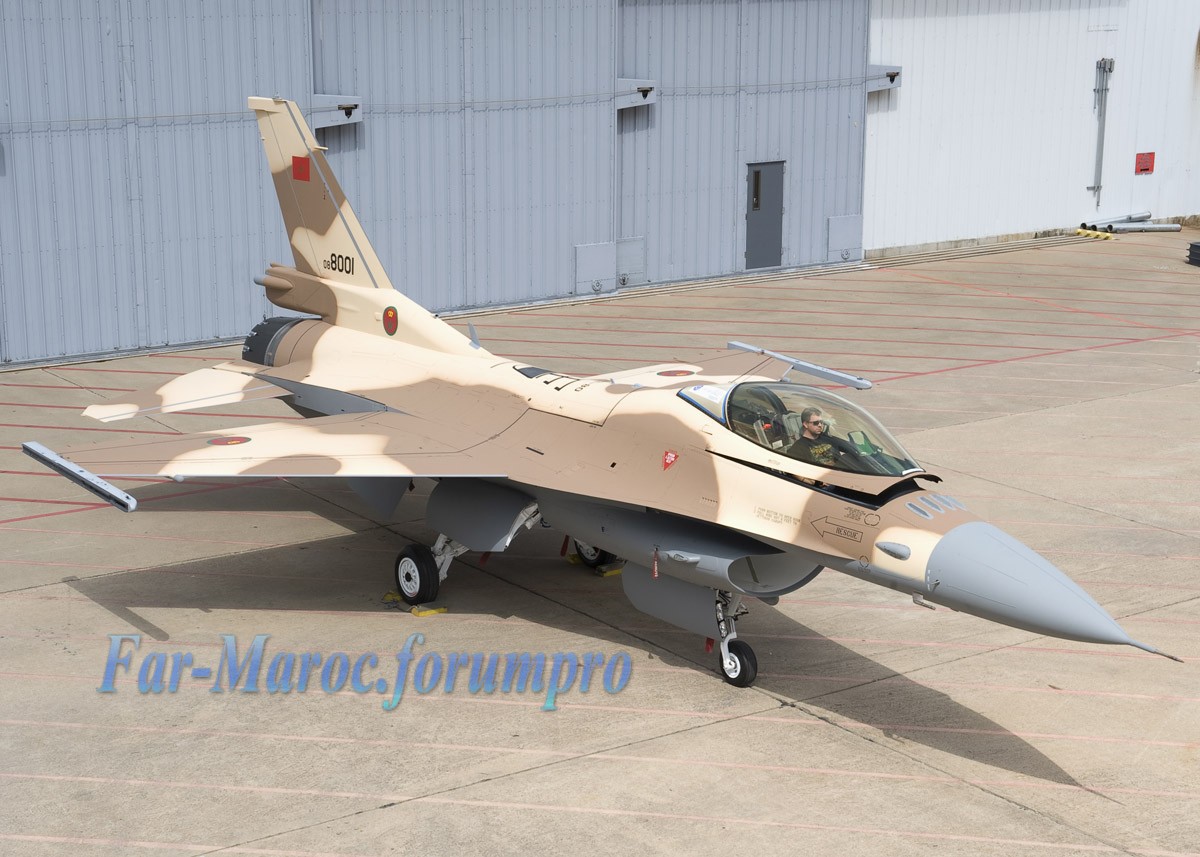
KramerThe RSAF F-16 Block 52 two seaters included Israeli EW equipment installed in the dorsal fairing. That is the reason for the dorsal hump on the RSAF Vipers, which is similar to that on the F-16I.
As for the single seater, that is the conformal fuel tank on the RSAF F-16 that makes it look different. Morocco ordered 24 CFTs with their F-16s as well and these can be bolted on separately to the fuselage.
KramerFirst Moroccan AF F-16 Blk52.
beautiful ! the scheme looks really good on the Viper..
KramerI think that sort of ad hoc way to purchases leads to too many aircraft types and lack of long term planning. Resulting in the problem the IAF have today.
Many fighter types and and lots of aircraft coming to the end of their lives without immediate replacement.
The Harrier does not actually give the IAF anything new that it cannot already do, bar perhaps a STOVL capability which it does not require anyway
The shortage is more due to bureaucratic red-tapism than due to lack of planning or foresight or “ad-hoc purchases”. The IAF has retired MiG-23, MiG-25 and MiG-21 variants in the recent past and each had different roles in the orbat. They weren’t just purchased on some whim or fancy. The MRCA was meant to come in as these went out, but thanks to changing govts and their changing rules, the thing has dragged on for years. Else all these MiG-23 and some MiG-21 types would’ve been replaced by the Mirage-2000-5 by now.
I do agree that the Harrier GR.9 doesn’t bring any new capability apart from STOVL to the IAF, but with the MRCA only due to arrive from 2014 and the Tejas Mk2 inductions in force from 2015 onwards, these Harriers might be useful to add some numbers quickly on the cheap as an interim gap filler. And I’d only suggest it as an interim purchase to tide-over the current fleet shortage. Wasn’t Pakistan buying up every available second-hand and cheap Mirage III, V and using them as spares hulks and also to bulk up the strike fleet? What is so different about the IN or the IAF purchasing second hand airframes with a decade or more of life in them? The earlier suggestion was to buy second-hand Qatari Mirages but that fell through due to cost (India offered ~$31 million per fighter and associated weapons, Qatar wanted over $50 million each) but if these GR.9s are offered for cheap then it might be a useful dedicated strike jet.
But they may be more useful to the IN-Currently the IN has only 13 or so Shars left and the INS Viraat has at least another 5-7 years of service left till IAC-1 enters service. The current LUSH upgraded Shar fleet is basically meant for fleet defence and is capable of that with the Elta El-2032 and Derby BVR missile, but these GR.9s could complement them to give a serious ground strike capability. the IN has more than 2 decades of STOVL experience which will be gone with the retirement of the Shar. It would be useful to maintain that STOVL experience, who knows, maybe for future F-35B operations.
And with the IN looking to induct LDPs, it appears that a serious thought is now being given to amphibious landing operations. These GR.9s operating off INS Viraat or INS Vikramaditya would be damn useful in the CAS role to support these LDPs while fleet defence from air and sea threats falls to the MiG-29Ks. That is after all the main role of the Harrier in the USMC.
KramerI can’t see why we (the corporate, UK, we) would want to sell them to the Indian Air Force or Navy, when we are actively pushing the far more lucrative sale of Typhoon at the same time.:)
These would be for different requirements. the Typhoon is being offered for the MRCA competition whereas the Harrier GR9 would only be an interim gap filler option either for the IAF to build up squadron numbers quickly or for the IN to add some Harriers for the INS Viraat and to retain STOVL flying skills and gain some good ground strike capabilities. the IN’s current fleet of SHARs are due to be retired sometime around 2015, after which the MiG-29K and N-LCA will take over naval fast jet roles off carriers.
KramerWhile I agree with ACM PV Naik that the IAF is now looking for 4th gen fighters, and should concentrate on acquiring those quickly, I actually believe that if the sale price is low, then those Harrier GR.9s are not a bad option and 3 squadrons plus the OCU aircraft could be bought to be based solely in the North East or the Andaman and Nicobar islands-basically for their ability to operate from austere forward bases. They have some solid ground strike capabilities built up over time and have been serving usefully in CAS roles in Afghanistan.
the RAF and RN shared the crews for 4 operational squadrons and 1 OCU, so that is a large number of serviceable aircraft that will be retired soon and hence available for use quite soon as well. And apart from the USMC and the IN, there are few services who use Harriers today (Thailand, Spain with the Matador?) and that means the price will be quite low since very few real options for sale exist.
There is the Harrier GR.9A with an improved Pegasus 105 engine that improves hot and high performance, something that will be very useful for operations in tropical climes. With the ability to carry upto 6 Paveway IV bombs at once, AGM-65 Maverick missiles or Brimstone A2G missiles, it could provide useful interim support. Buy limited stocks of these weapons from the US or UK and operate these fighters till the IAF builds up to the numbers it wants. After that, they can be retired.
Kramersome pics from the recent exercise with the RAF..
KramerBecause right now even C-130J planes to India are being delivered without advanced comms equipment. Will be a big jump to F-35
Host of other reasons, but do not want to derail thread…
So what? They’re just commns equipment that can be sourced elsewhere and integrated by the IAF itself. Even for the MRCA, the IAF is aware of what equipment it will not get for the F-16IN and F/A-18 E/F if the CISMOA agreement is not signed. That doesn’t stop them from being offered with all gusto by the US Govt and their respective companies.
See, thats where the importance of money comes in- that India will pay for its own equipment rather than seek military aid packages. It would be a substantial amount of money if the F-35 is opted for by the IAF or IN.
KramerEveryone knows that the IAF has not yet shown any interest in the F-35. The fact that they’ve committed to inducting the PAK-FA to serve alongside and to act as an eventual one-to-one replacement for the Su-30MKI shows that a large portion of their funds for future acquisitions will be locked up in this program. We also know that LM has been trying to entice them into the F-35, even going so far as suggesting that the F-16IN is the logical purchase for an eventual follow-on F-35 purchase (at AI-09 for instance)
Ajai Shukla’s articles notwithstanding, there is no push from within the IAF or MoD to scrap the MRCA and instead start talking to the US Govt about a FMS sale of F-35s. This is just his own opinion. They are dead serious about inducting the MRCA since it is more than relevant to the sub-continental orbat for the next 30 years considering what the PAF and PLAAF are operating now and what they plan to induct soon (JF-17s, F-16 Block 52+, J-11s, J-10Bs, etc.). Plus, and importantly (as already pointed out), the MRCA is about technology transfer. I doubt that there is so much IAF and MoD trust in the US to be ready to buy F-35s that would be made elsewhere, without source code transfer and require extensive OEM support throughout their lives.
the only way that the F-35A will ever be seen in IAF colours will be if the AMCA is dropped or has issues that delay it too much.
the IN is the only serious contender for the F-35 and it seems like they have their fighters (MiG-29K and N-LCA possibly) decided for the first 2 carriers. The IAC-2, if it goes with catapults will be likely to see F-35Cs and if not it may look at F-35Bs.
KramerIndia’s fifth limited-series production (LSP-5) Tejas Light Combat Aircraft is ready for its first flight.
…“Two more high-speed taxi trials are remaining and after that we will be ready for the first flight,” says a senior official associated with the program. “It will have internal cockpit lighting for enabling night flying, with all corrections being done. We are also testing a new communication set, similar to that on the Dhruv chopper. This would again ensure commonality of inventory in the country.”
LSP-5 will be the first to test the Tejas’ auto-pilot mode. “The autopilot is indigenously developed by the National Control Law team of National Aerospace Laboratories,” the official says. “With LSP-5, we are demonstrating all the final configuration of Tejas Mk-1, which will also be a final cockpit version.” The LSP-5 will be the 11th test vehicle to join the Tejas flight line.
If the delivery schedules are met, then the Indian Air Force will have LSP-7 and LSP-8 for user evaluation trials by March 2011. LSP-6 will be a test vehicle for high angle of attack. The Tejas squadron is expected to be in Bengaluru by mid-2011 and the first two series production aircraft (SP-1, SP-2) also should be ready by then.
The indigenous auto-pilot is most likely to be the one item that delayed the first flight of LSP-5 by 2 months. The NVG compatible cockpit is unlikely to have been the reason for any delays. There was also talk of some small changes in the cockpit layout as per test pilot inputs.
The interesting part is that LSP-6 is the one identified for high-alpha test flights. It was supposed to be rolled out in October, but now appears that it will be a little later. This is where the EADS consultancy will come in handy. we may see a LSP-6 with spin parachute later as it starts the high-alpha tests. By the time it reaches FOC, the Tejas Mk1 should’ve fully explored its flight envelope corners.
Kramerlousy quality, but rare enough anyway..Typhoons flying with Floggers during the ongoing Exercise Indra-dhanush.
KramerThe details of the Mi-35 upgrade are given here on BR. No question about the Mi-24/25/35’s brute looks. One of the meanest looking gunships out there.


 Sign In