 Kramer
What a rude tone for a simple thing. If an aircraft exceeds its design weight it’s over weight by that period. What are the dimensions of the Tejas anyway?
It doesn’t work that way. It is quite the opposite- the fault lay in those who first of all came up with such an optimistic design empty weight for the LCA. It was drawn up at a time when fighters with extensive usage of composites hadn’t yet been in operation and everyone (including those in the West because I know one idiotic poster who would love make it look like the designers at ADA, HAL and NAL were fools) thought that going the composite way would lead to huge weight savings. Experience showed that while in some areas weight can be saved (such as fuselage and wing panels where a honeycomb design really lends itself well), in major load bearing structures, the unknown aspect of composite behaviour leads to conservatism in allowables and in design methods. That leads to higher than originally anticipated weights. The Tejas actually uses composites in the spars and wing structures. That was a high risk option and maybe didn’t yield the kind of weight advantages..but fatigue advantages still remain. Boeing has been learning this fact the hard way on the 787 and the 747-8. Even they are looking to introduce composite ribs and at a later date, composite spars too. And I doubt that anyone would call them fools. Airbus is more conservative than Boeing in this respect, but both are smart. Each just uses its own experience to decide whether a particular technology is worth it or too risky.
One might factor in the thought that the original design weight was a figure drawn up back in the late 1980s when the PDP phase was just finished. At that time, when the LCA was meant to be a MiG-21 replacement and the equipment as well as payload fit has increased since then. If the payload was kept 1000 kgs lower than the Gripen’s and it then weighed 6500 kgs then we could easily say that it was overweight. But, when the payload is the same, fuel load is the same and the engine thrust is nearly the same, how is one overweight as compared to the other ? Their fatigue lives are nearly the same as well. The JF-17 on the other hand, being 6500 kgs empty weight, has a fatigue life of 4000 hours, which is lower than the Tejas and the Gripen.
Just to illustrate the issue of weight and scope creep, the R-60 AAMs mandated by IAF were changed in 2000 or so, to R-73s, and that led to a period of redesign AND increased weight. the original specs called for 7 pylons and it now has an additional pylon for the LDP or recon pod up in front of the intakes under the fuselage. Hard points are basically channeling loads into the structure and require heavy fittings and a load path that can sustain the load, vibration and fatigue for the life of the aircraft. It is no joke to design a fighter that can carry 4000 kgs of payload and weigh 6500 kgs empty, that including a 1100 kg engine.
KramerKramer,
http://forum.keypublishing.co.uk/showpost.php?p=1650450&postcount=598
😉
Loke, I have a Saab presentation that goes into a lot of details and it clearly mentions that the Gripen C is 6800 kgs empty and the Gripen D is 7100 kgs or thereabouts empty.
I don’t believe that empty weights are such a secret that Saab will lie about it on a presentation to an Air Force that it is hoping will become a customer.
KramerIt can be said to be over weight simply by the virtue that the final weight of the aircraft was above the design weight of the aircraft. Hence it was over its design weight.
Now you could argue that most aircraft that size weight around the same in which case you would have to look at the guys doing the weight estimations and ask them what happened.
On the flip side the fact that the Tejas was no more lighter than its contemporaries makes moot any bombastic claims of Tejas having the most amounts of composites.
But as you would know composite structures will only be lighter than traditional structures if the design team understand them and if the production team can produce defect free structures.
wow ! I’ve never seen such rubbish written ! just because they underestimated the weight initially but still managed to design a fighter that is in the same empty weight range as the Gripen and JF-17 which have nearly same fuel and payload weight, its still overweight !? :rolleyes:
congratulations. you’ve qualified to a whole new level of trolling !
BTW, the Tejas has nearly same amount of composites as the Gripen C/D and it still weighs 300 kgs more ! :rolleyes:
So maybe Saab too must be fools, huh ? :rolleyes:
KramerDont understand your point about the LCA to gripen comparison here however; LCA was designed to have a weight of 5500Kgs or so but has ended up a lot heavier. i.e. its over weight. Does not matter if it is lighter than the gripen.
of course it does matter ! does the Gripen C/D carry more payload ? More fuel ? from what is known, both carry the same amount. its’ not like we’re talking about an F-16 and the LCA, which are in totally different weight classes !
INTERNAL FUEL CAPACITY:
JAS-39 (A,C): 794 US gal (3,008 liters)
JAS-39 (B,D): 754 US gal (2,852 liters)
The Tejas Mk1 is also known to carry 3000 liters of internal fuel so they’re both capable of carrying the same internal fuel weight..
Their weapons payload capability is also similar !
Also wether through engine issues or structural issues or mixture of both from what is available in public domain on the internet the LCA is restricted to 6/7 gs i.e. below the 9g design limit.
It has not yet been tested to FOC standards, which means full AoA and once that is done, the g-limits will be actually known.
If you take the above into consideration and you if you really want to compare the LCA weight to the Gripens you must compare these facts also.
the LCA is not yet operational, the Gripen has been for a long time..there is a difference there, but my point is that the whole crap that the media has been spouting about it being overweight and what not are just nonsense ! the fact is that IT IS exactly in the weight, fuel, payload class of the Gripen C/D and the JF-17.
KramerYes you are correct kramer posters like myself do not mock but question the weight issues in the LCA (please note the difference here). Also there is a big difference here Kramer, one aircraft is overweight but will be classed as a 10G fighter and have the ability to supercruise whilst the other cant/wont.
the LCA Mk1 is a 9G fighter and was designed from ground up as a 9G fighter. that means all the ultimate load cases are designed by factoring in 9G as the limit load. ok ?
Regarding whether or not it has reached 9G during testing, well that is not clear. Maybe as more information about the program appears in the public domain, that will be cleared up as well.
the fact is that the empty weight of the Tejas Mk1 as it stands TODAY is lower than that of the Gripen C/D. . You won’t question PS Subramanyam’s statement about 6500 kgs at least, will you as you have questioned others in the past who have repeatedly said the same ?
Regarding supercruise, well who knows what the Tejas Mk2 will be capable of when it gets the F-414 engine ? I certainly won’t say for sure that the Tejas Mk2 can’t/won’t supercruise with that engine.
Kramerfirst of all its not clear that he meant that the extra weight is due to test instrumentation or structural weight due to strengthening, additional fuel tanks and new landing gear.
Anyway, even without any test equipment the empty weight of the Gripen C/D is ~ 300 kgs (6800 kgs vs 6500 kgs) more than that of the empty weight of the Tejas Mk1 without test instrumentation..this empty weight of the Tejas Mk1 has been confirmed by P.S Subramanyam, the Director of ADA in his interview with Force magazine.
Pretty much makes it clear that it is overweight COMPARED to the original target weight of 5500 kgs, but even 1000 kgs over that weight, it is still lighter than the Gripen C/D.
And there is going to be structural weight optimization carried out for the Tejas Mk2 to reduce the weight by a few hundred kgs further for the Tejas Mk2 variant.
KramerThanks Austin ! that is one illuminating interview and we finally have some details on the Tejas Mk2 !
And this particular statement of PS Subramanyam confirms it once and for all that the weight of the Tejas Mk1 is 6500 kgs which is nearly same as the Gripen C/D (6800 kgs empty) and JF-17 (6411 kgs empty)..how the heck is that supposed to be overweight only the critics know.
We had planned initially for a fighter in the 5.5 tonne category but currently it has grown to about 6.5 tonne.
KramerThanks Vishnu ! wonderful read !
interesting to note that the Gripen Demo is actually several hundred kgs overweight..some posters made a lot of mockery of the LCA when it was revealed that it was overweight.
Krameryes, its kind of look alike, but it didnt fly..
these was also under considuration as alternative to the gripen design:
http://www.x-plane.org/home/urf/aviation/gripen/39altern/altdesigns.html
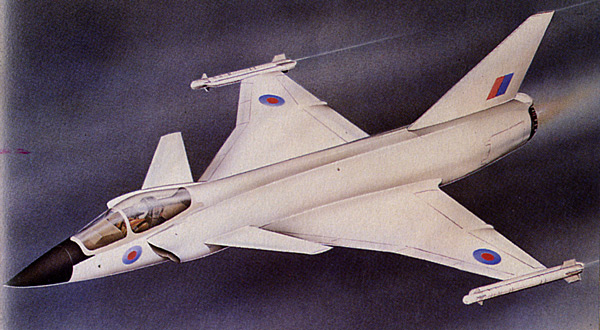
It didn’t fly but the basis for the Gripen design may well have been the BAe P.106..I’m not saying that it was copied but that it would’ve given important clues as to what might be a good idea to pursue. Saab after all would’ve been studying other concepts since the days of the Viggen.
We’ve seen a BAe P.106- like wind tunnel model at NAL in India. It was apparently also tested and might have been studied as a possible LCA configuration. For some reason, Dassault’s consultancy did not reveal any need for the canard and instead a double delta wing was preferred. It kept weight slightly lower by not requiring the structural supports for the canards and their actuators.
KramerSo the MKI, Mirage-2000 and MiG-27 will participate in Indra-Dhanush (Rainbow) from the IAF side alongwith the A-50EI Phalcon AWACS. Note the emphasis on protection of a high value asset and the mention of logistical management for moving large forces for a “out of area contingency”.
Just received this from the Indian Air Force: Indo-UK Air Force Exercise Indradhanush will take place at Air Force Station Kalaikunda, in West Midinapur district, West Bengal from 18 Oct 2010 till 03 Nov 2010.
This would be for the first time when RAF (Royal Air Force) Typhoons would be seen in a joint operational scenario in India. The IAF would be participating in this exercise with the Su-30 MKI, Mirage-2000, MiG-27 and Phalcon AWACS. The RAF would also be deploying its E-3D AWACS and VC-10 mid-air refuellers.
During Ex-Indradhanush, specific emphasis will be on exposing more IAF aircrew and controllers to missions like Large Force Engagements, and protection of High Value Aerial Assets — roles routinely undertaken by RAF as part of coalition/expeditionary force deployment around the globe. It will be for the first time that IAF AWACS will participate in a joint AF exercise. The other novel exposure is expected to be logistical management needed to move large forces for a possible out of area contingency.
KramerSo where does that put the HJT-36 trainer that was intended to replace the Kiran?
As per HAL chairman’s recent interview with Force, they received an order for 71 IJT-36 Sitaras from the IAF this April. The delays were due to the delay in the delivery of the first Al-55I engine from Russia.
Kramerdo you see any big resemblance to any flying design? except maybe Rafale?(gripen was first) the only two that i know have close-coupled canard and delta.
and also, as you mentioned it the use of canard for airbrakes/groundpressure it totally unheard of.
how about the BAe P.106 design ? it was well known that BAe had dealings with both Saab and HAL during the time that the RAF decided that it didn’t want to have a single engined light fighter in service.
KramerExercise Indradhanush to begin soon. RAF will field its Typhoons.
Top-notch fighters and other aircraft from India and UK will match their combat skills in the `Indra-Dhanush’ joint exercise at Kalaikunda airbase in West Bengal later this month. While the British Royal Air Force will deploy their spanking new Eurofighter jets for the exercise slated to begin from October 20, the IAF fleet will be led by the `air dominance’ Sukhoi-30MKI fighters.
“The exercise will be held in an AWACS (airborne warning and control systems) environment, with air defence being a major thrust area. We will be fielding different types of our fighters,” said a senior official. Both the Indian and British forces are also expected to use their mid-air refuelling aircraft, like the IL-78 and VC-10 tankers, during the combat manoeuvres.
“The aim of the joint exercise is to learn from each other and enhance mutual operational understanding. With every exercise, IAF has gained valuable experience and gained respect as a highly-professional and motivated force,” the official added. The exercise comes at a time when the $10.4 billion project to acquire 126 medium multi-role combat aircraft (MMRCA) for IAF is in the final stages of selection process.
KramerIf it is, then the chances are there will be enemy fighters around. Or even if some C-17s did get through, would 5-8 tanks make a difference!?
Will the airfields be secure?
What about SAMs?Better to use them for paratroopers. See my point?
India HAS inducted tanks and APCs into theaters where land or rail links were not available through the air route when required. This was done in Sri Lanka for the IPKF as well as Thoise during a period of tension. It is not so remote a likelihood that it would make a C-17 purchase not worthwhile- besides the C-17 has other advantages as well which aren’t just restricted to ease of handling tanks. the IAF ACM is on record as having stated that the IAF looked at 8-10 options and the one that best met their requirements for short field operations was the C-17. He also said that the IAF will look for capabilities that match the aspirations of the country. As the aspirations and the sphere of influence grows the capabilities of the IAF must grow to match those aspirations too. Same reason why the IN is now looking for more (likely new) LPDs after the INS Jalashwa, where it had none in the past.
KramerDr.V K Saraswat (Director General of DRDO and Scientific Advisor to the Defence Minister)said that there has been interest expressed by some countries in the Nag, Akash and LCA..
PTI | 04:10 PM,Oct 09,2010
Meanwhile, Saraswat said many countries have evinced interest in buying Akash, Nag missiles and light combat aircraft ‘Tejas’ developed by India.There is possibility of export of many things, including the LCA whose performance and capability matches with the best aircraft in the world in that category.”Many countries are approaching us for Akash missiles, Nag missiles and LCA,” he said but declined to name them, saying “it’s premature”.Saraswat, however, stressed that DRDO’s main role is to meet the indigenous requirements of the armed forces.”Export is only incidental,” he added.
Wonder which countries these are..


 Sign In







