 Kramer
Raw conclusion is simple: Gripen E/F wasnt the best aircraft overall in the final evaluation, but met min.req on all aspects and it was the most economical buy. No foul play was involved in this evaluation, that has ben reported from major military media as most likelly the most objective and torough competition we have seen so far in a fighterbuy internationally.
The most objective and thorough competition? Don’t know about that, but one thing’s for sure; the Swiss AF didn’t get the fighter that they wanted after having conducted a thorough evaluation of the contenders. A competition that evaluated the candidates eventually chose the one that was most economical, not the one that met their requirements the best.
The Swiss AF most likely won’t be disappointed since the Gripen NG is no slouch either, indeed is one of the best in its weight class and the Swiss AF really isn’t likely to ever even use their fighters in anger, but economics played the biggest part in this selection. Boeing was smart, pulling out its Super Hornet from the competition saying that the Swiss AF requirements for the F-5 replacement were too minimalistic, meaning that they knew that the Super Hornet would be good in the evaluations but wouldn’t fit their budget.
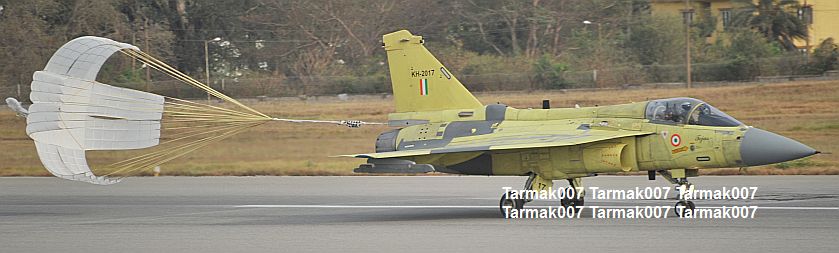
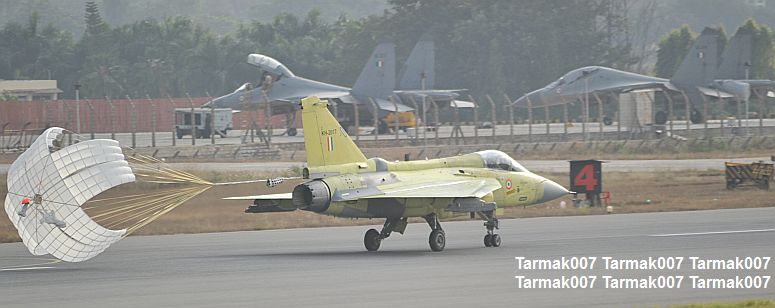
KramerMore pics of LSP-7 at its first flight


KramerAll the Swiss evaluation leaks referred to the Gripen C/D, not the NG. The leaked extracts were from the original evaluation, when there was no NG prototype to evaluate.
I know that. They accounted for the MS-21 configuration and still it didn’t meet all the Swiss requirements and stood below the Rafale and Typhoon. And anyway, the timeline for the Gripen NG being service ready is such that a Tejas Mk2 will be into more than detail design development by the time it will be ready. The Gripen C/D and NG is also a lot costlier than the Tejas Mk1 and 2 will be and will offer little gain in performance and a lot less in terms of experience for India.
Quadbike’s right about the faults of the LCA programme, though wrong, I think, about the solution. As you obviously realise, Indian military aircraft development has been badly managed. Too ambitious too quickly, too little account taken of politics of potential foreign partners, & an appalling lack of continuity. It should have started with licence-building, then progressed through incorporating more Indian-made parts, to local modifications, then indigenous design of a new type using imported critical components such as engines . . . you get the picture.
The Gnat/Ajeet & Jaguar programmes have both gone the right way, but it should have begun earlier, been part of a general trend, & been carried on. The experience gained on Ajeet should have been put into a new type, less ambitious than LCA, which could have been in service 20 years ago, to be followed by something like Tejas.
This process should ideally have started a decade before Gnat, perhaps with Vampire. Marut was the wrong way. But that said, throwing away the experience gained on it was criminal.
All this has been discussed to death on this forum on earlier IAF threads and there is little to discuss now about what could’ve been. However, not taking the LCA to its fruition will be a disaster for Indian aerospace since it will essentially replicate what happened earlier after the Marut. I don’t necessarily agree with what you say here about the Marut being the wrong way since the follow-on HF-71 was a promising design as was the Marut itself which was never exploited to its fullest potential by the IAF and retired prematurely. And India had been licence manufacturing MiG-21s well before the Jaguar, so that was not an issue.
Thinking of what might have been makes me feel a bit sad.
It does make a lot of us feel sad, but India just has to bite the bullet and develop the LCA to its fullest potential in order to not have such a situation repeat itself.
KramerIndian engineers will reach that level, but only if they start from the bottom, when you learn something you learn it step by step, look at the complexity of the LCA, India’s second fighter project compared to the Chinese ones or the Russian ones when they started off, they aimed at achieving something they can, rather than trying to build the best fighter in its class. If you bite more than what you can chew, you will end up with exactly the position where the LCA is, too far down the line to drop the project, yet too many problems to have it operational. I am sure if we went for something less complex, say without the complicated FBW, Western derived engine, the delta, the use of composites etc, we would have had an operational fighter many years ago, and from then on we could have already been developing the AMCA, a more sophisticated platform. It is not easy to skip generations and somethings are only learnt from experience.
When you state that, how on earth can you justify the LCA being dropped and a Gripen being acquired instead? India will forever be importing fighters from other nations if that were to happen.
As for the rest of the stuff you wrote on the LCA, its all in the past and there have been a lot of discussions on that. At the moment, the IAF has a stated intent of purchasing 6 LCA squadrons. the IN has committed money to prototypes and has now ordered 9 N-LCAs. These are committed funds, which indicate a firm backing for it. There is neither interest nor intent to acquire the Gripen or Sea Gripen since at the very best, it offers a bit more than the Mk2 will, whereas it will cost more and will give India’s aerospace industry precious little when we already have an MRCA.
And as we’ve seen in the Swiss evaluation, the Gripen NG isn’t as hot as it’s made out to be on these forums. Its good for its size, but its not that good that we ought to dump our own program to go for it. The IN will have the option of the Rafale and will guaranteed find it better than any paper Sea Gripen that they will need to fund. Even if we are to assume that the Sea Gripen program was problem-free and that it were as capable as the Rafale (which is not going to happen since its smaller and Saab has precious little experience building a naval fighter), the IN can simply have HAL build Rafale M’s..a far far less riskier approach than funding a Sea Gripen that no one else has ordered or will operate.
As for the Saras, the difference is that it is essentially a transport/passenger plane the risks are higher, there is no ejection mechanism etc.
So you believe that an ejection seat means that you can take any risk despite knowing that a certifying agency will not approve of it. I give up. Believe what you want. It wont change the facts I’m afraid.
May be they should just concentrate on meeting IAF requirements with the MK 1 and making the MK 2 a reality rather than spending time and resources on building what will be a very limited Naval fighter. Especially at a time when the Navy’s commitment to the platform is wavering.
yes, it is wavering..which is why just a fortnight ago, they committed funds to order 9 N-LCAs. :rolleyes:
India’s carriers have limited deck space and unlike the IAF they cannot afford to have a fighter which is less effective when they can get something more effective.
the Sea Gripen won’t be any more effective than a N-LCA. Nothing on it makes it more effective. If the IN wants a more effective fighter than the MiG-29K then they have the Rafale M to look at. Bring the avionics on board to the F3+ level and the IN doesn’t need to bother about any paper designs
KramerExperience and Expertise counts, Indian engineers have a long way to go till they reach the level of the SAAB,Dassault,Boeing,EADS guys so for them at this point it would be rather easy. They have a much better product in the Gripen to begin with.
Not going to argue on the other subject you want to play by the rules, fine take it slow and easy and NLCA will soon be not needed by the Navy.
And if we take the advice of those who believe what you do, then Indian engineers will never be able to reach that level. It is precisely this narrow minded thinking that IAF and GoI displayed in the 1970s and early 80s that led to all the Marut experience going nowhere. And the result was that all the expertise had to be built from scratch when the LCA program was started.
Its not me who wants to play by the rules- it is the way things work in aviation. Unless you want another Saras like crash that sets the program back by another 3-4 years while a probe looks into what went wrong and then CEMILAC says “hey we told you so”. I’m sure if you lost a loved one in such a crash that could be attributed to ignoring safety rules, you’d say never mind they didn’t play by the rules, but not everyone is as nice as you.
KramerI know there are rules, in govt-govt deals these can be broken and should be if we need to speed things up. If we are fine with importing stuff all the time then let it be like it is, follow the rules, procedures, and deliver the product when it will be considered obsolete.
wow..rules are there to be broken in the Govt. ?! Which world do you live in ? 😮 its the exact opposite, where people don’t have the right or the motivation to break rules which could backfire and lead to a big scandal later on.
CEMILAC is a certifying authority, which in every country is always owned by the Govt.. They will not clear the certification unless they are happy with the methods adopted for analysis and with the testing done for the parts. This BS about them being a govt. organization and hence turning a blind eye is so ignorant that the very fact that you’re suggesting it exposes your real world experience and knowledge.
Suggesting that its just a military airplane and that a pilot can eject and hence you should rush first flight is so immature as to show everyone out here just how much your opinion matters.
SAAB can just build one just like that, their experience is immense compared to ADA/HAL, if they get project sanction and funding now, I am willing to bet the Sea Gripen will overtake the N LCA programme, despite the headstart NLCA has.
Yes, of course they can build one “just like that” because they’ll be immune to any engineering issues (because you believe so). The only issue of course is to find someone who can believe them enough as to bankroll them. :rolleyes:
KramerTejas LSP-7

KramerYes, and JF-17 airframe looks better too. http://khudi.files.wordpress.com/2009/06/jf17.jpg
move over JSR, we now have a new village you know what..:D
KramerOh that is not a military aircraft, and in that sense the Chinese regulator is being tough because the aircraft will eventually need FAA certification, which it won’t get if it don’t pass stringent tests. NLCA don’t need that they can just look the other way and take it easy on the ADA. Let it fly and then integrate things redesign for safety etc can come at a later stage, even active fleets are grounded and modification done to make them safe during a later time, I guess it don’t matter much.
China has many successful programs so it can afford to play the tough game now. Still I am sure if the aircraft in question was a priority as LCA is to us, the certification would have done ages ago.
The pussyfooted approach with respect to testing has already cost LCA dear, who wants a 100% safety record when flight envelope expansion is so slow, one or two jets are always lost in the process of testing in most countries, its the norm. Look at the Gripen, F 16 etc, they had several crashes initially but aggressive testing meant they has their flight envelope expanded to paper specs faster.
So what you’re saying is that military certification is just eyewash and since a pilot can eject (if the situation is such that a pilot can eject), you can willy nilly approve any method or any part.
You’re only highlighting just how little you know about aviation in the real world.
p.s.: if an LCA crashed its precisely your kind of people who’ll jump up and down with suggestions about how the Sea Gripen or Gripen has now fully emerged from the shadows.
KramerAs a matter of fact, JF-17’s airframe is better than those of F-16 Block 52+ and Rafale due to the use of DSI.
😀
KramerI am sorry if i hit a nerve, look at China or any other country where the certification authority and the company that develops the plane are both government owned, I doubt they cite small issues and delay the first flight.
Your suggestion that certification may not delay a program does not match facts. China’s ARJ21 is already delayed by CAAC not giving it certification in time. C919 is going to be delayed because CAAC is not going to start work on certifying it till the ARJ21 is certified.
Nothing has been announced, but Comac now expects the Civil Aviation Administration of China (CAAC) to certify the ARJ21 as airworthy in September or October 2012, says one industry official. Another executive involved in the program thinks 2013 is more likely, 11 years after the project began.
Comac has yet to officially acknowledge the latest delay to the ARJ21 program. Its last announcement on the matter was that certification would be achieved by year-end. This date already represented a delay from the original, admittedly ambitious, objective of 2006.Strictly speaking, the FAA’s role is to validate the CAAC’s process, not the aircraft itself. But officials say the U.S. agency believes it can only be satisfied with the process if it follows it all the way to the end in this test case; only then can the C919 effort begin. A spokesman for the FAA declined to comment.
The CAAC is taking a properly tough line with Comac, says an industry official. There is not the slightest hint of a national regulator going soft on a national-champion manufacturer. In one instance, says another person close to the program, Comac was slow to recognize that a major ARJ21 part had failed a test, even though it very obviously had. Then the company hoped simply to repeat the test. The CAAC insisted on a redesign.
While an industry official familiar with the C919’s design says it will not have the faults of the ARJ21, the latter aircraft’s track record does not bode well for rapid certification flight tests. The ARJ21’s faults have included problems with the flight control system and an aluminum-alloy wing that broke before reaching its ultimate load. Flight control issues have resurfaced and avionics suppliers Honeywell and Rockwell Collins have been asked to change their equipment, not because it did not meet the specification but because a regulator, perhaps the CAAC, was not satisfied with the specification.
More tests are also needed. A program executive says he expects, or hopes, that if Comac fully satisfies the regulators, then the FAA will relax its attitude.
Crucially, Comac has yet to hand over the ARJ21 to the CAAC so the regulator can conduct its own tests, industry executives say. A regulator would normally need at least 10 months with the aircraft, accumulating 1,000 flight hr., which begin when the manufacturer issues a type inspection authorization. It is not clear when Comac will sign that authorization. And, despite the CAAC’s reported punctiliousness, there is the possibility the FAA may take issue with some of the Chinese regulator’s processes. If that occurs, there will be even further delays.
I was just saying that this is ardent red tapism, don’t need to be a rocket (or aviation) scientist to figure this out.
Perhaps you should read up more on what the role of the certification authority is- whether it makes the first flight or not is immaterial if the CEMILAC doesn’t certify it. The major parts that need to be validated on the N-LCA are the re-designed landing gear and LEVCON (along with the FBW but that doesn’t have the certification issue), and if those are the parts having issues then what’s the point of making the first flight? They will need to be re-designed anyway to cater to CEMILAC’s concerns. Their job is to make sure the N-LCA is safe to fly, not to make sure that it flies just for press releases.
If the N-LCA flies, it will be with CEMILAC’s blessings or else there will be no flight till their concerns are met. It may be a re-design, it may well be a concern with some of the methods adopted for doing the analysis. It may be a small issue or a major issue, we don’t know. We certainly don’t know enough for you to go criticizing them for red-tapism.
KramerSo who invented DSI? Lockheed? That’s defunct.
yes, Lockheed or Lockheed Martin. the difference is irrelevant. it certainly wasn’t any Chinese entity, so sorry to burst your bubble.
Kramerbetter radar, better airframe (DSI), better engine (WS-10), radar absorbing paint, better cockpit, better ECM
DSI alone makes it better !?! 😮 :p
Ok, I get it. That means the JF-17’s airframe is even better than the F-16 Block 52+ and the Rafale and the Typhoon and is only bested by the F-35 and J-10B..very good..
who says the WS-10 is better than the F110/F100/M-88 ?! :rolleyes:
who says that the J-10B has a better cockpit than the other 2? or that it has better ECM? who says it has a better radar? :rolleyes:
KramerEven West Europe doesn’t have DSI. So what makes you think Russia has DSI like China does?
it’s obvious that Western Europe and Russia haven’t developed DSI because of 2 reasons:
1) a fighter on which to develop DSI doesn’t exist for Western Europe, except the Gripen NG.
2) Russia doesn’t seem to be interested in it. if they wanted to, they’d have developed it. If the Chinese could, the Russians definitely could. Unless industrial espionage played such a large part that the Russians find that insurmountable. 😉
KramerTo be fair, it wasn’t Lockheed Martin which invented DSI. Back then it was the Lockheed Corporation before the merger which was the first to explore DSI. AVIC didn’t exist until 2008.
Who cares if it was Lockheed or Lockheed Martin ? It wasn’t a Chinese invention if you want to make it look like they invented DSI. Chinese interest in DSI began a few years after the F-16 prototype with DSI had already flown.


 Sign In







