 luisdo
erased24
Yes I do have some pictures of Cuban Mi-14 the quality is bad and I have them saved on a program called Paparport,
I don’t know how to post them from there but If you giveme you e-mail I will be glad to send them to you.
Luis
luisdoFlex
You have some pictures from Cuba that I”ll like to see.
The MiG-29, MiG-23, MiG-21, L-30, Mi-17, Mi-24 and the KA-27 can you post some of them.
Thanks
Luis.
luisdoerased24
Yes, the Marina de Guerra Revolucionaria (Navy) seems to be unsing the same roundel as the DAAFAR (Air Force), at least on the pictures that I have seen of the Mi-14 and Ka-28.
I have to tell you that the pictures that I saw of the Mi-14 were in black and white and I love to see if anybody has any pictures in color.
Luis
luisdoHey no problem with any body.
But since this is a military forum, mainly Air Forces let’s try to keep this concerning to the DAAFAR please. I need all the help I can get getting pictures on the Cuban Air Force and if any body has any pictures, please post them here.
I have seen all the pictures from the DAAFAR museum, I’m looking for operational pictures, does any body know were I can get them.
Thanks Luis
luisdoSean O’Connor
That page that put the link to is control by the Cuban Goverment, and he even has airbases where, there are no airport, so is part of Cuban dis-information. Now Cuba only has two airbases that remain opened, with only some 20 Mig active.
As far as the embargo, me being Cuban I do agree with you, it should end. However that is not the cause of the cuban problems the problem is Fidel Castro and his politics.
Take care Luis
luisdoSome more pictures never seen before from the DAAFAR.
Check in the middle a KA-28 Kamov from the Marina de Guerra Revolucionaria Cubana, only five were given to Cuba, and were based at Mariel together with some Mi-14. This picture was taken December 15Th, 1996. I don’t think these Kamov KA-28 are flying any more.

DAAFAR in 2004
MiG-23ML serial 243, MiG-21BIS serial 656, L-39C, now only about 12 Mig-23ML and about 5 L-39C remain in service, since 1994 the MiG-21BIS were taken out of service. Only about 6 MiG-21UM remain in service at the only two air bases that are opened, San Antonio de los Baños and Holguin.
Zona Aérea Occidental
2 Brigada de la Guardia “Playa Girón”
Comando de Defensa Aérea
UM 1779 Regimiento de Caza – San Antonio de los Baños
UM ???? Escuadrón de Caza Mixta
MiG-29A [3], MiG-29UB [1]
MiG-23MF/ML [4/4], MiG-23UB [2], MiG-21UM [3], L-39C [3]
Some Mi-17 also some based at Kawana in Varadero.
Zona Aérea Oriental
3° Brigada de la Guardia “Cuartel Moncada”
Comando de Defensa Aérea
UM 1724 Regimiento de Intercepcion – Holguín
UM ???? Escuadrón de Caza
MiG-23ML [8], MiG-23UB [2], MiG-21UM [3], L-39C [2]
Plus Some Mi-17
As far as the Structure of the Daafar, this is the the chief of the 2 Brigada de la Guardia “Playa Girón” coronel Félix Gustavo Alonso on the right.
This Picture was taken December 2 of 2004.

Cuban Mi-17


Cuban Mi-24D which were based at Cienfuegos. However some Cuban followers want to put this squadron at Santigo de Cuba, which is not true.
UM 3684 Regimiento de Helicópteros – Cienfuegos (reserve)
UM ???? Escuadrón de Helicópteros de Propósitos Generales
9 Mi-8 (Aerogaviota c/s)
UM ???? Escuadrón de Helicópteros de Propósitos Generales
9 Mi-8 (Aerogaviota c/s)
UM ???? Escuadrón de Helicópteros de Combate
12 Mi-24D (std)
I hope every body enjoys this pictures Luis.
luisdojunipergoth
I completly agree with you. I have lots of info on the Cuban Air Force, and if the editors need any help I’m willing to get them what ever they need. Here I’ll put some pictures of a Cuban MiG-21BIS


A close-in view of the side of a Cuban MiG-21 fighter aircraft showing the number 672. It was flown to Key West on September 20, 1993 by a defecting Cuban pilot.
I also know some of the former pilots of the Cuban Air Force, the most notable are Orestes Lorenzo and Rafael Del Pino.
Thanks Luis
luisdoCuban Air force in the early 1990s
REVOLUTIONARY AIR AND ANTI-AIRCRAFT DEFENSE FORCE in 1990
Zona Aerea Oeste
2a Brigada de la Guardia “Playa Giron”
Comando de Defensa Aerea-Air Defense Command
[/LEFT]
[LEFT]Zona Aerea Central
1a Brigada de la Guardia “Batalla de Santa Clara”
Comando de Defensa Aerea-Air Defense Command
Unit # Aircraft Type Role Air Base
UM 1890 Regimiento de Intercepcion
UM Escuadrón de Intercepcion 12 MiG-21Bis, 2 MiG-21UM AD/Attack Santa Clara
UM Escuadrón de Intercepcion 12 MiG-21Bis, 2 MiG-21UM AD/Attack Santa Clara
Comando Aereo Tactico-Tactical Air Command
UM 2661 Escuadrón de Caza-Bombardeo 12 MiG-23BN, 2MiG-23UB Attack Santa Clara
UM Escuadrón de Caza-Bombardeo 12 MiG-23BN, 2MiG-23UB Attack Santa Clara
UM 3684 Regimiento de Helicópteros
UM Escuadrón de Helicópteros de Propósitos Generales 9 Mi-8 Transport Cienfuegos
UM Escuadrón de Helicópteros de Propósitos Generales 9 Mi-8 Transport Cienfuegos
UM Escuadrón de Helicópteros-Combate 12 Mi-24D Attack Cienfuegos
Other Important Airports that may be use from time to time:[/LEFT]
Zona Aerea Oriente
3ª Brigada de la Guardia “Cuartel Moncada”
Unit # Aircraft Type Role Air Base
UM Regimiento de Helicópteros
UM Escuadrón de Helicópteros de Propósitos Generales 9 Mi-17 Transport Camaguey
UM Escuadrón de Helicópteros de Propósitos Generales 9 Mi-17 Transport Camaguey
Comando de Defensa Aerea-Air Defense Command
UM 1724 Regimiento de Intercepcion
UM Escuadrón de Caza 12 MiG-23ML, 2 MiG-23UB AD/ Attack Holguin
UM 3710 Escuadrón de Intercepcion 12 MiG-21Bis, 2 MiG-21UM AD/Attack Holguin
UM 3840 Escuadrón de Intercepcion 12 MiG-21Bis, 2 MiG-21UM AD/Attack Holguin
Other Important Airports that may be use from time to time:
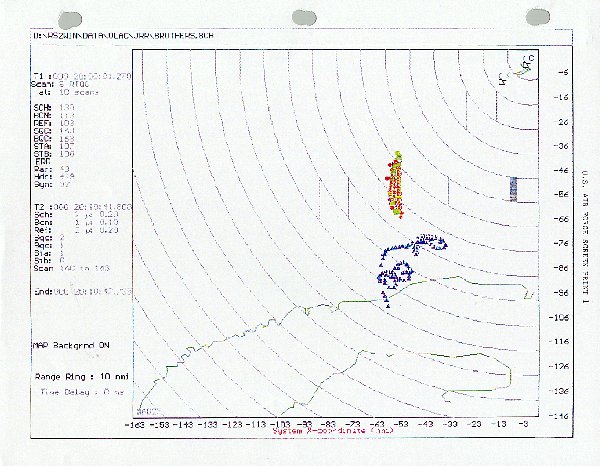
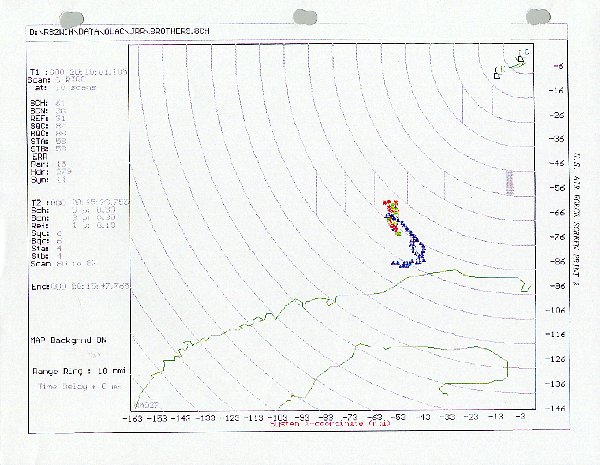
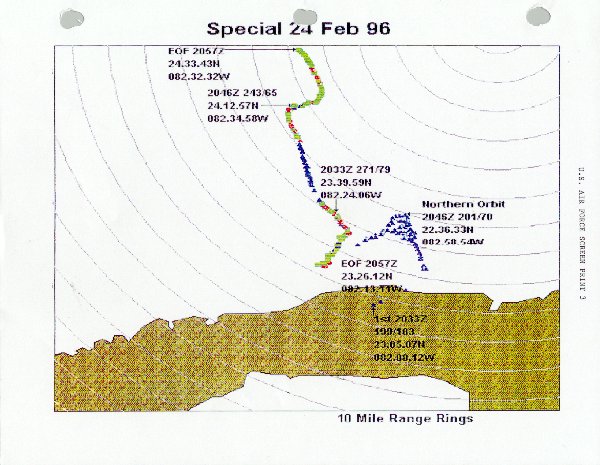
luisdoI have a few concerns with what many people have been writing about the Brothers to the Rescue shoot down.
First I have some charts from the US Air Force of the events of that day. By the way the Cuban fighter planes are in Blue so that you can follow the events. Only one of the Brothers to the Rescue planes went over the 12-mile Cuban Air space limit by two miles, the rest of them did not cross that line.
As far as a terrorist organization, where is the proof, I only know about a incident earlier that year, where one of their plane flew over Havana, dropping leaflets with the United Nations Declaration of Human Rights, o I forgot that’s a crime in Cuba.
luisdoHello Camaro.
I hate to disagree with you, and with all the respect in the world, I think the problem is in the meaning of the word shot down. To me shoot down is when the plane is hit by another aircraft, and you loose control of that plane and crash. Let see what Arthur Piercy wrote in the link that you send.
I’ll put a little piece of Part 1 and them part two.
http://www.urrib2000.narod.ru/ArticPiercy.html
Arthur’s dream is to build his own aircraft and to fly around the world. And he is already part of the way there – Arthur is a licensed pilot again and he has started to build his dream aeroplane. But to appreciate the courage and vision of Arthur Piercy, you need to hear him tell the story himself, in his website:
Project Dreamwings
See in the second part of the article, the Arthur´s story of the accident, and the pictures of the crashed Mirage F1CZ damaged by the R-60MK missile of the Major Alberto Ley Rivas´s MiG-23ML, with the Piercy´s commentaries.
This is my recollection of events leading up to the accident.
It was approximately 1500B (local) on 27 September 1987 when all hell broke loose. There had been numerous call-outs previously which proved to be nothing at all, so when the hot line started ringing there was very little reaction. However this time the call wasn’t to go on cockpit standby like before, but rather to scramble immediately.
The letter home I was writing went flying as I scrambled to get into the cockpit. In a matter of minutes we were screaming down the runway. I was lucky I was number two in the formation as it was about 45 deg C outside and the take-off was hair raising. How numbers three, four, five and six got airborne I don’t know.
After take-off we remained low level and set heading for the combat zone. It was our intentions to remain low level for as long as possible to avoid being detected by the Angolan radar’s.
The order came to pitch about 10 minutes after take-off and up we soared like homesick angels. We leveled of at about 30 000′ and the mission controller sounded like a horse racing commentator with all the instructions he was giving us to intercept the targets. Next came the order to jettison the drop tanks. This command is a little strange for me, because one never throws the tanks away in training so only when I saw a 1 200 liter tank falling away from the lead aircraft did I know this was no training sortie. It was serious. The adrenaline was flowing.
The next thing I saw was a Mig 23 flying through the formation about 300′ below us. My first reaction was WOW what a great looking aircraft. This was the first time I had seen one in the flesh so to speak. When he started turning only then did I see the second Mig. I called the engagement and started turning. I was doing Mach 1.3 (about 1600 km per hour) and he was going like hell so the turn was so wide I almost lost sight of him.
This where I get a little frustrated. For 10 years I have trained for this day and the majority of the fight I cannot recall. WHY! Anyway the next thing I remember is this Mig coming head on at me from about my one, two o’clock position. Still turning towards him I remember flicking the trigger safety over to the cannon position. If he was going to fly through my sights I was going to squeeze off a few rounds. Unfortunately for me he got off the first shot.
There was a bright orange flash from his left wing and then this incredibly fast telephone pole came hurtling towards me trailing a solid white smoke trail. What more is that it was cork screwing so I was never sure where it was going.
In all our training we were taught to break towards the missile. This could or should create a tracking problem for the missile and cause it to possibly overshoot.
But faced with reality I found it took a lot of willpower to fly towards something I knew was trying to kill me. However, I kept breaking towards it and I watched it corkscrew over my right wing and disappear behind me. I thought it had missed until I I heard a dull thud and felt a light bump on the aircraft. I immediately scanned all the gauges but there was not indication of any damage. When I looked up again the Mig flew over the canopy and disappeared behind me as well.
I immediate informed the leader that I thought I might have been hit and his reaction was: “OK let’s go home.” I did not need a second invitation and I rolled the aircraft onto its back and headed for the ground.
With hindsight it appeared that the whole fight whole fight lasted no more than 60 seconds from the time we pitched until I got the ‘go home’ command.
This is perhaps where I got a fright for the first time. I had not retarded the throttle any and I was rushing at the ground in a vertical dive. When I pulled the stick into my stomach to recover from the dive all that initially happen was the aircraft changed attitude but not direction. The momentum was so great the aircraft carried on descending. Just when I thought that is the end of me, the aircraft bottomed out just above the trees.
With all this rolling and diving I was separated from my leader and had no idea where he could be. Just then I started getting a radar warning audio in my helmet from my 6 o’clock (from behind). Some radar was looking at me. Was it the anti aircraft batteries or was it the Mig? I radioed to the boss that I thought someone was behind me. His reaction was to tell me get as low as I can, as fast as I can and not to turn to look behind me.
My first reaction was – I was so low I was raising a dust cloud like those crazy American Road Runner cartoons. The leader said he could set any dust trails so I eased the aircraft lower. The radio alt read 50′ and the speed approximate 730-740 knots.
At this stage I was beginning to think that I’d over-reacted and that I might not have been hit. Had I got out of the fight too early? The aircraft was performing as if there was nothing wrong with it. No vibrations and no handling difficulties. Oh well tomorrow I’ll be back I thought.
It was now about five minutes later and half-way home when the first warning light flashed on. EP pump failure. Instinct must have taken over because I thought my first reaction was to call the boss and tell him I have a failure. He pulled out his emergency check list, and started reading the failure procedures for me. All the necessary switches had be set. I don’t remember doing them.
While he was reading the EP pump failure I got the second failure, a right hand fuel pump failure. This is not too serious under normal operating conditions as the engine can gravity feed. While the boss was reading the fuel pump failure procedure and I was confirming that they were done the following light on the warning panel appeared. A HYD 2 system failure.
This caused a little concern initially as the aircraft’s main systems use hydraulic fluid. Undercarriage, flaps, controls, airbrakes and of course wheel brakes. After a quick and careful analysis of the situation I relaxed a little. The HYD 2 system is basically a standby system for the main HYD 1 system. All I had really lost with the HYD 2 failure was the nose-wheel steering. It could have been worse.
By now we were far enough away from the combat zone and the dangers associated with it, so I started to climb to try and conserve fuel.
The next thing that happened is that I was getting an audio warning but no visual warning when I looked at the panel. The hours of simulator training came into action – a pending OIL failure. This concerned me a little more than the rest of them. There are two critical components that use oil. The throttle and the nozzle flaps on the engine.
Flying the aircraft on the emergency throttle (electrically operated) is not easy. The throttle is very slow and unresponsive.
At this time the leader pulled in next to me to inspect for any damage. He reported fuel leaking out the aircraft and the drag chute was missing. As he said that the 500 liter warning light came on. The fuel gauges still read 1700 liters so now which one is right. A little more pressure was applied to little old me.
Landing a perfectly serviceable aircraft on a 7500′ runway requires some work. I was going to have to do it on emergency throttle and without a drag chute – a task I felt I could handle.
I planned to land the aircraft short on a new stretch of runway that was being constructed. This would give me an additional 500′ to play with on the landing roll. I got her down at the threshold but when I applied the brakes the only thing that happened was the expression on my face changed. I pulled the nose higher so that there would be some form of aerodynamic braking but this did not help. About a 1500′ from the end of the runway I applied the emergency hand brake with little effect. The arrester bed or sand pit at the end of the runway was my next hope of stopping this machine.
The aircraft went through the arrester bed like a hot knife through butter. No braking effect whatsoever. The next ‘obstacle’ was the security fence.
Where does ones sense of humor come from in at a time like this? I was about to go AWOL (absent without leave) with a multimillion rand aircraft. The board of enquiry are probably going to ask me who authorized this illegal departure from the security area. At the same time I was scared I was going to drown in the river just beyond the fence. My seat has a land survival pack in it and not an inflatable dingy!!
When I went through the fence I remember putting my hands in front of my face. It was at this precise moment that there was a loud bang. I remember smelling cordite or gunpowder and then everything went black. I felt the rush of wind over my face and the feeling of silk on my cheek. With hindsight I realized that when the ejection seat went off, my helmet must have come off as well and the silk I felt on the cheek was the ejection seat’s stabilizing parachute and not my personal parachute.
When I regained my senses I was lying in the sand on my right hand side. The first thing I attempted to do was to roll onto my back and when I pushed on the sand with my left arm there was this incredible piercing pain in my arm. The left arm was broken just above the elbow. I then looked down at my legs to see why they had not moved and I could not feel them at all. I realized that the ejection seat was still strapped to my back and thought that this might have something to do with the lack of movement in my legs. I had no idea that the neck was dislocated.
I then started looking around and the first thing I saw was that I was lying directly in front of my aircraft. Here was a F1 Mirage pointing straight at me. The problem wasn’t that the aircraft was pointing at me but rather that there was a fire just behind the left air intake. I know there is a fuel tank there but even worse was the fact that the ammo bins (with over a hundred rounds of 30mm ammunition) was just under the fire. If those rounds started going off I was in the line of fire.
When the fire brigade arrived on the scene they naturally came to my aid first. My immediate advice to them was that no one touches me until a doctor pitches up and that they immediately tend to the fire on the aircraft. There is no way that I want to be shot at by my own aircraft.
When the doctors arrived with the ambulance my first concern was they treat my arm for pain, then they can worry about the rest. Even after 2 morphine injections there was still not relief from the pain. I was later told that the adrenaline in the body was so high that the morphine had no effect.
Just before they pushed me into the back of the ambulance I passed out only to wake up in 1 Military Hospital in Pretoria 10 days later.
It was another seven months before I left the hospital with a C6, C7 fracture of the neck and permanently confined to using a wheelchair.
Photos
——————————————————————————–
The following photos were taken by the board of inquiry. ALL the notes and comments attached to the photographs are only my thoughts and opinions. In no way do any of the comments represent the SA Air Force.
. This is a photograph of the arrester bed and was taken from the end of the runway. It was suppose to have stopped the aircraft.
This was taken from the end of the arrester bed. The road in the foreground is actually the access road just inside the security fence
Standing where the security fence used to be. The rock in the foreground I believe was responsible for the collapse of the left main landing gear. The person in the background with the white shirt is standing next to the ejection seat. That is where I was found still strapped to the seat.
A view looking back from where I had come. As you can see, the people standing in foreground (right corner) are standing next to the ejection seat. Right in the line of fire if those HE rounds went off.
. The person on the right is standing next to the remains of the security fence.
Sorry site for such a graceful machine.
The rock can be clearly seen in the foreground and the person in the top left corner with the white shirt is with the ejection seat. Distance from the aircraft is approximately 100 meters.
I understand these picture were taken about an hour after the accident. The time was about 1630B.
. An aerial view of the distance traveled.
It was later proved that the 64g impact on the aircraft when the nose hit the ground caused the seat to eject. The handle pops out at that g so I did not attempt an ejection as was thought
This one “intercept radar” that will probably not be repaired or used for spare parts. My “panic book” I was using during all the emergencies is lying on the dash board.
A close-up of the damage done to the nozzle flaps. Note the empty hole above the nozzle flaps where the drag chute should have been. It was shot off when the missile exploded
The telescopic rod which pushes the ejection seat out of the aircraft. The seat does not go through the canopy. Around the rim of the canopy there are explosive charges which break the glass when the ejection sequence is initiated. The telescopic rod was found to be bent forward.
The g-meter. +9.2 and -1.1 are indicated. I cannot tell you where I pulled 9 g’s. Was it the recovery from the dive or the impact in the sand. Who knows?
As mentioned on the previous page, none of this damage caused any ill effects on the handling of the aircraft.
The aircraft was recovered, sent home and half of it was used to repair another which was damaged in another incident back home. At least half of my aircraft was flying again so why can’t I go flying again? . All it took was one small piece of shrapnel in a critical component to cause an accident. The oil leaked out if this little hole and that resulted in me not having normal control over the engine. The throttle needs oil to operate properly. I had to use the emergency throttle which is an electrically operated one and it is very unresponsive. I believe that if there was no problem with the throttle I could have landed the aircraft successfully, without putting any additional scratches on it.
Did this save my life? The ejection seat lying on its back. The handle visible is the one between my legs. Note the damage to the seat on the right hand side where my right leg was. The seat must have impacted with the ground on this side. Surprisingly there where no injuries on my right side. Apart from a dislocated neck, I had broken my left arm.
All the marks you see on the fuselage and tail are shrapnel holes from the missile that exploded near the tail. The burnt section on the jet pipe was caused by an oil leak that was burning. Damage can also be seen on the right flap. Even with all that damage, there wasn’t a single unnecessary vibration on the aircraft, and I had been traveling at 730KTS or about 1360 kilos per hour.
The burnt section on the left intake was caused by the fence which ruptured the fuel tank. Just under that section is the ammo bin and in the aircraft was 150 rounds high explosive (HE) ammo. From my position where I was lying in the sand, directly in front of the aircraft, I could see the fire and I was wondering if my own aircraft was going to shoot me with HE rounds. When the rescue team arrived I sent them to extinguish the fire first.
One of my life savers while lying in ICU. Sally was one of the few people who were absolutely and perhaps brutally honest with me about my condition. At least with her I knew what was happening. Sally I will never forget you! Camaro four times Arthur call it, an accident, and again I do hate to disagree with you, but I think the prove is in what you put as a link, also remember that most Cuban pilots don’t considered this case a shot down.
Thank you very much Luis
luisdoHello Camaro.
I hate to disagree with you, and with all the respect in the world, I think the problem is in the meaning of the word shot down. To me shoot down is when the plane is hit by another aircraft, and you loose control of that plane and crash. Let see what Arthur Piercy wrote in the link that you send.
I’ll put a little piece of Part 1 and them part two.
Arthur’s dream is to build his own aircraft and to fly around the world. And he is already part of the way there – Arthur is a licensed pilot again and he has started to build his dream aeroplane. But to appreciate the courage and vision of Arthur Piercy, you need to hear him tell the story himself, in his website:
Project Dreamwings
See in the second part of the article, the Arthur´s story of the accident, and the pictures of the crashed Mirage F1CZ damaged by the R-60MK missile of the Major Alberto Ley Rivas´s MiG-23ML, with the Piercy´s commentaries.
This is my recollection of events leading up to the accident.
It was approximately 1500B (local) on 27 September 1987 when all hell broke loose. There had been numerous call-outs previously which proved to be nothing at all, so when the hot line started ringing there was very little reaction. However this time the call wasn’t to go on cockpit standby like before, but rather to scramble immediately.
The letter home I was writing went flying as I scrambled to get into the cockpit. In a matter of minutes we were screaming down the runway. I was lucky I was number two in the formation as it was about 45 deg C outside and the take-off was hair raising. How numbers three, four, five and six got airborne I don’t know.
After take-off we remained low level and set heading for the combat zone. It was our intentions to remain low level for as long as possible to avoid being detected by the Angolan radar’s.
The order came to pitch about 10 minutes after take-off and up we soared like homesick angels. We leveled of at about 30 000′ and the mission controller sounded like a horse racing commentator with all the instructions he was giving us to intercept the targets. Next came the order to jettison the drop tanks. This command is a little strange for me, because one never throws the tanks away in training so only when I saw a 1 200 liter tank falling away from the lead aircraft did I know this was no training sortie. It was serious. The adrenaline was flowing.
The next thing I saw was a Mig 23 flying through the formation about 300′ below us. My first reaction was WOW what a great looking aircraft. This was the first time I had seen one in the flesh so to speak. When he started turning only then did I see the second Mig. I called the engagement and started turning. I was doing Mach 1.3 (about 1600 km per hour) and he was going like hell so the turn was so wide I almost lost sight of him.
This where I get a little frustrated. For 10 years I have trained for this day and the majority of the fight I cannot recall. WHY! Anyway the next thing I remember is this Mig coming head on at me from about my one, two o’clock position. Still turning towards him I remember flicking the trigger safety over to the cannon position. If he was going to fly through my sights I was going to squeeze off a few rounds. Unfortunately for me he got off the first shot.
There was a bright orange flash from his left wing and then this incredibly fast telephone pole came hurtling towards me trailing a solid white smoke trail. What more is that it was cork screwing so I was never sure where it was going.
In all our training we were taught to break towards the missile. This could or should create a tracking problem for the missile and cause it to possibly overshoot.
But faced with reality I found it took a lot of willpower to fly towards something I knew was trying to kill me. However, I kept breaking towards it and I watched it corkscrew over my right wing and disappear behind me. I thought it had missed until I I heard a dull thud and felt a light bump on the aircraft. I immediately scanned all the gauges but there was not indication of any damage. When I looked up again the Mig flew over the canopy and disappeared behind me as well.
I immediate informed the leader that I thought I might have been hit and his reaction was: “OK let’s go home.” I did not need a second invitation and I rolled the aircraft onto its back and headed for the ground.
With hindsight it appeared that the whole fight whole fight lasted no more than 60 seconds from the time we pitched until I got the ‘go home’ command.
This is perhaps where I got a fright for the first time. I had not retarded the throttle any and I was rushing at the ground in a vertical dive. When I pulled the stick into my stomach to recover from the dive all that initially happen was the aircraft changed attitude but not direction. The momentum was so great the aircraft carried on descending. Just when I thought that is the end of me, the aircraft bottomed out just above the trees.
With all this rolling and diving I was separated from my leader and had no idea where he could be. Just then I started getting a radar warning audio in my helmet from my 6 o’clock (from behind). Some radar was looking at me. Was it the anti aircraft batteries or was it the Mig? I radioed to the boss that I thought someone was behind me. His reaction was to tell me get as low as I can, as fast as I can and not to turn to look behind me.
My first reaction was – I was so low I was raising a dust cloud like those crazy American Road Runner cartoons. The leader said he could set any dust trails so I eased the aircraft lower. The radio alt read 50′ and the speed approximate 730-740 knots.
At this stage I was beginning to think that I’d over-reacted and that I might not have been hit. Had I got out of the fight too early? The aircraft was performing as if there was nothing wrong with it. No vibrations and no handling difficulties. Oh well tomorrow I’ll be back I thought.
It was now about five minutes later and half-way home when the first warning light flashed on. EP pump failure. Instinct must have taken over because I thought my first reaction was to call the boss and tell him I have a failure. He pulled out his emergency check list, and started reading the failure procedures for me. All the necessary switches had be set. I don’t remember doing them.
While he was reading the EP pump failure I got the second failure, a right hand fuel pump failure. This is not too serious under normal operating conditions as the engine can gravity feed. While the boss was reading the fuel pump failure procedure and I was confirming that they were done the following light on the warning panel appeared. A HYD 2 system failure.
This caused a little concern initially as the aircraft’s main systems use hydraulic fluid. Undercarriage, flaps, controls, airbrakes and of course wheel brakes. After a quick and careful analysis of the situation I relaxed a little. The HYD 2 system is basically a standby system for the main HYD 1 system. All I had really lost with the HYD 2 failure was the nose-wheel steering. It could have been worse.
By now we were far enough away from the combat zone and the dangers associated with it, so I started to climb to try and conserve fuel.
The next thing that happened is that I was getting an audio warning but no visual warning when I looked at the panel. The hours of simulator training came into action – a pending OIL failure. This concerned me a little more than the rest of them. There are two critical components that use oil. The throttle and the nozzle flaps on the engine.
Flying the aircraft on the emergency throttle (electrically operated) is not easy. The throttle is very slow and unresponsive.
At this time the leader pulled in next to me to inspect for any damage. He reported fuel leaking out the aircraft and the drag chute was missing. As he said that the 500 liter warning light came on. The fuel gauges still read 1700 liters so now which one is right. A little more pressure was applied to little old me.
Landing a perfectly serviceable aircraft on a 7500′ runway requires some work. I was going to have to do it on emergency throttle and without a drag chute – a task I felt I could handle.
I planned to land the aircraft short on a new stretch of runway that was being constructed. This would give me an additional 500′ to play with on the landing roll. I got her down at the threshold but when I applied the brakes the only thing that happened was the expression on my face changed. I pulled the nose higher so that there would be some form of aerodynamic braking but this did not help. About a 1500′ from the end of the runway I applied the emergency hand brake with little effect. The arrester bed or sand pit at the end of the runway was my next hope of stopping this machine.
The aircraft went through the arrester bed like a hot knife through butter. No braking effect whatsoever. The next ‘obstacle’ was the security fence.
Where does ones sense of humor come from in at a time like this? I was about to go AWOL (absent without leave) with a multimillion rand aircraft. The board of enquiry are probably going to ask me who authorized this illegal departure from the security area. At the same time I was scared I was going to drown in the river just beyond the fence. My seat has a land survival pack in it and not an inflatable dingy!!
When I went through the fence I remember putting my hands in front of my face. It was at this precise moment that there was a loud bang. I remember smelling cordite or gunpowder and then everything went black. I felt the rush of wind over my face and the feeling of silk on my cheek. With hindsight I realized that when the ejection seat went off, my helmet must have come off as well and the silk I felt on the cheek was the ejection seat’s stabilizing parachute and not my personal parachute.
When I regained my senses I was lying in the sand on my right hand side. The first thing I attempted to do was to roll onto my back and when I pushed on the sand with my left arm there was this incredible piercing pain in my arm. The left arm was broken just above the elbow. I then looked down at my legs to see why they had not moved and I could not feel them at all. I realized that the ejection seat was still strapped to my back and thought that this might have something to do with the lack of movement in my legs. I had no idea that the neck was dislocated.
I then started looking around and the first thing I saw was that I was lying directly in front of my aircraft. Here was a F1 Mirage pointing straight at me. The problem wasn’t that the aircraft was pointing at me but rather that there was a fire just behind the left air intake. I know there is a fuel tank there but even worse was the fact that the ammo bins (with over a hundred rounds of 30mm ammunition) was just under the fire. If those rounds started going off I was in the line of fire.
When the fire brigade arrived on the scene they naturally came to my aid first. My immediate advice to them was that no one touches me until a doctor pitches up and that they immediately tend to the fire on the aircraft. There is no way that I want to be shot at by my own aircraft.
When the doctors arrived with the ambulance my first concern was they treat my arm for pain, then they can worry about the rest. Even after 2 morphine injections there was still not relief from the pain. I was later told that the adrenaline in the body was so high that the morphine had no effect.
Just before they pushed me into the back of the ambulance I passed out only to wake up in 1 Military Hospital in Pretoria 10 days later.
It was another seven months before I left the hospital with a C6, C7 fracture of the neck and permanently confined to using a wheelchair.
Photos
——————————————————————————–
The following photos were taken by the board of inquiry. ALL the notes and comments attached to the photographs are only my thoughts and opinions. In no way do any of the comments represent the SA Air Force.
. This is a photograph of the arrester bed and was taken from the end of the runway. It was suppose to have stopped the aircraft.
This was taken from the end of the arrester bed. The road in the foreground is actually the access road just inside the security fence
Standing where the security fence used to be. The rock in the foreground I believe was responsible for the collapse of the left main landing gear. The person in the background with the white shirt is standing next to the ejection seat. That is where I was found still strapped to the seat.
A view looking back from where I had come. As you can see, the people standing in foreground (right corner) are standing next to the ejection seat. Right in the line of fire if those HE rounds went off.
. The person on the right is standing next to the remains of the security fence.
Sorry site for such a graceful machine.
The rock can be clearly seen in the foreground and the person in the top left corner with the white shirt is with the ejection seat. Distance from the aircraft is approximately 100 meters.
I understand these picture were taken about an hour after the accident. The time was about 1630B.
. An aerial view of the distance traveled.
It was later proved that the 64g impact on the aircraft when the nose hit the ground caused the seat to eject. The handle pops out at that g so I did not attempt an ejection as was thought
This one “intercept radar” that will probably not be repaired or used for spare parts. My “panic book” I was using during all the emergencies is lying on the dash board.
A close-up of the damage done to the nozzle flaps. Note the empty hole above the nozzle flaps where the drag chute should have been. It was shot off when the missile exploded
The telescopic rod which pushes the ejection seat out of the aircraft. The seat does not go through the canopy. Around the rim of the canopy there are explosive charges which break the glass when the ejection sequence is initiated. The telescopic rod was found to be bent forward.
The g-meter. +9.2 and -1.1 are indicated. I cannot tell you where I pulled 9 g’s. Was it the recovery from the dive or the impact in the sand. Who knows?
As mentioned on the previous page, none of this damage caused any ill effects on the handling of the aircraft.
The aircraft was recovered, sent home and half of it was used to repair another which was damaged in another incident back home. At least half of my aircraft was flying again so why can’t I go flying again?
. All it took was one small piece of shrapnel in a critical component to cause an accident. The oil leaked out if this little hole and that resulted in me not having normal control over the engine. The throttle needs oil to operate properly. I had to use the emergency throttle which is an electrically operated one and it is very unresponsive. I believe that if there was no problem with the throttle I could have landed the aircraft successfully, without putting any additional scratches on it.
Did this save my life? The ejection seat lying on its back. The handle visible is the one between my legs. Note the damage to the seat on the right hand side where my right leg was. The seat must have impacted with the ground on this side. Surprisingly there where no injuries on my right side. Apart from a dislocated neck, I had broken my left arm.
All the marks you see on the fuselage and tail are shrapnel holes from the missile that exploded near the tail. The burnt section on the jet pipe was caused by an oil leak that was burning. Damage can also be seen on the right flap. Even with all that damage, there wasn’t a single unnecessary vibration on the aircraft, and I had been traveling at 730KTS or about 1360 kilos per hour.
The burnt section on the left intake was caused by the fence which ruptured the fuel tank. Just under that section is the ammo bin and in the aircraft was 150 rounds high explosive (HE) ammo. From my position where I was lying in the sand, directly in front of the aircraft, I could see the fire and I was wondering if my own aircraft was going to shoot me with HE rounds. When the rescue team arrived I sent them to extinguish the fire first.
One of my life savers while lying in ICU. Sally was one of the few people who were absolutely and perhaps brutally honest with me about my condition. At least with her I knew what was happening. Sally I will never forget you!
[B]Camaro four times Arthur call it, an accident, and again I do hate to disagree with you, but I think the prove is in what you put as a link, also remember that most Cuban pilots don’t considered this case a shot down.
You also mention a blockade, and again I don’t agree with you. Please let me explain, lets look up the meaning of the word blockade in a dictionary.
Here is the link http://www.m-w.com/cgi-bin/dictionary
Main Entry: 2blockade
Function: noun
1 : the isolation by a warring nation of an enemy area (as a harbor) by troops or warships to prevent passage of persons or supplies; broadly : a restrictive measure designed to obstruct the commerce and communications of an unfriendly nation
2 : something that blocks
3 : interruption of normal physiological function (as transmission of nerve impulses) of a tissue or organ
See Camaro is not a blockade it is an embargo, I’ll aslo get you the meaning of embargo. Here is the link http://www.m-w.com/cgi-bin/dictionary
Main Entry: 1em·bar·go
Pronunciation: im-‘bär-(“)gO
Function: noun
Inflected Form(s): plural -goes
Etymology: Spanish, from embargar to bar, from (assumed) Vulgar Latin imbarricare, from Latin in- + (assumed) Vulgar Latin barra bar
1 : an order of a government prohibiting the departure of commercial ships from its ports
2 : a legal prohibition on commerce
3 : STOPPAGE, IMPEDIMENT; especially : PROHIBITION
4 : an order by a common carrier or public regulatory agency prohibiting or restricting freight transportation.
Camaro I’m just used to comunist propaganda where they change everything around, I have found that is very good keeping a dictionary closed to you, when you read any of their propaganda.
Take good care of your self Luis
luisdoEcuatoriano.
That picture of the South African Mirage F-1 is from the planes that the Cubans claim as a shoot down in Angola, however the pilot was able to bring that plane all the way back to base, My question is that considered a shoot down?
Thank you Luis.
luisdoluisito man…
you sound like a fanatic anti-comunist, ’cause you’re saying only the 1/2 half of the truth…(i hope i’m wrong)
1- the “poor inocent children” of the cessna were playing with fire and got burned, as simple as that.
2- the “yank herc” with the power it has (radio talking) can do that from international airspace, so it will be stupid to try anything
the “cessna inocent children” were in cuban airspace running towards international airspace 😉
3- you have forgotten the kills cuban pilots scored in real combat with real enemy fighters and real competent enemy pilots (read a bit)
4- the low flying hours? i believe it, because the cuban economy is not “da bes”, but… is it fidel’s fault”? or is it “the half century of u/s blockade’s” fault???
to me the power of the “evil empire” is being shown right there, you just have to know “who” the evil empire is 😀
Camaro.
1) I am Cuban, and what I like is the freedom for my country, the opportunity for my country to be able to express their ideas, to have free elections, with more than one political party, because otherwise, I compare that to a horse race with only one horse.
2) According to the UN those “Brothers to the Rescue planes” were shoot down over international air space. If you have proved otherwise please let me know. By the way, don’t send me any Cuban info, because the only thing they were able to provide the investigating team, were hand drawn radar tracks, I don’t have to tell you where those “Brother to the Rescue plane” where according to those maps.
3) Cuban Kills, well that’s a new one, let me help you, the last Cuban kill were in 1961, during Bay of Pigs, by the way the Cuban pilot with the most down planes, just died three day ago in Miami (Alvaro Prendes, 3 B-26s). In Angola the Cubans have made some claims, I have talked to many pilot that took part in Angola War, including the former Chief of the Cuban Air Force, DAAFAR (General Rafael del Pino, 2 B-26s during the Bay of Pigs) and NOTHING no shoot downs for the Cubans in Angola. By the way Del Pino no longer leaves in Cuba either, he escaped in 1986, with his son Ramses a former MiG-23BN pilot.
In fact there is a joke going around about that.
Do you know how come Cuba does not have an Air Force? No
Because all the good pilots have left.
I know three other former Cuban Air Force pilot and all of them tell the same story, in fact there is a book called Wings of Morning by Orestes Lorenzo, that will tell you some good stories, including how in 1993 he was able to fly a Cessna into Cuba to get his family out, since Fidel did not want to let them out.
If you like any more info please let me know, Cuba is my specialty.
By the way, for writing these things in Cuba I would end up in prison.
Thank You Luis
luisdoJa Worsley
Most of the pilots from the Cuban air force, only fly around 30 to 40 hours per year, they may be very good shooting down Cessna out of the sky, but nothing else. Just to give you an example, in the last couple of days the USAAF has been using a C-130 to transmit Radio and TV signal into Cuba, in the same area where the Brothers to the Rescue planes went down, and nothing has happened. I guess is a little different going against the USAAF.
thanks Luis
luisdoMil Mi-24 Hind D in DAAFAR Service
Serial Code Type CN Unit Status First Last Comment
.. Mi-24D UM3684Cienfuegos w/o jun86 w/o 20jun86
03 Mi-24D UM3684Cienfuegos act feb91 feb91
06 Mi-24D UM3684Cienfuegos ?
11 Mi-24D UM3684Cienfuegos act feb91 feb91
12 Mi-24D Daafar Museum pre oct01 oct03
15 Mi-24D UM3684Cienfuegos act Dec 1998 Seen at Varadero
17 Mi-24D UM3684Cienfuegos act mar98 mar98
24 Mi-24D UM3684Cienfuegos act feb91 feb91


Mi-24D At a display for Fidel in Santiago in December 2 2001
Getting information on the Cuban Air Force is almost impossible, and on top of that the Cuban government put out fake info, like on just about every source, you’ll see the Mi-24D based at Santiago de Cuba, and that has never been the case. Also the squadron numbers on most places are wrong, Cuban squadron numbers are always in the thousands, not in the hundred.
Enjoy Luis


 Sign In







