 blackadam
You wrong
“During the initial days of the conflict, F-35s occasionally return to their bases – only to discover several are heavily damaged from enemy missile attacks,” Harrigian and Marosko write, in their warplay. Those F-35s must divert to civilian airfields. By this time, the F-22 and F-35 won’t need air traffic controllers as their high-tech computers will guide them to runways, even in bad weather.
https://www.defenseone.com/threats/2016/06/air-force-officers-give-new-details-f-35-war-china/129562/
As part of its modernization efforts, the FAA has issued a rule that requires all aircraft—military and civilian—operating within US national airspace to be equipped with Automatic Dependent Surveillance-Broadcast (ADS-B) Out transponders, which broadcast its position via satellite, by January 1, 2020.
https://nationalinterest.org/blog/how-the-f-22-f-35-could-lose-their-stealth-thanks-the-24350
blackadamUS Navy fear supersonic anti-ship missile – update 2018
That being said, U.S. Navy officials have expressed concerns about the capabilities of the latest Russian and Chinese supersonic anti-ship missiles—particularly the fearsome P-800 Oniks. The Mach 2.8 capable Oniks—and its Russian-Indian cousin the Brahmos—fly a particular profile that makes it difficult to intercept. However, the Navy has not been eager to share any details about exactly why that is the case for obvious reasons.
http://nationalinterest.org/blog/the-buzz/the-us-navys-aegis-missile-defense-vs-russias-supersonic-kh-18662
For short-range anti-ship attacks, the H-6K carries the potent YJ-12 supersonic anti-ship missile. “The YJ-12 poses a number of a number of security concerns for U.S. naval forces in the Pacific and is considered the ‘most dangerous anti-ship missile China has produced thus far,’” according the Missile Defense Advocacy group. “The danger posed by the YJ-12 comes from its range of 400 km, making it the longest-ranged ACBM ever engineered, and its ability to travel at high rates of speed (up to Mach 3). This makes it difficult for Aegis Combat Systems and SM-2 surface-to-air missiles that protect U.S. carrier strike groups to identify and engage the missile since it can be launched beyond their engagement ranges, which greatly reduces the U.S. Navy’s time to react. Protection against the YJ-12 is even more difficult due to its cork-screw-like turns which allow it to evade final defenses. With the combination of Chinese Flankers, YJ-12’s can potentially reach up to 1,900km which could cause an even larger problem for the U.S. than China’s DF-21D ASBM. Deployment of the YJ-12 and the development of related ASCMs also demonstrates China’s desire to field anti-access and area denial capabilities in case of future conflict.”
http://nationalinterest.org/blog/the-buzz/chinas-h-6k-the-old-bomber-could-sink-the-us-navy-25913
blackadamDescription: The J/APG-1 is an active phased array radar developed to equip the Japanese Air Self-Defense Force (JASDF) F-2 fighter aircraft. The J/APG-1 radar only has a detection range of 40 kilometers due to problems caused by the interferences coming from the interaction of the body and the radar’s antenna. This radar system entered service with the F-2 jet in 2002.
http://www.deagel.com/Sensor-Systems/JAPG-1_a003143001.aspx
The first radar AESA JAPG 1 is a very short range detect. Comparison it to the first radar PESA Zaslon’s MiG-31, max range 400km
The MiG-31 was the world’s first operational fighter with a passive electronically scanned array radar (PESA), the Zaslon S-800. Its maximum range against fighter-sized targets is approximately 200 km (125 mi), and it can track up to 10 targets and simultaneously attack four of them with its AA-9 ‘Amos’ missiles. It is claimed to have limited astern coverage, possibly due to drag chute housing above and between the engines. The radar is matched with an infrared search and tracking (IRST) system in a retractable undernose fairing.
https://en.wikipedia.org/wiki/Zaslon
https://www.globalaircraft.org/planes/mig-31_foxhound.pl
https://books.google.com.vn/books?id=18hWDQAAQBAJ&pg=PT86&lpg=PT86&dq=The+MiG-31+was+the+world%27s+first+operational+fighter+with+a+passive+electronically+scanned+array+radar+(PESA),+the+Zaslon+S-800&source=bl&ots=ogrcdHdlgx&sig=NiSfpu0wn-HhI9ujb_8nmP4CT3o&hl=vi&sa=X&redir_esc=y#v=onepage&q=The%20MiG-31%20was%20the%20world%27s%20first%20operational%20fighter%20with%20a%20passive%20electronically%20scanned%20array%20radar%20(PESA)%2C%20the%20Zaslon%20S-800&f=false
blackadam10 Missing, 5 Injured After USS John S. McCain Collides With Oil Tanker Near Straits Of Malacca
Is Aegis really good?
http://www.zerohedge.com/news/2017-08-20/uss-john-mccain-collides-merchant-ship-near-straits-malacca
USS Fitzgerald: US Navy to discipline dozen sailors
blackadamWho the best ?! i see the YJ12 danger more than XASM 3
blackadamU.S. Navy confirms deaths of all seven missing USS Fitzgerald crew
by Reiji Yoshida
Staff Writer
Jun 18, 2017
Article history
PRINT
SHARE
Yokosuka, Kanagawa Pref. – The U.S. Navy has identified the seven sailors who died when their destroyer collided with a container ship off Japan on Saturday.
Seven crew members were unaccounted for after the collision flooded berths with seawater. Navy divers recovered the bodies after the heavily damaged USS Fitzgerald returned to its home port in Yokosuka, Kanagawa Prefecture with the aid of tugboats.
In a statement released early Monday, the U.S. Navy’s 7th Fleet identified the victims on Monday’s incident as Gunner’s Mate Seaman Dakota Kyle Rigsby, 19, from Palmyra, Virginia; Yeoman 3rd Class Shingo Alexander Douglass, 25, from San Diego; Sonar Technician 3rd Class Ngoc T Truong Huynh, 25, from Oakville, Connecticut; Gunner’s Mate 2nd Class Noe Hernandez, 26, from Weslaco, Texas; Fire Controlman 2nd Class Carlos Victor Ganzon Sibayan, 23, from Chula Vista, California; Personnel Specialist 1st Class Xavier Alec Martin, 24, from Halethorpe, Maryland; and Fire Controlman 1st Class Gary Leo Rehm Jr., 37, from Elyria, Ohio.
The grim information came two days after the Fitzgerald, a guided-missile destroyer, collided with a Philippine-flagged, Japanese-charted container ship about 100 km southwest of Yokosuka.
The Fitzgerald, which has the state-of-the-art Aegis missile-defense system, was believed to have been deployed to monitor missiles being tested by North Korea.
“We have found the remains of a number of our missing” sailors, Vice Adm. Joseph Aucoin had announced Sunday during a news conference at the Yokosuka naval base.
As search crews gained access to damaged sections, several bodies were located in flooded berthing compartments, the 7th Fleet said in a statement.
Their remains were transferred to Naval Hospital Yokosuka, Aucoin said.
Despite the extensive damage to the Fitzgerald’s right side, the destroyer managed to reach Yokosuka and was anchored there Sunday afternoon.
On Sunday, reporters and photographers were given an opportunity to take photos and videos of the ship. A large dent was seen on the right side, next to its Aegis radar arrays and behind its vertical launch tubes.
Asked about the cause of the fatal collision, Aucoin declined to speculate, saying a full investigation would be soon underway.
“As to how much warning they had? I don’t know. That’s going to be found out during investigations,” Aucoin said, adding that the U.S. Navy would fully cooperate with Japanese authorities.
Investigators must determine how a sophisticated U.S. warship collided with a container ship four times its size. Raising even more questions, tracking data sent from the cargo vessel, the ACX Crystal, showed that it had reversed course about 25 minutes before the accident, according to the website MarineTraffic.com.
Aucoin said he was proud of the crew for its quick response to the collision.
“I can’t tell you how proud I am of the crew for what they did to save the ship,” he said.
He said that the Fitzgerald will not be decommissioned, although it may take months before the destroyer is fully repaired and put back into operation.
U.S. President Donald Trump also offered his condolences to the families and thanked Tokyo for its help. Japan had sent Maritime Self-Defense Force and Japan Coast Guard vessels and aircraft to help find the missing sailors.
“Thoughts and prayers with the sailors of USS Fitzgerald and their families,” Trump wrote on Twitter. “Thank you to our Japanese allies for their assistance.”
In a letter to Trump, Prime Minister Shinzo Abe vowed that his government “would not hesitate to continue offering support to the United States in these difficult times.”
The collision, which took place at 2:24 a.m. Saturday, damaged three large compartments in the USS Fitzgerald, including an area that houses 116 crew members.
The damage caused a large amount of flooding inside the 8,900-ton Arleigh Burke-class destroyer.
“Right near the pilot house there was a big puncture (and) a big gash underneath the waterline,” he said.
The collision also destroyed the cabin of the ship’s commander, he added.
“He is lucky to be alive,” Aucoin said.
According to shipping giant Nippon Yusen K.K., which charted the 29,060 ton cargo ship, none of its 20 crew members were injured.
blackadamThe ABM radar system is primarily for detecting and tracking end-stage targets, as it is slowed by air resistance. The radar TPY-2 and SBX-1 or SPY-1D can tracking escape velocity of missile ? like DF-26 ?!
A rocket launcher will have a velocity of 7 km / s to escape from the atmosphere (escape velocity)
Recent Korean and Chinese missiles recently tested, the TPY-2 system has not yet announced any specific detection or tracking capabilities!
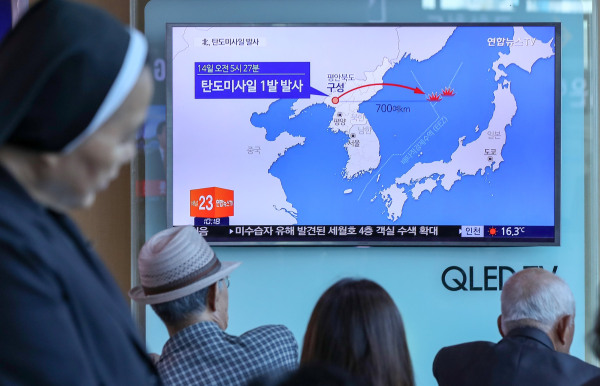
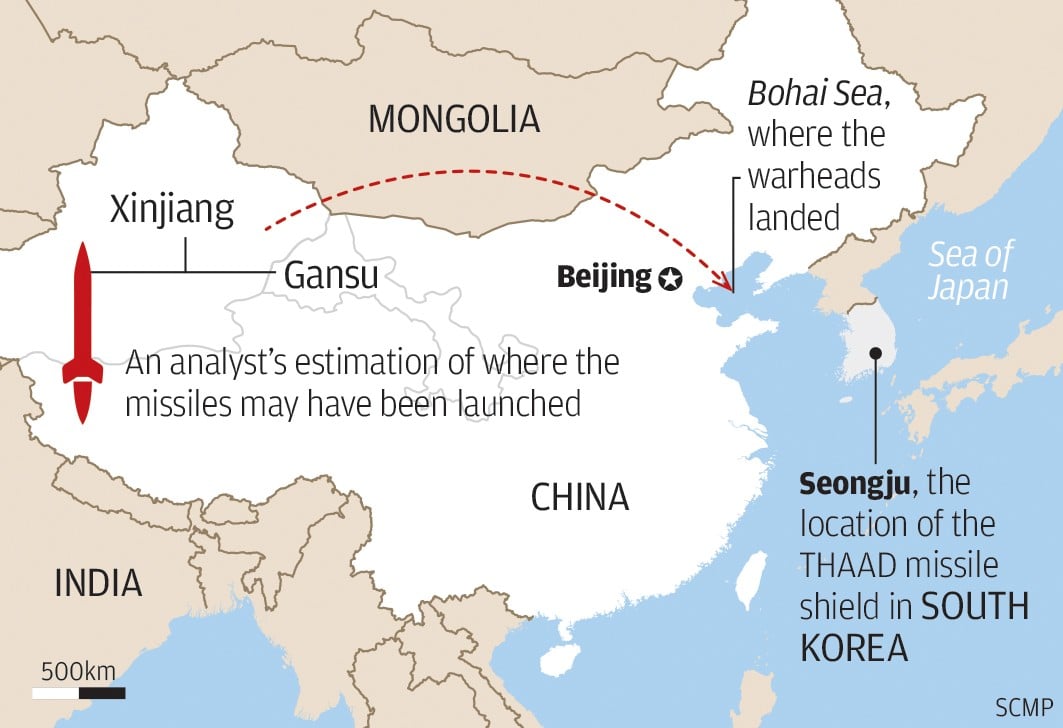
blackadam@garryA
You forgot that the motorized missile, when it falling the engine still working, it pushed the speed + the gravitational force of the earth, making the missile faster
blackadam@garryA
I don;t think so ! suppose you let a rock fall from the top of a really tall building. It’s speed will change as follows:
after 1 sec – 9.81 m/s
after 2 secs – 19.62 m/s
after 3 secs – 29.43 m/s
And can you tell me which formula you are using? I use this formula:V2-V02=2as
blackadam@garryA
falling missile remain at 1 g (g = 9.8 m/s2) and speed constant? is right ? Or vary according to its corner fall, altitude and max speed?
For example, the DF-21D missile has a cruising speed of Mach 10 at a height of 100km, a length of 14 meters and a diameter of 1 m, range 1500km, with a weight of 14 tons. So when it falls it can reach speeds on more than Mach 10? And force g will change!
Do we consider the resistance of the air and the weight of the warhead ?

blackadamHow the THAAD can against DF-26 ?
China says it has successfully tested new type of missile
http://www.foxnews.com/world/2017/05/10/china-says-it-has-successfully-tested-new-type-missile.html
The DF-26 has a range of> 2000 km, Mach 10 speed (as it descends from> 800 km at high-altitude)
THAAD has a range of 200 km, altitude 150km. The TPY-2 radar has a range of 1000km with unknown altitude ?!
blackadamWhere China plans to deploy anti-THAAD cruise missiles
March 28, 2017 Vasily Kashin, special to RBTH
In January 2017 the Xinhua news agency reported that China and Russia agreed on certain joint military measures in response to the expected deployment of the American THAAD missile system on the Korean Peninsula. Now that this deployment has already begun, the question arises as to what these measures will look like.
First of all, one should note that the deployment of THAAD in South Korea has different implications for the security of Russia and China. The impact is minimal in Russia’s case, because THAAD is designed to intercept medium-range ballistic missiles. Russia does not have such missiles, since in 1987 the Soviet Union and the United States signed the Intermediate-Range Nuclear Forces Treaty.
Even if we assume that the THAAD system is upgraded with more powerful missiles, it would still not pose any threat to Russian strategic nuclear forces. Russian intercontinental ballistic missiles and nuclear missile submarines are far away from the Korean Peninsula and the flight path of Russian missiles flying to targets in the United States pass through the North Pole.
Members of the Russian and Chinese teams at the closing ceremony of the Masters of Reconnaissance competition as part of the International Army Games held in the training compound of the Novosibirsk Military Command College. Source: Alexandr Kryazhev/RIA Novosti
Russia and China vow action against U.S. ABM plans on Korean Peninsula
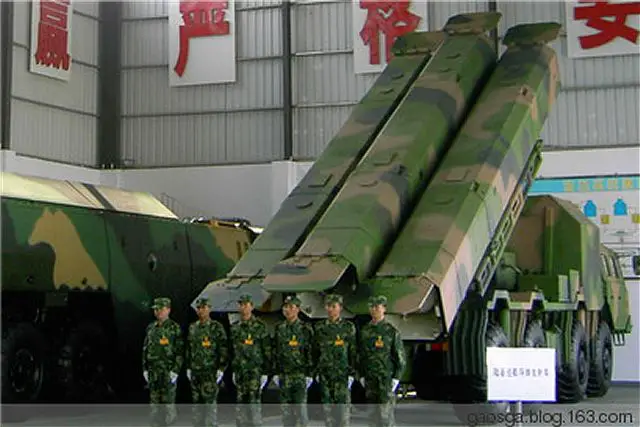
Thus, the Russian opposition to the deployment of THAAD is caused not so much by threats to security but by fundamental strategic considerations. Russia opposes placing elements of the U.S. missile defense system near its borders in principle. If THAAD complexes in South Korea were managed by the Korean military, not the U.S., there would most likely be no objection to the deployment of the complex. China’s position on the matter is much softer.
Why the U.S. might need THAAD in South Korea
The U.S. has already signed contracts for the delivery of THAAD to the United Arab Emirates and Qatar. The fact that this was not done in the case of South Korea indicates that the true motives of deployment on the Korean Peninsula are far from declared.

Apparently, the U.S. wants to have extra capacity for radar monitoring of airspace over the Northeastern China, where China’s bases containing ballistic missiles, including medium-range, are stationed. In addition, there comes possible trajectory of Chinese intercontinental ballistic missiles being launched in the direction of the United States.
Accordingly, it is possible to assume that it will be China, and not Russia, which offers the most serious response to the deployment of THAAD from the military-technical point of view.
Russia will limit its actions to some acceleration of previously planned measures related to the modernization of the armed forces in the Russian Far East.
China’s response
The most likely response to the deployment of THAAD would be the creation of specialized groupings intended for the destruction of the missile defense system on the Korean Peninsula.
A Terminal High Altitude Area Defense (THAAD) interceptor is launched during a intercept test, in this undated handout photo provided by the U.S. Department of Defense, Missile Defense Agency. Source: Reuters
Why Moscow and Beijing are really afraid of the U.S. THAAD in South Korea
The likely tool for this kind of preliminary strike would be cruise missiles: THAAD is not able to intercept them, especially in the case of a massive strike at known coordinates.
The obvious option for China may be deploying DF-10 missiles on the Shandong Peninsula. In addition, China can use technical means to strengthen its intelligence about the place of deployment of the THAAD.
Syria-tested Club missiles
Russia, unlike China, is not able to openly deploy ground-based medium-ranged cruise missiles, although the U.S. has been accusing Russia of doing so.
But the new Russian warships, as a rule, are equipped with Club (Kalibr) cruise missiles with a range over 2000 km. These complexes have been successfully tested in the course of the war in Syria. The construction of such ships for the Russian Pacific fleet was planned long before the plans to deploy THAAD in Korea.
In January 2016, Russia revealed plans to construct six project 636.3 diesel-electric submarines to be based in Vladivostok. These boats are able to carry Club missiles as well and were also tested during the Syria campaign.
A People’s Liberation Army soldier jumps over a burning obstacle during a training session on a snowfield, in Heihe, Heilongjiang province. Source: Reuters
Will Trump push China to form a military alliance with Russia?
The fleet is expected to adopt other ships able to carry Clubs including the Karakurt-class corvette, the construction of which has already begun.
Perhaps this will be the Russian answer to THAAD, although all of these measures would have been undertaken anyway.
Apart from told above, Russia and China will also carry out additional joint exercises and, possibly, coordinate in the field of technical intelligence to more effectively track the current location and mode of operation of the THAAD complex.
Vasily Kashin is a senior research fellow in the Moscow Based Institute for Far Eastern Studies and in the Higher School of Economics. Views expressed are personal.
https://rbth.com/opinion/2017/03/28/china-plans-deploy-anti-thaad-cruise-missiles-729028
blackadamChina, Russia will deploy the SS-26 and DH-10 to limit the capabilities of THAAD, if war occurs, THAAD is designed to detect North Korea’s ICBM and MRBM targets rather than LACM’s. Russia and China
blackadamwhat about this picture ? It shows that TPY-2 is completely capable of scanning surface targets in China. South Korea has a lot of high mountains that can do it
blackadamSo when placing TPY-2 on mountain Everest, it will detect the ground targets in China at range 1000km ?


 Sign In







