Bayar
BayarIt will be U,S’ loss really not India’s. The only worry for India is the Tejas’ programme which is dependent on U.S engines.
The best thing for India is to coproduce an engine with a non-US engine maker while it develops its own. Otherwise the US will use all the leverage it has over it. You guys should stay clear of the F-16 “F-21” and opt for the Su-57.
Turkey took this leverage away from the US by planning everything around US suppliers because they are at the end of the day hostage to the lobby groups in US Congress.
BayarJapanese media reports that the purchase of a limited number of F-35’s is only a stop-gap solution until it develops its own 5th Generation Fighter.
Japan discloses further details of next-generation fighter aircraft
https://defence-blog.com/news/japan-…-aircraft.html
Mar 28, 2019 in Aviation, News, Video
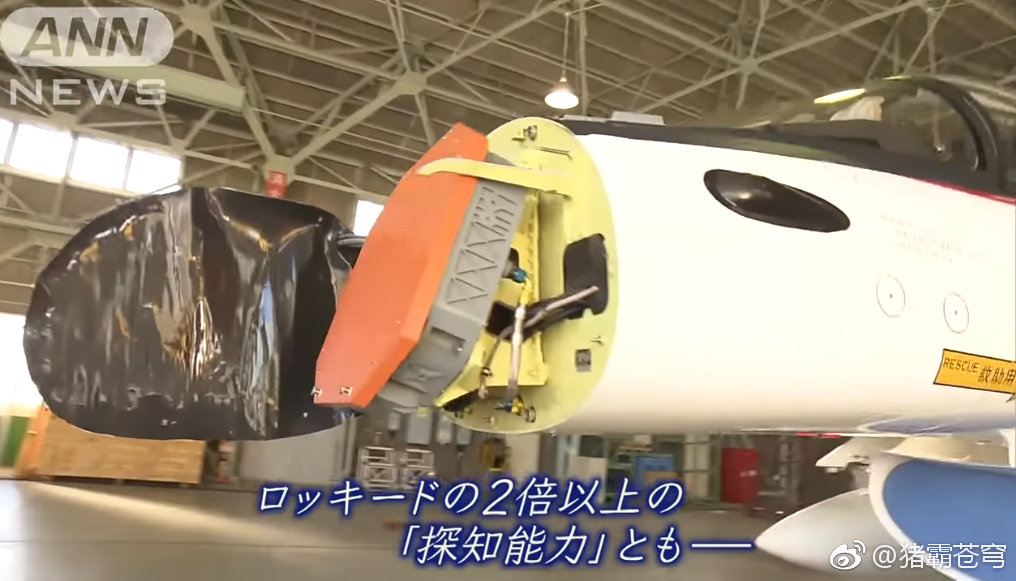
Japan continues to work on creating domestic fifth-generation stealth fighter as seen in footage aired on national TV.
The footage posted on 26 March shows that Mitsubishi Electronics-led team proceeded to test their active electronically scanned array (AESA) radar based on the F-2 fighter aircraft. According to several media reports, the new Japanese AESA radar similar to US-made AN/APG-81, which is installed on Lockheed Martin F-35 Lightning II fighter jet.
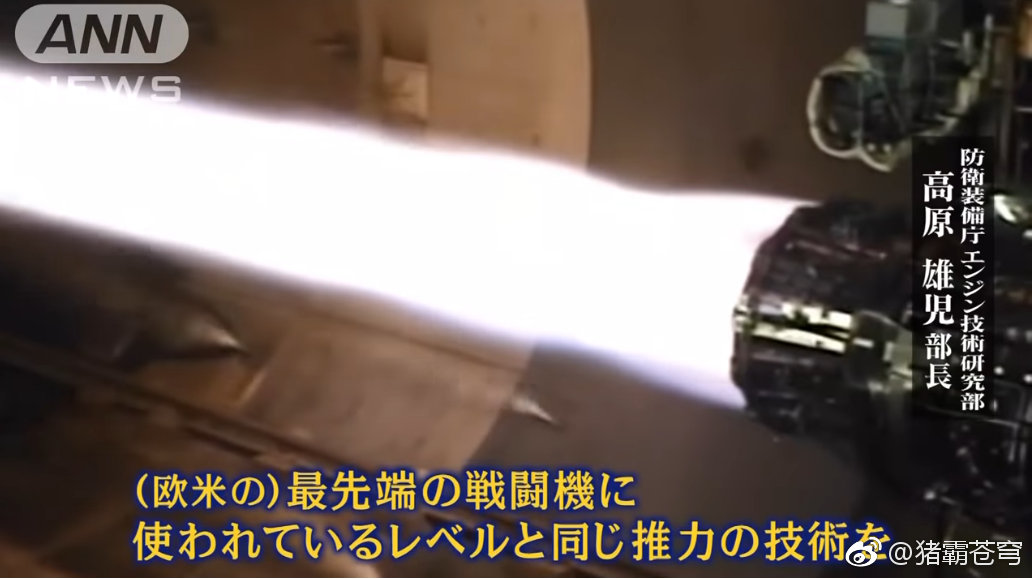
Also showcased for the first time footage of test prototype of a low-bypass turbofan (in some sources called the XF9-1) equipped with afterburners, developed by IHI Corporation as part of a power plant program for an advanced F-3 fighter. The new engine is about 4.8 meters in length, about 1 meter in diameter and more than 15 tons of thrust with afterburner, and more than 11 tons of intermediate thrust without.
The developers said that the new fighters engine has basically met the performance requirements of the design. With the adoption of Japans material technology, the engine prototype core ensures a reliable operation at a 1800 degree temperature in front of the turbine, which has reached the level of the fourth generation of large aero turbofan engines.
According to the current information, Japan started up the program of development of the domestic stealth fighter in response to the United States refusal to sell Japan the Lockheed-Martin F-22 Raptor in 2007. Japanese media also reported that purchasing of newest F-35 Joint Strike Fighter aircraft is an interim solution until Tokyo can develop and produce its own 5th generation fighter.
Last month, the Japanese Ministry of Defense (MoD) has confirmed to Janes its plans to pursue a Japan-led program to develop a next-generation fighter aircraft that will replace its Mitsubishi F-2 multirole combat platform in the 2030s.
BayarNot sure why US is proposing an alternate as S-400 is a signed deal.
US should get over the illusion that it can dictate what India can and must buy for its genuine defence need from any nation it chooses to much less from Russia which who she shares a strategic partnership since the 50’s
The same reason they did it to Turkey, Saudi Arabia & Qatar. Turkey is due to receive its S-400’s in July and now the US is cancelling Turkey’s participation in the F-35 and imposing CAATSA sanctions on its so-called NATO ally. What is ironic is that NASA can still trade with Russia. LOL
The US does not want to loose its arms markets and hence will not shy away from threatening nations with sanctions etc in order to get its way.
BayarFINALLY. The best news of the day…
U.S. senators introduce bill to stop transfer of F-35 fighters to Turkey
Reuters WORLD NEWS
MARCH 29, 2019 / 5:53 AM / UPDATED 5 HOURS AGO
https://www.reuters.com/article/us-u…-idUSKCN1R92GCWASHINGTON (Reuters) – Four U.S. senators on Thursday introduced a bipartisan bill to prohibit the transfer of F-35 fighter aircraft to Turkey until the U.S. government certifies that Ankara will not take delivery of a Russian S-400 air defense system, a statement on the move said.
Turkey is a production partner in the trillion-dollar F-35 fighter jet program but Ankara also wants to purchase a Russian missile defense system, which the United States says would compromise the security of F-35 aircraft, which are made by Lockheed Martin Corp..
The senators – Democrats Jeanne Shaheen and Chris Van Hollen and Republicans James Lankford and Thom Tillis – have all expressed alarm over Turkey’s planned purchase of Russian S-400 missiles and said the NATO ally cannot have both.
“The prospect of Russia having access to U.S. aircraft and technology in a NATO country, Turkey, is a serious national and global security risk,” Shaheen said.
Reuters last week reported that the United States could soon freeze preparations for delivering F-35s to Turkey. While no decision has been made, any such move would be a massive blow to already strained ties between Washington and Ankara.
“Turkey is an important NATO ally and willing partner in addressing a number of U.S. national security priorities,” said Lankford. “It’s concerning that Turkey would seek close defense cooperation with Russia, whose authoritarian ruler seeks to undermine NATO and U.S. interests at every turn.”
So far Ankara has not shown any willingness to reverse the S-400 purchase, forcing the United States to explore a future for the F-35 program without Turkey, which makes parts of the fuselage, landing gear and cockpit displays.
Now Turkey can announce its own measures…Popcorn time!
BayarGreat Bayar, bring it over to the Turkey thread and explain all about it there. Doesn’t belong here for several reasons:
Turkey most likely won’t be part of the F-35 program after this summer if there isn’t a reversal on the S-400. Therefore the value of this discussion is moot.Every thread doesn’t need to be subjected to a barrage about Turkey’s aerospace ambitions, their planned procurement represents roughly 3% of the global F-35 market, so this discussion shouldn’t be dominating the F-35 thread.
Thanks
I don’t want to pollute my Turkish Aerospace thread with the F-35 saga…
As the Turkish President said today: “instead of threatening Turkey for the past 2 years why don’t you put your money where your mouth is and cancel Turkey’s participation in the JSF program- we said that Turkey will not under any circumstances rescind the contract with Russia so why don’t you take concrete steps and stop wasting time”.
So I ask too- why just empty threats for the past 2 years and no concrete steps? What is Washington scared of? Hurry up and kick Turkey out of the program.
BayarYour comparing Apples and Oranges is why. What the US and NATO is concern about. Is Turkey provide Russian access to the F-35. As both the S-400 and F-35 would be tied directly to the Turkish Air Defense network.
You think the Russian Adviser that support the S-400 wouldn’t try to gain access to the F-35. Which, is the chief Russian Threat from the air for the foreseeable future. Hell, the F-35 is likely the number threat the Russian Military is most concern with these days.
So, what some S300/S400 or whatever intel they gather from a nearby F-35 over flying them. Is “nothing” compared to direct access to the system itself!
Turkey has two independent Networks:
The Indigenous Kement Network which is not connected to NATO in any way shape or form; and
The NATO Integrated Air Defense Network.
The HISAR-A, HISAR-O and S-400 and in future the S-500 are part of the indigenous Kement Network;
The NATO network is formed by the SAMP-T/Aster
The only form of communication between the F-35 and Turkey’s Kement Network is through the IFF system. Greek F-16’s also have communication with their S-300PMU’s via the IFF system.
BayarIt seems like Uncle Sam is now showing the carrot to India regarding the S-400…
US says working with India to offer alternative to Russian S-400 missile defence system https://www.thestatesman.com/world/us-working-india-offer-alternative-russian-s-400-missile-defence-system-1502741376.html Brushing aside the threat of American sanctions, India in October last year signed the much-anticipated S-400 long-range surface-to-air missile defence system deal with Russia.
SNS Web | New Delhi | March 28, 2019 10:53 am
The US is working with India to offer an alternative to the Russian S-400 Triumf missile defence system, according to Assistant Defence Secretary Randall Schriver, but he left open the possibility that Washington may not punish New Delhi over the $5.4 billion Moscow deal.“I think it would be an unfortunate decision if they chose to pursue that”, he told the House of Representatives Armed Forces Committee on Wednesday in Washington during a hearing on US Military Activities in Indo-Pacific region.
“We are very keen to see them make an alternative choice” and “we’re working with them to provide potential alternatives”, he said.
The commander of the Indo-Pacific Command, Admiral Philip Davidson, also made a pitch for India to buy US defence equipment. “I continue to make the point with them that our interoperability and compatibility going forward will be advantaged with the purchase of US systems”, he said.
In a reference to the Countering America’s Adversaries Through Sanctions Act (CAATSA), Schriver pointed out that there was a punitive US legislation “hanging over” the S-400 deal with Russia.
But he added, “We want to work through it because India is an emerging partnership for us”.
“The legislation”, Schriver said “is not designed to be an impediment in the growing strategic partnership we have with India. It’s designed for consequence to Russia.”
The 2017 law adopted with bi-partisan support as a response to Moscow’s involvement in US elections seeks to impose sanctions on buyers of Russian defence equipment.
Schriver was answering a question from Democratic Representative Seth Moulton, who asked how India’s purchase of S-400 and the lease of Russian nuclear submarines would impact India-US relations.
Schriver told him that the purchase of S-400 has “not gone to contract or completed”, but he did not touch on the $3 billion lease agreement India signed earlier this month for a Russian Akula class nuclear submarine.
Possible US alternatives to the Russian S-400 are the Lockheed Martin’s THAAD system (short for Terminal High Altitude Area Defense) and Raytheon’s Patriot system, although the three vary in capabilities and costs.
China’s challenge in the Indo-Pacific region and the US response to it dominated the hearings.
“The reemergence of great power competition – if not carefully managed – poses a challenge to the free and open order in the Indo-Pacific that underpins our continued peace and prosperity,” Schriver said.
Davidson said that “the vision of a free and open Indo-Pacific” was the unifying factor for India, Japan, Australia, France and New Zealand, which shared similar concepts.
The chair of the Armed Service Committee Adam Smith, a Democrat, and other legislators and US defence officials spoke of the importance of the growing ties between the two biggest democracies.
Smith noted that the Pacific command had been renamed Indo-Pacific with India in mind.
“The improvement of our relationship with the nation of India is one of the most positive developments in foreign relations in last several years”, he said. “I hope we can build and improve upon that”.
Concurring with him, Schriver said it was “a great example of a partnership that we’re investing a lot in”. He said the first 2+2 high-level meeting of the defence and foreign affairs heads of the two countries in September made “great strides in the defence relationship”.
Davidson called the signing of the Communications Compatibility and Security Agreement (COMCASA) a “breakthrough down at the operational level”.
India’s Defence Minister Nirmala Sitharaman and External Affairs Minister Sushma Swaraj and Secretary of State Mike Pompeo and then-Defence Secretary James Mattis of the US met in New Delhi for the first 2+2 meeting to enhance strategic cooperation between their countries. COMCASA was signed at the meeting.
Representative Mike Waltz, a Republican, asked, “Moving forward. what more can we do in our engagement with India and what more should we be doing and what more would you like to do and how can this body help”?
“We’re working to operationalise the COMCASA”, Davidson said. “It’s an IT (Information Technology) Agreement (Through) which we can do sharing and other things”.
“There’s an opportunity for us to share tactical fly away kits in an operational planning system that I think will advance our relationship on military to military relationship very, very well,” he said.
He said that India switching to US defence equipment would enhance interoperability and “allows us to get to training doctrine, tactical level coordination that’s really powerful”.
“While they very much want to protect their nonaligned policy, the tactical and technical capability we get out of like systems will really advance that relationship down in the military space”, he added.
In a written statement to the committee, Schriver said earlier, “Within South Asia, we are pursuing emerging partnerships with Sri Lanka, Nepal, Bangladesh, and the Maldives”.
“With India and Japan, the Malabar exercise affords an opportunity to increase our ability to operate trilaterally, including through real-time information sharing”, he said.
Brushing aside the threat of American sanctions, India in October last year signed the much-anticipated S-400 long-range surface-to-air missile defence system deal with Russia that is expected to bolster the defence preparedness of the country.
Under the more than $5 billion deal, Russia will supply five regiments of the highly-sophisticated missiles to India. These missiles will provide India umbrella coverage against any air-borne threats like fighter jets, missiles and UAVs.
The S-400 missile system, manufactured by Almaz-Antey, is capable of tracking and destroying hostile strategic bombers, jets, missiles and drones at a range of 380 km.
The Russian missile system is said to be the best in the world. China signed a deal with Russia in 2015 to buy six battalions of this missile system. Many other countries, including Saudi Arabia and Turkey, are also said to be negotiating with the Russian authorities to buy the system.
India has been negotiating the missile deal with Russia for three years. It had firmly told the US at the ‘2+2’ dialogue that it takes note of the historic nature of India-Russia defence relationship as also legacy issues and keep the missile deal out of the sanctions’ regime.
The US had urged its allies to forgo transactions with Russia, warning that the S-400 missile defence system that India intends to buy would be a “focus area” for it to implement punitive sanctions against a nation undertaking “significant” business deals with the Russians.
(With inputs from IANS)
BayarIt looks like alot of Middle Eastern countries will be opting for the Su-57E in near future.
President Erdogan and Putin are meeting in Moscow to discuss further military cooperation. The High-Level Russian-Turkish Cooperation Council will convene on April 8, Kremlin spokesman Dmitry Peskov told Sputnik on Saturday. https://www.urdupoint.com/en/world/putin-erdogan-to-meet-on-april-8-in-moscow-a-576753.html
LIMA 2019: Russia set to clear Sukhoi Su-57 for export
Jon Grevatt, Langkawi – Jane’s Defence Industry
28 March 2019
https://www.janes.com/article/87519/…-57-for-exportThe Russian government is set to grant authorisation for the export of the Sukhoi Su-57 PAK FA fifth-generation fighter aircraft, a senior Russian defence industry official has revealed.
Viktor Kladov, the director for international co-operation and regional policy at Russia’s Rostec defence industrial holding company, said the version of the aircraft promoted to international customers will be named Su-57E (Export).
He added that he expects the aircraft to be a competitive bidder for programmes in the Middle East and some parts of Asia Pacific.
Speaking at a media briefing at the 2019 LIMA exhibition in Langkawi, Kladov said that all the necessary documentation to support the approval of exports of the Su-57E has been submitted to the Russian government by UAC and its parent company, Rostec.
BayarWith every “Exercise” (Red Flag) the F-35 is just “CRUSHING” all comers……
My condolences to RED AIR! 😉
“When a fifth-generation fighter meets a fourth-generation fighter—the [latter] dies,”
USAF General Mark Welsh
How many other 5th Gen Fighters have participated in Red Flag?
BayarYes, so what’s your point???
Why hasn’t the Russians obtained data from the Israeli F-35’s then? Why are Turkey’s F-35’s exposed to Turkey’s standalone S-400s and not Israel’s?
BayarThe whole point of having an Advance Air Defense System. Is tointegrate it within your Air Defense Network. Which, is why nobody believes Turkey in the first place….
Turkey is playing political games here. It doesn’t want the S-400 really. It wants access to more Western Technology to further their own Defense Industry. Yet, the West is not buying it and is ready to pull the plug…..
Honestly, they can play political suicide. If, they want we don’t care…..:stupid:
You do realize Israeli F-35’s train with Greek S-300PMU’s.
Israeli F-35’s also operate in Syria with Russian S-400’s in proximity.
BayarYour own quote……..What matters for NATO is whether this system is going to integrated in what we call the Integrated NATO Air Defence where, you know, we link the different air defence systems, we link the radar, we share information. Thats extremely difficult to do with the S400…
That clearly is the “BUSINESS” of NATO. All he was doing was giving “Turkey” the right to decide for her own. As nobody likes to be told what they can or can’t do……
We call that “Diplomacy”
You ommitted this part-
it has also been clearly stated by Turkey that this is a system which they dont foresee integrated into the NATO Integrated Air Defence system, and that there has been no request for integration of the Turkish system into the NATO Integrated Air Defence system.
https://www.nato.int/cps/en/natohq/o…ectedLocale=en
Turkey has no interest in integrating its S-400’s with the Integrated Nato Air Defense System. Turkey intends to use the S-400 as stand-alone units in its offshore bases.
BayarAs I’ve said for a very long time. This is nothing but politics and in the end.Turkey will ultimately get the F35. While, giving up the S-400.
As to do otherwise in “NOT” in her interests…..:stupid:
“The delivery of the S-400s will begin in July 2019. As of October, the system will be active. There are two systems, the second system’s calendar is set back, there is no problem”, the undersecretary of the Undersecretariat for Defense Industries (SSM), İsmail Demir, said in a televised interview.
So Turkey’s participation in the JSF program would need to be determined prior to July.
BayarYou have a source that states NATO says the S-400 deal between Turkey and Russia is not it’s business. As I would like to see that……..;)
https://www.nato.int/cps/en/natohq/o…ectedLocale=en
[Bloomberg]: Thank you. Did any member state bring up the issue of China and cyber security during today’s meetings? And a second question, if I may: what will NATO do if Turkey decides to go ahead and buy the Russian missile system? Thank you.Jens Stoltenberg: The session we just finished was about INF and therefore it was not so much focused on other issues. We will discuss NATO readiness later on today, and also deterrence and defence, and I expect that Allies will also mention the fact that China is a rising power and some Allies have already expressed concerns related to cyber security infrastructure, and so on. But in the session we just finished, this was not the issue.
Then, on the S-400, well, its up to each and every Ally to decide what kind of equipment they acquire, thats a national decision. At the same time, I know that there is a dialogue going on between the United States and Turkey on the question of missile and air defence. I know that there is also some contacts between Turkey and other Allies France and Italy on a French-Italian system called SAMP-T. And on top of that, NATO has already deployed two batteries, one SAMP-T battery and one battery of Patriot missiles in Turkey. Thats done by Spain and Italy.
Then, on the S400, which is an air defence system, as you mentioned, thats a national decision. So, the acquirement of military capabilities by different NATO Allies is not a NATO decision, that’s a decision by each and every NATO Ally. What matters for NATO is whether this system is going to integrated in what we call the Integrated NATO Air Defence where, you know, we link the different air defence systems, we link the radar, we share information. Thats extremely difficult to do with the S400 and it has also been clearly stated by Turkey that this is a system which they dont foresee integrated into the NATO Integrated Air Defence system, and that there has been no request for integration of the Turkish system into the NATO Integrated Air Defence system.
QUESTION: Thank you. This is Mehmet Solmaz from Daily Sabah. My first question is how was your trip to Turkey, in terms of tackling troubled issues? You know, the Greek soldiers issue or the S400s. And my second question is regarding the US Permanent Representative, Hutchinson, has recently, during this week, said that purchasing S400s from Russia would have serious consequences. There are also other American voices calling for sanctions on Turkey and how do you evaluate all these? Thank you.
JENS STOLTENBERG [NATO Secretary General]: My visit to Ankara and my meetings with the with President Erdoğan, with Foreign Minister Çavuşoğlu and also the Defence Minister, was a very useful visit. Turkey’s a highly valued Ally and Turkey contributes to our shared security in many different ways, not least in the fight against terrorism; air bases, infrastructure in Turkey, has been key for the efforts of the Global Coalition to Defeat ISIS. And we addressed all those issues in my meetings in Ankara. Then of course we also addressed some of the issues where we have seen some differences between NATO Allies, for instance on the situation in North Syria. NATO is not present on the ground in Northern Syria, but we support the efforts of the Global Coalition, and some NATO Allies are, including Turkey, but also the United States. And it was clearly stated during my visit in Ankara that there is now close contact between the United States and Turkey on how to move forward in a way which is as coordinated as possible, to avoid any unnecessary problems in Northern Syria.
When it comes to the S400, thats a national decision. It’s a national decision by any NATO Ally to decide what kind of equipment they acquire. What matters for NATO is of course the question of whether it’s going to be integrated into the integrated NATO air defence system. There has been no request for that and I think it’s obvious that that will be difficult, but there has been clearly no request for that from the Turkish side. Of course, we have seen the statements from the United States on possible sanctions. We also discussed that during my visit to Ankara and again, I welcome the fact that there is now close dialogue and contacts between the United States and Turkey on this issue.
BayarCan you take the non F-35, Turkish part somewhere else? This is not a thread to discuss Patriot or S400. As far as Turkish pilots are concerned, of course they will continue to train on the aircraft because as of today, Turkey is still a partner. But having a handful of pilots begin training on the aircraft is a lot different from being able to fly these aircraft home or use them in an operational setting. I agree with the planning ahead part, given that Turkey is executing the fastest 5th generation project in the world with the aim to put into service the T-X by 2025 (how many flights has the TD had on that?) .
And yes I agree, Turkey should plan for a future without the F-35, without the industrial partnership in the program and without being able to supply weapons like the SOM-J to its partners. That appears to be the best outcome for both Turkey and the US though I am sure offers and counter-offers will continue to be made, as is normal during a negotiation because what I have described is likely the worst case scenario that both parties would probably like to avoid if possible. They have till the summer to sort this out if they can.
The US has made Turkey’s participation in the F-35 program contingent upon its acquisition of the S-400/PAC-3. Accordingly, the issues are intertwined. Being an F-35 program thread I think it is appropriate that developments relating to a JSF Partner’s potential exit from the program are posted in this thread.
The US said that the S-400 is not inter-operable with NATO and it cites this reason for imposing an arms embargo on Turkey (including the F-35). NATO says Turkey’s S-400 acquisition is not its business.


 Sign In