Bayar
Bayar“Europe” does not have the funds to finance another aircraft besides the Typhoon, nevermind that the development and acquisition costs of that particular bird are already payed, but Turkey with a defense budget half of the French or the British ones is going to finance “Europe” into a new multi national program?
Right now, no one in Europe outside of the TAF is considering the TFX, there are severall Air Forces buying “Dave”, the French and the British are into UCAV´s and “ze Germans” are looking around, but no one is giving much of a thought to the TFX, wich is entirely normal. Turkey wants to go from the Hurkus directly into a “Raptor Lite”, and most of the outsider´s are… well lets say… “dubious” about the chances of that particular bird getting into sqn´s, nevermind the “On time, on cost and on spec” bits, it will be quite a feat if TAI pulls something that ends in combat sqn´s, but the chances of the rest of Europe adopting it has a replacement for the Phoon (IMO) are almost nil.ps – The Raptor line is closed for six years now.
Cheers
Thats correct. Right now no one in Europe is considering the TF-X. But I didn’t assert this. I said once BAE Systems and TAI complete the pre-design phase European nations may decide to join the TF-X program.
Yes the French and British are into the UCAV’s but so too is Turkey under its MITUP program- the TFX is a prelude to this program. In fact all Western airforces will commence studies into UCAV’s. BAE Systems has Taranis, the US has the Boeing X-45 and Northrop Grumman X-47B, the Indian DRDO AURA, and the Russian MiG Skat. BUT all of these platforms will not replace the role of traditional combat aircraft until at least 2035 onwards. The TFX is intended to be commissioned between 2023-25.
Turkish Aerospace Industries is also not going from Hurkus to the TFX. It is going from licensed production of 300 F-16’s, indigenous modernisation of entire F-16’s (Ozgur program), industrial input in the JSF program to design and development of the SNC/TAI Freedom Trainer to developing a new combat aircraft TOGETHER in conjunction with a British defence giant.
If Europeans purchase Gripen’s and Mirage then they will most definitely consider the TF-X.
BayarBasically if I read this right..are you saying TFX will become some kind successor to Eurojet Typhoon, as a Euro project?
Then if that to happen TFX will not become Turkey drive project, cause I don’t think UK or Germany will want to commit themselves on large scale project if the project still Turkey drive and not Euro drive..
Bit difference on individual companies frm UK involved with TFX then to UK as a political entity commit themselves to TFX.
(1) The Eurofighter Typhoon is a 4.5 Gen multi-role fighter whereas the TF-X is an air-superiority fighter program.
(2) Europe does not have the funds to finance another combat aircraft platform in addition to the Typhoon but requires an air superiority fighter in its inventories in light of the threats faced. It is highly unlikely the US will sell the F-22 abroad. This is where Turkish Aerospace Industries comes in. The TF-X is directly funded by the Turkish Government. A Government which won its entire election campaign on the development of an indigenous fighter and development of the Turkish Aerospace sector. $44 billion has been allocated for this program. TAI would basically be funding the R&D for a European Air-Superiority Fighter.
(3) Turkey can use the Organisation for Joint Armament Cooperation as project manager of the program. OCCAR is a European intergovernmental organisation which facilitates and manages collaborative armament programmes through their lifecycle between the nations of Belgium, France, Germany, Italy, Spain, and the United Kingdom. Other States can participate in OCCAR programmes without becoming a Member State. Currently the EU and/or NATO members Turkey, Netherlands, Luxembourg, Finland, Sweden, Lithuania and Poland participate in one or more OCCAR programmes without being a formal member. Turkey was a OCCAR member in the A-400M military program.
BayarFor KFX/IFX…the involvement of LM is there. It’s safe design..the KAI and it’s Junior Partner DI did not want to invent something entirely new. Afterall they are going to used technology that already available in the market as much as possible.
Hence why the KFX/IFX is 4.5 Generation.
The Brits/Turks on the other hand have a strategic vision: the development of a new generation air superiority fighter akin to a European equivalent to the US F-22. BAE Systems brings a lot of expertise in this regard from its previous research into LO aircraft. The British Aeronautical Society article also implies this.
News coming out of Ankara indicates that there may be more European partners who join the TF-X program in future after completion of the pre-design phase. Germany stands out in this regard.
Bayarand the render in that picture looks totally different than the f-22 clone above.
it suggests they still havent decided on a planform.
The render at the TF-X symposium was prior to Turkish Aerospace Industries releasing the more mature render showing F-22 clone with IRST in December 2016.
BayarI would venture a guess all those graphics are more of artists renderings based on rough requirements (number of engines, rough planform) than actual engineering solutions.
Some leaks show that some of the designs are mature pre-conceptual design phase designs.
[ATTACH=CONFIG]251299[/ATTACH]
BayarIf all these new aircraft end up looking like F-22 and/or F-35 mashups I’m going to be seriously pissed off. If the Russians and Chinese can design something new to fire the imagination, why not others?
It is about aerodynamics not aesthetics. Also the West (Europe) has a finite number of aerospace engineers with experience in combat aircraft design. Hence, why you get similar designs. However, I am more interested in the sub-systems of an aircraft and the TF-X is the only one out of the (ATX, K-FX/I-FX) that seems to offer new technologies. The idea of the TF-X having 2 UAV escorts with A2A missiles is very interesting. TAI moving away from the radio frequency spectrum to laser data-links will also be a move in the right direction.
Bayaroh, so when did they change it to the f-22 clone?
The rendition provided by me above is directly from Turkish Aerospace Industries: its magazine called “TAI’s Voice” December 2016 Issue.
Additionally, the Turkish Air Force stated during the TF-X convention that it was looking for an F-22 type new generation Air Superiority Fighter to replace its F-16’s with. Below is a photograph from that symposium.
[ATTACH=CONFIG]251276[/ATTACH]
BayarTurkey’s Naval Modernisation and Expansion
MILGEM Class
I-class Frigate
[ATTACH=CONFIG]251265[/ATTACH]
TF-2000 class AAW Destroyer
[ATTACH=CONFIG]251268[/ATTACH]
TCG Anadolu Light Carrier/LHD
[ATTACH=CONFIG]251267[/ATTACH]
BayarThese were the initial conceptual designs developed together with SAAB of Sweden. They have undergone significant changes…
BayarThe current concept design…this too will change over the coming months as the program develops. It is safe to assume the TF-X will be a F-22 with IRST type aircraft.
[ATTACH=CONFIG]251243[/ATTACH]
The TF-X program now also has its own dedicated project office/facility.
[ATTACH=CONFIG]251244[/ATTACH]
Bayarthat’s a lot of thrust from that engine. I don’t think this has been even demonstrated. its like 10 years into the future. it better be 6 Generation fighter.
Eurojet has already offered India an uprated EJ200 for the AMCA program with reheated output of 120kN.
Had Turkey wanted a licensed production version of the EJ200 there would be no need for the establishment of a dedicated joint Turkish-Roll-Royce Research and Development Centre. See http://www.rolls-royce.com/media/press-releases/yr-2015/pr-06-10-2015-rr-supports-turkeys-advancement-in-manufacturing-technology.aspx
Under the agreement signed between the UK and Turkey, Turkey will obtain the technology of the EJ200 AND develop it further with Rolls-Royce.
There is a reason as to why industry sources are calling the TF-X program a poor-man’s F-22 program.
Euro jets is already working on new variant dubbed EJ2x0 which will have at least 20% growth potential with a reheated output of around 103kN (or 23,100lbf) but to meet AMCA requirements Eurojet also has second offer which will be to increase output by 30% above the baseline specification, such an upgrade will require more substantial plant-wide changes including a new LP compressor and turbine and an improvement in the total pressure ratio and Indian order commitment for development to take place. These engines will have a reheated output of around 120kN (or 27,000lbf).
idrw.org . Read more at http://idrw.org/halfhearted-us-falling-behind-europeans-in-race-to-supply-engines-for-amca/ .
BayarLOL
so much confidence over nothing,
all the information you posted is not new or revealing. everyone else posted the same thing, or better informationyou even posted an old picture of BOEING’s TX render. that’s not Turkish
I suspect you’re not even Turkish
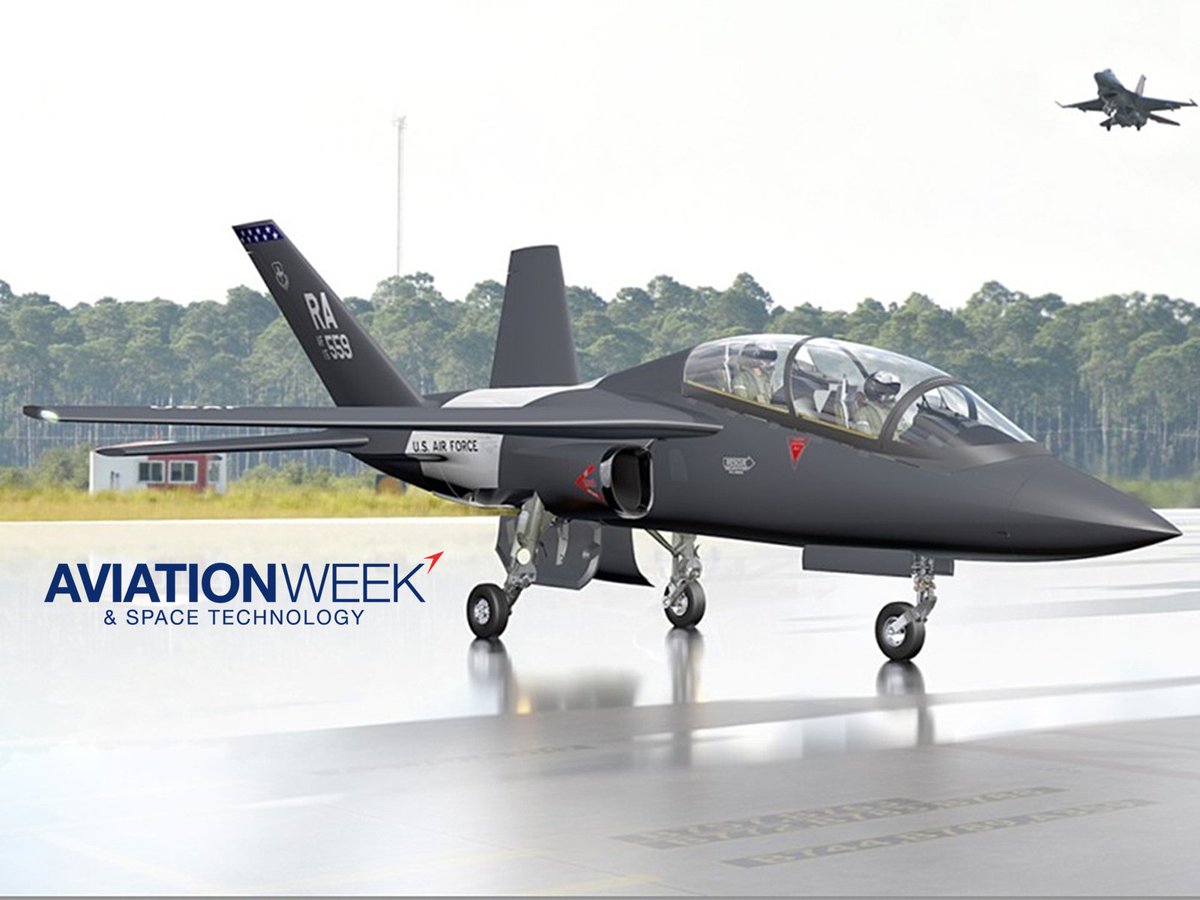
Perhaps you are ill-informed about certain things. Sierra Nevada Corporation and Turkish Aerospace Industries are entering the US Air Force TX Trainer tender with the twin-engined Freedom Trainer. Although the SNC/TAI Freedom Trainer bears striking resemblance to the Boeing T-X prototype it is an entirely different aircraft. Below is another rendition of the SNC/TAI Freedom Trainer.
[ATTACH=CONFIG]251222[/ATTACH]
Sierra Nevada Corp./TAI Team To Offer Freedom Trainer For T-X
Dec 16, 2016 James Drew | Aviation Week & Space Technology
http://aviationweek.com/defense/sierra-nevada-corp-tai-team-offer-freedom-trainer-t-xSierra Nevada Corp. (SNC) and Turkish Aerospace Industries (TAI) are betting that the U.S. Air Force is seeking a fuel-efficient advanced pilot trainer to succeed the outdated Northrop T-38 Talon, like the one the companies plan to offer.
With the spotlight shining on the major primes until now, the two businesses have quietly set up shop in Centennial, Colorado, as Freedom Aircraft Ventures LLC, to develop a lightweight, all-composite trainer powered by two business jet-class engines.
The company tells Aviation Week in exclusive interviews that it intends to enter the jam-packed race for the T-X, offering an “economical” trainer alternative to those being pitched by rivals Lockheed Martin, Boeing, Northrop Grumman and Raytheon. The clean-sheet aircraft has been designed by an integrated team of engineers from SNC and TAI, who have been working for some time at the joint venture’s headquarters near Denver.
Dream Chaser
»SNC/TAI pitch lightweight, FJ44-4M-powered Freedom Trainer
»Single prototype being built in Colorado for flight evaluations
»American-made advanced pilot trainer aimed at domestic and international air forces, but based on U.S. T-X requirements
»Freedom Aircraft Ventures LLC registered in Centennial, Colorado
Better known for its satellites and Dream Chaser spaceplane, the Sparks, Nevada-based company’s Turkish-American owners Fatih and Eren Ozmen, CEO and owner/president, respectively, want to play in the big leagues and see military aircraft manufacturing as a key driver of growth.
They singled out the military trainer market after sensing demand for more than 1,200 aircraft globally, driven partly by the introduction of the Lockheed F-35 Lightning II, with the largest potential order being the U.S. government’s requirement for 350 or more T-X aircraft.
The company’s twin-tail, moderately swept-wing trainer with a tricycle landing gear and step-tandem cockpit is powered by the Williams International FJ44-4M, a 3,600-lb.-thrust-class engine chosen by the Aero Vodochody L-39NG and Leonardo/Alenia Aermacchi M-345 High-Efficiency Trainer. Williams certified the engine in 2010 for the light business jet market, providing a cruise speed of up to 450 kt. over a 2,000-nm range with 5,000 flight hours between overhauls. It was chosen as the Freedom Trainer offering due to its relatively inexpensive procurement and sustainment costs as well as fuel efficiency, with the company saying it can buy two Williams engines for half the cost of one high-power military turbofan.
The company already has one flying prototype in development, and it intends to answer the long-awaited T-X request for proposals (RFP) once released by the Air Force. The timing of the RFP will not be affected by the stopgap funding measure passed by Congress, since it is not a new-start program. The air force says a RFP notification could come any day, otherwise it will push into January due to holidays.
SNC/TAI’s proposal is for a purely a fly-by-wire trainer, seeming to leave little design margin for secondary light-attack or aggressor roles. Instead, the aircraft digitally replicates radar intercepts, precision-guided munition drops and the use of targeting pods. The aircraft is no larger than the GE J85-5-powered T-38 and consumes 30% less fuel, allowing weight reductions across the board to boost high subsonic performance at lower thrust levels. “We’re focusing on open architecture and lowest total ownership cost,” one company executive explains. The Freedom Trainer also is designed to fully comply with the Air Force’s Open Mission System standards to prevent “vendor-lock,” even though that requirement was dropped. “We did not want to drive costly design/redesign into systems that may otherwise meet the objective requirement,” an Air Force Life Cycle Management Center official says. SNC believes buying into any proprietary systems will drive up costs later.
The company says the Freedom Trainer will likely cost less to buy and sustain than its higher-powered competitors and consume 40-50% less fuel, while still meeting all threshold and objective performance requirements, including 6.5-7.5g sustained and high angle-of-attack maneuverability.
“In this day of tight budgets and looming operations and sustainment bow waves, it only makes sense for the Air Force to spend less up-front so they can save more over the life cycle, which is why this training system makes so much sense,” Fatih Ozmen says.
SNC is the prime contractor, with financial and intellectual input from TAI, it notes. “We’re not just a pretty face,” the company says. “We didn’t start off with a design from Turkey or anyplace else.” The single prototype under construction in Colorado, and the overall program, can be accelerated as needed to meet the Air Force’s schedule requirements for T-X. It has not been decided where in the U.S. serial production would occur, and there is potential for coproduction overseas for foreign buyers, the company says. It has some experience in this arena, having teamed with Brazil’s Embraer to set up an A-29 Super Tucano factory in Jacksonville, Florida, which is now delivering aircraft for the Afghan and Lebanese air forces.
T-X is the single largest opportunity for SNC, but it will complete the trainer even if it loses, with opportunities in Australia, Turkey and many other nations that are inducting modern warplanes. “We’ve cast a wide net,” a company official says.
Freedom Trainer was purposefully designed from the outset to meet Air Force training and airworthiness standards, which are well regarded by other air arms. The aircraft incorporates “live, virtual and constructive” training elements, provisions for aerial refueling, data links and communication radios woven into a high-performance aircraft with a fifth-generation cockpit, sensor suite and avionics. The overall training system requires “very little invention,” the company notes.
SNC is renowned for keeping a low profile, having also silently competed unsuccessfully in the Air Force’s first round of contracts for the Joint Surveillance Target Attack Radar System, or J-Stars, replacement program.
The company has again kept quiet while finalizing its teaming arrangements and developing the T-X proposal. It has been engaging directly with the government, steering clear of industry days.
“We don’t want to surprise people in the Defense Department and Air Force, but we do want to surprise the industry,” says one company official. “It’s not just about T-X per se; we’re looking at an international advanced trainer.”
The Air Force confirmed engagement with SNC, saying it keeps an “open dialogue” with all companies that express interest in the T-X competition. The service says it welcomes any proposals that meet its requirements.
SNC is lining up against sizable primes: the first, second, fourth and sixth largest defense OEMs in the world by 2015 revenue. Lockheed Martin and Korea Aerospace Industries are offering to build the Golden Eagle-based T-50A in Greenville, South Carolina. Raytheon and Leonardo would set up a T-100 final assembly and checkout facility plant in Meridian, Mississippi. Boeing and Saab unveiled their clean-sheet trainer in St. Louis in September, without having picked a final assembly location. The Northrop Grumman/Scaled Composites/BAE Systems/L-3 team has not shown its hand, except through leaked photos on social media. Its T-X prototype is flying routinely at the Mojave Air and Space Port in California.
SNC’s annual revenue has grown to $2 billion since being bought by the Ozmens in 1994. The majority of its revenue comes from space systems and special forces programs. TAI has significant aerospace aircraft manufacturing clout in Turkey, having license-built more than 300 F-16s and now center fuselages for the F-35 as a second source. The company is producing the Hurkus Free Bird turboprop basic trainer as well as helicopters, unmanned aerial vehicles and a next-generation fighter for the Turkish government.
The Ozmens’ ethnic tie is with Turkey, and they are helping that nation develop a regional jet based on the Dornier 328, with TAI as a major subcontractor. It seems a natural fit, but the SNC/TAI partnership for T-X is not without headwinds due to the political and security situation in the NATO-allied nation. The unsuccessful military coup against President Recep Erdogan in July resulted in a governmentwide purge, and war continues to rage across the borders in Syria and Iraq.
SNC says the joint venture with TAI is solid, postcoup. TAI immediately sent an envoy to the U.S. to reaffirm its commitment to Freedom Trainer. “The talent from TAI has been phenomenal,” SNC points out. “They brought their A-Team. We’ve cast a wide net,” a company official says.
SNC says it aims to be a disruptive innovator, and its Freedom Trainer “family of systems” is the embodiment of that ethos, from the aircraft to the ground-based training system, simulators and courseware, and logistics chain. “The aircraft is just another training device,” the company notes. “We want the students to go off to their weapon systems with as high a quality training experience as possible, but focusing on doing it at the lowest possible cost per graduate.
“We think a lot of our solutions are groundbreaking innovations,” the company continues. “We took an engine that can meet [our requirements] and built an airplane around it.”
The U.S. government plans to retain 546 T-38A/B/Cs. While some play aggressor roles in flying exercises or support weapons testing, 431 Talons support undergraduate training for pilot selected to fly fighters or bombers. The Air Education and Training Command expects to phase out its T-38 between 2023-29 as the T-X comes online, targeting initial operational capability by fiscal 2024.
The source-selection process will take about one year, with a development contract expected in early fiscal 2018. Low-rate production should start in fiscal 2022.
BayarBAE Systems and British officials have already confirmed that technology developed for the TF-X (especially in the avionics department) will be used to modernise the Royal Air Force Typhoons in future. The contract between Turkey and the UK also clearly state that Turkey will consent to the transfer of such technology (as Turkish Aerospace Industries would own all the IP for the TF-X).
Thus, Turkey is basically paying for the R&D costs of an upgrade package for Typhoons in a way aswell in exchange for engineering support with the TF-X.
When it comes to the engine that will power the TF-X- it will basically be a derivative of the EJ200 that not only has TV but also improved thrust. Each TF-X engine will have dry thrust of around 78 kN (or 17,500 lbf) with a reheated output of around 120 kN (or 27,000 lbw). The Turks have already stated that the TF-X will also be able to super cruise.
BayarBelow are some of the sub-systems that have already been developed by Turkish Companies for the TF-X program. They include the ASELSAN AESA Radar which uses GaN technology, and ASELSAN IRIST, ASELPOD Targeting and Navigation Pod, Aselsan Electronic Warfare Pod, Air-to-Air missiles etc. These are currently being tested on F-16 test-beds but will be integrated into the TF-X.
[ATTACH=CONFIG]251208[/ATTACH]
[ATTACH=CONFIG]251207[/ATTACH]
[ATTACH=CONFIG]251206[/ATTACH]
[ATTACH=CONFIG]251205[/ATTACH]
[ATTACH=CONFIG]251204[/ATTACH]
[ATTACH=CONFIG]251209[/ATTACH]
[ATTACH=CONFIG]251210[/ATTACH]
BayarTo0 much misinformation about Turkey’s TF-X program here.
Firstly, Turkey’s TX program and TF-X program are two different programs.
The First is a Jet Trainer replacement for the Talons- dubbed the T-X program
The Second is an Air-Superiority Twin-engine fighter that would compliment the F-35 in a network-centric airforce structure: the TF-X program.
Sierra Nevada Corporation and Turkish Aerospace Industries have jointly developed the Freedom Trainer, which will almost certainly win Turkey’s TX trainer program
BAE Systems + Rolls Royce + Turkish Aerospace Industries + TUSAS Engine Industries are working on the TF-X Air Superiority Fighter program.
Now BAE Systems is merely providing technology (BAE Replica program and Eurofighter Typhoon technology) transfer and Engineering support services to TAI in the TFX program.
Rolls Royce is also transferring EJ-200 technology to TUSAS Engine Industries. Rolls Royce has extensive research on a EJ-200 with Thrust vectoring that did not come to fruition. TEI wants to develop the EJ-200 with thrust vectoring further and use it as an indigenous replacement for the TF-X.
TX
http://pbs.twimg.com/media/Cz0P5_KXEAAaNUw.jpg[ATTACH=CONFIG]251197[/ATTACH]
[ATTACH=CONFIG]251198[/ATTACH]
TFX Rendering
[ATTACH=CONFIG]251199[/ATTACH]


 Sign In








.jpg)