 Bayar
BayarJust wait for this to happen….
Should that Bill become legislation then the deal with Rostec of Russia will kick in…we could then see a YAK-141 derivative aircraft fielded by both Russian and Turkish LHD’s.
Turkey would also allocate the $20 billion it had allocated for the F-35’s towards speeding up the TF-X program with BAE systems.
The US would then loose Incirlik AF base and the Kurecik Radar station together with Turkish Air Space. We could also see Russian and Chinese bases in Turkey and Northern Cyprus….There is a very remote possibility of the Trump Administration making this mistake.
BayarMeanwhile Turkey’s 2 LHD’s/Light Carriers (TCG Anadolu and TCG Trakya) will be getting 16 F-35B’s each…
TCG Trakya, On The Way
http://en.c4defence.com/Agenda/tcg-trakya-on-the-way/6374/1As Turkey counts down for delivery of the first F-35 Lightning II aircraft, another development came into light of the Turkish Navy front. According to the information obtained by C4Defence, the service plans to supply a total of 32 short-takeoff and vertical landing (STOVL) aircraft. Today, there are two aircraft models with this feature and one is to retire. For this reason, the service is considering Lockheed Martin’s F-35B aircraft program.
According to the information obtained, the service wrote a letter to the Chief of General Staff and requested initiation of the construction of TCG Trakya, the twin of Landing Helicopter Dock (LHD) TCG ANADOLU. The Navy stated that the timing of construction of the second ship would have many advantages both in terms of construction time and program cost.
The second phase of the program will include the supply of vertical landing aircraft to be deployed on TCG Trakya. Accordingly, the total number of F-35B aircraft demanded by the service will also be revised.
Although it is not officially requested from the US yet, the Navy plans to buy 16 aircraft per LHD. If all goes as planned, Turkey will have purchased 100 F-35As and 32 F-35Bs.
The Spanish Navantia Shipyard provides technical support to Sedef Shipyard. Sedef Shipyard utilizes Navantia’s Juan Carlos 1 LHD ship experience. The Spanish Juan Carlos 1 ship is equipped with McDonnell Douglas design (now Boeing) AV-8B Harrier II platforms as well as vertical landing helicopters. Spain plans to retire these aircraft and supply the F-35B instead.
This news is exclusive to C4Defence and cannot be used/published without referencing to C4Defence.
Short Url: http://c4news.me/4G7y7
BayarTUSAS Engine Industries (Turkey) PD170 MALE UAV Engine enters serial production. Completes 10,000 Flight Hours and is approved for Export without ITAR restrictions.
The PD170 has a power-output of 170 hp and weight of 170 kg (at up to 20,000 ft). It will provide the TAI Anka UAV a flight ceiling of 40,000 ft.
It will also power the dual-engined Anka-2 UAS.

BayarPakistani JF-17’s get the ASELPOD from Turkey
Aselsan has supplied Pakistan with the ASELPOD a 3rd Generation Advanced Targeting Electro-Optical Reconnaissance, Surveillance and Targeting POD.
http://www.janes.com/article/70935/turkey-s-aselsan-to-supply-targeting-pods-for-pakistan-s-jf-17-fighters-says-report
http://www.aviationanalysis.net/2017/05/pakistan-orders-additonal-aselpod.html
https://www.thenews.com.pk/print/208150-Turkeys-Aselsan-to-supply-targeting-pods-for-JF-17-fighters
Details on the ASELPOD can be found here: http://www.aselsan.com.tr/en-us/capabilities/electro-optic-systems/air-platforms/aselpod-advanced-targeting-pod
The sale paves the way for Turkey to sell Pakistan its helmet mounted cuing system together with its precision strike weapons and air-to-air missile systems. There is also talk that Turkey will supply Pakistani JF-17’s with an Aselsan AESA radar once it enters serial production.
BayarFar too many competitors and actors in the MALE UAV industry. US, Israel & Turkey lead UCAV sales in the West. While China lead UCAV sales in the East.
BayarThe BAE Mantis and Euro Male look like the Turkish Aerospace Industries ANKA-2 that is about to enter into service…
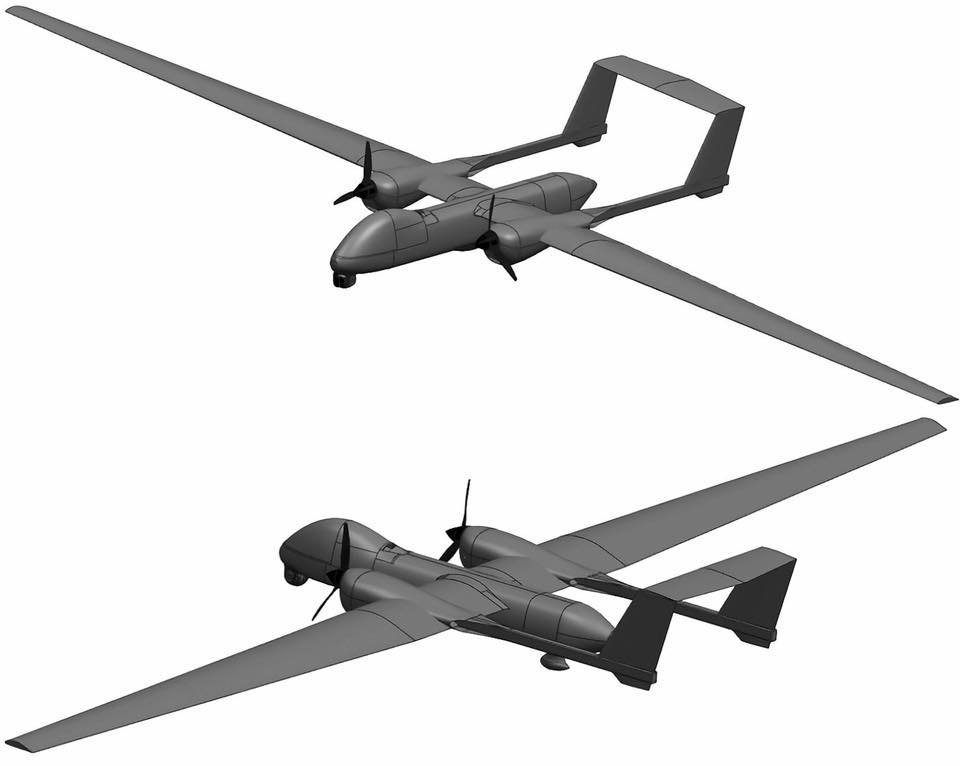
BayarTurkey introduces ANKA-I COMINT/SIGINT/ELINT/EW UAV.
http://warnesysworld.com/comintsigint-version-anka-uav-revealed/

BayarTurkey-France-Italy to develop new Long-range high altitude Air Defense system based on SAMP/T Aster.
http://www.defenseworld.net/news/21707/French_Italian_Consortium_Eurosam_Signs_Missiles_Development_Contract_With_Turkish_Firms#.WlFQjpP1UWo
BayarWe can then safely assume that Turkey has de facto exited NATO and that it is a de jure NATO member State.
It also looks like Turkey will be the next country to have PAK-FA’s as anticipated.
BayarBoth Greece and Bulgaria have S-300PMU’s. Both are NATO member States.
Turkey has repeatedly also stated that its S-400 and possible S-500 (post-2020) will not be integrated to the NATO Air Defence system structure and that Turkey intends to create an independent Air Defence capability.
Telling Turkey there will be “consequences” when NATO countries such as Greece and Bulgaria still hold S-300 PMU’s is a veiled threat.
In any event the political ties between Turkey and the US and EU are almost non-existent at the moment. Officials of both countries cannot even visit each other due to a ban on VISA’s.
BayarNATO threatens Turkey over S-400 purchase.
NATO official: Turkey faces ‘consequences’ if purchase of S-400 completed
By: Aaron Mehta 11 hours ago
31417
https://www.defensenews.com/land/2017/10/25/nato-official-turkey-faces-consequences-if-purchase-of-s-400-completed/Turkey announced its choice to buy the Russian S-400 in September, but is yet to sign final paperwork on the deal. (Paul Gypteau/AFP via Getty Images)
WASHINGTON — A top NATO official has warned of “necessary consequences” for Turkey should the alliance member purchase a Russian air-defense system.
Gen. Petr Pavel, chairman of NATO’s Military Committee, said Wednesday that while each nation is free to make its own defense decisions, Turkey’s planned buy of the S-400 system would preclude Anakara from being part of any integrated air-defense system with NATO allies, and may result in other technical restrictions.
“The principal of sovereignty obviously exists in acquisition of defense equipment, but the same way that nations are sovereign in making their decision, they are also sovereign in facing the consequences of that decision,” Pavel told a group of reporters hosted by the Defense Writers Group.
While Turkey announced its choice of the S-400 in September, Ankara has yet to sign final paperwork on the deal, and until they do, Pavel said it is “fair among allies to have that discussion, to raise all concerns and potential difficulties.”
Other concerns raised by Pavel about the system were “most security” focused, noting that even if NATO missile defense systems are not integrated with the S-400, its mere presence “creates challenges for allied assets potentially deployed onto the territory of that country.”
Notably, Turkey is both a partner nation and a sustainment hub for the F-35 Joint Strike Fighter Program, which is central to the future air power of several NATO nations, including the U.S. and the U.K. Some experts have questioned if an S-400 system active in Turkey could gain information about the stealthy jet that could have operational impact down the line.
Still, Pavel said Turkey remains a key part of NATO, even as outside groups have raised concerns that the government of President Recep Tayyip Erdogan is sliding away from democracy.
“When it comes to democratic deficits, show me one single nation that is perfect. No one is perfect,” Pavel said. “No one challenges the role of Turkey as an important ally at the very difficult crossroads of challenges to the alliance.”
BayarTurkish Indigenous Anti-Ship missile ATMACA is undergoing testing.
ATMACA Tested For The First Time
http://en.c4defence.com/Agenda/atmaca-tested-for-the-first-time/4988/1Speaking the 8th Marine Systems Seminar held today, Turkish Naval Technical Commander General Admiral Ahmet Çakır gave information about the maritime platforms and shared a new info regarding anti-ship missile ATMACA. Cakir explained that ATMACA anti-ship missile was tested for the first time. ATMACA, developed by ROKETSAN indigenously and designed to replace the Harpoon missiles currently used by the Turkish Naval Forces, was a project kept secret until now. The Naval Technical Commander added that the missile will be subjected to tests onboard ships in the coming periods.
ATMACA, which is said to have a range of over 200 kilometres, has a weight of 800 kilograms. On the other hand, 691-kilogram Harpoon has a range of 140 kilometres.
BayarTurkey now discussing S-500 purchase with Russia as alternative to THAAD
Erdogan: Turkey considers S-500 systems
13 Oct in 9:40
http://vestnikkavkaza.net/news/Erdogan-Turkey-considers-S-500-systems.htmlErdogan: Turkey considers S-500 systems
Turkey’s President Recep Tayyip Erdogan said talks have been held with Russia on the S-500 system.He also noted that there was no problem with Turkey’s planned purchase of S-400 surface-to-air missile systems, Haberturk reported.
Speaking to reporters, Erdogan said there would be no joint production in the first stage of S-400 purchases, but in the second stage “God willing we will take joint production steps”.
“In our talks with (Russia President Vladimir) Putin we are not thinking of stopping with the S-400s. We have had talks on the S-500s too,” he added, referring to a missile system currently under development.
Spuknik also confirms talks: https://www.rt.com/news/406552-turkey-russsia-s400-s500/
BayarKremlin denies claims that it will not share S-400 technology with Turkey. Confirms that Turkey and Russia are discussing co-production.
Earlier the Turkish Foreign Minister had stated in response to reports that Russia would not transfer technology that if this is the case Turkey will look elsewhere.
Kremlin Comments on Turkish FM’s Remark on Possible Cancelation of S-400 Deal © Sputnik/ Sergey Malgavko
MILITARY & INTELLIGENCE
14:18 09.10.2017(updated 17:03 09.10.2017)
https://sputniknews.com/military/201710091058067859-kremlin-turkey-s400-technology/The Turkish foreign minister said that Ankara may cancel the deal on the acquisition of the S-400 air defense systems if Russia does not agree to jointly produce the military equipment. The Kremlin has commented on the issue.
Russia and Turkey are holding expert level talks on a possible deal to transfer technology for production of Russian S-400 air defense systems, Kremlin spokesman Dmitry Peskov told reporters Monday.
“I can tell you that contacts and negotiations at the expert level in the context of this deal continue,” Peskov said when asked whether Russia was ready to transfer to Turkey technology to jointly manufacture S-400 systems on the country’s territory.
The statement comes as Turkish Foreign Minister Mevlut Cavusoglu said earlier in the day that Ankara expects that Russia and Turkey will launch joint production of S-400 missile defense systems, but if the Russian side refuses to cooperate, Turkey will have to find other partners.
“We have agreed in principle on joint production in the middle- and long-term. If Russians do not agree, we will sign an agreement with another country. But we have not received any negative messages [from Moscow] regarding this issue. Putin said that the two sides could take steps to launch a joint production,” Cavusoglu said in an interview with the Aksam newspaper.
BayarTurkey discussing purchase of Patriot Advanced Capability – 3 (PAC-3) interceptors from Lockheed Martin.
This will mean Turkey will field 4 different High Altitude Air Defence Systems:
(1) S-400- Contract already signed. Funds transfered.
(2) MBDA ASTER 30-SAMP/T- Co-production Contract Signed.
(3) Roketsan HISAR-U- Indigenous development. Low & Medium Altitude Segments already developed and tested. High Altitude system development efforts nearing completion.
(4) Patriot Advanced Capability-3 (PAC-3)- Co-production being discussed with Lockheed Martin.
Some systems may be used to provide Air Cover for Turkey’s bases in Qatar and Somalia.
Turkey is still interested in Patriot defense systems, Turkish official says
https://www.dailysabah.com/diplomacy/2017/10/08/turkey-is-still-interested-in-patriot-defense-systems-turkish-official-saysRAGIP SOYLU @ragipsoylu
WASHINGTON, D.C., Published: 13 hours agoThe Turkish government is still in talks with Washington about the possible sale of Patriot missile defense systems, a senior Turkish official said Friday.
Turkey’s main opposition Republican People’s Party (CHP) Deputy Chairman Öztürk Yılmaz, who visited Washington last week, told a group of Turkish journalists on Friday that Turkey contacted Americans about the Patriot systems two to three weeks ago.
The Turkish official, who spoke on condition of anonymity, confirmed Yılmaz’s remarks and said that Turkey was routinely conducting this kind of talks and Turkish expectations on the deal has not changed. “For us, technology transfer and joint production are the necessary conditions for purchase,” the official said.
Turkey recently reached an agreement with Russia to buy S-400 missile defense systems. Both the Turkish and Russian side acknowledged that Turkey paid a down payment for the weapons. The Turkish official said Ankara had intended to use the Russian system for urgent needs and was still looking for another system for longer-term use.
Yılmaz, who had a series of meetings with officials from the White House, the State Department and Pentagon, said even though two countries reach a deal on a possible sale of the Patriot, it would be almost impossible to get it authorized by Congress due to severe anti-Turkey sentiment.
At the White House, Yılmaz, a former senior Turkish diplomat, met a large delegation of American officials, including Fiona Hill, deputy assistant to the president and senior director for European and Russian Affairs, and Molly Montgomery, special adviser for Europe, Eurasia and Russia.
Yılmaz said his interactions with American officials made him think that the U.S. wouldn’t budge from its support to terror group PKK’s Syrian armed wing People’s Protection Units (YPG) against Daesh. “But American officials are looking for ways to re-vitalize relations and satisfy Turkish concerns in Syria and in the region” he said.
Many experts in Washington previously told Daily Sabah that the Trump administration had not had a Turkey policy. This extended meeting with senior American officials with an opposition leader suggests that the White House is doing prep work on a new strategy.
Yılmaz believes American officials are more closely following Turkish domestic politics, and in his meetings with the congressmen, he realized that they have much more awareness about Turkish affairs.


 Sign In







