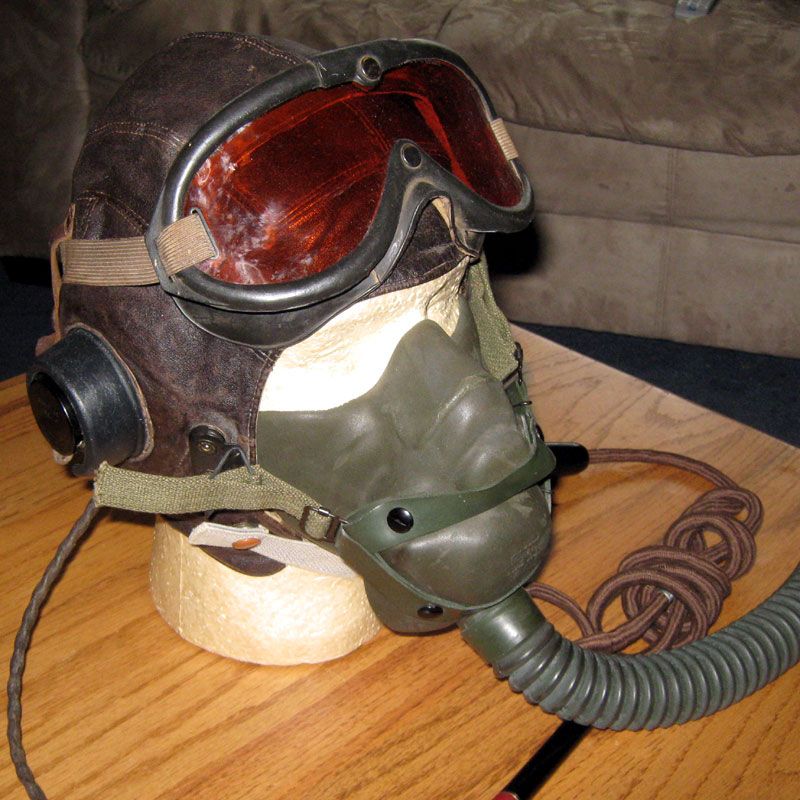
Mr. Silburn at Sefton Clothing has repaired to USAAF used RAF Type C helmets for me and does absolutely amazing first class work.
It’s not smashed :rolleyes:, just dented. It was like that when it was hanging in Lambeth.
Brian
Seems to me, that even in 1945 at an OTU with all the battering it would have taken from novice pilots, they would still have repaired that “dent” 🙂
How did the oil cooler intake get smashed? Seems to me leaving it that way doesn’t fall under historical preservation does it? Ouch!
A slight change of the question on R6915. Is anyone getting a comprehensive photo record of her now that she’s a bit more accessible? For those of us a long ways away, getting to see inside the cockpit and the other parts of her insides that normally don’t get opened, would be fascinating.
Again, much like the FAA Museum Corsair, that untouched look from 1945 is something those of us who weren’t around then, don’t get to see very often.
From my own examination of the IWM Spitfire it would seem that the current paint scheme is all there is on it. It doesn’t have any indication of a previous scheme and I would suggest that it was given a bare metal strip at some point before its current colours. Digging for a previous scheme would be another fruitless Spitfire dig 😉
I’m curious if that was common practice for Spits being passed on to OTU or even being rebuilt for further front line use?
I’ve often wondered if the Spit I at the Chicago Museum of Science and Industry would be the same way or if her paint history is there, one layer at a time
If the resources were there, would R6915 provide the same wealth of original marking detail as the FAA Museum Corsair revealed underneath her coats of paint?
Maybe someone can help this guy and the kids who are doing the 1:1 Spitfire build
Please make TIGHAR go away!
That 38, or what’s left of it, doesn’t have a prayer with those folks ‘involved’.
“Clouds of Fear” by Sammy Hall
I prefer the Spitfires in crates down the abandoned mine shaft story better. That way the hole has already been dug.
As mentioned in another thread, that one I heard in a London pub while spending a semester of college there in 1980. The mine shaft was in Australia too. Probably a bit more cooperative there 🙂
This whole thread totally restores ones faith in people and this forum, good on all those people that are donating lending and helping with this project, what the kids will learn from this is that the older generation really take delight in helping youngsters do something very vey worthwhile.
Now who has plans for the B-36 I i am starting on in the basement ? 😀Mike Pannell
It does make you want to point this out to the crowd that complains about the kids not knowing the history.
Lots of folks putting their money or help where their mouths are on this one. Kids are happy to learn if the adults keep teaching 🙂
What a way to learn too with this kind of project.
One of the most heroic acts was Pardus push.
http://www.historynet.com/pardos-push-an-incredible-feat-of-airmanship.htm
An F86 driver had done something similar in Korea, pushing his buddy’s flamed out bird by puting his beak right in the tail pipe. If memory serves they made it to the ocean and the pilot was able to punch out but then drowned! 🙁
Sefton Clothing, Stephen Silburn, as already mentioned. He does amazing work
He’s repaired two RAF Type Cs used by USAAF pilots for me. This one was my first ever that I had lying on a shelf since the mid 1970s when I got it as a kid. Ear cups cut off and I couldn’t for the life of me figure how I’d ever get it right.
Heard about Mr. Silburn and he took on the job. Looks great don’t you think?
He does both the early Type C receiver cups and the later type as is shown here.

In 1980 while doing my first Yank in the RAF bit, and before I was Spitfire goofy, I remember being in a pub and hearing an old guy talking about Spitfire VIIIs down a mine shaft in crates in Australia.
That’s the only one I ever specifically heard someone talk about.
But sometimes things do show up like the P40 and P38 bits buried in the Aleutians and dug up in the late 80s
http://www.pacificwrecks.com/people/photos/odgers/index.html
Or the Freeman Field digging that has gone on and still is going on.
http://www.indianamilitary.org/FreemanAAF/Museum/FF_museum.html
Wasn’t there a large dump site at RAF Honington as well as it was a repair facility for USAAF bombers as well as an operational field?
Easy to see why they considered changing the name from Spitfire with the later Griffon birds. What a beast. A beauty too but a monster in the air. Sad that Mr. Malloch and his Spit were lost 🙁
I still have a scrapbook of Spit pics clipped out of different magazines from when I first went around the bend about Spitfires and that bird is included.







