 SlowMan
Personally I think the F-35 is overkill for the average air force.
It was designed for the NATO air forces, who have a collective duty to go to an offensive war and the NATO air forces have seen action in Yugoslavia, Afghanistan, and most recently in Libya.
I think the JAS-39 Gripen, F/A-18E/F or even upgraded F-16C is still completely viable for smaller air forces.
For non-NATO members with minimal threats they are fine choices.
SlowManDude, it will be wise to drop this trolling of yours, it’s pathetic really. What you do is exactly the same as jackjack or whatever he’s called now, only pointed at another country. Please bring us KFX info if you wish, it’s an interesting project to follow, but otherwise please refrain from this embarassing diatribe of yours, we’re all adults here and should behave as such. Thanks.
I am simply correcting J-31 Burrito’s claim that the J-31 is the real deal while the KFX was a paper plane.
It is the opposite in reality; the J-31 has no central government backing and its future is in doubt until it earns that PLA marking to show the official state support. It is the opposite with the KFX program, which does have two country’s backings and the third one is in negotiation. The J-31 isn’t the first private venture military jet in China’s history.
SlowManwhat are you talking about???:confused::confused::confused:
if you have zero knowledge about China, DO NOT SPEAK please.
It is you who need education on China.
The first group


The second group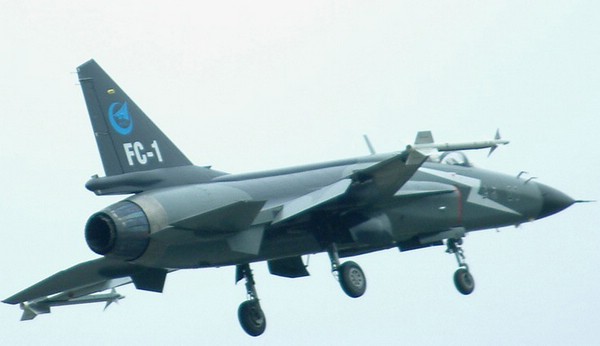

See the difference between two? The second ones are projects pursued by military regions, not by the Chinese central government. These do not wear the PLA markings.
SlowManhttp://www3.nhk.or.jp/news/html/20130205/k10015295961000.html
ただ、F35はイスラエルが購入する可能性があることなどから「日本の企業が製造した部品が紛争当事国にわたることになり、三原則の理念に抵触するのではないか」という指摘が出ています。
このため、政府は機体を第三国に移転する場合は日本側の事前の同意を得るようアメリカに要請することなどを検討しています。
However, pointed out, “will be part Japanese companies have been manufactured over the parties to the dispute, is not to conflict with the philosophy of the three principles” from such as the possibility that Israel will purchase the F35 that are out you.
For this reason, the government is considering and that if you are trying to transfer to a third country aircraft will request the United States to obtain the prior consent of the Japanese side.
You may heard about the controversy in Japan which would make the sales of F-35 to Israel illegal under the Japanese law.
The Japanese government’s solution is that the US seek Japan’s permission in advance before shipping F-35s to export customers, and the Japanese government will grant the US the permission to export.
SlowManThe PAK-FA is never going to be purchased by South Korea
Due to timing.
So, short-term the F-35 is by far the best bet.
The F-35 was all but eliminated in the Korean contest, as Lockheed bid $14.1 billion and the Korean government vowed they would never pay a dime more than $9.5 billion max. It is now the Silent Eagle vs Typhoon contest. Beside, the F-35 did worse than the other two in performance evaluation.
SlowManFairly comprehensive in all respects, the KLJ-7 has a similar performance to a late model AN/APG-66 apparently.
Yet Pakistanis wanted to yank the KLJ-7 out of JF-17 and replace it with a French radar and avionics.
What’s up with that? Why isn’t Russia pushing gear at Iran?
Russia actually honors UN arms embargo, unlike China.
SlowManThe KPP is:
6.5G “for no less than 15 seconds using no more than 15 degrees nose low attitude at 80% fuel weight between an altitude of 10,000 and 20,000 feet”
Both the M-346 and Hawk T.2 can do that albeit at a reduction of fatigue index.
What this KPP demands is that the candidate jet must be able to stay at or above 6.5G for at least 15 seconds from whatever the instantaneous G they start with.
The ability to stay at or above 6.5 G is determined by both structural strength to sustain the G-loading and the engine’s ability to keep the jet at a constant speed while making the turn; jets rapidly bleed energy and speed while turning, and the engine must be able to compensate for this energy bleed to sustain the turn speed and the G. If the engine can’t, then the jet will drop below 6.5 G in less than 15 seconds and be disqualified.
It is up to Alenia and BAE Systems to show how their designs will be adapted to suit the requirement. It might prove down the line that there is increased risk and cost in that.
Indeed, structural modifications and engine upgrades are required, while the T-50 doesn’t need them. A decisive cost and delivery time advantage in favor of the T-50.
It should also be noted that the T-50 will need work to meet the requirement.
T-50 MK.2(Aka F/A-50) already went through a complete airframe re-design overhaul to carry 5.6 tons of payload; it now carries 900 gallons of external fuel and a couple tons of bombs. Structural strength won’t be a problem.
The T-50 is also hampered by its association with Lockheed Martin
Indeed. The T-50’s sole problem is Lockheed’s ill reputation in the US. This is what gives Boeing and Saab’s bids a chance.
SlowManAnd with the right engines I don’t see why the specs given by the PLA itself are out of reach. 200 ton+ MTOW and 66 ton payload. I think in context, payload usually doesn’t include internal fuel.
Because Kawasaki C-2, which has same size as Y-20 and is built out of composite material(same as 787 Dreamliner), doesn’t claim such MTOW and payload.


SlowManRather a simplification but yes Embraer could have a stab at it with the Tucano and then fail as it doesn’t meet the performance parameters laid out in the KPP.
So does the Hawk and the M-346, in sustained G KPP.
And?
The gap between them and the T-50 would only grow, not narrow, as the T-50 wouldn’t need a structural modification to meet the sustained G KPP and meets them as is while the Hawk and the M-346 would grow costlier, heavier, and need thirstier engine to push heavier modified airframes.
BTW, Lockheed’s considering replacing the engine with F414, which would suggest that current T-50’s acceleration and supersonic speed wasn’t good enough and they would need even higher acceleration than what they have right now which was significantly better than what the M-346 and the Hawk have to begin with.
SlowManNeither is Australia or South Korea.
Australia doesn’t fall into any of Japan’s “banned” category.
As for Korea, this country does fall into a “Country likely to go into military conflicts in the near future” category with none other than Japan itself, so Japan will ban the F-35 export to Korea, which doesn’t change anything because the F-35 is all but eliminated in Korean F-X contest.
SlowManIf Japan cannot sell arms to “those involved in or likely to be involved in international conflicts”, why are they selling to America?
The US and NATO members are specifically exempt from this ban. Israel is not a NATO member.
SlowManBTW, there is a weapons procurement policy shift in the new incoming Korean government.
Basically, the new Korean government will fund what they consider to be anti-China weapons first, while cutting back or delaying on anti-North Korea weapons.
This means that the 800 km ballistic missiles(considered anti-China weapon) gets pushed forward to 2015 IOC(Recall that the deal to extend the range was agreed just 3 months ago) and 2 additional naval battle fleets consisting of only heavy destroyers and submarines are funded first, while the MRLS and the K2 tanks intended for North Korea gets funding cut.
The same principle is the reason why the Korean government would not spend a dime more than $9.5 billion on anti-NK weapon system like the F-X, while the anti-China weapons system KFX now gets the backing in the parliament.
SlowManThe initial KPP released by the DOD and USAF define the general performance parameters. Any further refinement will only look at details of required features not change those base performance parameters.
Well then even the Super Tucano’s qualified to bid since the preliminary KPP doesn’t mention means of propulsion, no ceiling, and no top speed, etc.
Both Alenia and BAE Systems have decided they can adapt their designs to meet those KPP
At the cost of additional expense and higher weight.
The USAF and DOD have gone to industry with a set of performance parameters in what is effectively a legally binding document.
The legally binding document is the one in the RFP, not this draft KPP for reference and feedback only.
SlowManwhat’s so hard to believe about it?
Koreans didn’t buy more T-80U units in cash, unlike the KA-32 helicopter and the Murena hovercraft which they bought plenty more in cash.
T-80 was an awesome tank in its days and the Koreans were impressed by it.. so much so that they had to develop the K2 tank to counter it as the K1 wasn’t enough.
The K-2 is aimed at North Korean and Chinese tanks, not at Russian tanks. Furthermore, it is optimized for a blitzkrieg style mission and not at direct tank to tank combat, as most of North Korean and Chinese tanks are supposed to be taken out via CAS.
J-10 wasn’t allowed for export to Pakistan either thats why they sold them the JF-17 instead.
China Officially Offers Pakistan J-10 Variant
Aug. 3, 2011 – 06:00AM | By USMAN ANSARI | CommentsISLAMABAD – China for the first time officially offered Pakistan a variant of its most advanced frontline fighter, the Chengdu J-10 Vigorous Dragon/F-10 Vanguard.
Citing defense sources, the offer was reported in the Urdu press here over the weekend. The offer was made during the recent visit to China by Lt. Gen. Waheed Arshad, the Pakistani Army chief of General Staff.
China would not sell them a type 52 or KJ-2000, or Type 99 tank.. they would sell them specifically made monkey models
China doesn’t get the privilege of making monkey models to foreign customers; that’s the right reserved exclusively for the US and Russia.
Neither would KFX..
That’s why Korea’s buying something that will be ready by 2017 in the meantime.
Eastern Manchuria belongs to Korea?
Yes, that is the official government and parliament stance. Contrary to certain Chinese misunderstanding, the country most hated by Koreans is China, not Japan, because it is China that’s sustaining the evil Kim regime and holding Eastern Manchuria.
Accordingly, the KFX’s primary role is to engage in A2A combat with the PLA jets over the Yellow Sea and North Korea, not strike roles.
SlowManYou could consider AMCA design finalized if it was entering production now.
It isn’t. It isn’t close to, that will be past 2020, closer to 2030.
That the program is so far in the future that concrete decisions don’t need to be made now, doesn’t mean the design is finalized.
India runs large numbers of development programs beyond what Korea considers.
This isn’t about denigrating either countries endeavors.
The difference is that there were KFX’s prototype parts, including the AESA radar, EO sensor, avionics computer system, a working cockpit, and a bunch of other parts on display at the parliament waiting to go into the airframe a couple days ago, meant to pressure the parliament to approve $20 billion+ funding.
AMCA is still on the design study phase, with most of it still in computer files.


 Sign In







