 SlowMan
sources schmorses, the latest pictures show not one but TWO models with no internal bay.. it’ll barely be able to lick the F-35 or J-31, let alone defeat it.
The Internal Weapons Bay is not due until the Block 2. At least the KFX is a supercruiser from the start, unlike the J-20/J-31.

SlowManHave they chosen yet between the canard and conventional version? Thanks.
That depends on the winner of F-X contest, either Boeing(Wing-Tail) or EADS(Eurocanard). Lockheed declared they were not interested.
Koreans themselves prefer Wing-tail, as they already have a tested local FBW system for this layout. Eurocanard is a totally new uncharted territory for the Koreans and they would have to depend on EADS for a Eurocanard FBW system.
SlowManAha… I mis(?)interpreted the text as if SAAB was chosen as a partner for the KF-X project.
Saab has been doing the consulting work under the radar. The standard Korean weapons program practice is to hire an experienced foreign consultant to review and validate the local engineering work if it’s the local industry’s first attempt at doing things.
It is also notable that Turkey returned to the KFX participation negotiation table after Turkey withdrew from an earlier negotiation and hired Saab to do a preliminary design study. Saab may have something to do with Turkey’s return to the KFX negotiation table.
An interesting observation is that this jet is intended to kill the J-20 AND the F-35(JASDF F-35s and Aussie F-35), so this would explain the lack of Korean interest in the F-35, where the current F-X is now a battle between the Silent Eagle and the Typhoon.
SlowManhttp://www.f-16.net/news_article4509.html
Australia is delaying 12 of 14 units in its initial F-35 batch. Just 2 F-35s delivered to Australia by 2020. Australia will by 24 Super Hornets in the mean time.
http://sankei.jp.msn.com/politics/news/130127/plc13012710470005-n1.htm
There is a political uproar in Japan as the US is delivering Block 3I units instead of promised Block 3F units to Japan in 2016~2017.
SlowManJust like making a plane look like an F-22 or F-35, doesn’t mean it will be as good as one. 😉
The PLA operates on the principle of numerical superiority, made famous by the human wave attack. The PLA belief is that they could overcome technologically superior US forces by overwhelming them with sheer number, and that dooms day scenario has been studied by the RAND corporation.
http://www.wired.com/dangerroom/2009/08/think-tank-china-beats-us-in-simulated-taiwan-air-war/
Think Tank: China Beats U.S. in Simulated Taiwan Air War
Still, with or without F-22s, the Chinese air and missile force “dramatically outnumbers [U.S. and Taiwanese] forces and wins the war of attrition,” according to Steve Trimble’s summary of the RAND study. The Chinese lose 241 jets on the first day of fighting, while the U.S. and Taiwan together lose 147, but this lopsided kill ratio doesn’t matter, when China has hundreds more planes to put into the air. Moreover, most of the U.S. and Taiwanese planes lost, are destroyed on the ground by barrages of Chinese ballistic missiles. (It’s not for no reason that the U.S. Air Force is working hard to win new friends, each with juicy new bases, all over the Pacific.)
So as long as enough J-11, J-20, and J-31 could close in enough for IR missile launches, the US loses.
SlowManI do not remember ever having seen a Korean luxury sedan like Kia K9 or Hyundai Equus.
K9 is not on sale in the US/Europe due to an ongoing brand dispute with China’s Chery.
Equus is selling a couple thousands units a year in the US and you can see them if you are living in the US coastal states. The vehicle itself is super-competitive and has beaten the likes of Lexus LS460 in Car and Driver’s head to head comparison tests, as well as being the highest rated luxury car sold in the US by the Strategic Vision awards for two years in a row(2011, 2012).
The Equus’s only problem is its “brand” which Hyundai can’t do much until the high end consumer perception changes over time.
SlowManA Chinese replica of a prime brand watch (Breitling, Omega..) might measure time exactly well.. does it mean anything? If you had $3900.00 to spend, which one would you buy, the original or a 40% discounted Chinese copy??
Based on the statistics of auto sales where foreign brands has taken over the 70% market share in China, even Chinese consumers shun Chinese brand cars.
Low price Chinese goods are competitive when they are throw-away goods, like cloth, cheap furniture, $100 electronics, etc. Chinese goods are not competitive when they are long-term durable. This is why China’s having trouble selling jet fighters with the exception of ones provided as foreign aids, because even the 3rd world customers are wary of Chinese weapons and would rather shop Russian instead.
SlowManyes, its all about requirement and cost. STOBAR lighter load or Catobar full load. Both is possible with the “sea-Gripen” according to the feasibility study.
The thing with Stobar gripen is that its probably very good at it, due to its original design requirements.
It has to be STOL, not STOBAR, because LHDs cannot have catapults which are costly to install and operate.
The very element that helps Gripen to land at a low speed would also help Gripen take off at a low speed too, so STOL is definitely doable with retractable arrest wires only for the emergency cases.
Just ask jet fighter designers which jet they would prefer to build, a STOVL jet or a 330 m STOL jet.
SlowManBut you just said that Korea has been saying “Yes, master” for decades, decades during which Japan has been stubbornly refusing to do what the USA has asked it to do, which is spend more on its armed forces & remove some of the restrictions on them.
You got Korea and Japan mixed up. Just swap them and your statement would be correct.
Swerve, if South Korea had a choice, they would be building and flying Rafales by now instead of F-15Ks.
Koreans were looking for a long-range heavy bomber. The Rafale wasn’t it, although Rafale did win high marks on the strength of its tech transfer and 100% offset offers.
Boeing literally got Senator Christopher Bond to scream the Koreans down with blatant threats and the South Koreans folded. :diablo:
Koreans said no to both the F-35 and the Global Hawks, while Japan said yes to both(I can’t think of the last time Japan said no). Need I say more.
SlowManYou realize there there are a dozen other airplanes on the flight deck too? Where are they supposed to go when you need 100% of the flight deck length to launch a Gripen?
Harriers need like 90% of an LHD’s flight deck to take off too, yet you don’t hear the USMC complaining.
SlowManThere’s no pretence that anyone else imposes the restrictions on Japan.
The end result is that Korea is saying no to Global Hawks(The government is saying they will acquire four HALE drones at $600 million or less, that would certainly rule out the Global Hawks), while Japan will soon swallow the bullet and announce a $1.7 billion Global Hawk deal.

Ishihara Shintaro has been dreaming of a Japan that can say no all his life, but it is Korea that has been saying no all along.
SlowManhow do you expect the gripen to take off while weighing 15 tons (insufficiently loaded for its mission anyway) with an engine giving only 10-11 tons of thrust?
The EPE is 13 ton class. Plus TVC.
you’d just go to the end of the deck and fall into the water
I will say that a 330 m runway length is long enough to operate Gripen-class fighter jets. This requires that the LHD be stretched by some 30%, but this is far far cheaper and simpler than blowing hundreds of billions trying to make the F-35B work.
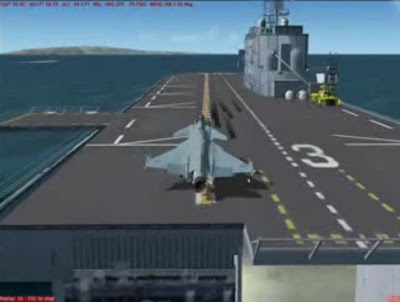
SlowManchinese f35 not harrier.
J-31 = Chinese F-35 replica
J-18 = Chinese Harrier or Yak-38 replica.
SlowManRrriighhttt . . . so Japan’s self-imposed arms restrictions
Similar to Korea’s supposedly “self-imposed” missile restriction that covers UAVs.
The Korean surveillance drone program was hampered by the payload weight restriction to 500 kg because of the difficulty of getting all the sensors and electronics within that 500 kg limit. That problem is now largely eliminated with the new 2.5 ton payload limit, but it takes time to develop a new HALE UAV to carry those payload. Until then this local surveillance payload consisting of a SAR, EO, and SIGINT package will have to be carried onboard a fleet of Dassault Falcon jet.
Likewise Japan’s HALE surveillance drone program faced the additional hurdle of range limit intended to prohibit “offensive” weapons per the Article 9 of the Peace Constitution, so Japan will have to rely on the US operated and Japan-financed Global Hawk fleet to monitor the East China Sea and the Diaoyu Islands, until the Article 9 is struck down and Japan can now have offensive weapons.
SlowManthere is many foreigners who think china cannot make aesa.
Including Pakistan which wanted to yank out Chinese radars and avionics from the JF-17 and replace them with French ones, until blocked by India.


 Sign In







