Logan Hartke
One regiment consists of a command section with a 96L6 radar, which replaces both the 64N6 and 76N6. That command section can control up to six batteries. Each battery consists of one GRAVE STONE engagement radar, and that radar can control up to 12 TELs.
Alright, that’s some of the information that I was looking for.
So, a regiment has the following elements:
1 x Command Section:
1 x 96L6E Radar Vehicle
1 x Command Vehicle
3-6 Missile Batteries:
1 x GRAVE STONE Radar Vehicle
3-12 x S-400 TELs
If the above is correct, can you answer a few more specific questions that I have in regards to it?
The command vehicle in the photo that I posted appears to have the command module placed in a standard ISO container and is likely able to be mounted on any vehicle that can carry it, is that correct?
What is the Russian designation for the GRAVE STONE radar?
How many batteries per regiment and TELs per battery might be typical for the S-400 system?
Any idea on when the 40N6 missile might be ready for deployment? Also, has Russia stated whether they plan to offer the missile for export with the S-400 system or not?
What might the typical battery-command post configuration be for an S-400 regiment? I assume the usual Soviet/Russian-style multi-pointed star configuration (depending on number of batteries), but what kind of distances are we talking about? Also, where are reloads positioned, with the batteries or in a different location?
Finally, what kind of information do you have on Tor-M1 integration into S-300/400 systems? Are they one per TEL, one per battery, or what? When Tor-M1s are deployed with them, do they also bring a Ranzhir-M along, or would that be unnecessary?
Thanks in advance, very much.
Logan Hartke
Logan HartkeI never said that I think the Typhoon is worse than the Flanker nor will not beat it most of the time, I just said that it’s a fighter that I can easily see the Typhoon having some trouble with. I think that even in 4-to-1 odds that a Eurofighter wouldn’t have any trouble with MiG-21s, F-4s, etc. That’s what I mean. What I am saying, however, is that If a group of 4 Typhoons encounters 8 Flankers, I can envision a great number of situations where you will start seeing Typhoon losses. As most of the Typhoon operators would start to see some social and media controversy over the new fighter in a case like that, that’s what I was talking about. Now, while most of us here know that in a situation like that, a Typhoon only losing 1 aircraft would have been doing quite well; an 8-to-1 ratio against Flankers is impressive for most aircraft, but the taxpayers might not see it that way.
I wasn’t saying that the Typhoon wasn’t up to the task, I was just saying that 10-20 years down the road, I can see a lot of situations where the Typhoon might run into some trouble either preventing certain strike aircraft from hitting a sensitive target or merely trying not to suffer any losses. If export MiG-31s start getting bought up and your Su-30MKI+ Flankers start becoming more common and Rafales start getting passed around North Africa, I can foresee a number of possible incidents where Typhoons might wish they had some more help on hand.
Logan Hartke
Logan HartkeI doubt the UK ever will. Just like it didn’t go with F-15s or F-14s during the Cold War. It hasn’t had a Flanker competitor for some time now. I’m sure that they’ll just try to compensate with missiles and maybe stealth UAVs eventually.
Anyway, the F-22 isn’t for sale right now. Australia and Japan want it and now there are even murmurs coming from Israel. My money would be on them getting it before the RAF ever would seriously think about it. No, the only chance the RAF will have to use the F-22 in combat will likely be as exchange pilots.
Logan Hartke
Logan HartkeI think that the Typhoon is a good enough aircraft that it will still be quite capable in 20 years as long as the systems are kept updated. Its real tests are going to be up against the Flanker and its derivatives. It won’t have to go up against the F-22 and most of the Typhoon’s potential adversaries won’t be any better. I think that the only aircraft that it might have a problem with that it could be up against in 10-20 years will be the J-10, the Su-27, the Rafale, and the F-35. I can see Italian Typhoons against Turkish F-35s or something, so I wouldn’t totally discount some of those match-ups. Libyan or Algerian or Moroccan Rafales versus British or Italian or Spanish Typhoons. Anyone can get Su-27s, so the potential for it as an adversary is limitless, and who knows who China might seel the J-10 to. I don’t think that the J-10 will be a major adversary air-to-air, but let’s say a group of adversary J-10s is attempting to strike a target protected by Typhoons. How capable would a flight of Typhoons be in stopping a strike package of J-10s?
I can understand your concern, and it’s true that the Typhoon lacks some capabilities that larger fighters like the F-22, the F-15, the Su-27, and the MiG-31 might possess, but I think that it will serve its users just fine and is likely the best aircraft in the world in its class. I personally think that RAF Typhoons against South American Flankers would probably end in favor of the Typhoons, but like the SHAR vs Mirage, I don’t think that it’ll be easy, and will always be in large part attributable to the skill and professionalism of its pilots.
Logan Hartke
Logan HartkeVery nice, guys. Thanks again. Any specific reason why the Mexicans decided to purchase them? I know they’re a bit maintenance intensive and you’d think that if they needed something outsized moved that they’d just hire a civilian company to do it. I’d even think that an Mi-26 might be cheaper. I love the CH-53, but considering that Austria stopped using them due to their cost, I’m surprised that Mexico would decide to become a new user.
Logan Hartke
Logan HartkeForgive me if it’s hiding in one of these threads and I’ve not seen it, but does anyone have photos of Mexican CH-53s?
Thanks in advance,
Logan Hartke
Logan HartkeFirst of all, I know the F/A-18E/F is newer, but that’s not an advantage in and of itself when they’re both coming off of the production line at the same time.
Second, the F-15E has a number of advantages, even airframe-wise (if not much aerodynamically), over the F-15C. They definitely of the same lineage, but there are a lot of improvements to the airframe.
Lastly, I know it has better corrosion resistance because it’s a naval fighter, but I merely stated it because it’s not always something taken into account at first glance.
Logan Hartke
Logan HartkeReally, they’re just different aircraft for a different mission. The F-15E is faster, more powerful, longer ranged, and can carry more. Suffice it to say that it has better performance in a number of areas. So why is the F/A-18E/F more expensive? A number of reasons.
First of all, it’s navalized. That’s not an easy thing to do. As stated above, there are a lot of different aspects to this and a lot that this requires. Compare the USN Hornets to the F-15s of the Hawaii ANG and you get a first-hand look at the problems salt water corrosion can cause. The F-15 deals with it, but not as well as a Hornet can.
Second, it’s easier to service (and cheaper). Operating a squadron of Super Hornets instead of Strike Eagles can easily save you in the long run, depending on your mission. Like most USAF fighters, the Eagle is most at home in an environment with a good deal of infrastructure. If a country has to build a new base to operate a new squadron of F-15s, they don’t look as nice. The runways have to handle a higher gross weight, have bigger hangars, be longer, etc. The F-15 will tend to go through fuel at a higher rate as well, depending on the mission. On that note, too, the F-15 requires boom tanking, which means bigger tankers, too. The Hornet is probe and drogue and even does buddy tanking. It will, however, need tanking on missions that some F-15s wouldn’t, but it can perform some missions that the F-15 wouldn’t have been able to without a huge tanker.
Third, it uses a lot more composites. Composites have a lot of advantages over aluminum, but cost is generally not one of them. The Eagle is still a lot of metal, both a good and a bad thing. They each, like the aircraft themselves, have their ups and their downs, but you are paying more for the net advantages that the increased composites give you.
Also, in the long run, the Super Hornet is likely to be in service longer than the Eagle, so you have the option of increased longevity.
Both are great aircraft. Depends on what you need. It’s kind of like a Flanker vs Rafale.
Logan Hartke
Logan HartkeLogan, is that a Sidewinder rail on the agressor UH-60?
I hadn’t noticed it, but it sure appears to be. Going up to play with the Hornets at NSAWC?
NSAWC has had a few neat camos on aircraft otherwise unaccustomed to it. One of the best is another gray camo for the Hornet. I won’t put any more pictures of them in this thread since it’s not exactly a “small air force”, but here’s a couple of links to their older schemes:
http://modelingmadness.com/others/features/nsawc/nsawc5.htm
http://modelingmadness.com/others/features/nsawc/nsawc6.htm
Logan Hartke
Logan HartkeHi logan…
venezuelan Bell412EP
Thanks, baphomet. With the exception of the new batch of Russian aircraft, Venezuelan schemes always seem to be nice.
Logan Hartke
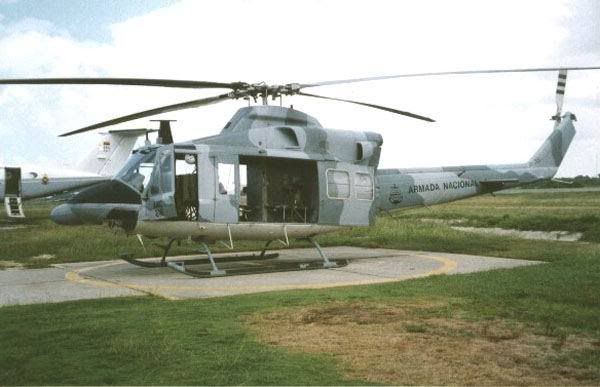
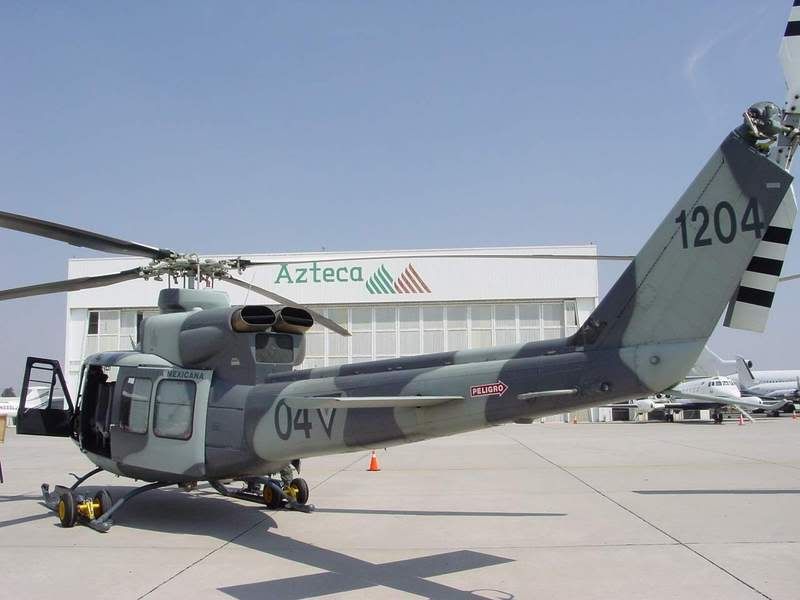
Logan HartkeI love these gray-based camouflage schemes. Most military schemes are so boring anymore. Too many that are entirely gray and the ones that are camouflage are either the boring green and brown or standard desert ones. That Mexican Navy one seems to look great on anything they slap it on. I just wish that they’d gotten some Flankers dressed up in it. Too bad.
Anyway, does anyone have some other neat gray-based camouflage schemes from some small air forces?
Here’s a couple examples that I’ve always liked. The SH-60 is US, I know, but it is incredibly rare, non-standard, and is only pseudo-US.
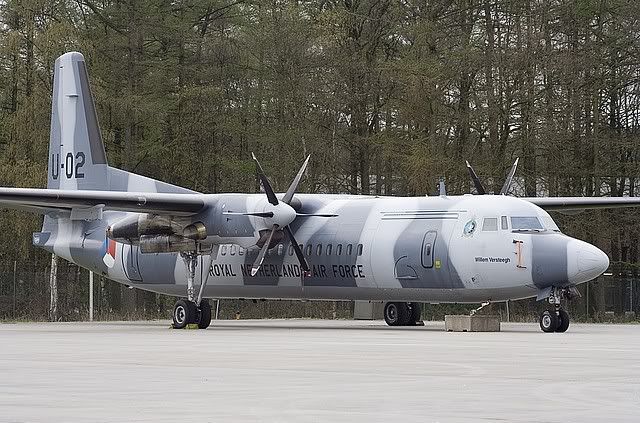
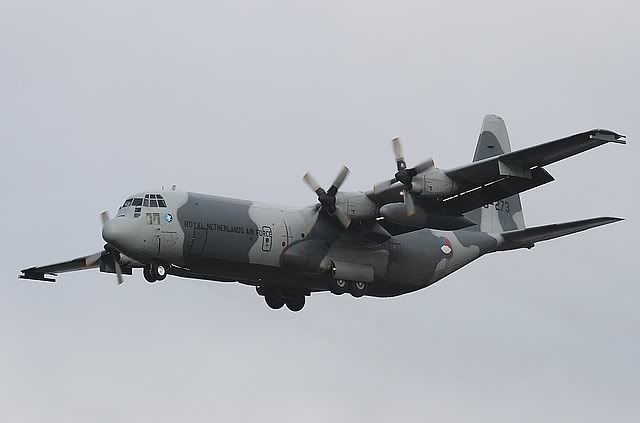
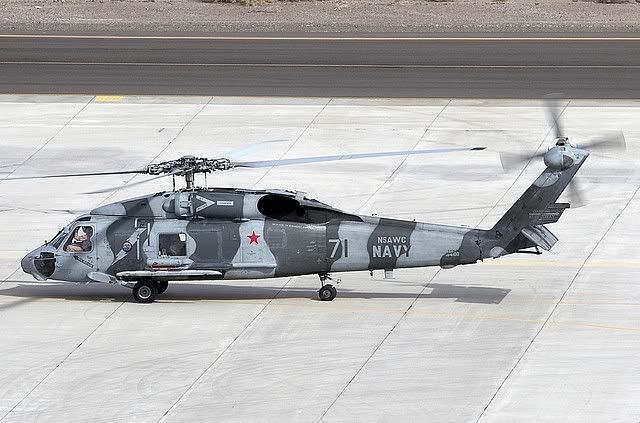
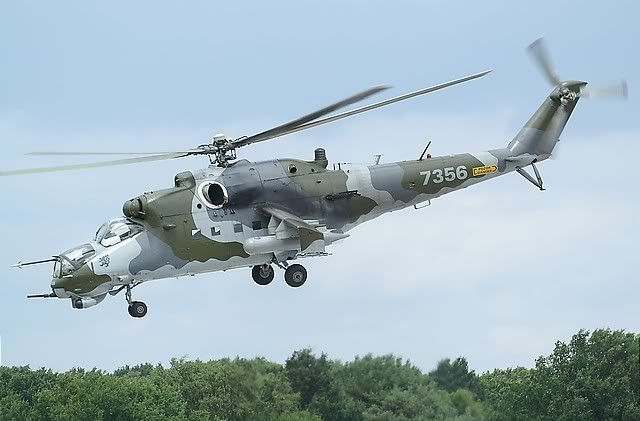
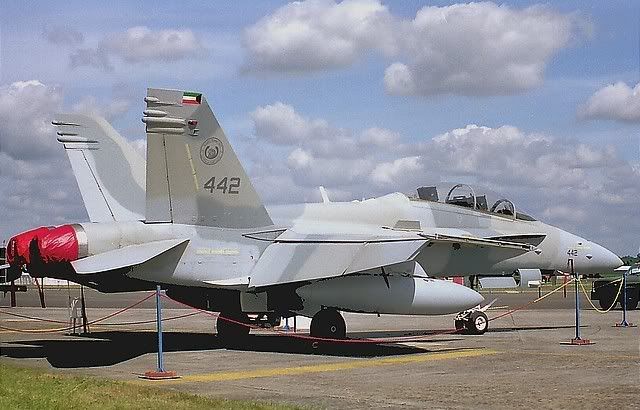
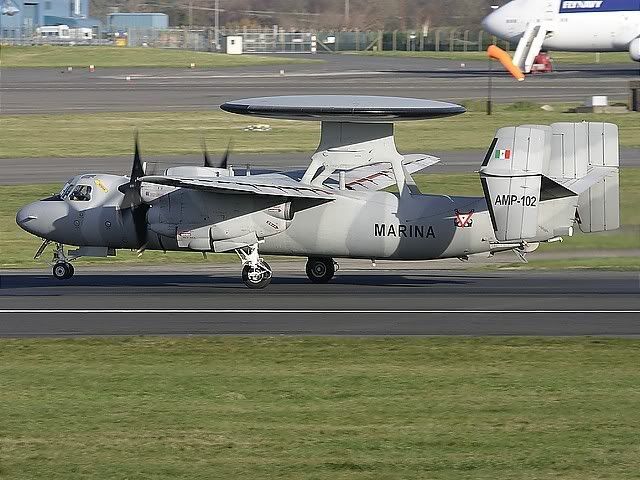
So, what other neat schemes do people have like these?
Logan Hartke
Logan HartkeAlso, you have to remember that only part of an MPA’s value is found in ASW work. Surface patrol and ASuW, fisheries patrol and enforcement, drug interdiction, search and rescue, and numerous other roles all factor into using MPA aircraft.
MPA often operate as part of a package. Subs typically operate alone, so if you find one with an ASW ship or a submarine of your own, you might be on about equal terms or even disadvantaged. An MPA is a bit of a force multiplier, not vulnerable to enemy subs and able to quickly transit to an area where an enemy sub might be. Using a sub or frigate to hunt down an enemy sub makes it likely that the hunter will become the hunted. With the exception of a few submarines (such as Kilos) armed with short range SAMs, MPAs are one of the few platforms that can search for and attach enemy subs with impunity.
So, you do a lot of your searching with other platforms, ASW frigates and submarines, and then call in an MPA to swing the odds heavily in your favor. When it comes to ASW, they’re also great for a bit of “area denial” dropping sonobuoys and pinging away since they don’t need to worry about exposing themselves like a submarine might. If an enemy submarine is close, the MPA finds it. If it’s not, you’ve forced the enemy sub to go somewhere else. Area denial.
Logan Hartke
Logan HartkeI don’t know, I’m all in favor of it. I see it as far more practical than some of its competitors like the PC-21 and the T-6A. It really only costs about as much as they do, fuel included due to its nice new turbofan. Also, I have to agree with Alenia-Aermacchi on this one; washed out pilots cost the RAF far more. I think that switching trainees to a jet at that stage is more beneficial than continuing with the over-grown turboprops. The fact that it can take over a lot of the jet-conversion role being done by Hawks makes it more efficient, as well.
Air International had a great article on it a bit ago as well.
I really like it, swerve. I think that if you get some pilots to do some basic training on an aircraft like an SF-260 (docile enough for beginners, but good enough to do basic maneuvers), advance to an M-311, then finish up on a new Hawk or equivalent, then you’ll have a pilot ready to take to the skies in any modern fighter and probably cheaper than most services currently are able to do.
Logan Hartke
Logan Hartke7seas,
Perfect! Those are the two that I was looking for. If you can, send the PDF as an attachment in an email to me.
Thanks again,
Logan Hartke
Logan HartkeThere’s also the decision to procure multiple types of units in a very large production contract in order to support multiple companies, establish multiple production lines, etc. That’s very common, the former in times of peace and the latter in times of war.
Logan Hartke


 Sign In