 kiwinopal
It’s a dumb thing to use the tail plane as aileron (evelons!) when still ailerons on the wing avaible! For the same momentum need a tailplane a greater deflection as a aileron on the wing and generate in this circumstance more drag and bleed more energy!
F-22 and T-50 need TVC for reducing the transonic trim drag through the short momentum arm (less authority). Especially the F-22 and T-50 with theirs in the wing biting stabs and less effectiv position in the wing downwash (wing vortex, even worser level of efficiency). Through the short momentum arm through the are really not measure of all things. Effectiv more a taillees Delta configuration with big evelons on the wrong place.:diablo:
The ailerons are in the outer section of a wing while flaperons are on the inner parts, this is to increase moment arm.
The tailerons aka Tailplanes working differentially to generate roll, are common among modern fighters.
Using tailerons when using TVC is a result not of small tailplanes, it`s the opposite, small tailplanes are the result of TVC, using TVC as a pitch control frees the tailplanes to do roll control while reduces the vertical and horizontal tail size thus reducing drag a very good example is the T-50, further more the tailplanes are set free to help the ailerons in roll so increasing agility a good example is the F-22.
Tailplanes are usually use as pitch control, ailerons as roll control and flaperons to increase camber on a wing.
Using a tailplane differentially is just to aid the ailerons.
kiwinopalBut with a tailplane is the momentum arm much shorter (wing) and when you deflect the trailing edge flaps upwards then generate you downforce and more drag (bleed more energy, wave drag on the hing line at transonic and a lower Mach crit!), in the oposit direction the same. The momentum arm is to short on a wing at a tailed plane. On transonic and supersonic forget the increase of chamber it’s really not usefull, it’s only obstructive (increase the wave drag).
But we speak about Carnards and not clean Deltas!
The Canard do the job what the tail at tailed plane do.
Sure tailplanes can used as roll controll but the momentum arm is much shorter as for ailerons on the wing, the same can do a Canard too. So what? It’s more a crook when you need all flaps (F-18, F14, MRCA Tornado etc.) or when the ailerons are uselees at high sweep angle (F-14 and MRCA Tornado etc.)
The resulting momentum arm (elevator) is on a Canard much longer as on a tailed jet
The moment arm of any control surface will be related to the distance between the aircraft`s center of gravity and the center of lift of the control surface and it does not matter if the control surface center of lift it`s ahead or behind the center of gravity.
it is the same with a flap`s moment arm.
A longer arm is the one which is farther from the center of gravity.
unstable aircraft have their wings center of lifts ahead of the center of gravity, so the wing is closer to the center of gravity, thus this makes their trailing edge flaps closer to the center of gravity.
in example the Viggen-Gripen or Mirage III-Mirage 2000
This will mitigate the pitch down force while deploying the flap.
This will enhance flap lift but reduce the pitch down force.
On a stealth fighter like the T-50 or F-22, TVC will do the supersonic trim and the tailplanes the roll.
On aircraft like Rafale, the canard is very close coupled with the wing and the wing its moved forward to created relaxed stability, if the Rafale gets a high ITR it`s thanks to a huge wing and relaxed stability coupled with an excellent TWR and low drag airframe.
Aircraft like the F-18 or Harrier have their tailplanes quit far from the center of gravity because the tailplane is not needed as a vortex generator on the wing upper surface like a canard is, and can be highly swept to reduce drag and increase moment arm
kiwinopalA Gripen doesn´t use the elevons to create a pitching moment. That´s the canards job. The elevons helps control the pitch rate after the pitch is initiated. In other words, the elevons add lift, so that the canards doesn´t have to kill lift.
Are you with me on this?
Flaps generate a pitch force when deployed on a tailess they are used as pitch control, deploying flaps is harder on a tailess delta and even in a stable canard-delta wing or one with tailplanes aircraft seehttp://www.skybrary.aero/bookshelf/books/819.pdf..jpg/250px-F-102A_DELTA_DAGGER_afg-041110-022(elevon).jpg)
As flap are deployed the lift moves aft and generate a pitch down force, this will be benefitial on any unstable aircraft with canards or tailplanes to create a pitch down force and generate more lift.
kiwinopalQuote my self
The resulting momentum arm for a Canard with dual elevator is much longer as for conventional tailed fighter.
Then should we not forget relaxed or negativ stability degrade the momentum arm at a tailed plane! A Carnard can use therefor a negativer MAC% (higher instability) as a tailed fighter.;)
Any wing has ailerons and trailing edge flaps AKA elevons, any aircraft with canards or tailplanes can use them, there is not such thing like canards only can use ailerons and flaps. The same pitch force flaps generate can be generated on an F-16, Mirage 2000 or Gripen.
Negative stability on an aircraft with tailplanes does not degrade the tailplane use, since lift can be used to balance the tail down force.
An aircraft with tailplanes can use exclusively the flaps as flaps just to increase the camber of the wing but a tailess uses them as elevons since it lacks a tail.
Tailplanes can be used asymmetricaly as roll control or togather as pitch control.
kiwinopalYour theory will be funny if you will be drawing it by yourself.
it is not a theory, the main landing is ahead of the center of gravity, if it is behind the aircraft will tilt.
kiwinopalbusiness is business. nothing is so noble or complicated as you said…
you have the market,here comes the profit hunter, nothing more…
some news…
[
and the CACC arj21(70-90 seats) is test flying,CACC C-919(190 seats) is under development(but it won’t come out very soon or soomthly). so I don’t think you are ackowledge of what happening in China and using the right example comparing to china. it’s a dead end to work FOR others for ever.——————————
back to the topic…military contract is much different and the details are kept secret well till now…none of us including the media know what exactally happened in this 200 Su27SKs TOT contract…we don’t know whether this contract was halt or changed after the 95th Su27sk was finished. the license for these jets was paid ,not for free…and I have to say there is a lot of mistake in this report.
The contract was never ketp secret that is the myth to justify an unethical chinese practice that basicly steals from russia a design.
Mexico is wining the investment race with China just in 3 years we have taken several dozen companies.
see where are the engines are being built
http://www.reuters.com/article/idUSN1718361120100317
http://www.maquilaportal.com/news/index.php?blog/show/Cessna-will-manufacture-more-parts-for-private-jets-in-Chihuahua.html
http://www.mysanantonio.com/business/local/Mexico_firm_selects_San_Antonio_for_manufacturing.html
see where the engines for the A-320 are also being developed
http://translate.google.com/translate?hl=en&sl=es&u=http://www.cnnexpansion.com/manufactura/2010/04/14/itr-sera-proveedor-de-airbus&ei=gm4HTO-gFNyJcNbWgIAO&sa=X&oi=translate&ct=result&resnum=1&ved=0CBUQ7gEwAA&prev=/search%3Fq%3Dmanufactura%2Baeroespacial%2BITR%26hl%3Den%26sa%3DN%26rlz%3D1R2ADRA_jaJP377
http://translate.google.com/translate?hl=en&sl=es&u=http://www.cnnexpansion.com/manufactura/actualidad/itr-de-tubos-a-turbinas&ei=rn0HTL_wE8-IkAWrrLDwDw&sa=X&oi=translate&ct=result&resnum=1&ved=0CBkQ7gEwAA&prev=/search%3Fq%3Ditr%2Bturbinas%2Bde%2Bbaja%2Bpresion%26hl%3Den%26sa%3DX%26rlz%3D1W1ADRA_ja
http://translate.google.com/translate?hl=en&sl=es&u=http://www.cnnexpansion.com/manufactura/2010/04/15/kuo-recibe-certificacion-aeroespacial&ei=3XIHTNOjNMOecfKm_bUO&sa=X&oi=translate&ct=result&resnum=1&ved=0CBUQ7gEwAA&prev=/search%3Fq%3Dmanufactura%2Baeroespacial%2BKUO%26hl%3Den%26rlz%3D1R2ADRA_jaJP377
http://www.maquilaportal.com/news/index.php/blog/show/Cessna-inaugurates-fourth-plant-in-Chihuahua-City.html
http://noticias.uanl.mx/interes/descripcion.php?id_not=526&lang=en
see we are working with GE but we also have development in jet engine technologyhttp://www.frisaaero.com/
We are getting contracts but in mexico ethics have to be inforced more, business is business but a violation of a contract is a violation, the J-11B is a violation of Russian intelectual property
the only way China will keep those companies is by respecting their rights if not they will go to other countries and that applies too to mexico, we need to offer good conditions for investment if not they won`t invest in Mexico
kiwinopalI haven’t read the original contract, but all the reliable PLA sources are saying that Russia is only China to indigenize the plane. That’s part of the agreement that China will eventually produce the planes by itself.
You can see that the Indians are trying to do the same thing with MKI by producing more and more of it by itself.
yeah, Russians news shouldn’t be taken as solid sources. They are generally very biased only repeating what the Russian industries are saying. And worst of all, they get a lot of the most basic facts wrong. For example
1) we were told about TVC with AL-31FN sold to China, that turned out to be complete nonsense
2) we were told about Russia upgrading J-10 use their electronics + TVC to get super-10, that’s nonsense too
3) we were told China was going to buy su-33s, that wasn’t true. In fact, different Russian news articles come up with different theories on it all the time.
4) we were told China was buying Zubr, but China actually bought it from Ukraine
5) we were told about Mi-171 production in China, but that never happened.
6) we have a host of articles regarding the IL-76 contract that are wrong and in some cases contradictingIn most cases, the articles regarding J-11B and su-33 are overly emotional, angry and not well researched or based on evidences.
I do not understand why you defend something that is clearly wrong, see any manufacturer has rights, the Indians are respecting all the parts of their contract, the Russians are not complaigning at all about the Su-30MKI, China did something foolish, in mexico we are building light Cessna aircraft , MD helicopters, Fuselages for the Bombardier Challenger and soon we are going to build the Learjet 85 but we can not build them unless we are authorized by Bombardier, Cessna, MD helicopters and to build them is under their consent not without it .
We are building an ultralight aircraft from a Spanish company as the Aeromarmi Stela but the reality is Aeromarmi bought the rights to build it, modifiy it and comercialize it.
Russia is angry because China is not complying with the deal, China and Russia agreed on Russian engines and Radar for each and every one of the 200 Su-27s built in China, China did not buy them, they instead continue building the Su-27 with new engines and radar of chinese Origin, for russia the Chinese have only one intent that is not pay and get a free ride from the russian tech and the label indigenous J-11B is just a ploy to comercialize it.
China has done the same in cars and other products but you know at the end they are just shooting themselves on their feet we are glad they do that, because thanks to that wrong policy Bombardier chose Mexico instead of China, in fact GE and Bombardier build aircraft and jet engines in Mexico without fear of being copied and stolen of their products.
China however still has investment for example Cessna built jets there mostly because of labour price, but the risks are higher in China in terms of IT protection than in Mexico.
We in many ways are more limited than China true China builds their own WS-10 and their own Z-10 we have nothing like that, but we are now engaged in building low preassure turbines for the A-320, A-321 and other Airbus jets and we even build helicopter fuselages for the US army the main difference is we are still dependant upon foreign companies but we have an advantage China has not, we are trusted as a place the main aerospace companies can invest and their products still are safe from being copied illegally.
You might say China has gotten the technology and we are still working as subcontractors, but the advantage of Mexico is we are working for Bombardier, GE, Honeywell as part of their own industry without competing and in the case of ITR we are working with Roll-Royce and ITP as partners not rivals, China is becoming a rival and is becoming less trusted due to the little legislation and protection of the IT property.
kiwinopalTNCA Series B
This was a modification of series A aircraft. 5 aircraft were built
Here we see the first Series B
This aircraft had a Salmson engine and was designed by a team lead by Angel lascurain that included Antonio Sea, Luis Garduno, Agustín Enríquez, Mariano Domínguez and Pedro Souza, it flew for the first time on November 7, 1920 and later test flown by Ralph O’Neill.
Four of five aircraft were fitted with 45 calibre Thompson machine guns.
kiwinopalProve it, if you have no idea that length of chord for canards a/c actually is much longer than tailed a/c
If you know the center of gravity is ahead of the main landing gear and the aerodynamic center of the tailplane or Canard is where the main geometry center is located you can calculate the F-15 and F-18 have very long moment arms
The Rafale has its center of gravity ahead of the main landing gear and the aerodynamic center of the canard around the end of the canopy
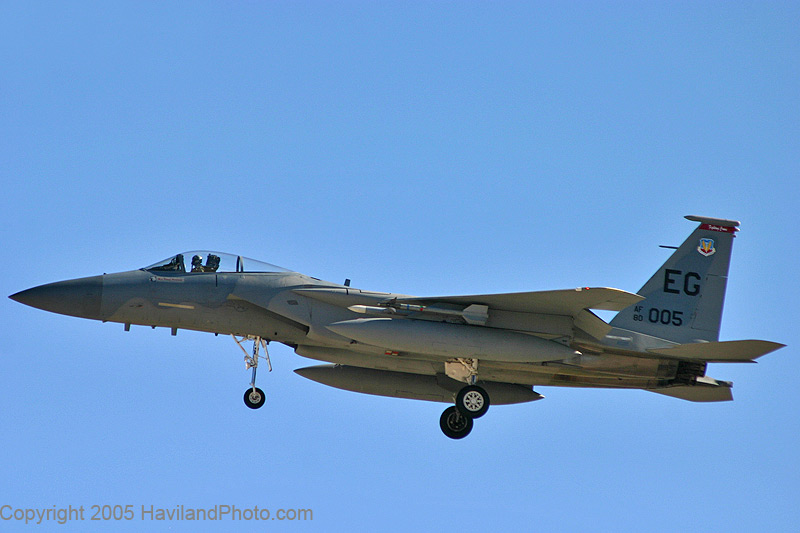
same will be the F-15 the center of gravity is ahead of its main landing gear and the aerodynamic center of the tailplane is slightly aft of the end of its vertical tail
the Hornet is similar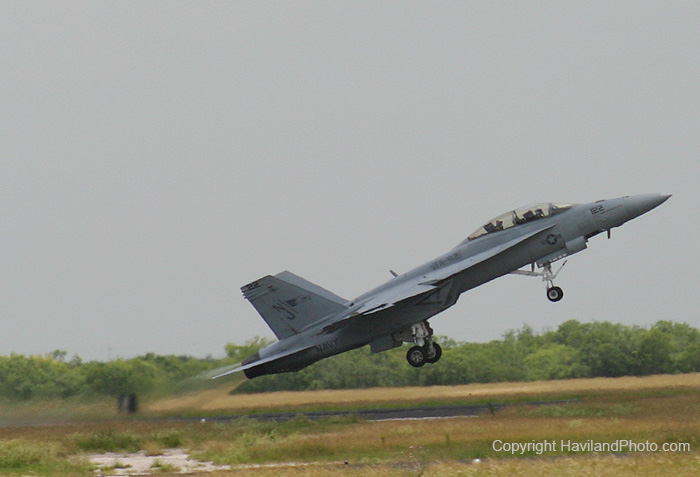
[same will be the F-18 the center of gravity is ahead of its main landing gear and the aerodynamic center of the tailplane is around the begining of its nozzle
The Gripen has its center of gravity ahead of the main landing gear and the aerodynamic center of the canard slightly aft of the end of the canopy 
the F-16 has the center of gravity ahead of its main landing gear and the aerodynamic center of the tailplane is around the begining of its nozzle
kiwinopalA Gripen doesn´t use the elevons to create a pitching moment. That´s the canards job. The elevons helps control the pitch rate after the pitch is initiated. In other words, the elevons add lift, so that the canards doesn´t have to kill lift.
Are you with me on this?
I do understand what are you saying but see also each aircraft has different wings if the total lift coefficient is high and thrust vectoring is helping trim an unstable aircraft can use its tailplanes the minimun with a long moment arm, thus making the canard not needed in example the F-22, T-50 and F-35.
The F-35 has no TVC but has a wider gap between its wing and tailplanes than the F-22 and T-50
The F-22 has also chines which create vortices adding lateral stability and in conjuction with wing vortices add extra lift.
On the MiG-29 it has nose strakes doing a similar job since canards and LERX vortices interact with forebody vortices increasing sideslips and lateral unstabilities generating thus roll problems such as wing rock or wing drop.
kiwinopalThe main wing on the Gripen and Rafale also blends with the fuselage. The fuselage lift on the F-16 and MiG-29 for example comes from the LEX, wich only increases lift at certain AoA. Most of the time it´s just a weight and drag penalty. The canards offers lift, but for all speeds and AoA, and they offer optimal lift/drag ratio, as they are adjustable. Also, they are small, meaning little weight and drag.
The F-16 and MiG-29 have LERX lift at level flight and vortices at AoA beyond 5 degrees.
I do agree the Rafale and Gripen have some degree of Fuselage blending, but it is not like on the MiG-29.
The main advantage on the canard side is it can be deflected on the Su-33 and Su-35 working basicly as a leading edge flap. it helps the LERX vortices to delay further their bursting keeping the flow attached to the wing and tailplanes and gives some turbulance damping at low speed, this was found ideal for the Su-34 and Su-33, further more it adds some degree of longitudinal unstability to the heavier forebodies of the Su-35, Su-34 and Su-33KUB.
In the Su-35 it helps its handling at high AoA and reduces wing bending allowing for higher loads without structural reinforcements thus saving weight.
Since it works as a leading edge on the LERX-canard combination the LEVCON was found to be more practical on the T-50.
kiwinopalTurkey has more to loose than Israel when going into a situation outside their control. Non of its allies is eager to see Turkey in that situation. At the moment Turkey will loose it self claimed role as mediator in that region. By the way, even when Israel will allow such few ships to pass nothing will change really by that. I am still surprised that none demanded the release of the kidnapped Israeli soldier and a constant ceasefire as a first step to lift the present blockade.
Turkey can simply switch sides to the Russian-Iranian side which is not good for the West and Israel can not use nukes, basicly for both sides show restiction is the best, for Israel needs a friend in Turkey and Turkey show still has some political clout.
There is no need for a war and both sides know it, Turkey has the international community supporting it as long as they do not start a war by attacking militarily Israel; Israel has to win the approval of its action too violence won`t bring it.
kiwinopalYou got it backwards here kiwi:
AerodynamicsUnstable design features
The important issue of how much relaxed static longitudinal stability is optimal for various configurations was consistently, by internal as well as from external sources, answered with a neutral static margin for the wing-tail configuration and something like minus10 percent for the delta canard,
Aerodynamic summary
The salient points in the Gripen aerodynamics are:
Digital fly-by-wire control system and relaxed, negative static stability in pitch (cg far aft) have made the disposition of the delta canard layout, internal as well as external, much easier, whereby:Optimal cros sectional area ruling, thus wave drag reduction, has been fully realized.
The direct fall-out of relaxed static stability are:
· Higher trimmed lift.
· Reduced lift dependent drag.
· Reduced supersonic trim drag.U. Claréus, project manager, JAS 39 Aerodynamics, Saab Aerospace
You can also not exclude the important area ruling in the discussion when determining supersonic drag, where tail inherently has the short stick, it shouldn’t be there at all.
Range at subsonic ~0.6 speed is the likely reasons for intended offensive warfare by powers like USA & Russia, and to a lesser extent a long experience and tradition, as well as payload and loitering.
I do not deny tail cross section has an impact of drag, but remember aircraft life the F-16, T-50, Su-27, MiG-29 have integral wings that blend with the fuselage increasing lift and reducing drag, the Gripen has not that extra lift.
The Gripen as a better solution with respect a Viggen, but not exactly better than an F-16 or MiG-29 aircraft which use extensive fuselage lift
kiwinopal5% is maybe aerodynamic efficiency and therefor less energybleed.
9G is 9 G and is an effect of newtons second law. TooCool_12f has right at a given G rate and speed, there is a given turnrate.
5% increase is the max increase you will get at max lift coefficient and overload, you can not get more simply because the aircraft its operating at its maximun lift coefficient and max overload allowed.
kiwinopalIt´s just one of the advantages, and it´s not the main one. The delta/canard config offers many advantages.
Not true. Read my post above. The elevons aren’t just for show. They work similar to a taileron. Why would all the work fall on the canard? The canards and elevons work together. The canards can quickly kill lift if it needs to, but by instead decreasing(not talking negative lift here) the lift on the canard and increasing lift with elevons, stopping a pitch moment is possible.
Stop focusing so much on the canard. All the control surface work together. See my drawing.
Robban
Applying the elevons as control devices at pitch is another way of dealing with the problem in the same way a tailess wing aircraft uses them as pitch control devices, however why do you think most aircraft have tails or canards? simply because this free the wing from being a pitch control device and any tail or canard have a longer moment arm.
Now the F-22 and T-50 have tails which use TVC as the main pitch control device, freeing the tailplanes from pitch control decreasing trim drag.
Tailplanes have longer moment arm and the same will be a canard, specially the Eurofighter; the F-22. F-16 or Su-27 can use its tailplanes lift to decrease the tail down force with minimun deflection and least drag due to a longer moment arm.
The relaxed stability on the the F-22 makes it a good supercruiser and TVC will increase that.
The T-50 has even reduced vertical and horizontal tail size due to TVC use as lateral and longitudinal stability control device reducing significantly drag.
here i leave you a report about TVC use as lateral control
http://docs.google.com/viewer?a=v&q=cache:ckR6oozKpesJ:dtrs.dfrc.nasa.gov/archive/00001071/01/186016.pdf+lateral+stability+thrust+vectoring&hl=en&pid=bl&srcid=ADGEESgjkKT3ydt2BF1rQlT8tN7J41vsiL4UVLy38YZoTPU0eEwaDq7tZXelxZ5dJFA6I7F-rGn0GLzKUS37cvr63vXOxIA15ehli1pu6DwFVmJlpohFrU-2R2iiUo5m76qtXwHAQQnL&sig=AHIEtbQ_SrRWRiVGqQFcTKAN_5xmlPWNCw


 Sign In







